

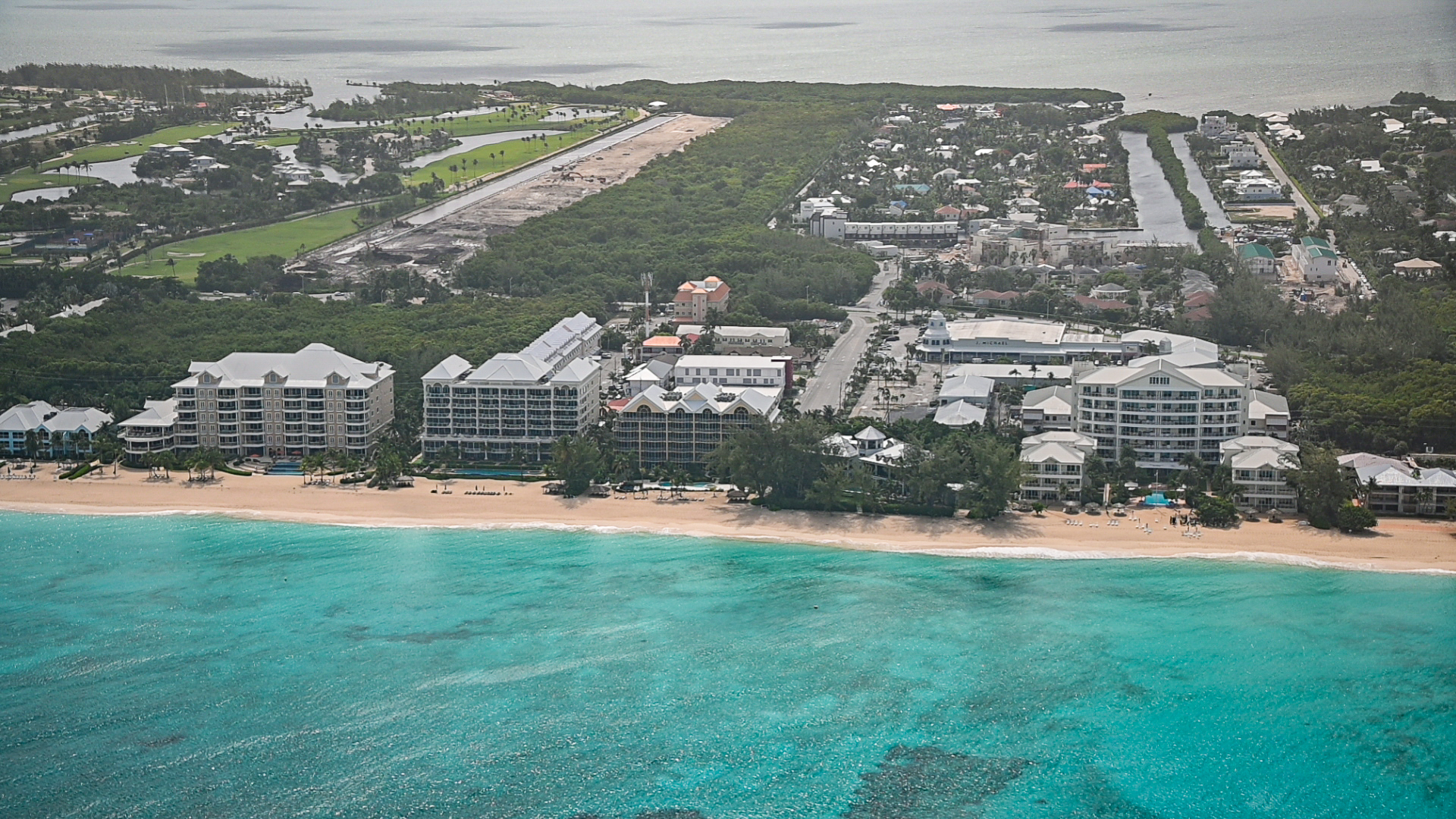
When Roy Bodden was born in 1945, the Cayman Islands population stood at just under 7,000. When he went away to school in Canada in the early 1960s, it had risen to 8,500.
By the time he was elected to the legislature in 1988, it had ballooned to almost 25,000, as the financial services and tourism industries began to take root.
He had quit the legislature when Hurricane Ivan struck in 2004, with the population at more than 40,000.
The elder statesman of Cayman politics has returned to a quiet life on his cattle farm where he works with the animals and writes his books.
It’s a lifestyle that he fears will soon be impossible as growth transforms Cayman into an increasingly urban society.
The 2021 census, published on 28 July, confirmed the islands’ population, at just over 71,000, has grown more than 1,000% in his lifetime.
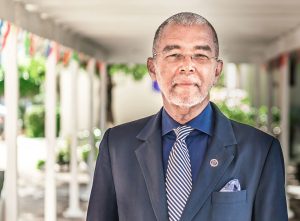 Author and academic Bodden believes he will live to see it hit 100,000. It’s not a milestone he is especially enthusiastic about.
He believes Cayman’s leaders have erred by relying on an economic model that leans too heavily on imported workers and imported consumers.
“We are on a treadmill which is running at full speed and we can’t get off,” he said.
“We can’t stop the treadmill because we would be stopping progress. We could try to jump, but it is going to hurt.”
Bodden advocates for a new approach. He does not subscribe to the perceived political wisdom that population growth is directly linked to economic growth.
He argues that Cayman should slow down and plan its future more carefully, not just in terms of physical development but in human development too.
An ‘adhocracy’
Managed growth and planned development have become watch words in recent times. But Bodden says the writing has been on the wall since the 1960s.
“All the problems we are having today were predicted decades ago,” he insisted.
Workforce assessment, training and education tied to economic needs, and an immigration system that prioritises professions that benefit the economy are all needed, he argues, along with a proper development plan.
While the rapid growth of the island has undoubtedly improved quality of life for many, he cautions that too many are being left behind and that the infrastructure, services and needs of the country have never been factored into the mix.
“Everything happens on an ad-hoc basis,” he said. “We are living in an adhocracy.”
Premier indicates Cayman needs population growth
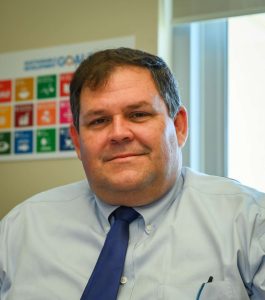
Premier Wayne Panton made similar comments at a press conference to announce the publication of the census last week.
He said development in Cayman had too often happened on an ‘ad-hoc’ basis and a more managed approach was needed.
The premier appeared to indicate a belief, however, that population growth is necessary.
“If our population is static, to maintain economic growth we are going to have to have an increase in productivity,” he said. “That has either got to come through technology or people just working harder.
“This is all a challenge to suggest you can have a static population and continue to have opportunities to attract economic growth to be the engine to create new jobs and that sort of thing.”
Asked what would be the maximum number for Cayman’s population, he said, “I don’t know; we can ever say what the number should be but we should be planning and trying to ensure that it is a reasonable level of growth and not something that is uncontrolled and unpredicted and we are behind all the time and trying to catch up in terms of services.”
Deputy Premier Chris Saunders made similar remarks.
“When people say we need to slow down, in a service-based economy what you are talking about slowing down is job creation,” he said. Panton added that his ambition was for Caymanians to play a greater role in determining what the future holds.
“We as a country have to decide what is an appropriate rate of growth and have to design policies that are in line with that,” he said.
But he added that the development plan – considered a key policy in managing how the island grows – could take until into his second term in office – to complete and implement.
Opposition: Action speaks louder than words
The Opposition Progressives party has been more vocally in support of growth – a stance which arguably cost them some support at the last election, amid community concerns about over-development.
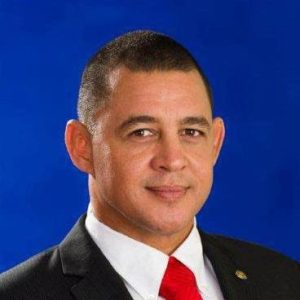
Despite that approach, Joey Hew, the shadow planning minister, claimed the Progressives had done more to introduce controls and constraints than the current government.
Hew said construction and development played an important role in the economy and in supporting government revenue.
He acknowledged a growing population had its downsides, but insisted the former government had begun to address these.
Hew cited the PlanCayman initiative, the first update of the development plan since the 1990s, and the solid waste management strategy to replace the landfill as two policies his government had pursued, both of which have stalled under the new administration.
Panton has previously stated that aspects of the landfill deal, including provisions for the Sister Islands, were unsatisfactory and that the PlanCayman initiative – which would have examined zoning and land-use needs on an area-by-area basis – needed a rethink. The ReGen project contract, a partnership with the Dart group to replace the George Town Landfill with a waste-to-energy plant and a suite of recycling and composting facilities, is still expected to be inked this year. But Panton said the development plan would likely only be halfway to completion by 2024.
Hew argues that the current government, despite its rhetoric on sustainability, has actually stalled policies that would have made a difference.
“Action, and not mere words, is needed,” he said.
He also argues for an infrastructure plan, setting out requirements for schools, highways, green spaces, ports and sports facilities to support future population needs.
Hew, in emailed remarks in response to questions from the Compass, insisted “any government” would prefer to deal with the challenges of growth than the “disaster” of no growth.
He added, “Without economic growth, the government and the country will struggle, businesses will falter, and our people will lose jobs. No growth is, therefore, a recipe for disaster.”
A third way
Bodden, who has been a teacher, historian, radio host, politician, academic and author in a long career, believes long-term planning is too important to be left exclusively in the realm of politics. He said elected MPs, on four-year terms, would always struggle to prioritise initiatives that would not have an obvious impact within the election cycle.
He argues for a “think tank” of political veterans like himself, academics, private-sector leaders and other respected community members to provide the intellectual resources for a more coherently planned future.
He insists it is possible to decouple economic growth from population growth, but he accepts that will involve a serious rethink of Cayman’s economy. Work-permit and permanent-residency fees, stamp duty on imports and land transfers, and sales taxes on consumers are among government’s main revenue sources.
Bodden proposes a property tax on second homes as one possible alternate means to generate revenue.
Carrying capacity
Census data shows that Cayman’s population has risen at a pace that outstrips almost every other country in the world.
Analysis by the Compass suggests that, even on the most modest projection of 2% growth per annum, the islands’ population will reach 87,000 by the time of the next census in 2031.
With 4% growth per annum, the population will hit 105,000 by then.
For context, the census shows that the annual growth rate has reduced slightly over time. Over the last decade, it was 2.4%; the previous decade, it was 3.2%; and in the two decades before that, it was 4.4%. The only constant has been a consistent year-on-year growth, with temporary downward blips, in an overall upward trend that has proved impervious to disasters like Hurricane Ivan or COVID-19.
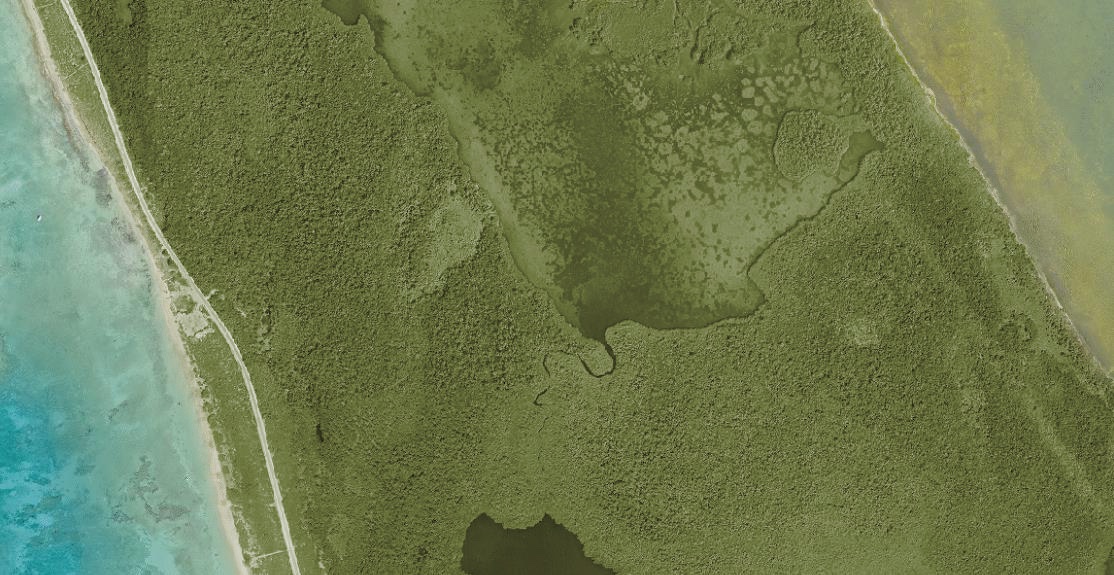
While the waves of immigration have brought new skills, new industry and new prosperity to Cayman, questions are beginning to be asked about how long it can continue without bumping against ecological and geographical limits.
With the threat of climate changes, flooding and erosion, the question of whether Cayman has a ‘carrying capacity’ is an increasingly pressing one.
There is no simple answer, Gina Ebanks-Petrie, director of the Department of Environment acknowledged.
“Given that Cayman has a finite land mass, there are clearly physical limits to how many people can live here without causing significant degradation of the ecosystems and their services that sustain life,” she said.
“However, when considering carrying capacity for a country, there is also a social dimension to the concept that needs to be factored in, so it’s not a straightforward calculation that spits out a number. There are societal and personal preferences about how we wish to live and experience life, as well as the ability to employ technology and innovation that would all contribute to any consideration of carrying capacity.”
Related Videos





The paradigm everyone is operating here is economic growth.
A growing field of interest give the climate crisis is to move away from economic growth.
Imagine a world of “enough” where we manage our economy in a holistic way to have enough and not always be seeking more.
Start with “doughnut economics” by Kate Raworth.
A thoughtful piece.
I like the term “adhocracy”, it certainly applies here, as does the term reactive rather than proactive.
The solution to our problems is not working harder, grinding away our lives for economic growth. We already live in a culture of hard work and long hours.
The solution to our problems is not waiting for some technology that will magically create endless streams of revenue for us. We will be waiting for a while.
The solution to our problems is not to cram more people on our resource and infrastructure strained island. This path will only lead us to destroy our natural paradise and lose our culture, as we have very clearly seen over the last few decades.
The solution is to look deeper into the actual question itself, “Can Cayman succeed?”. There is more basic question we all need to ask first. What does success mean? What does success look like?
Our leaders suggestion that population growth is necessary is to sustain economic growth shows that economic growth is exactly what success looks like to them. Endless economic growth is the most basic value of our current culture. The cornerstone which our society built around. Everything else is secondary. Family, community, culture, nature; all of them are a lower priority than making more money. We are among the richest countries in the world, in the wealthiest era of mankind, yet we are still not satisfied. We always want more. In fact, our desire for more has only become thirstier.
Endless economic growth is the very definition of unsustainability. We live on an incredibly abundant Earth but we can never deny the primal fact that resources are finite. We are already unbalancing every life supporting system we are blessed with. Every civilisation that has taken this path, the path of material wealth, has caused immense suffering and inevitably collapsed. The cracks in ours are already beginning to show.
Thankfully, there are many other paths our nation and our global community can take. Instead of lusting for endless growth, we can work to create a more resilient economy. Stabilise our economy by diversifying and preparing for economic and natural disasters. More money will not bring us more happiness, but more stability can bring us more security.
Creating more jobs should never be the objective, creating enough jobs should be. Creating new jobs just creates more people to fill those jobs. It is an endless cycle. Let us instead focus on creating a flexible economy, so as times change and new industries are born, jobs are naturally and seamlessly shifted towards them (education is key).
To me, success is much more than a healthy and sustainable economy. Success is a thriving culture, a healthy environment, and a loving community that supports the needs of all. Yes, the economy is a key component to support these objectives, but right now we have a thriving economy at the expense of our culture, our environment, and our community. At the expense of our spirit.
I think many people would agree with this perspective of success, but how do we get there? We tend to focus on policies and technologies to resolve our problems, but the answer is much simpler. The answer is: you. Each and every one of us must embody these changes within ourselves before they can manifest into societal and political changes. Our society is only operating this way because we are individually operating this way. Many of us believe that having more money will lead us to better lives. It will give our children better lives. It will give us the freedom we have always desired.
If you do not see these beliefs within you, then you must look deeper. Every human being has these beliefs to some degree, especially in the culture we live in. We can read about this same story in ancient texts thousands of years old. We must break these beliefs to create the better society we all know is possible. And to do this, we must first know ourselves.
There are many many ways to cultivate these values, but I would like to share a few reminders that always help me. Work less and focus on family and community. Simplify life and let go of some material possessions. Downgrade the house. Take time to enjoy nature on our incredible tropical paradise. Be part of culture by expressing your beautiful self. Slow down and breathe. Help those in need.
These are already the fundamentals of true Caymanian culture. We know how to live this way. We have been living this way for hundreds of years. And even though for many years we didn’t have much material wealth, by all accounts, we were pretty damn happy. This doesn’t mean we need to revert to old times to find happiness. We just need to rediscover that balance and remember what life is all about. We can support our material needs AND focus on our deepest values of expressing our vibrant culture, living in balance with nature, and being a community that works as one.
This is what success looks like to me. What does it look like to you?