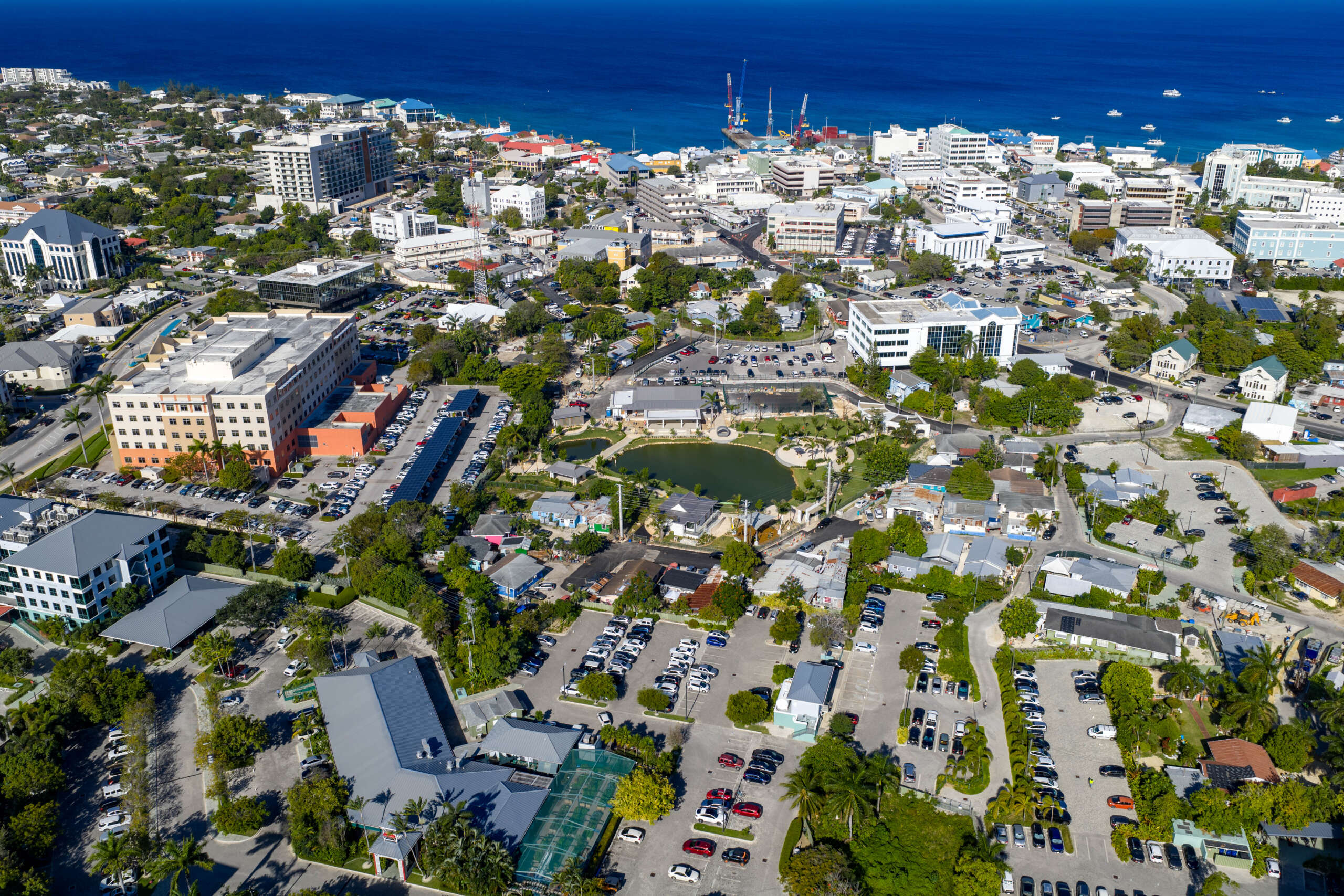
Cayman has profited from a massive surge in population over the past two decades, but has not invested in the infrastructure to match, according to a new analysis.
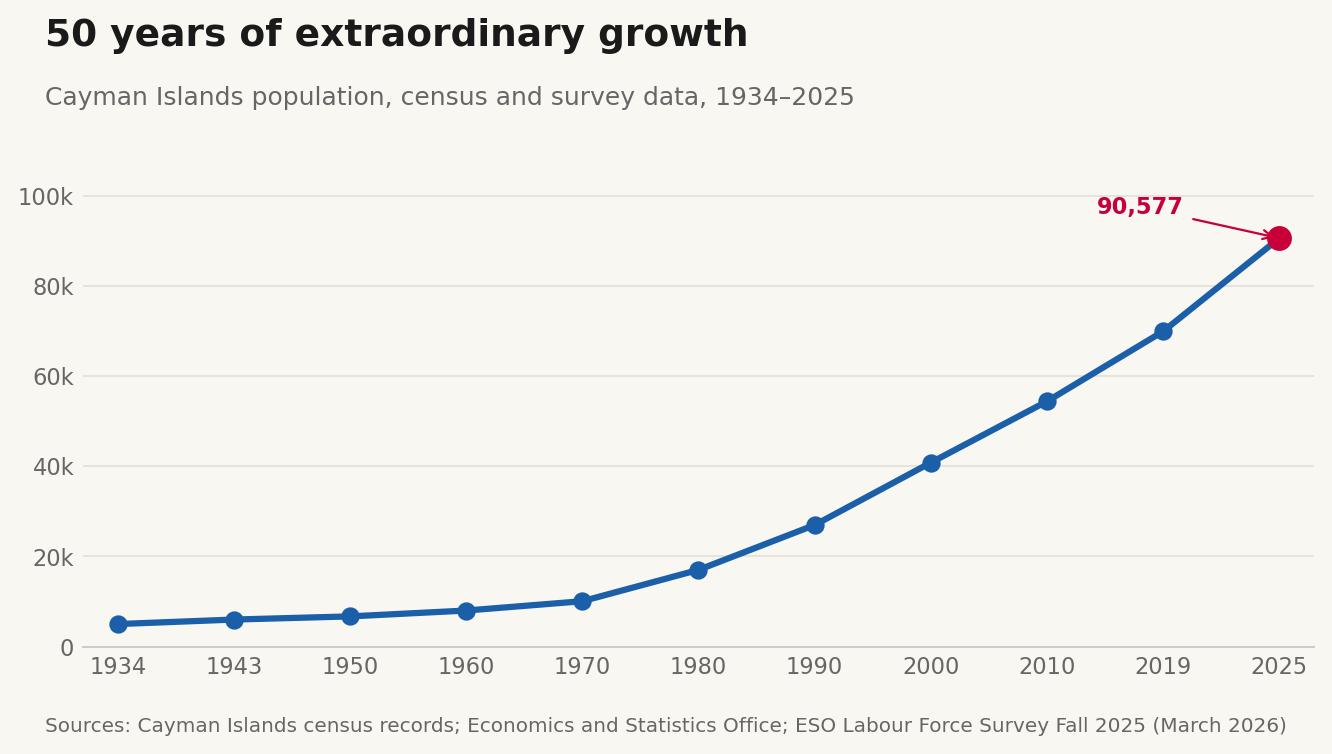
A special report by economist Marla Dukharan indicates that Cayman’s population has doubled in the 22 years since Hurricane Ivan and has almost tripled since 1990.
The Islands are now home to more than 90,000 people and has the fastest annual population growth rate in the Caribbean.
The report traces how that growth has fed government revenue through work permit and duty fees. Roughly half of that revenue comes from the financial services sector, which the report identifies as the single largest contributor to both GDP and government income.
But Dukharan concludes that the proceeds have been largely spent on government personnel costs without equivalent investment in roads, housing, waste management or other essential infrastructure.
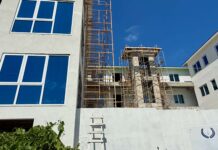
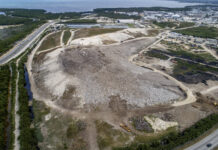
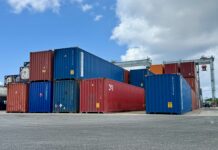
Recent Compass reporting points to capacity constraints at the landfill, the cargo port, the airport and on the energy grid, with the Islands’ outdated infrastructure struggling to keep pace with that growth.
Meanwhile, government has indicated Cayman needs to build 3,000 new homes to match current demand, again citing the surge in population as a key factor.
Dukharan says she is agnostic on the question of whether population growth is good or bad, saying that is an issue for the Caymanian people to determine.
But she believes the pressures associated with growth would be less noticeable if the profits had been invested sensibly.
“I don’t actually think that the population growth is a bad thing. It’s about how you manage it,” she told the Compass.
“The authorities have earned quite a bit of money as a result of the population growth, but did they channel that money into accommodating, from an infrastructure standpoint, the population that they are deriving this revenue from? The answer is no.”
In simple terms, she says, “The policymakers are not using the revenue that they get from the population growth to provide for the population growth.”
Carrying capacity
Dukharan suggests an independent carrying capacity study is needed to determine how far Cayman can realistically grow, and what infrastructure that growth would require.

Her report indicates, “We have no clue from an ecological standpoint, what population size could be comfortably sustained and how.”
She points to a 2022 consultants’ report that found Cayman’s cargo port could not accommodate a population much beyond 100,000, a limit she says should be respected in the short term to protect food and fuel security.
But she does not see the size of the Islands as the principle constraint.
Denser development could substantially expand how many people Cayman could support, if that is the direction Cayman’s people wish to go in.
Treat land like oil
She cautions, however, that land is a limited resource, and Cayman’s history suggests that when land is sold it rarely comes back into local ownership.
She likens the arrangement to the oil reserves that sustain the economies of Middle East Gulf states, and questions why Cayman does not levy an annual tax on foreign-owned property. Currently, a one-time stamp duty is charged at purchase.
“Why are you not taxing this the way you would tax a barrel of oil? Why are you not charging a property tax to foreigners to help maintain the infrastructure that you need to grow?” she asks.
She suggests much of the revenue currently goes towards funding an expanded government payroll.
“The Government of the Cayman Islands is engaging in a type of fiscal redistribution much like that of a petro-state, but without a sovereign wealth fund financed by royalties on their finite and depleting natural resource,” the report states.
She argues Cayman would be better served by a form of universal basic income for Caymanians and an operating sovereign wealth fund to support long-term investment in its people.
The Cayman loop
The report’s core conclusion is that Cayman is caught in a loop in which population growth supports government revenue, which government then uses to hire more people, which adds to the demand for construction, goods and services, fuelling more population growth.
“The Government of the Cayman Islands is highly incentivized to continue to support growth in the (high-wage) non-Caymanian population in order to grow its revenue, and to continue to support construction activity in order to grow the economy, and therefore grow its revenue.
“The majority of the Government’s revenue is redistributed to the Caymanian population via the state’s personnel costs (70% Caymanian) and other social spending,” the report adds.
Dukharan’s report does not argue for or against further population growth. But it does suggest future expansion should be planned and deliberate, weighing the costs alongside the financial benefits.
“In the absence of a plan, with their eyes wide shut, the people of the Cayman Islands are heading towards an unknown population size, by default,” the report concludes.
Report’s key findings
- Population growth, particularly among high-wage foreign workers, drives higher government revenue through work permit fees and other levies.
- Construction has the biggest economic multiplier of any sector in Cayman, meaning building activity generates more knock-on economic growth than anything else.
- A larger population – especially of high-wage foreign workers – therefore means higher GDP, largely through construction and consumption.
- Higher GDP means higher government revenue.
- Most of that revenue is spent on personnel costs in the public sector. Seventy percent of the public servants who benefit are Caymanian.
Related Videos