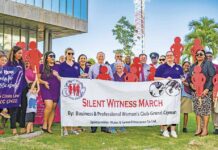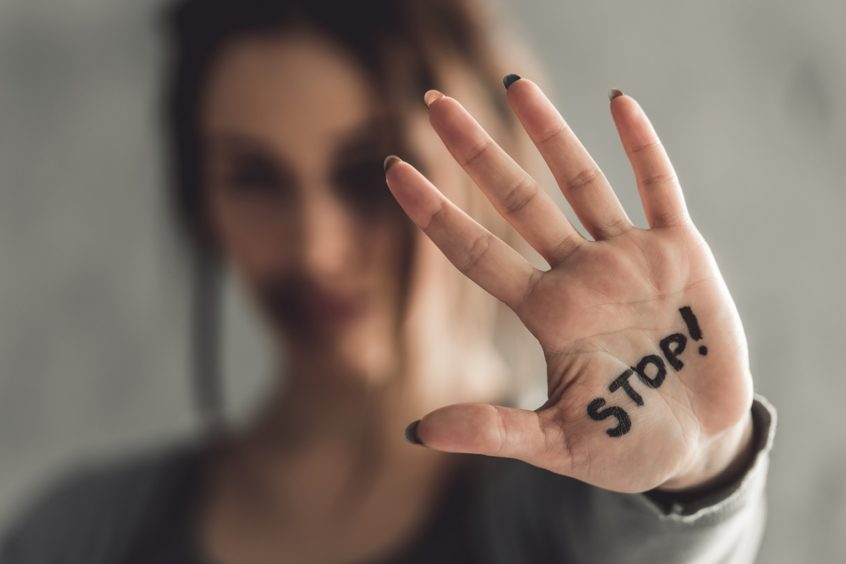
Though there is a rise in awareness and a higher number of individuals reporting domestic violence, local advocates say more must be done at a government and community level to rid Cayman of this scourge.
Annie Multon, founding member of the Business and Professional Women Club, speaking on Wednesday’s episode of the Cayman Compass weekly Facebook talkshow ‘The Resh Hour’, says while Cayman has come a long way from the 1980s where it was taboo to discuss domestic violence, there is still more that needs to be done as a community to protect domestic violence survivors.
“We have made progress; there’s not enough of it. There’s more that needs to be done and whatever else that we can do, and that’s not just the Business and Professional Women’s Club, but that’s everybody. You don’t have to belong to an organisation to get out there and do something or say something. You can be on a one-to-one, be somebody’s friend, just be somebody’s friend,” Multon said.
Community support needed
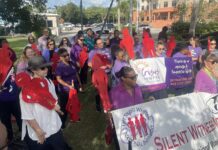
Mahreen Nabi, BPW vice president and chair of the Silent Witness March committee, agreed, saying that everyone has a part to play in stopping violence in the home.
“Every single one of us has a responsibility in the community to advocate, to support, to engage on the issue of domestic violence and abuse in general,” she said. “So, take the opportunity to educate yourself, feel empowered, know that there are resources out there and if you are someone who is dealing with a situation like this right now, there is hope.”
With 1,500 reports for the year so far, Nabi said efforts like the Silent Witness March and local awareness campaigns are working. The high number of reports, she said, are an indication that survivors are feeling more confident to come forward rather than the statistics being a reflection of a spike in domestic violence in the community.
Multon, speaking on the history of the march – now in its 22nd year – said it sparked changes back in the 1980s that led to the creation of a women-only unit within the police to deal with female victims, and a policy across the board, which she noted was pushed by Frank McField, where female victims of rape or assault were only treated by women to help ease the process.
“[This] then gave the women more courage, more confidence that no matter how slight it was, they could go to the police station, they could go to the hospital and report what had happened. And up until that point, nobody wanted to say they had been raped, nobody. They wanted to keep it to themselves,” Multon said.
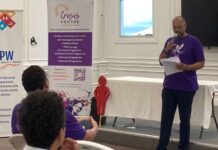
Community psychiatric nurse Dympna Carten says the community should be mindful of the mental health trauma that is endured by the survivors and those around them, and look for any symptoms of struggle.
She noted that the mental health line, which will be rebranded in the coming months as CaymanMind, remains a great resource for support and has been used by survivors who need someone to talk to.
Anyone seeking mental health support can call the Mental Health Helpline at 1-800-534-MIND (6463).
Related Videos