Most alternative fund managers delivered value for investors during last year’s difficult and volatile financial markets conditions.
Three-quarters of investors in EY’s 2022 Global Alternative Fund Survey said their fund managers had met or exceeded expectations amid the volatility caused by geopolitical conflict, inflation, central bank intervention and increased regulatory action.
Investors said they were confident fund managers would manage risk during this uncertain period and protect capital in down markets while setting up investments for long-term income generation.
Hedge funds were viewed slightly less favourably when their net returns were compared with absolute gains in the market. However, during 2022’s market pullback, they were the only asset class for which an increased number of investors identified outperformance.
Performance in 2022 overall softened as fewer investors saw outperformance across their portfolios than a year earlier.
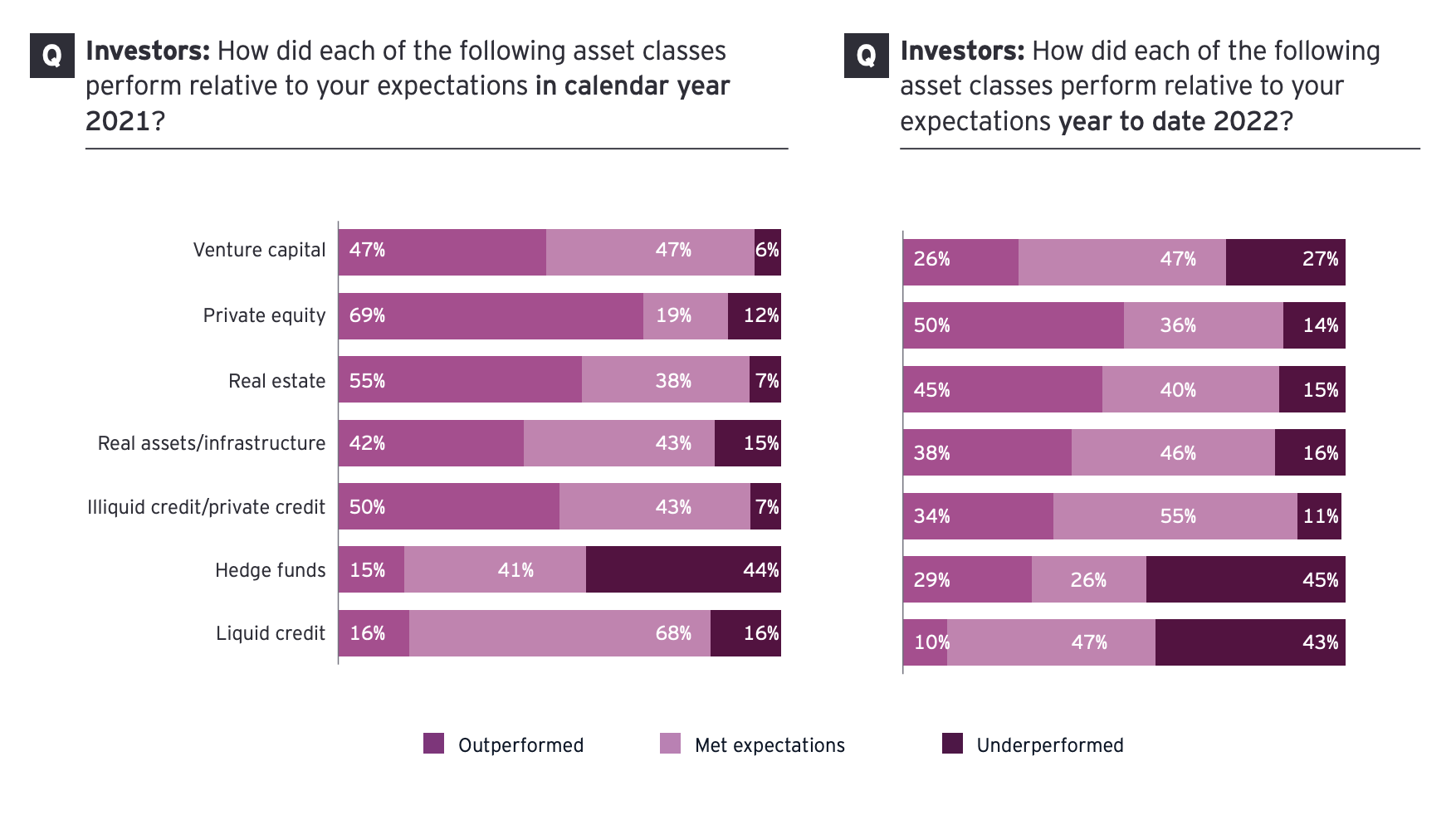 Most investors indicated they would hold their alternative allocations constant, but of those expecting changes, the majority intends to increase their allocations.
Product differentiation
The survey report found that managers are under pressure to seek growth and market differentiation through new product development.
Managers said they were expanding product offerings in areas such illiquid credit, real estate, private equity, venture capital and opportunistic or special situations.
In addition, funds are looking to increase growth by expanding distribution of their existing products to new customers and by incorporating differentiated investing criteria within their existing strategies, such as ESG or private market investing within a hedge fund.
Almost one-third of hedge fund managers have increased their private market investing in the last year.
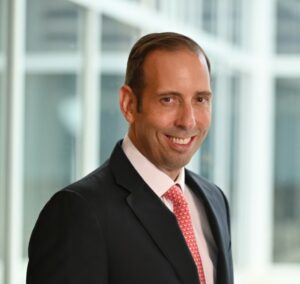
“Uncertainty, market conditions and changing investor preferences are creating new challenges for hedge fund managers,” said Jeff Short, Wealth & Asset Management Leader, EY Region of the Bahamas, Bermuda, British Virgin Islands and Cayman Islands. “Those who demonstrate resilience amid the shifting landscape, while also offering products that can generate returns from short-term market dislocations, are well positioned to attract inflows.”
Meanwhile, interest in sustainable and impact investing is growing. As many public pensions, endowments and foundations have their own socially responsible commitments, almost 15% of investors are required to invest in these products.
More than a quarter believe they will be required to in the next two to three years.
Investors seek to gain exposure to socially responsible offerings largely through socially responsible funds or separately managed accounts (SMAs); funds that have some portion of their assets dedicated specifically to investing to address ESG issues; and impact funds.
Industry maturing
The survey report noted a maturing of the alternative funds industry as many managers adopted a more long-term view to position their business and addressing future issues such as ownership and control transition.
Nearly one-third of managers indicated they are exploring their options with respect to their future operations, with investors more actively engaged than ever in conversations with managers around their succession-planning strategies.
Talent retention remains a challenge
Throughout the year employee retention remained one of the main challenges. Attrition was particularly high among the youngest generation of front- and back-office staff.
Firms responded by raising salaries and offering more flexible working terms.
“Demand for talent is high in today’s tight labor market and, for fund managers and investors alike, talent management is a high priority,” Short added. “By prioritizing diversity and inclusiveness, flexibility, competitive compensation and the expansion of role responsibilities, managers strengthen their ability to retain and attract talent.”
Post-pandemic, the industry’s workplace flexibility policies continue to evolve. Hybrid and remote work is replaced by more structured return-to-office policies resembling a pre-COVID-19 working environment and structure.
However, the need to balance competing stakeholder expectations of in-person engagement against employee flexibility remains.
The survey, fielded responses from 226 managers and 61 investors between May and August 2022 and was conducted in collaboration with Coalition Greenwich.
The report provided a basis for discussion among the asset management industry professionals who attended the EY Annual Alternative Fund Symposium – Cayman Islands, held last month. Topics discussed in panels and presentations included tangible investing, AI, innovation and trends in alternative investing.
Related Videos