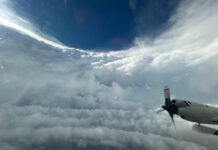
“We were falling out of the sky a couple thousand feet per minute, pitched 10 degrees nose up… I had a death grip.”
Lieutenant Colonel Stephen Pituch recounted one of his early experiences with the US government’s hurricane hunting agency during a special visit to the islands this week.
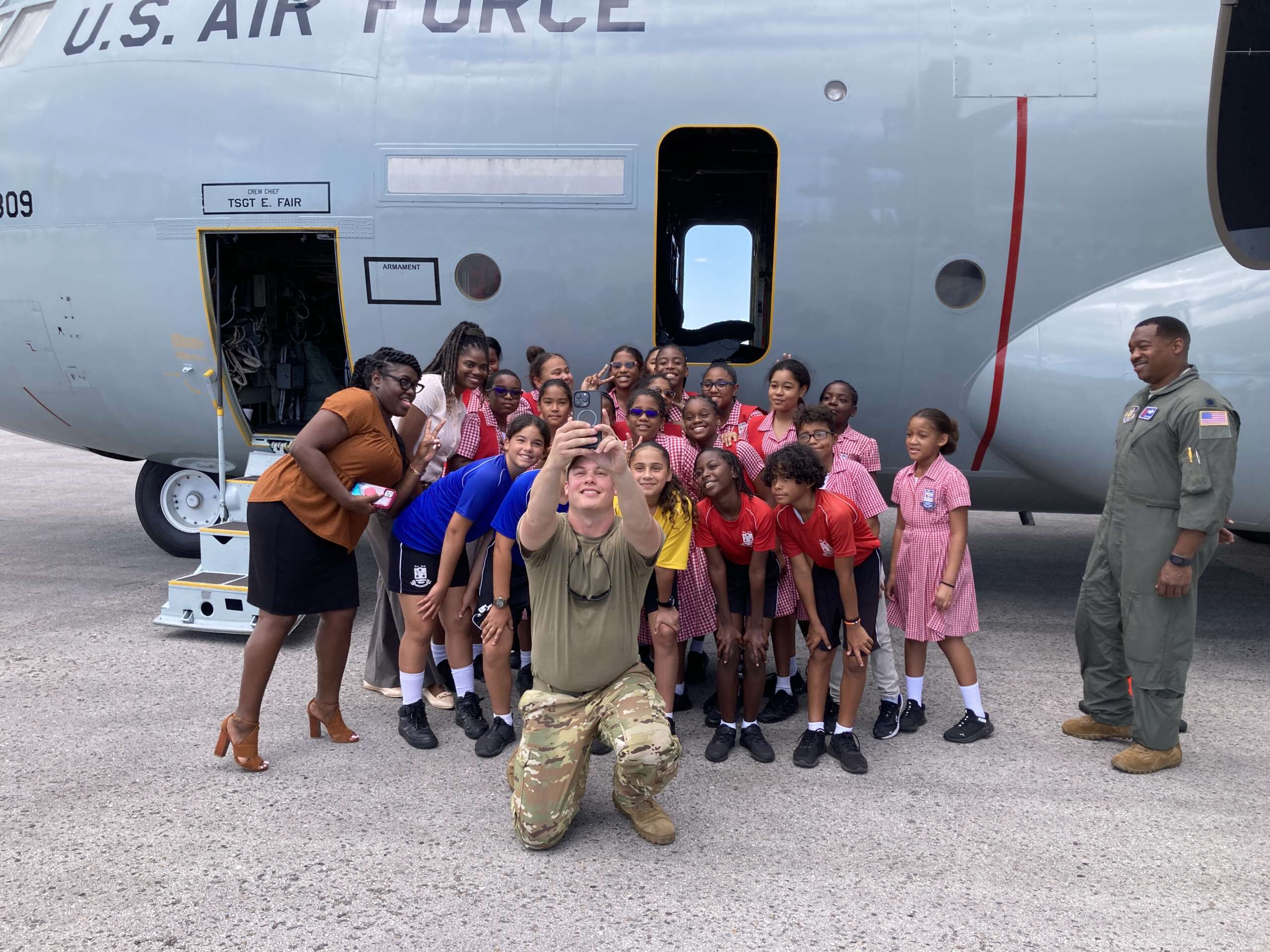
The United States Air Force’s WC-130J Hercules aircraft arrived in Grand Cayman as part of a regional tour to educate and prepare residents for the upcoming hurricane season.
During the visit, the 53rd Weather Reconnaissance Squadron, an elite United States Air Force Reserve Unit which form the aircraft’s crew, shared their unique experiences.
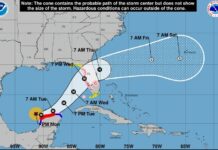
Squadron commander Pituch described to the Compass how his team regularly flies into storms to gather critical data in order to forecast their intensity and landfall.
Each of the 10 dedicated ‘Hurricane Hunter’ planes may pass through the eye wall numerous times, depending on where the storm is and how fast it is travelling, he said.
“You can’t get the data we get from a satellite,” Pituch added, “it has to come from the inside the storm itself.”
‘Falling out of the sky’
The lieutenant colonel said that during the regional visits, children often ask if flying into a storm is frightening, but, he said it only is if the plane is “not doing what it’s supposed to do”.
He spoke of a time when he started flying with the Hurricane Hunters and all of the aircraft’s auto systems were overpowered by a storm.
“We had already penetrated the eye wall five times that night, it was 2am and we were all relaxed at this point, and on that last pass of the storm it really beat us up,” he said.
“It kicked all the systems off and we were falling out of the sky a couple thousand feet per minute, pitched 10 degrees nose up.
“I looked over at the instructor that was sitting next to me and he just said, ‘We’ll find good air eventually’. He barely even put his book down while I had a death grip.”
Despite the early scare, Pituch, who has piloted combat planes all over the world, said he enjoys his work with the Hurricane Hunters immensely.
“Every year we deploy, we go fly and we save lives. We’re doing something that matters to a lot of people. It’s a very rewarding job.
“In some of the less developed countries… that aren’t designed to withstand even the force of a category one, if we just give those people information, they can continue living.”
The collected data is sent in real time via satellite directly to the US National Hurricane Center for analysis and use by hurricane forecasters.
An inspiring visit
Hundreds of schoolchildren were given exclusive access to the aircraft and visiting crew at Owen Roberts International Airport on Wednesday, 19 April.
The pupils, aged 8 to 12, from both public and private primary schools also learned about the role local agencies play in hurricane preparedness and response.
The Royal Cayman Islands Police Service, Cayman Islands Airports Authority and the Cayman Islands Regiment all set up education booths for the children at the airport.
Also hosting booths were event coordinators: Cayman Islands National Weather Service and Hazard Management Cayman Islands.
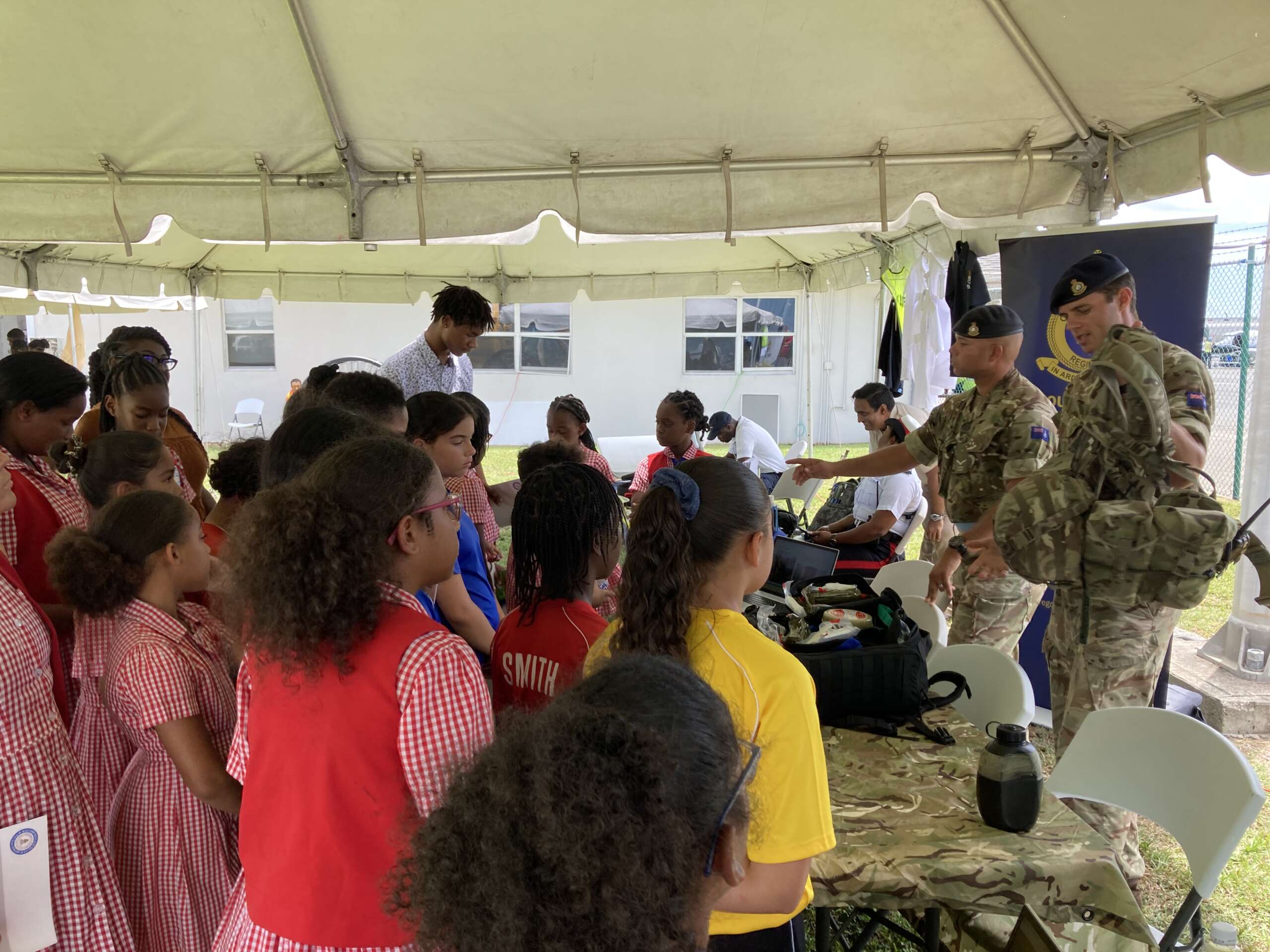
Danielle Coleman, director of Hazard Management Cayman Islands, said, “We find that teaching kids about preparedness is a great way to get their parents to get ready.”
While John Tibbetts, director general of Cayman Islands National Weather Service, said the visit aimed to “inspire the students”.
The event is part of the National Oceanic and Atmospheric Administration and the United States Air Force Reserve’s annual tour of Latin America and the Caribbean.
A Hurricane Hunter visited the Cayman Islands 55 years ago and there have been four visits since, Coleman said.
Four members of the National Hurricane Center, the US agency responsible for tracking and predicting tropical weather systems, also arrived in Grand Cayman as part of the tour.
They met with Premier Wayne Panton, who is also Minister for Sustainability and Climate Resiliency and the current chair of the Caribbean Meteorological Organization.
Atlantic hurricane season runs from 1 June to 30 Nov.
For the latest information on storm activity in the Cayman Islands, as well as information on how to prepare for hurricane season, visit Storm Centre.
Related Videos