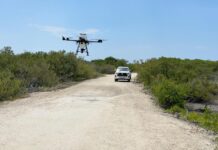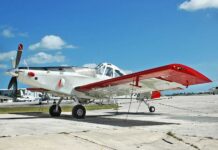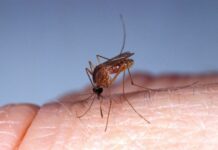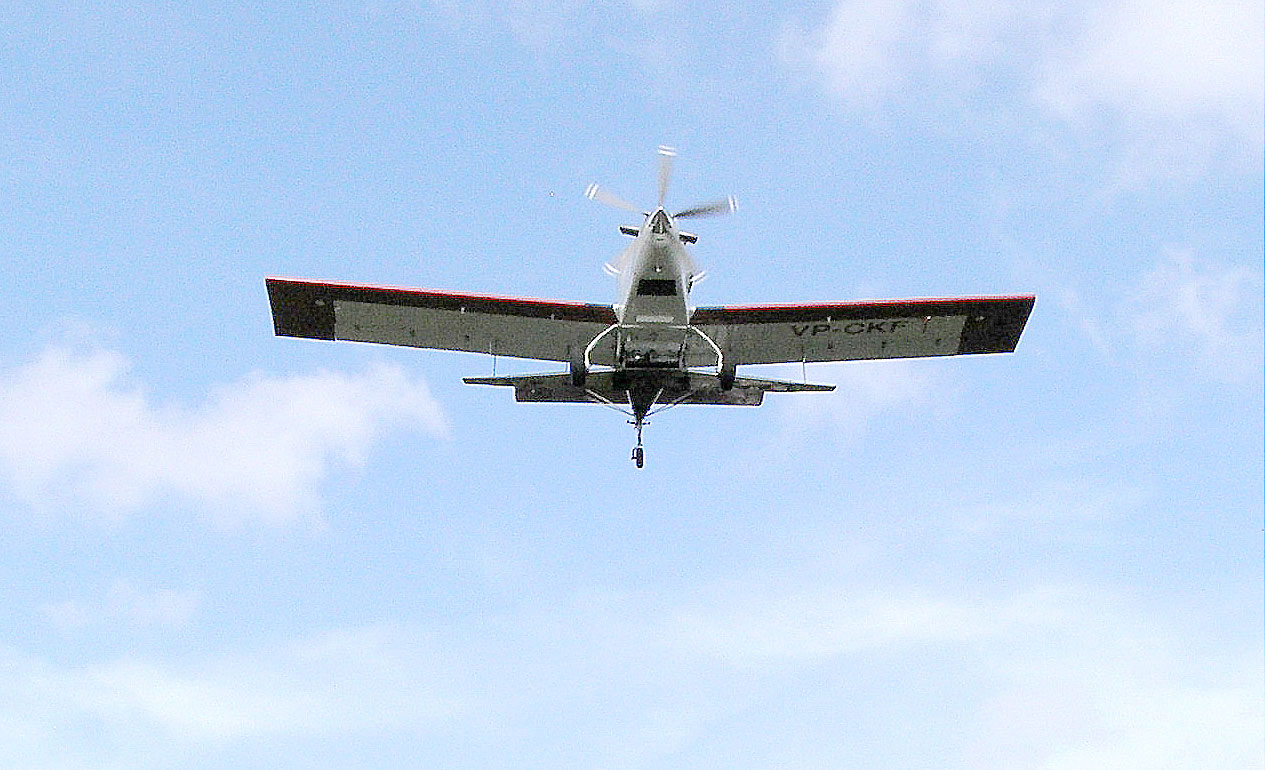
The Health Ministry says it expects the Mosquito Research and Control Unit to resume aerial spraying this week as the local mosquito population increases.
The Ministry, in a statement Friday evening following a Cayman Compass article on the absence of the MRCU planes, said the MRCU has been unable to conduct any aerial operations since 14 April.
“Both the Ministry and MRCU look forward to having aerial operations resume as soon as possible next week and apologises for the current necessary inconvenience,” Ministry Chief Officer Nellie Pouchie said in the statement.
Dr. Alan Wheeler, MRCU Director, addressed the increased number of mosquitoes in the statement saying it is due to high tides.
“Any tide that is above 30cm will cause flooding of the mangrove areas. On 6th April, the tide rose above this level and increased gradually until it reached a peak of 64cm on the 19th April. This is the highest-ever tide recorded by MRCU. The result of this extended high tide has been to hatch mosquito eggs that have remained dormant for many years,” Wheeler said.
MRCU insecticide applications
MRCU insecticide applications, the statement said, are conducted based on a daily evaluation of the mosquito situation, not on a set schedule.
Since the onset of the current mosquito emergence on 13 April, MRCU has conducted 40 separate ground missions across Grand Cayman and treated a total of 68,143 acres.
The ministry said it was working closely with MRCU to help educate both residents and stayover visitors of MRCU’s aerial operations in light of complaints that have been received about the flights.
Ben Tresidder, MRCU’s aerial applications Acting Chief Pilot, explained the unit’s aerial operations which fall into two general categories: adulticiding and larviciding.
“Adulticiding, utilizing (ULV) ultra-low-volume liquid targets flying mosquitoes that are looking for a blood meal, and thus due to the activity period of the insect generally take place in the evenings. Larvaciding operations, by contrast, are generally granular applications that target mosquito larvae, with the aim of preventing them from developing to become flying mosquitoes. For safety reasons these larviciding operations take place during the hours of daylight,” he said.
Adulticiding and larviciding involve differing aerial application techniques, he said.
“One noticeable difference is that while adulticiding operations may mean a single pass over a particular area, larvaciding operations often require several passes in the same vicinity and may mean that our aircraft ‘lingers’ for an extended period of time,” Tresidder said.
MRCU’s aerial and ground operations, the Ministry said, are essential to prevent the transmission of mosquito related illnesses in the Cayman Islands.
To date, there have been no reported cases of mosquito related illnesses in Cayman in 2023.
The Ministry, MRCU and the Public Health Department reminded the public to continue safety practices when outside during the peak mosquito hours (sunrise and sunset).
“This includes wearing long sleeve clothing and utilising your mosquito repellent while outdoors. Mosquito repellant containing 50% DEET can also be used when outside during peak hours for added protection. Additionally, the community is reminded to drain still water in outdoor receptacles (tyres, containers, flower pots, etc) to prevent mosquito breeding, and to ensure doors and window remain closed if they are not screened,” it said.
The public is also encouraged to contact the MRCU, for more information or to file a mosquito related complaint, on 949-2557.
Related Videos