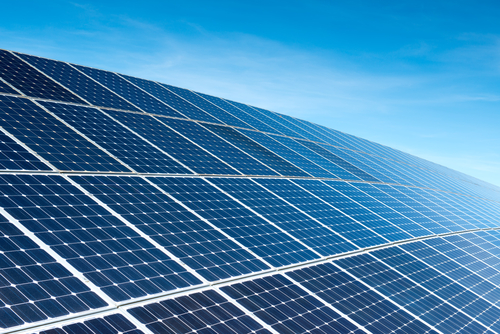
Renewables experts have asked the government to allow Cayman residents to install solar and battery energy storage systems at their homes or businesses without prior permission.
In a detailed white paper, the Cayman Renewable Energy Association (CREA) requested that an official policy be adopted giving consumers the legal right to set up their own systems.
The easy-to-install technology will provide a cost-effective energy solution, the non-profit association said, as well as support life safety and quality, and help with grid resiliency.
The report was presented to the government’s Energy Policy Council on 18 April, CREA president James Whittaker told the Compass, and will soon go to the public and stakeholders for review.
Whittaker explained that currently people have to ask Caribbean Utilities Company for permission to install private renewable energy systems, but, he said, it should be a right.
“Any utility objections to this right are not for grid stability reasons but for the protection of profits and integrated monopoly control,” he said.
“Cayman’s consumers want renewable energy to be a part of their legal rights and the government should ensure they have it.”
In response, CUC said it supports consumers having the right to adopt renewable energy as long as it does not negatively impact other customers or stakeholders on the grid.
On-demand use
Solar-plus-storage is the integration of battery energy-storage systems with solar energy-generation systems, allowing for on-demand use.
As technology advances, these systems are becoming cheaper, and more energy utility companies around the world are adopting and integrating them, the white paper explains.
Cayman’s sustainable energy industry has sold and installed dozens of battery systems in the local market, pointing to a strong consumer demand, it says.
Most systems in the Cayman Islands are used for back-up power only, but they are capable of providing greater and broader benefits.
And that can happen with the right policies, regulatory programmes and incentives in place to take advantage of their “advanced on-demand functionality”, the report says.
CUC piloted its own at home battery storage project in 2021, but the CREA paper claims it has been unsuccessful “without a single customer system installed”.
‘Democratising’
The 12-page white paper outlines the benefits of solar and battery energy storage systems, and the reasons the adoption of systems up to 20 kilowatts should be encouraged.
“Renewable energy is democratising,” Whittaker told the Compass. “It’s one of the things that integrated monopoly utilities fear.
“Unlike centralised fossil fuel generation, [with] renewable energy generation, we can all have a piece of it.”
The paper says benefits can generally be split into two categories – individual and grid. But a major benefit to both is the reduction of greenhouse gas emissions.
The current production of electricity requires the burning of diesel fuel. In 2014, this accounted for over 50% of the Cayman Islands greenhouse gas emissions.
Renewable-generated electricity produces much-lower greenhouse gas emissions.
One of the individual benefits of taking on the solar-plus-storage technology is the reduction in electrical grid reliance, allowing consumers to have access to power during outages.
“Knowing that key aspects of the home can be powered… in case of these disruptions can bring great peace of mind and even life safety benefits,” the paper says.
The technology also allows consumers to have greater energy security during global economic and geo-political disruptions.
And it could, with the correct regulations, allow residents to create energy communities allowing people to share energy with family, friends and neighbours.
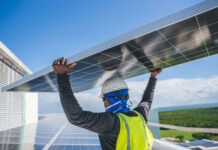
The systems are easy to access, and to install within the home, and are modular, the association says in its white paper, with the ability to add more batteries over time as needed.
Another benefit for the consumer is that they maximise existing rooftops and developed space and there is less reliance on developing Cayman’s natural land and habitats.
More sustainable
Cayman’s public power provider CUC will also benefit because there will be a reduced peak on demand, the white paper says, due to load shifting.
This moves electrical consumption to a different interval of time, while keeping total consumption constant, making day-to-day operation more sustainable.
The home-based technology will also allow for dispatchable generation – a source of electricity that can be programmed according to the market’s needs and the grid’s capacity.
Allowing consumers to adopt this type of renewable system reduces solar power peaks and frequency destabilisation during sunnier and less sunny parts of the day.
Finally, the utilities company will benefit from the creation of virtual power plants – networks of smaller energy-producing and energy-storing devices.
The white paper also went into detail on the “perceived negatives” of the system such as its relatively large initial cost, longevity of hardware and lack of end-of-life recycling facilities.
Whittaker said to counteract costs, the association is looking at financing solutions to ensure that renewable energy systems are accessible to everyone.
Need for adoption
As of February 2023, renewable energy accounted for just 3% of Grand Cayman’s energy production, although the government’s National Energy Policy target is 70% by 2037.
This is mostly due to regulatory issues and constrained capacity, the white paper says, adding it is a not a reflection of the available technology or economic viability.
It suggests that consumers are being limited and often totally prohibited from adopting renewables systems due to poor capacity planning and implementation by CUC and regulator OfReg.
“Look no further than the volatile and restricted solar adoption levels for last five plus years as evidence,” the paper says.
The association concluded its white paper by asking for the consumer’s right to renewable energy to be supported as official government policy.
The utility, regulator and planning department will still continue to set technical standards for these systems as per normal, it said.
The paper added that the systems must be a maximum of 20KW AC of solar, must include battery storage and be capable of providing grid benefits.
National Energy Policy
The Cabinet-appointed Energy Policy Council is responsible for the monitoring, review and evaluation of the National Energy Policy.
It includes representatives from the public and private sectors, including the energy regulator, renewable energy advocacy groups, the utilities and environmental interests.
The white paper was submitted as part of the council’s five-year review of the policy which is ongoing and will involve public consultation, a Ministry of Sustainability and Climate Resiliency spokesperson told the Compass.
More about this process and updates on the upcoming public consultation can be found at energy.gov.ky
A CUC spokesperson said the company supports consumers having the right to adopt renewable energy as long as it does not negatively impact other customers or stakeholders on the grid.
They added that the company believes solar and battery energy storage systems will play a big role in the enhancement of sustainability and resiliency of energy in Grand Cayman.
“CUC has continued to work on the ongoing pilot battery project referenced in the white paper and continues to make progress in this area,” they told the Compass.
“Looking forward, CUC is committed to continuously evaluating how best to incorporate solar and storage together to be able to address the challenges faced.”
Editor’s Note: The story has been updated to add responses from the Ministry of Sustainability and Climate Resiliency and CUC.
Related Videos