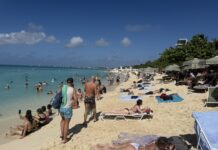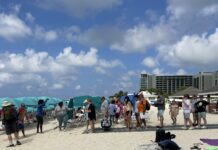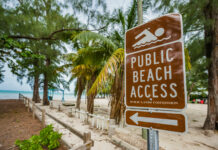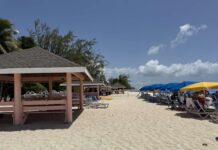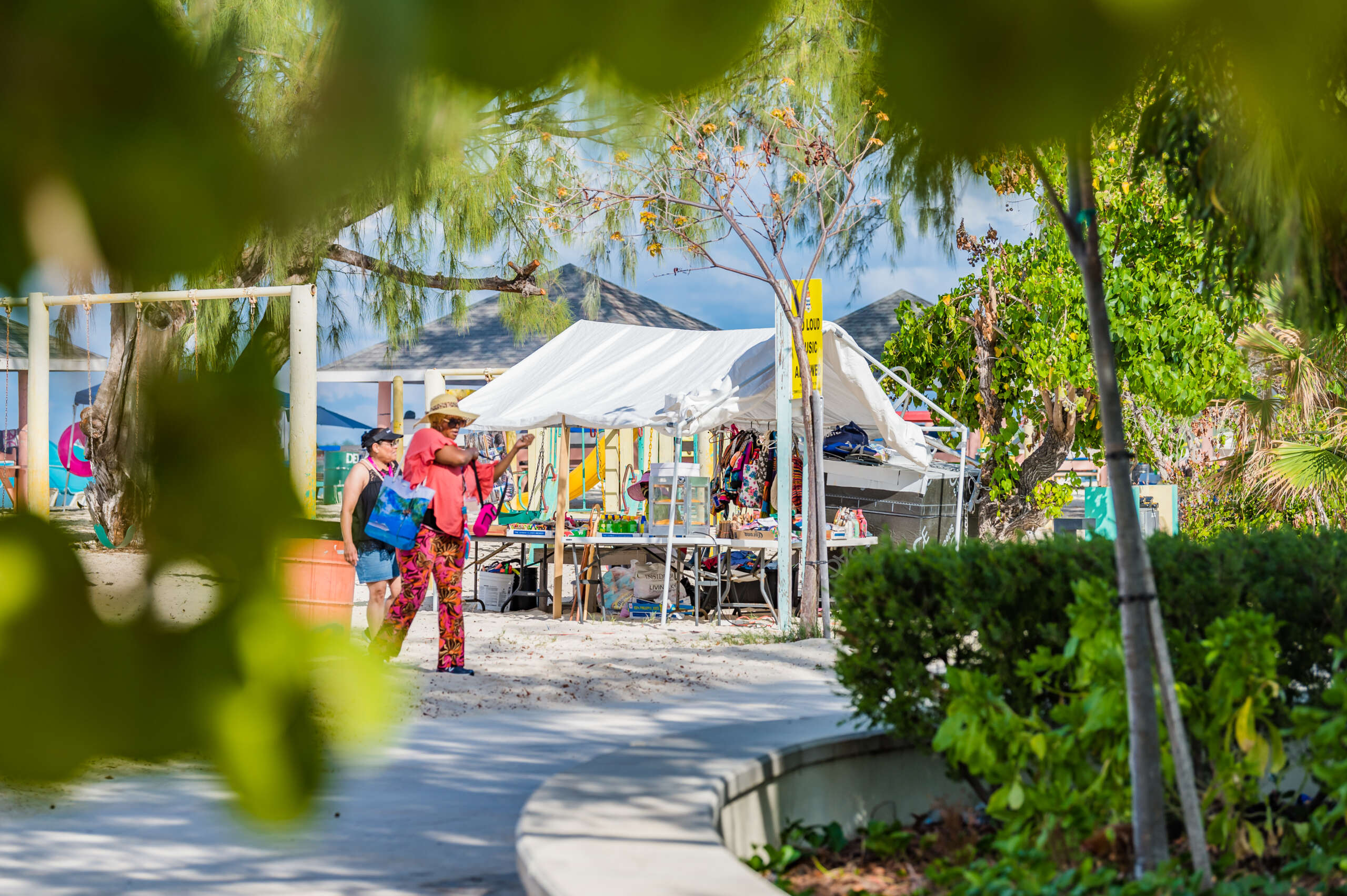
Caymanians who run businesses selling goods and services on a popular stretch of Seven Mile Beach can at long last apply for a permit to allow them to operate there within the law.
This comes just months after the Public Lands Commission made threats to remove sellers from Public Beach, despite no avenue being in place to allow them to work legally.
But Cabinet now has approved the Seven Mile Beach Vendor Policy which will serve as a guide for the commission to process permit applications and manage the area.
Commission chair Woody DaCosta, in a press release issued Friday, said the ultimate goal of the policy is to give the public access to the organised provision of food, drinks and other services.
It clearly defines the role of a vendor, he said, along with parameters which “strike a balance” between their interest and the good of the general public.
Long-awaited
In April, Tourism Minister Kenneth Bryan told the Compass a policy was in the works, saying it would allow traders to “know what their future’s going to be”.
Referring to a violent incident involving a vendor, he added, “Without properly regulated behaviour, it can negatively affect our tourism product, and we don’t want that.”
At the time, several sellers said they were looking forward to finally having access to permits to operate on the beach after years of confusion and dispute with the commission.
In March, cease and desist notices were issued to 17 traders during an enforcement operation. However, this was not followed up with any arrests.
Chief inspector Winsome Prendergast said the new policy will improve service levels at the commission’s inspectorate, which monitors and manages use of public lands.
“It provides a clear guideline for processing applications and a fairer and more transparent process of how public lands are regulated,” she said in the release.
“I want to remind prospective vendors that public lands are for the use and enjoyment of the general public.
“Therefore, when a vendor permit is issued, you can only operate based on what the permit allows you to do.”
Costs and rules
To apply for the permit, sellers will need to pay a fee of $100 and then $75 per year. This can be paid at any post office or the Public Lands Commission Inspectorate office.
Additional annual fees include $250 per boat, $50 per jet ski and $250 for floating devices.
Vendors will also need to supply a copy of a government-issued photo ID, plans to clean beach area used, proof of insurance and, if required, a trade and business licence.
During the application process, businesses will be rated on their experience, operating schedule, product-and-service mix, cultural relevance and environmental sustainability.
Vendor categories comprise beach gear, beach lockers, beach chairs, water sports, food and beverage, food trucks, local produce and cultural wares.
New rules state sellers will be restricted to operating from the blue-and-green vendor kiosks, where electricity will be provided, with collapsible tents allowed in that area at the discretion of the commission.

Only food-and-beverage stalls and trucks, local produce sellers, and water-sports and beach-gear assistants will be allowed to operate outside the kiosks.
On public holidays and weekends, only food-and-beverage trucks and local produce vendors will be allowed to operate.
Sale of alcohol is prohibited. However, the commission may issue occasional permits at the site allowing vendors to sell alcohol at their discretion.
Littering by any seller is also strictly prohibited. Vendors must provide waste bins for their patrons to use, and empty them daily.
Food sellers must have a basic food-handling certificate from the Department of Environmental Health and access to a portable sink with hands-free water distribution.
Water-sports vendors must have a lifeguard certification, inclusive of CPR and first aid, from the Red Cross or other suitable organisation.
Beach-gear vendors are required to receive CPR and first-aid training from the Red Cross or other suitable organisation.
The application form and policy can be found on the PLC website.
Related Videos