

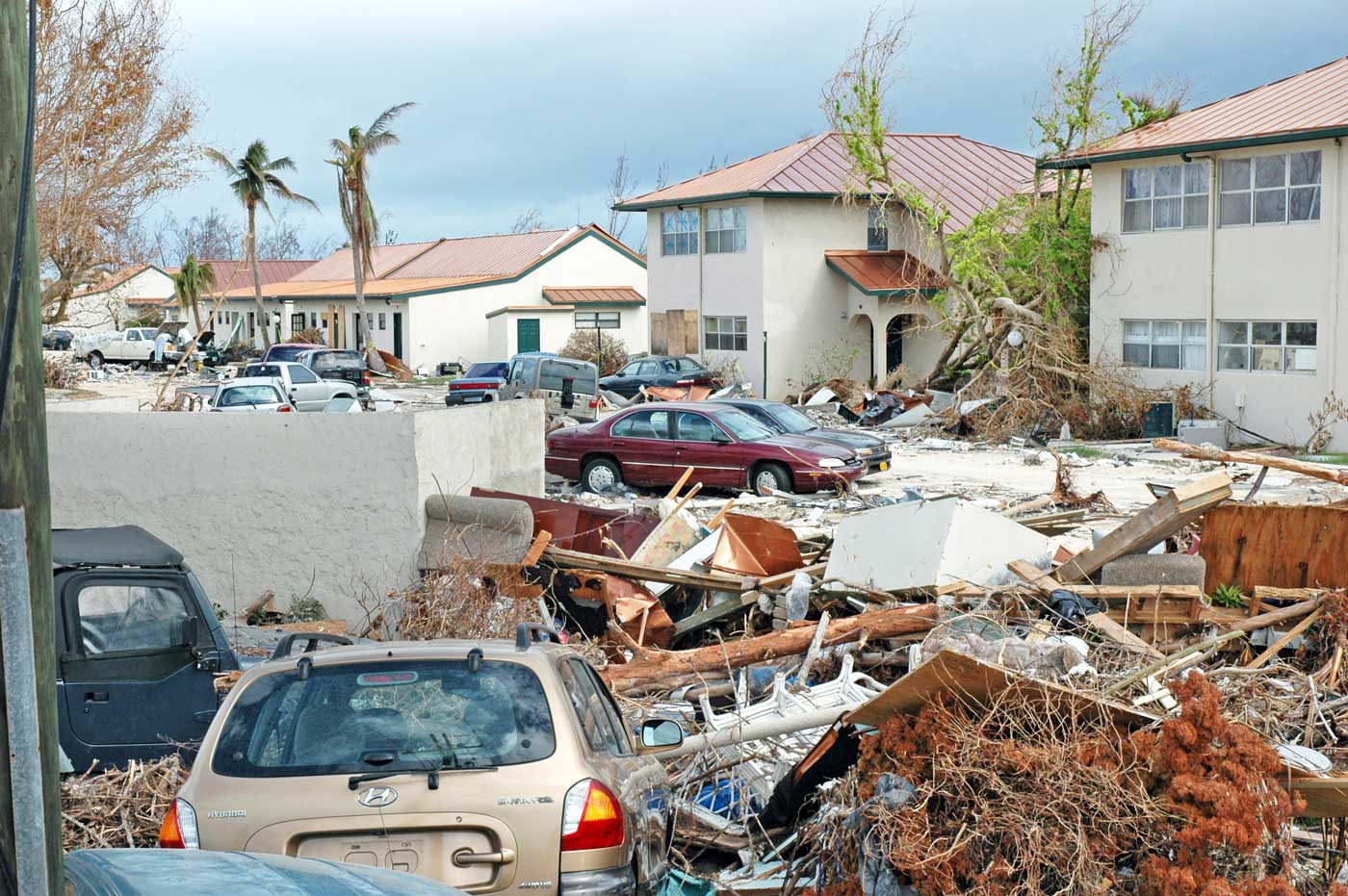
A significant rise in home insurance premiums is proving to be both a cost-of-living challenge and a climate crisis in the making for the Cayman Islands.
Hikes of around 40% in monthly premium costs – on top of mortgage, rent and electricity bill increases – are causing problems for household finances. As we reported last week, the toll of rising bills and stagnant salaries is proving too much to manage for some families.
Inflation, interest rate increases and supply chain challenges are contributing to the general cost-of-living pressures.
But the niche reasons behind the insurance rate increases are potentially more worrying. Increased storm activity – not just in Cayman but also in the US and the wider Caribbean – has been cited as a key reason for the surge in costs.
And with climate change analysts projecting an even greater threat from intense storms in the coming decades, there is potential for costs to increase further and for insurance to be harder to obtain.
How much have insurance rates gone up?
Home insurance rates are estimated to have gone up by around 40% on average. However,
the Compass is aware of condo developments that have seen increases of close to 100%. For condo owners, that is an extra $200-a-month. The cash costs are higher for home owners, with larger properties, but the percentage increases have not been as dramatic.
Why are they increasing so much?
The primary reason for premium increases in Cayman is the cost of obtaining reinsurance. For the uninitiated, that is insurance for the insurance companies.
In a market update, earlier this year, global broker Aon warned that prices were expected to rise between 15% and 30% for policy renewals. It cited new pricing models – factoring in climate change projections – as part of the reason.
Robert Muir-Wood, chief research officer with global catastrophe modelling company Risk Management Solutions, told the Compass payout from recent hurricanes had impacted the reinsurance industry, putting an upward pressure on prices.
Hurricane Ian, which brushed Cayman before barreling into Florida and the Carolinas last
October, was “the final straw”, he said.
Large payouts from previous storms in the region, including Dorian, Irma, Maria and Harvey, will also have been factored into the rate increase, he said.
What about the supply chain challenges?
The cost of raw materials and supply chain challenges, particularly for small islands, has exacerbated the problem.
Property consultancy BCQS International reported that building costs have gone up 21% in
Grand Cayman from 2020-2022. That directly impacts insurance premiums, which are based on an assessment of the replacement value. Having an outdated valuation won’t help, says Rick Riyat of BCQS. While it might mean your premiums are cheaper, you will find yourself under-insured and saddled with the repair bill if your property is damaged.
Those two factors – increased replacement costs and the increased cost of reinsurance – have conspired to create a situation where premiums have almost doubled for some home owners.
Why are storms outside of Cayman a factor?
A major disaster in the US, like Hurricane Ian, for example, has an outsized impact on the industry.
Reinsurers were left with an estimated bill of more than $50 billion after Ian and the
cumulative effect of that impact, alongside other recent hurricanes, led to the spike in prices.
Cayman is a downstream market that feels the impact of events elsewhere, says Muir Wood, who first came to Cayman in the 1990s, when government sought advice about a spike in interest rates.
At that time, the global market had been hit by a number of events, not just storms.
Hurricane Andrew was one factor, but the Piper Alpha oil platform explosion in the North Sea and the Northridge earthquake in California, severely impacted the reinsurance market.
Jack Leeland, CEO of Cayman insurance firm Saxon, points out that while recent storms in
the region have had an impact, Cayman is at the mercy of global forces.
Inflation, Russia’s war in Ukraine, and an increase in other natural disasters, such as
wildfires and floods, have all had an effect.”
What has climate change to do with it?
Climate change is a factor in the sense that it is believed to be driving extreme weather
related events – including storms, wildfires and floods.
There’s also global risk assessments, such as the United Nations predictions of more
intense hurricanes as the oceans warm, which analysts will factor into the mix when deciding where to offer coverage and at what cost.
Aon, in its ‘state of the market’ briefing, noted that industry pricing models had been updated to consider various factors, including climate change.
Muir-Wood acknowledged this would likely be a factor, but said specific disasters and the level of pay-outs required (whether linked to climate change or not) were the key determinate of costs in the reinsurance market.
There remains some skepticism, however, about how directly climate change links to
specific weather events and it is likely that the market will be more responsive to hard losses.
What’s the best case scenario?
Most analysts expect the increased rates to bring more reinsurers into the market, putting
the brakes on the price rises. A relatively benign hurricane season would also assist.
“I expect the rates to stabilise,” says Arthur Bogle, CEO of Cayman-based Bogle Insurance Brokers. But he adds a note of caution that many in Cayman will not yet have felt
the full increase of the shift in the market, with premium increases only kicking in when annual policies are renewed.
“By the end of the year, everyone should have their rates up to the current market. I am hoping that the rates will not continue to increase from there if we have a clean hurricane season,” he added.
The Financial Times reported at the end of last year that several key players had stopped writing new property and catastrophe reinsurance business altogether.
“That’s usually the cue for capital to come flooding into the market and prices to fall again,” the paper noted.
What’s the worst case scenario?
An extremely active hurricane season – including another storm that brings severe financial losses to the US – would likely compound the impact of recent disasters, keeping prices high and making insurance hard to obtain in some areas.
But the real concern for Cayman, says Muir-Wood, is a direct hit on a par with 2004’s
Hurricane Ivan. While that is a frightening prospect for a number of reasons, he cautions that it could have long-term impacts on Cayman’s insurability.
“If the market decides that events of that magnitude happen every 30 or 40 years on average, and not every century, then you have a problem, because the market may conclude they can’t actually generate enough premiums to pay for the losses and, at that point, they could withdraw,” he said.
He has similar fears for small islands like Dominica and the Bahamas that have had huge
impact storms in recent years. That’s very much a doomsday scenario, however.
What would be the impact of losing insurability?
The consequences for Cayman of not being able to obtain affordable catastrophe reinsurance would be extreme.
Investment in Cayman would become far less viable. Banks would be unlikely to make home loans without insurance, with severe impacts for development, housing and businesses.
“Cayman has to do everything it can to prevent that from happening,” says Muir-Wood.
What can Cayman do as a jurisdiction to prevent that?
Obviously, Cayman has no control over the weather. What it can control is the ability of its
buildings to withstand a severe storm. Building above sea-level, ensuring new construction is up to a proper wind code, and developing away from historic flood zones are among key actions already happening in Cayman.
“The only thing that an island can do is to absolutely focus on driving down the level of
vulnerability,” says Muir-Wood.
If Cayman can demonstrate its capacity to withstand a severe storm without accumulating
massive financial losses, then it should be able to maintain its insurability, even amid an increased threat level from intense storms.
While Cayman built back stronger after Ivan, tightening its building code and utilising new construction methods to add resilience, vulnerability still exists in the many pre-Ivan
developments. There is already a difficult in insuring wooden homes, for example.
What can individuals do?
For new home owners, Bogle advises making sure the building is up to modern codes and is at a minimum elevation of at least seven feet above sea level.
Limiting the size of a home can reduce insurance costs.
Related Videos









Why do we have to pay for another country’s wildfires? Countries that have wildfires have far more reasonable insurance premiums. They obviously do not contribute to our hurricanes to the same extent.
Why is our insurance in Cayman far above the cost of other Caribbean Islands?
People living in condominiums and apartment complexes have no choice but to insure for every possible disaster and they are SUFFERING under the weight of hefty increases. Government NEEDS to do a full investigative report into property insurance premiums in the Cayman Islands.