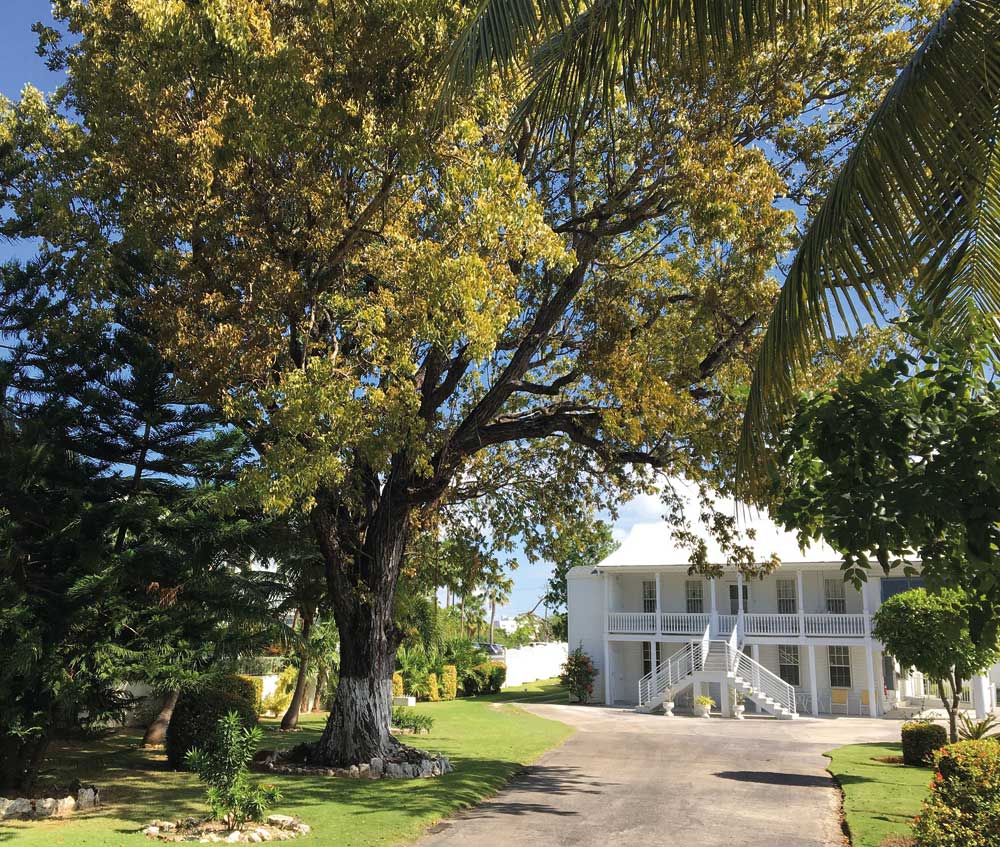
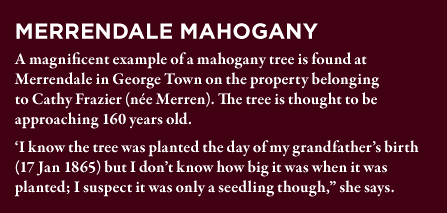
 It’s a tree that grows across the Cayman Islands, but few know of the importance mahogany played in the country’s history.
Renowned for its strength, mahogany has been used to build some of the world’s finest furniture, and by the mid-1700s it surpassed turtles as Cayman’s most valuable export, for a time.
In fact, it is said that Red Bay was named for the mahogany dye which stained the water while the wood was awaiting shipment.
It was taken to Kingston, from where it went to England and other countries. In the 18th century, the majority of the world’s mahogany was exported from Jamaica, including the wood that originated in Cayman.
CHIPPENDALE FURNITURE
Mahogany became the favoured wood of London cabinet maker Thomas Chippendale (1718-1779). He was regarded as the leading furniture maker of his era and his sought-after designs are still reproduced globally today.
The species that grows in Cayman is West Indian mahogany (Swietenia mahagoni), which was particularly valued for its dense wood – taking up to 80 years to grow and harvest – giving extra strength to furniture.
Historical records show that the first formal land grants in Grand Cayman, between the 1730s and 1740s, were made mainly to cut mahogany.
The trees can be seen across the island, growing on their own, rather than in clumps, and change colour throughout the year, from bright green, when the leaves are new around May, to a greenish-rusty gold as they age.
Further information about the fascinating story of Cayman’s mahogany can be found on the blog by natural historian Ann Stafford, CaymANNature at caymannature.wordpress.com/2022/06/12/cayman-islands-founded-upon-the-seas-and-mahogany/.
This article appears in the Spring/Summer 2023 issue of InsideOut magazine, now available at magazine stands and delivered to select homes.
Related Videos