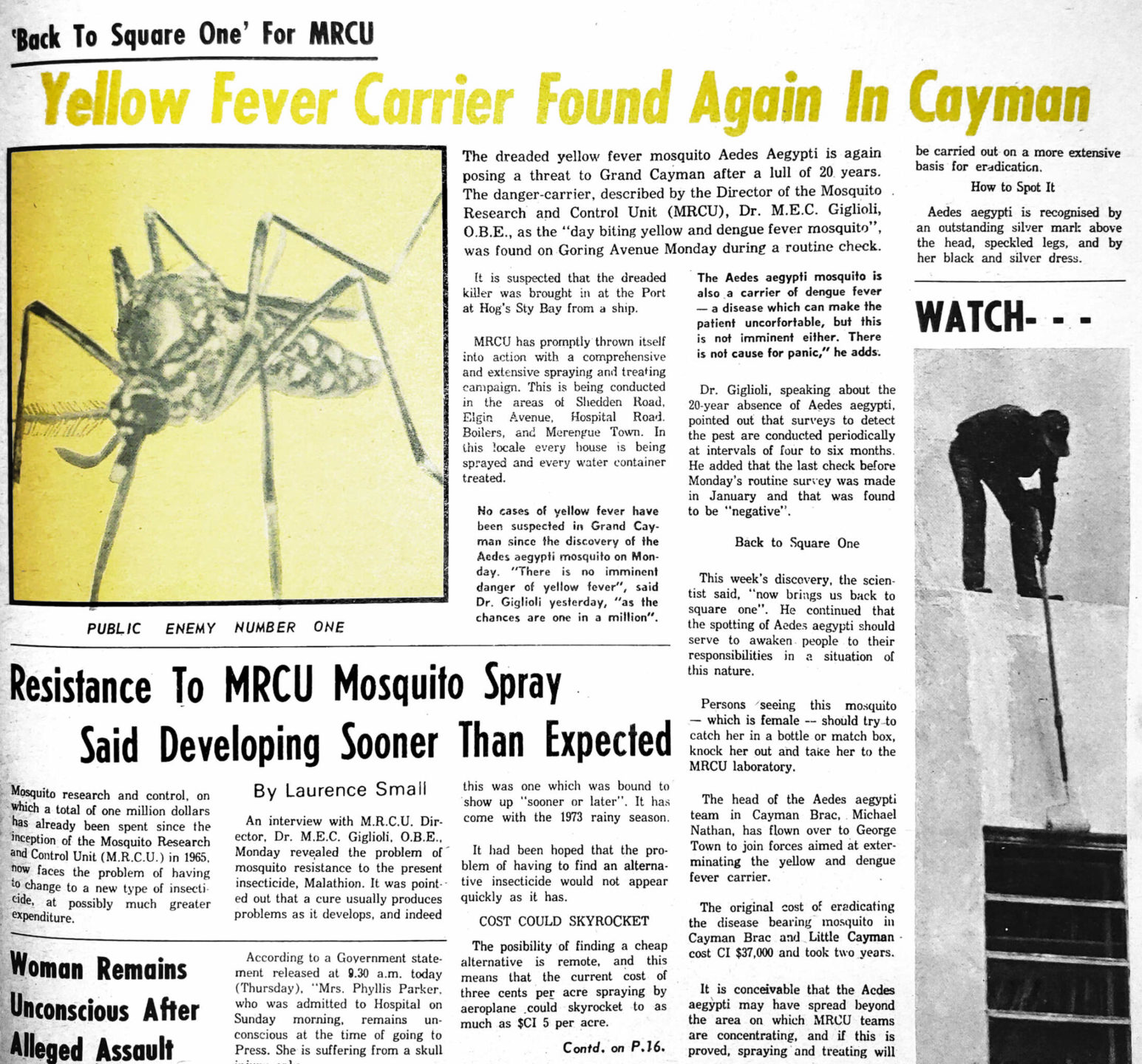
A well-known species of mosquito dominated the front page of the 21 June 1973 Cayman Compass. The main story warned that “the dreaded yellow fever mosquito Aedes Aegypti is again posing a threat to Grand Cayman after a lull of 20 years”. The founder of the Mosquito Research and Control Unit, Marco Giglioli, said that the “day biting yellow and dengue fever mosquito” was found on Goring Avenue, and it was believed the insect was brought in on a ship at Hog Sty Bay. While there were no suspected cases of yellow fever in Grand Cayman, Giglioli said the discovery of the mosquito “brings us back to square one”.
To make matters worse, the second story explained that the development of resistance to the insecticide Malathion among Aedes aegypti had occurred sooner than expected. After spending $1 million on mosquito research and control, the unit faced the difficult problem of finding a cheap alternative insecticide, meaning “that the current cost of three cents per acre spraying by aeroplane could skyrocket to as much as $CI 5 per acre”.
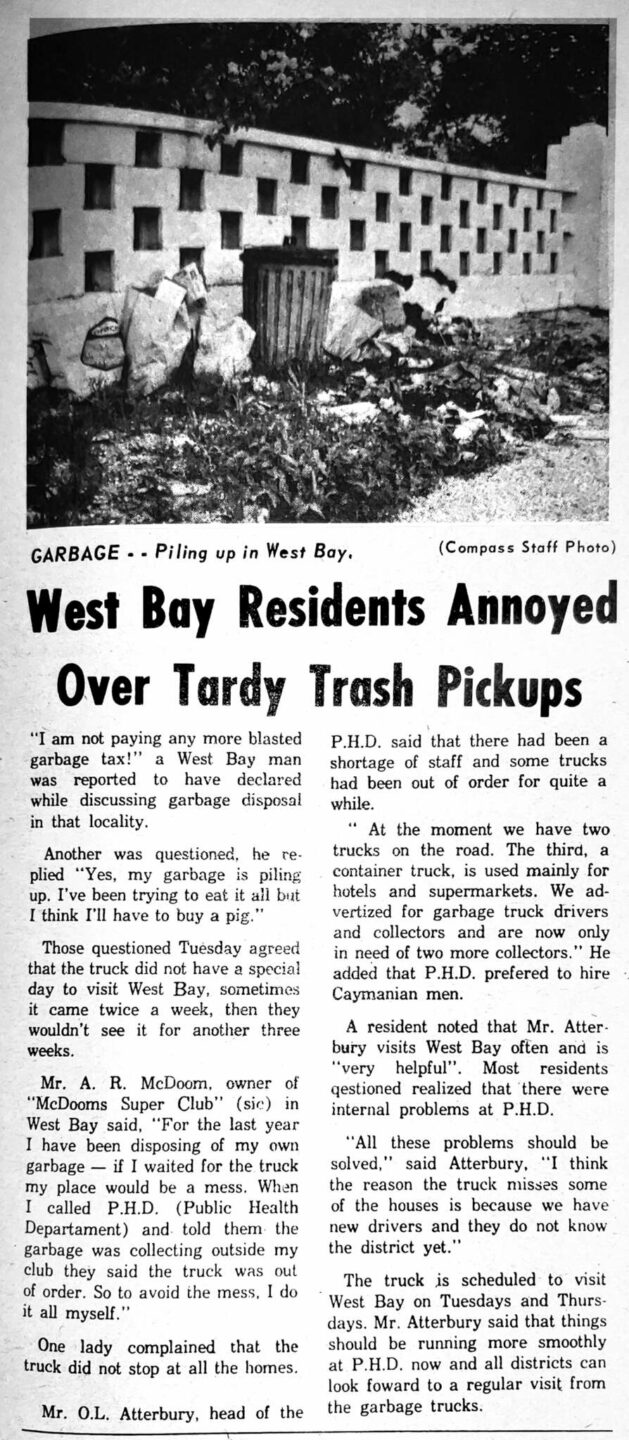
A problem of a different sort was noted on page 3: ‘West Bay Residents Annoyed Over Tardy Trash Pickups’. The rubbish was piling up on the streets, with people in the area noting that the truck did not seem to have a specific day to come around, and “sometimes it came twice a week, then they wouldn’t see it for another three weeks”. One person interviewed told the Compass, “Yes, my garbage is piling up. I’ve been trying to eat it all but I think I will have to buy a pig.”
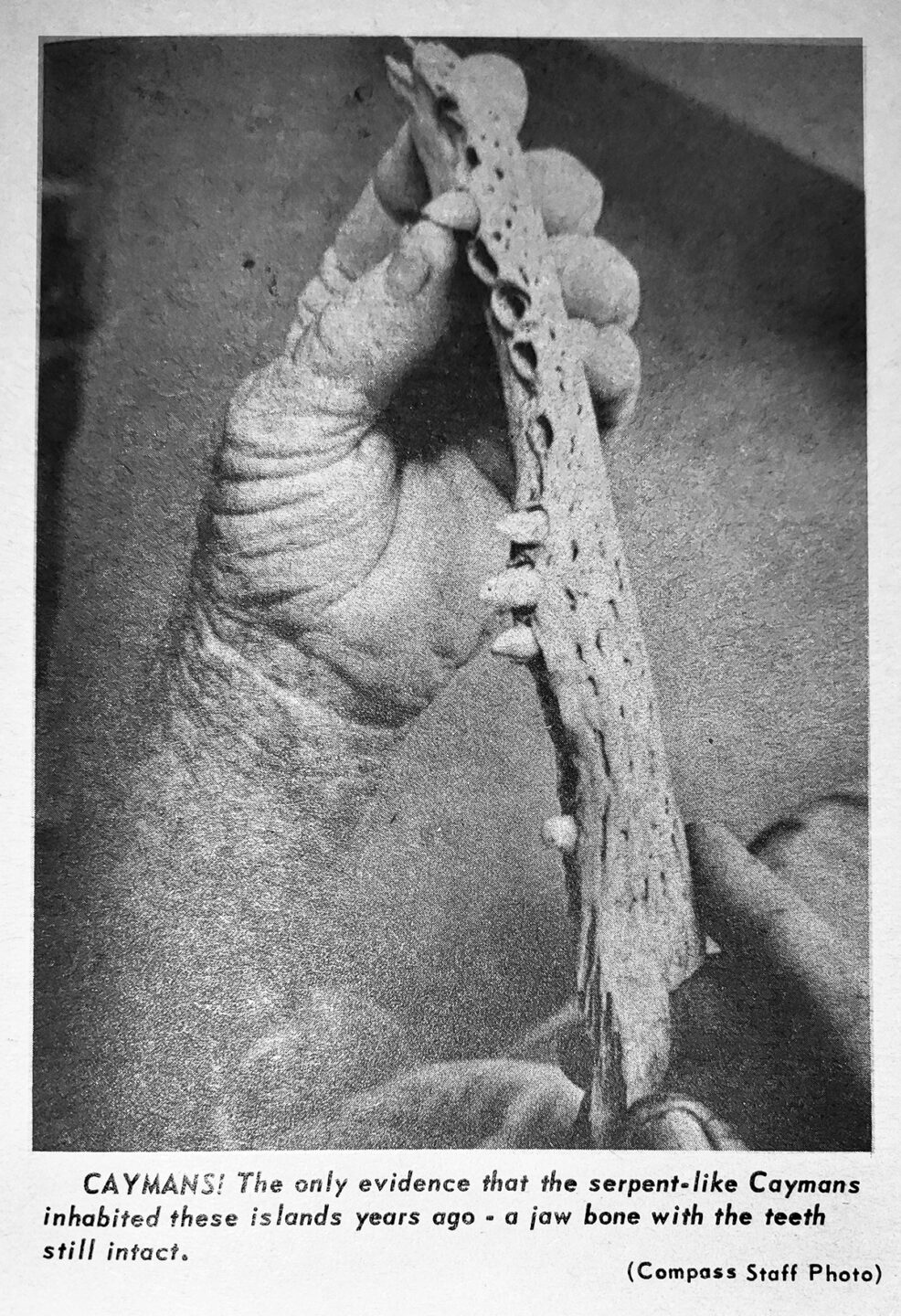
And, finally, a photo headlined ‘CAYMANS!’ carried the explanation that a “jaw bone with the teeth still intact” was the only evidence that caymans, also known as caimans – alligator-like reptiles – lived in these islands years ago.
Related Videos