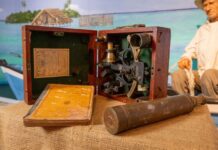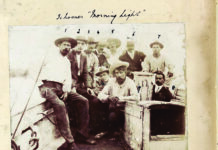
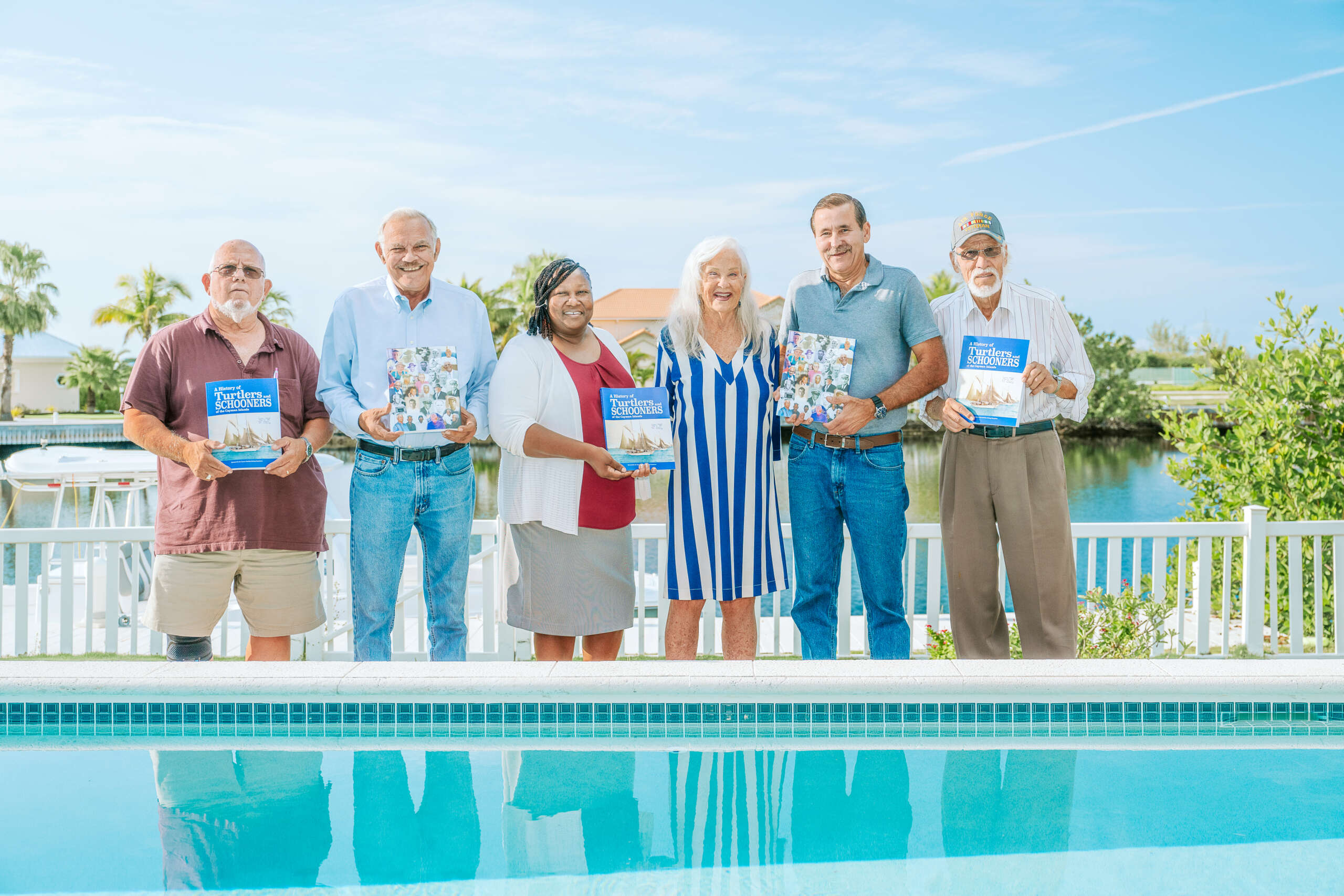
It’s taken 24 years, as well as countless hours of research and editing, but ‘A History of Turtlers and Schooners of the Cayman Islands’ is finally hitting the bookshelves.
The 312-page tome is a definitive history of the heyday of Cayman’s mariners.
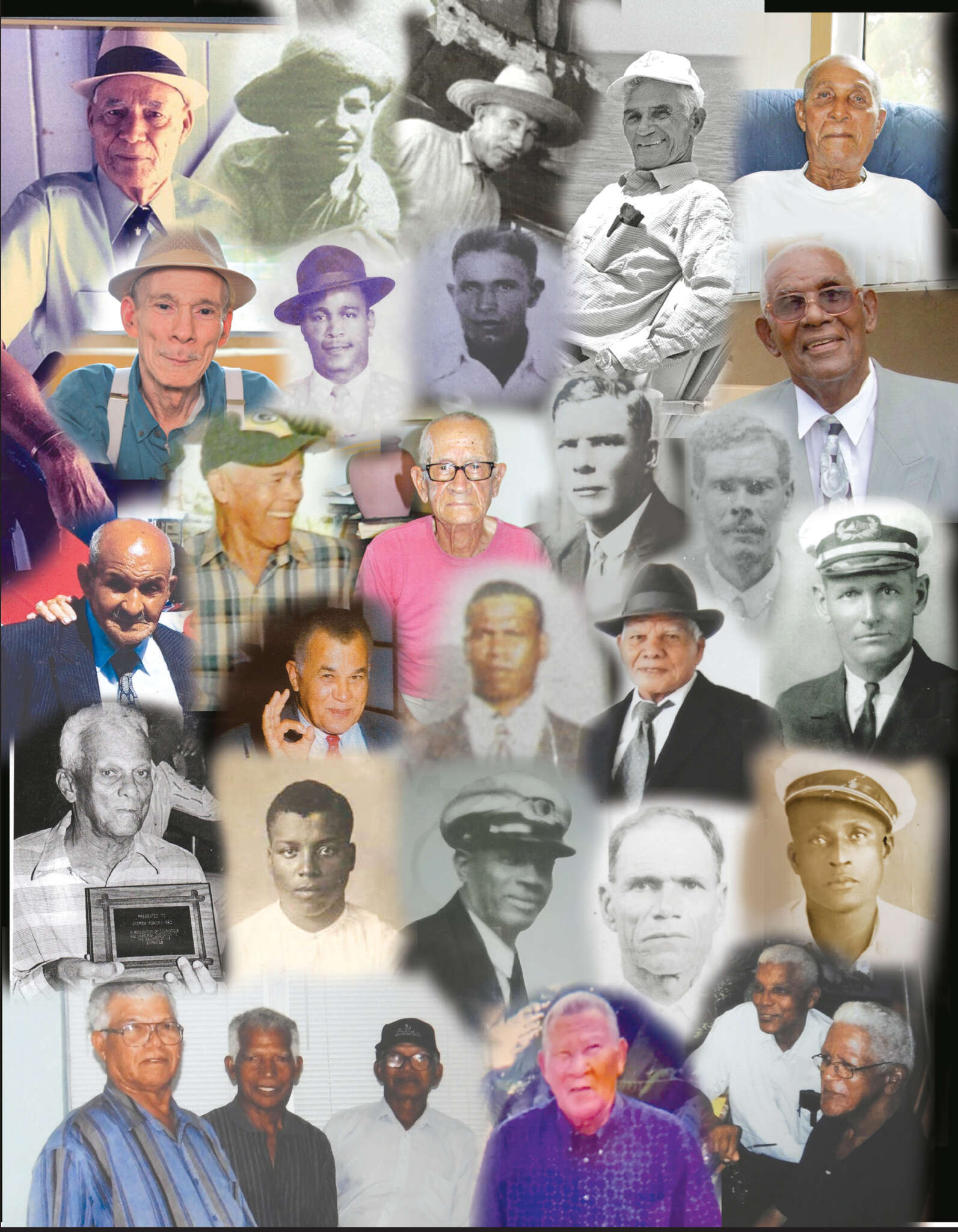
It contains tales of derring-do, incredible survival, tragedies and near-misses, as well as the life stories of some of the islands’ seafarers, who braved the ocean on board the catboats they used for turtling, and the schooners that carried them and the iconic boats to faraway waters.
The book will be officially launched at the Cayman Turtle Centre on Saturday, 15 July, from 5pm to 7pm.
Suzy Soto, who compiled and painstakingly fact-checked the text of the book and the many historical photographs it contains, said it was a labour of love, that explores the history of turtling and the boats and people that made it possible.
In a recent interview with the Cayman Compass, she flicked through the book, noting such incredible stories as that of Andrew Powery, who swam 11 miles to get help after he and his fellow crew members were shipwrecked in the 1932 hurricane off the Miskito Cays in Nicaragua; or Captain Arnold Conolly, who manned the wheel of his ship for two straight days in 1940.
The book is a testament to Cayman’s shipbuilding and ship sailing. Starting on page 283, the book lists 299 sailing vessels registered in Cayman between 1850 and 1951.
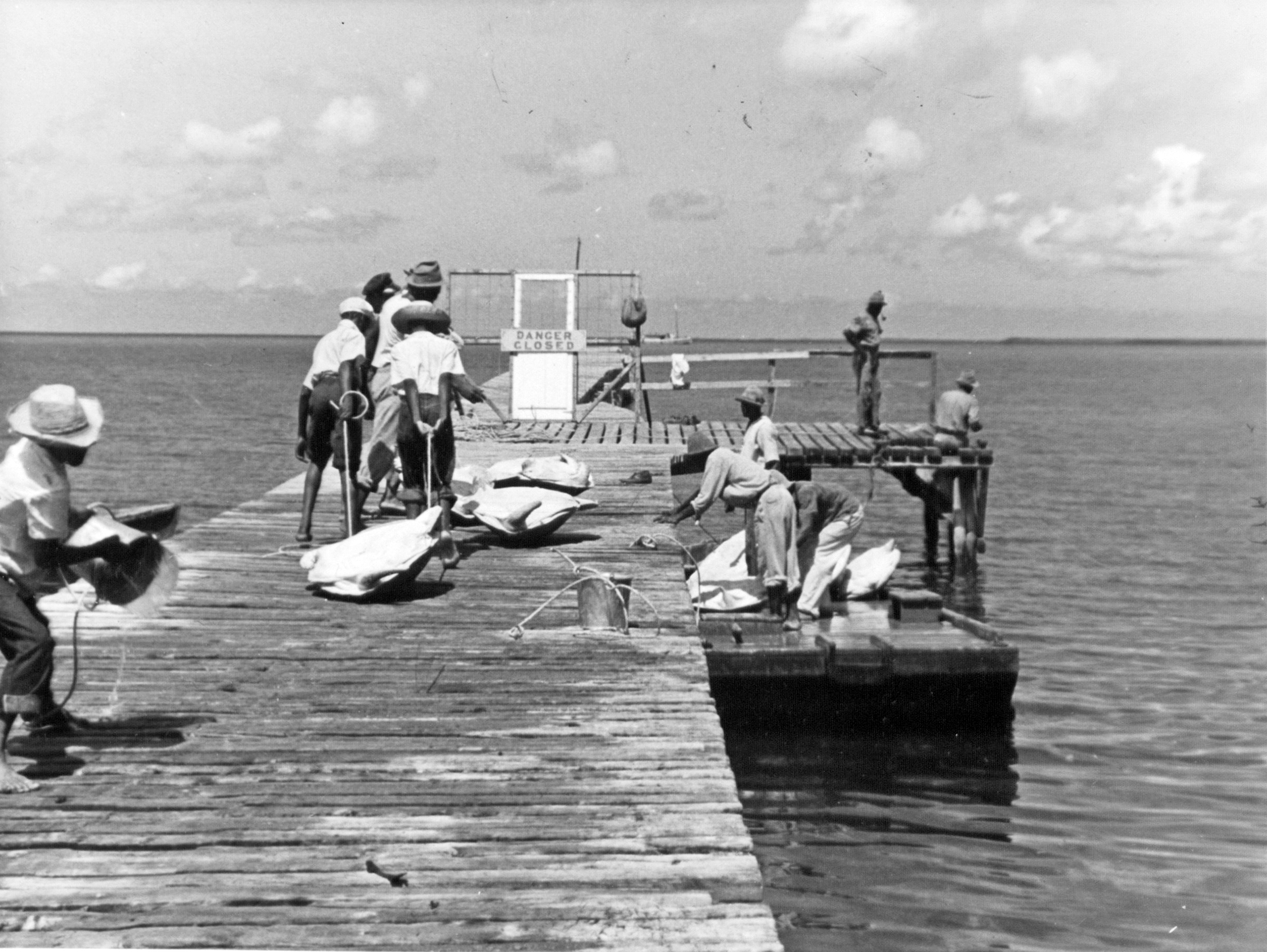
Many of Cayman’s male population, in the early 20th century, travelled to the coast of Nicaragua to hunt turtles after turtling made the animals scarce in local waters. Their catboats were carried on board schooners that sailed out of Cayman. Once they got to their destination, at Miskito Bank, or other sites, the catboats were lowered from the schooner and used by the turtlers. The men would spend months at a time at those sites, building kraals for the captured turtles, and sleeping in makeshift huts.
Turtling was the economic mainstay of the islands at the time. Later, from the 1930s to the ‘50s, most were employed in shipbuilding, and later as merchant marines on ships that crisscrossed the globe.
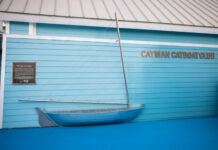
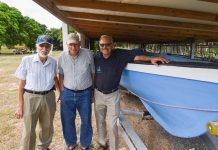
Jerris Miller, chairman of the Cayman Maritime Heritage Foundation and president of the Cayman Catboat Club, in his introduction to the book, noted, “The effort to publish this historical collection of stories about the sailors and families who were intimately entwined with the turtle schooners of yesteryear started back in 1999, with grants from Cable and Wireless and Caribbean Utilities Company. This effort resulted in the first draft being produced and delivered to the Catboat Club in 2004.”
But, 2004 also brought Hurricane Ivan, which destroyed the clubhouse and its fleet of catboats, along with all electronically stored materials and photographic collections. It seemed the book could not be completed.
But, then in 2018, there was a new push to finish it, with help and funding from HSBC bank. A publishing committee was formed and work began again on the book, with more funding coming from several quarters.
Using an aptly nautical metaphor, Miller wrote in the introduction, “This ship appears to have made a round trip after all the years of beating to windward financially. It is particularly gratifying that two great-grandsons of two pioneering schooner families in the Cayman Islands, the Arches and the Millers, have combined to navigate us on the final tack to a safe harbour and publishing this book.”
Below we look at some of the stories explored in the book.
Hustler lost in a hurricane
The 61-ton R.L. Hustler, built in Grand Cayman by Roland A. Bodden Jr. and launched in 1931, set out on its return journey from Panama to Cayman on 15 Oct. 1940 with at least 13 people on board. It was to be the last voyage the ship would make, as it encountered a deadly hurricane on its way home.
The last sighting of the R.L. Hustler was at 4:30pm on 18 Oct., 70 miles north of Colón, by Captain Arnold Conolly, skippering the Radium schooner. The Radium turned back as the storm raged, while the R.L. Hustler carried on.
The Hustler was never found – only its two masts were recovered – and all souls on board perished, including Captain Laurie Bodden; two of Bob Soto’s brothers, Rene and Haldine Bodden, aged 16 and 21, respectively; mate Dale Hurlston; chef Samuel Linwood; seamen Ralph Bodden, Peter Watson and Griffith Solomon; brothers Bertie, Ivan and Ewen Jackson; and seaman Nino Bush and his wife Alma of South Sound.
The chapter on the ill-fated R.L. Hustler contains, in full, a long letter by Captain Conolly to the acting commissioner of the Cayman Islands, in which the captain – a good friend of Captain Laurie and the last person to report seeing the R.L. Hustler at sea – urged that the letter should be read “in every town and village”. He wrote about the night of the storm when he witnessed Captain Laurie “standing to the wheel of the Hustler trying to save his life, trying to save his crew’s lives, trying to save his passengers’ lives, trying to save his vessel, but fate was against him”.
Conolly explained that he himself had spent two full days at the wheel of his ship, as his crew of four ‘greenhorns’ chopped down the vessel’s mast in the tempest, to help keep the ship from capsizing, and then sheltered in a cabin below. He told the acting commissioner, “Just think for one moment, for a man to be out in a hurricane from Sunday morning until Tuesday morning without a South Wester hat, much more an oil skin, without anything to eat or drink, no one to assist me to hold the wheel.”
The tragedy of the Nunoca
The Nunoca, a 110-foot motor schooner, was built at the Arch’s shipyard in George Town in 1932 and acquired by R. B. Kirkconnell and Brothers shipping company on Cayman Brac in 1933.
The night before it sailed out of George Town, on 4 July 1936, it encountered some engine trouble, which an engineer attempted to fix.
The captain on that final voyage was Moses Ithamar Kirkconnell Sr.
Cayman Maritime Heritage Foundation member Loxley Banks’s grandmother Aneza was on board the ship and he has done extensive research into the loss of the vessel. Aneza, wife of Captain Lorrine Henning, was travelling with their 7-year-old son Loxley Henning, on their way to meet her husband in Tampa. The couple’s 10-year-old son Sam remained on Grand Cayman.
“There was a lot of smoke coming from the ship as I watched it go out of sight from Henning Beach in West Bay,” the book quotes Sam as telling his family when he spoke of the experience years later.
When the Nunoca failed to arrived as scheduled in Tampa, Captain Henning raised the alarm and a widespread search was conducted for days. Eventually, some wreckage was found that was identified as belonging to the Nunoca, which is believed to have sunk following an engine explosion and fire.
On board were 22 crew and passengers. All were lost.
A rigger’s luck: Captain Benny Bodden
In a chapter of the book written by the late Sir Anthony Jenkinson, the life and times of ‘master mariner, rigger, sailmaker, shipwright’ Captain Benny Bodden, also apparently known as ‘Red Head Benny’ are related.
He left Cayman at the age of 17 to ship out of Tampa. His first ship was the lumber schooner Charles Weibe, trading between the Tampa and Cuban ports, before he went to work on various other vessels that took him to San Salvador, Costa Rica, Texas and Nicaragua.
Jenkinson writes of a double shipwreck involving Bodden in 1925 when the Horace M. Bickford set sail from Cayman for Norfolk, Virginia, with a cargo of logwood from Jamaica. Three days into the voyage, they ran into a storm but battled their way through, before rescuing the ‘not so lucky shipwrecked crew of the schooner Campania’.
But then, misfortune struck again when the Bickford hit some submerged wreckage 155 miles off Key West, resulting it in becoming waterlogged, with eight feet of water in the hold.
“Finally, as a very last resort, the captain sent out a distress signal to a passing steamship, which deliberately ignored their pleas for help,” Jenkinson wrote.
Eventually, passing US oil tanker Olean rescued the crew of eight and the twice-wrecked crew of seven of the Campania.
“It was as if fate played a hand in meting out disaster to both crews as well as the Olean, since in later months, each member of the various crews met with disaster on the seas,” the book notes. Bodden, by now a captain, almost lost the Cayman turtle schooner Artemis, en route to Tampa, just one-and-a-half months after the Bickford encounter.
The story continues with other near misses Captain Benny, “who never drank or smoked, and seldom issued a bad word”, encountered in his career.
A heroic swim for safety
With information gleaned from a 1995 Newstar magazine article written by Alan Ebanks and from Heather McLaughlin’s book ‘The ’32 Storm’, the chapter on Andrew Powery describes an incredible tale of survival, strength and tenacity.
In October 1932, at the age of 20, Powery joined the crew of a ship called the Managuan, which was heading from Cayman to Nicaragua on a turtling expedition. They encountered the hurricane which went on to devastate the Cayman Islands. The storm flooded the ship, and, as was the life-saving procedure in those days, the crew cut down their mast, but the efforts proved fruitless as the vessel ended up shipwrecked on the cays amid the roiling sea and high wind.
They ended up stranded with no food, shelter or drinking water. The four other crew members implored Powery, the youngest and strongest swimmer among them, to swim the 11 miles to the Serrana Cays to get help.
That swim took him nearly two days, from sunrise on Wednesday, 9 Nov., to Friday, 11 Nov., at 2am.
The book quotes him as saying, “I didn’t have anything to eat since the Saturday before the swim. The only clothes I had on was an underpants and a marina [sleeveless undershirt], no shoes. If I had been in a war zone, I don’t believe I could have gone through any more.”
He feared sharks near the reef would attack him because he was bleeding, as when the water grew too shallow, he was forced to walk over the reef, which cut his feet badly.
“To tell you the truth,” he’s quoted as saying, “at first I didn’t feel anything because the water made me numb. I believe that a shark could have ate me and I would not have felt it.”
He made it to Serrana Cays and the crew was eventually rescued.
A royal rescue
The book also references a 2008 story published in the Cayman Compass and written by Dave Martins about the late Captain Tom Dias and his brush with royalty.
In 1936, Lord Mountbatten, visiting Jamaica on his auxiliary yacht Lost Horizon, was preparing to return to England for the coronation of Edward VIII. However, when the yacht’s captain became gravely ill, the Webster Shipping Company recommended Tom Dias, from Rock Hole, who was known for his navigating skills, to skipper the royal visitor’s yacht back across the Atlantic.
The ship ran into a raging nor’wester and had to seek shelter in Cayman. After seeing his passengers ashore, he returned to the vessel to ride out the storm.
But that wasn’t the end of the troubles. As they were nearing England, a fire broke out in the engine room and the yacht was soon engulfed in flames. “However, Captain Tom managed to get his royal passengers into the vessel’s life boats and ferried them safely to Portsmouth,” Martins wrote.
To express his gratitude, Lord Mountbatten invited Captain Tom to dine with the Royal family in Buckingham Palace.
Dias’s daughter Olive told Martins, “I remember he wrote me a letter about it. He said he went to the Palace, well-dressed, in a full suit of white, with a captain’s hat and the Duke was there; the Queen was there; another girl was there, and the Queen’s uncle – lots of royalty – and he said everything he touched in there was made of gold.”
Mountbatten recommended that to the Marine Board of England that Dias receive some kind of public recognition for his efforts. He was given an official commendation and granted an open Master’s Licence, valid anywhere in the world and the first to be awarded to a Caymanian.
The story quotes the late Ernest Panton as saying that years later, when Prince Philip, the Duke of Edinburgh, visited Cayman in 1970, he was “delighted to see this man who had saved his uncle’s life 36 years earlier. He had an interesting chat with Tom and told him how glad he was to see him.”
Captain Tom passed away the following year, in 1971. Lord Mountbatten was killed by the Irish Republican Army on his fishing boat in 1979.
Related Videos