

An archaeological dig at Jackson’s Wall has revealed some insights into its past.
The dig, at the Newlands site, led by archaeologist Elysia Petras and carried out over several days in May this year, was followed by processing and cataloguing of the artefacts found there, as well as analysis of some pieces of broken pottery or ceramics, and clay pipes.
According to a preliminary report on the findings, 14 low-fired coarse earthenware sherds and a sample from one of the 11 white kaolin smoking pipe stems recovered at the site have been sent to the University of Missouri Research Reactor for neutron activation analysis to help determine their origin.
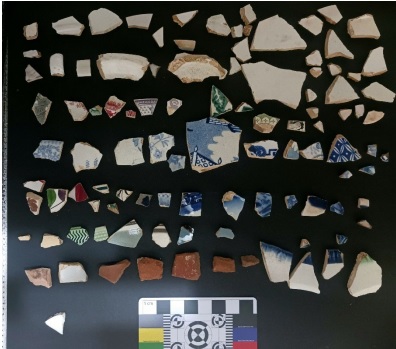
Petras, a PhD candidate in the Department of Anthropology at Temple University in Philadelphia who specialises in historical archaeology, especially in the area of inter-islands trade and general living conditions of enslaved people, said in her report that many of the pieces of pottery appear to be handmade rather than wheel-thrown ceramics, and are hypothesised to have been made in the Caribbean.
“The results of chemical analysis will help us determine the colony of origin of the sherds,” she said in the report. “As this ware type is associated with enslaved and later free women of African descent…, these sherds may be connected with the enslaved population of the Jackson’s Wall site.”
Sherd is the term used by archaeologists to describe a fragmented piece of historic ceramic.
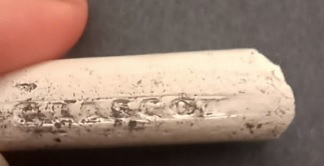
The 11 kaolin smoking pipes have also been sent for residue analysis to determine if there are still traces of tobacco in them and, if so, then to try to find out where that tobacco came from.
Petras told the Compass she and the National Trust for the Cayman Islands team, along with a small group of volunteers, had been surprised to find so many artefacts at the site.
“There was a lot more there than we’d expected,” she said. “I think the amount of ceramics we found there indicates that the site was continuously occupied since the Jackson family first came to Cayman until the 1960s.”
She added, “The amount we found really shows that the site had a long, long history of being home to many generations.”
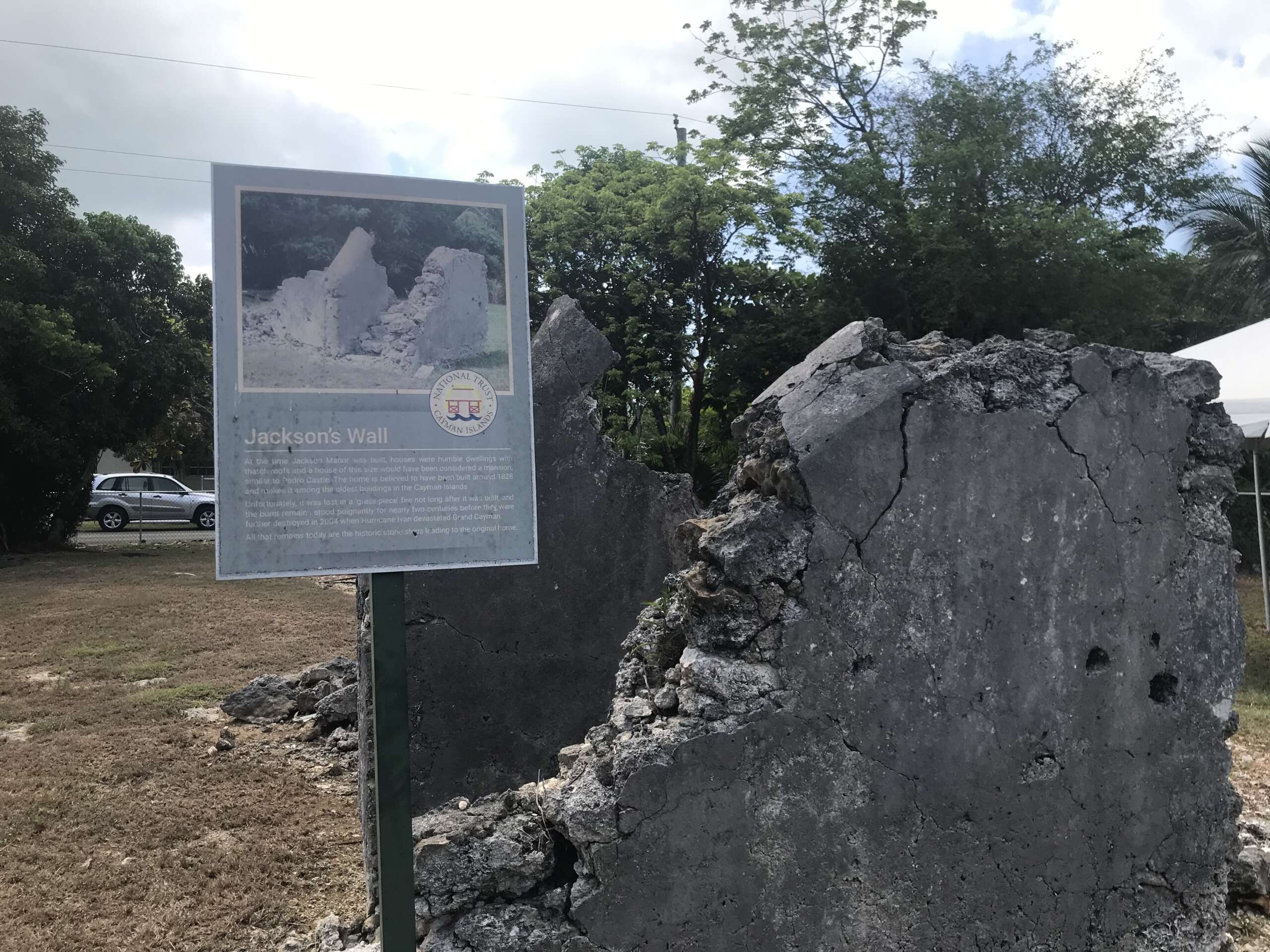
Jackson’s Wall refers to the remains of a house or manor that once stood on the site off Hirst Road, near the International College of the Cayman Islands. It is believed to have been built in 1828 by the Jackson family, though Petras says artefacts found at the site may indicate that there might have been an earlier dwelling there.
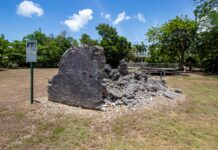
All that stands on the site now is a ruined stone wall and some steps.
Petras, in her report, outlined what is currently known about that site – that John Shearer Jackson, an early European settler of the Cayman Islands, is believed to have arrived in
Grand Cayman from England in 1770. The earliest record of Jackson is his marriage to an Elizabeth Bodden in 1774. Their son, James Shearer Jackson, is likely to have lived at the Jackson’s Wall site, and kept a sheep ranch in the area.
Stuart Wilson, the National Trust’s historical programmes manager, told the Compass the excavation work had revealed “quite a bit” about the site’s history, and the ongoing analysis would likely uncover more.
He added that the National Trust hopes ultimately to open up the site as a public park, with additional signage explaining the significance of the location.
But before that can happen, further excavations will be done. “We plan to restart another dig in January,” he said.
He added, “We want to make sure we have explored all the archaeological potential that exists there.”
Wilson noted that a lot of what had been found coincides with what has previously been discovered at Pedro St. James and the Mission House – both historical sites on Grand Cayman.
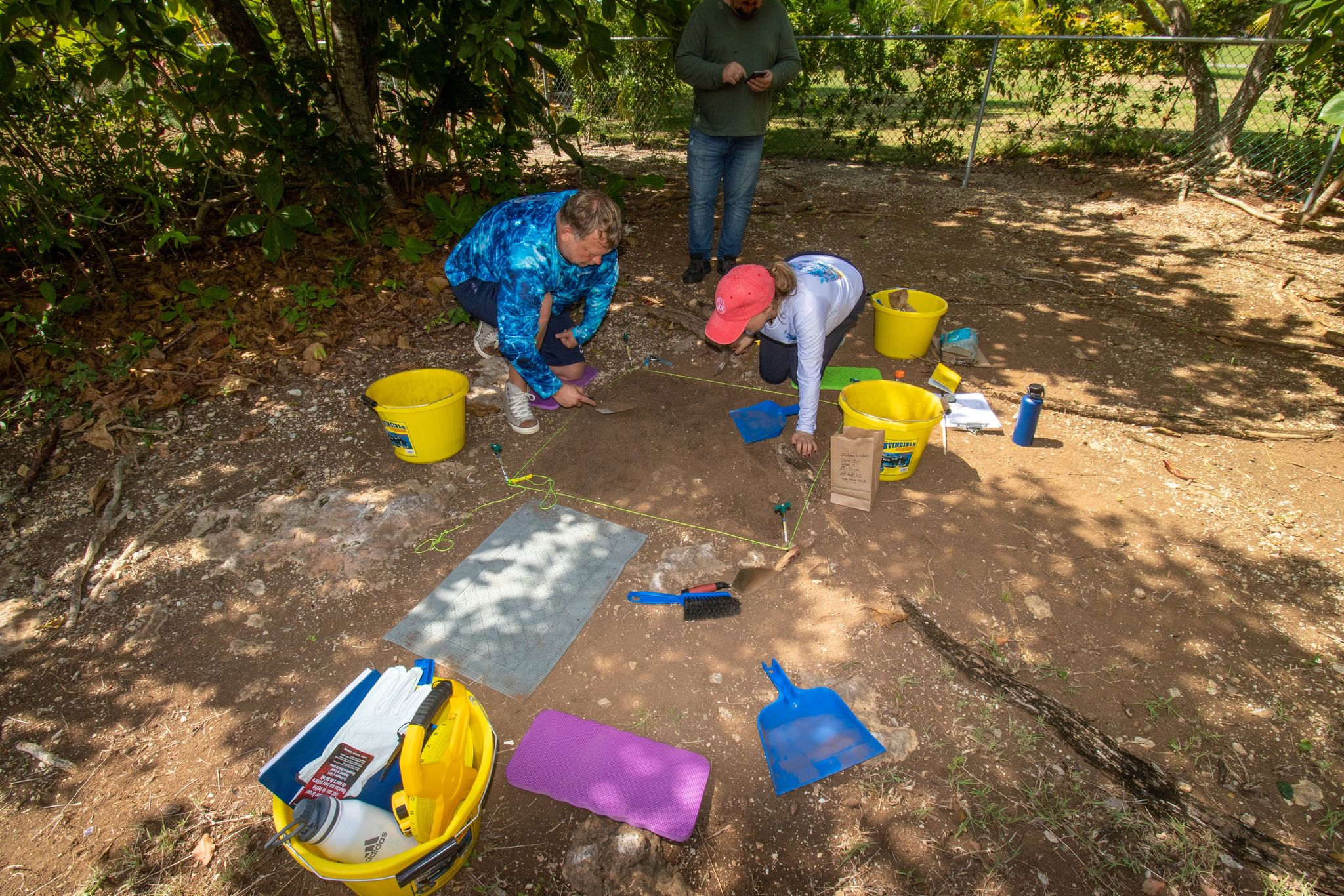
The team concentrated on three separate areas in the field, each one measuring 1 metre by 1 metre (3.3 by 3.3 foot), at which they dug down to a depth of about a foot using trowels.
In all, they recovered 502 pieces of ceramic or pottery, 260 shards of glass, and 30 pieces of clay tobacco pipes, as well as fragments of metal, including bullet casings, shells, daub and other items.
Animal teeth and bones were also recovered.
Many of the pieces were found on the surface or within the first four inches of ground.
Some of the pieces of the bowls and stems of clay pipes were intact enough to show where they had been made and by which manufacturer. For example, one 19th century kaolin pipe stem bore the maker’s mark ‘W WHITE’ on one side and ‘GLASGOW’ on the other. Pipe-manufacturing company William White of Glasgow, Scotland, operated from the early 1800s to the mid-1950s.
The report notes that this pipe stem can be dated from between 1805 and 1891, as pipes manufactured for export after 1891 would bear the name of the country (Scotland) instead of the city (Glasgow).
The team also found some modern-day items, like toothpaste tubes, jean buttons and glass from beer bottles, which points to more recent occupation of the site.
Related Videos








Dear Norma
Thanks for your article. John Shearer Jackson was my 5th great-grandfather. I am following this archaeological dig with great interest and look forward to learning what it yields. There are some factual errors in the information provided to you, however. The John Shearer Jackson who came to Cayman was not born until 1777 in St. Mary, Jamaica and he married Elizabeth Bodden in 1794 (not 1774, as the article states). It was John’s parents, Dr. Joseph Jackson and Mary Tharpe, who married in Jamaica in 1774.
Respectfully,
Charles D. Bush