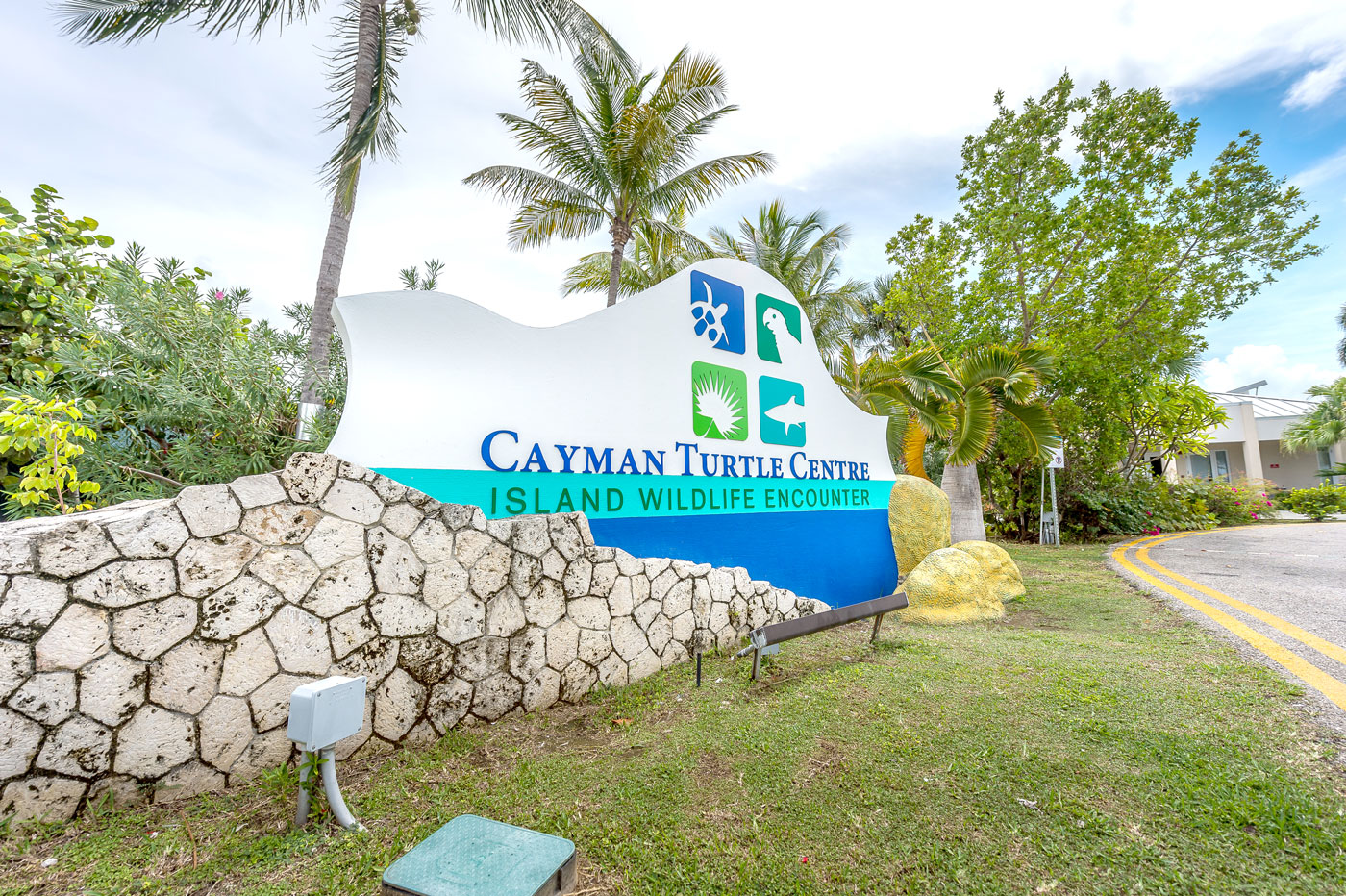
A former Cayman Turtle Centre employee who admitted in March to massive fraud was back in Grand Court last week for a fresh examination of the evidence.
Mark Manderson pleaded guilty to fraud by a public officer in relation to 61 false and inflated invoices, totalling $486,791, between May 2015 and November 2017.
He was accused of using his friend Jeremy Alexis Williams’s company over that time as a means to extract huge amounts of money from his employers.
The IT professional is now in court again for a judge-only Newton hearing, which is held when the defendant pleads guilty on the basis of different facts than the prosecution presents.
If the defence is unable to prove its version of the facts to Justice Cheryll Richards, Manderson may lose any reduction in sentence he was entitled to for his guilty plea.
‘Best of friends’
On day four of the hearing, on Friday, 11 Aug., witness Williams, a former co-defendant and close friend of Manderson, was called to the stand.
Crown prosecutor Toyin Salako was the first to address Williams, laying out the background of the former Cayman Islands Monetary Authority senior analyst’s involvement.
She said that in 2018 he was arrested in relation to an investigation concerning the Cayman Turtle Centre and, on 4 June 2020, pleaded guilty to entering into an arrangement.
On 23 Sept. 2020, he submitted a written basis of plea – his factual version of events – and, a week later, he gave a statement to the police and the Anti-Corruption Commission.
Salako asked Williams if, prior to his arrest in 2018, he and Manderson had been the “best of friends”, and he agreed, adding that he saw him very regularly.
He told the court he owned a company called Electro-City through which he ordered car parts and electronics for people.
Williams got a trade and business licence for his company in 2015, mainly so he could do business with the Cayman Turtle Centre, where Manderson worked in the IT department.
He also set up a business account and a company email address, and the defendant helped him to create a company logo.
The witness said he began a business arrangement with the Turtle Centre, where the plan was that they would tell him what they needed, he would source it, and then return with a price.
If a price was agreed, he would then send an invoice, the centre would issue a cheque, and then he would order the goods and send them over, the court heard.
Bad invoices
Salako described the first fraudulent invoice dated 12 May 2015, which was for 25 Microsoft Office and 25 Microsoft Windows licences.
Williams said the defendant gave him a price for the items, told him who to buy them from and drafted an invoice. The witness did not check if the prices were correct.
However, Manderson ended up getting the licences himself, Williams told the court.
Despite not carrying out the work, Williams received a cheque for $16,021 from the Cayman Turtle Centre. He deposited the money and gave Manderson the cash for the licences.
He received another cheque from the government company that same month for $15,587. He had not agreed to any work but said he believed it was for future sourcing.
Williams admitted that over two years he received 61 cheques from Manderson. He did not see any invoices and sourced no goods for the Turtle Centre in exchange for the money.
He said each time he got a cheque he deposited the funds in his business account, then took some of the cash out and give it to the defendant.
Used as a ‘cloak’
Manderson’s defence attorney Oliver Grimwood told the court that the two men would socialise most days, go on holiday together and spend time with each other’s families.
“An awful lot of face-to-face interaction, a lot of conversations between the two of you,” he said during his cross-examination.
The witness said that, in those conversations, nothing had given him the impression that the items he was getting paid for sourcing were not being provided to the Turtle Centre.
Grimwood continued: “Mark, an employee of the Turtle Centre, was using your company as a cloak to hide behind to pretend that he was an independent third-party supplier.
“And that, of course, would allow him to do business with his own employer,” he said, to which Williams replied: “Correct.”
‘Knowingly’ helped defendant
The defence lawyer reminded the court that Williams was a senior analyst at Cayman’s financial services regulator.
He said he would be aware that there are codes of conduct and obligations in relation to conflict of interest, as well as breach of trust.
Grimwood suggested: “With all that knowledge, you… knowingly assisted Mr. Manderson to do business with his own employer, hiding behind the veneer of your company.”
Williams replied that it was not the initial agreement, but agreed that was what later happened. He added that it was his original “intention” to source the products.
Grimwood asked the witness why he did not object when he got the second cheque from Manderson without having done the work.
He replied that he did query it, but was told by Manderson not to worry and that it was just for things that he needed.
When the third cheque came in, he did not refuse it because he trusted his friend, Williams told the court, adding that, in hindsight, he realised it was wrong.
Court documents show that Manderson made $128,202 in profit, while in his witness statement he said he made $143,000. That was on top of his wage of $6,000 per month.
Grimwood asked if the reason he kept the scheme going was because he was enjoying the money, to which the witness replied: “I wouldn’t say enjoying.”
The attorney reminded him of his multiple holidays with Manderson to Colombia, Miami and Cuba, where Williams would spend large amounts of money on drinks and socialising.
He also mentioned discussions Williams had with the defendant about buying a boat.
The hearing is expected to conclude on 4 Sept.
Related Videos