

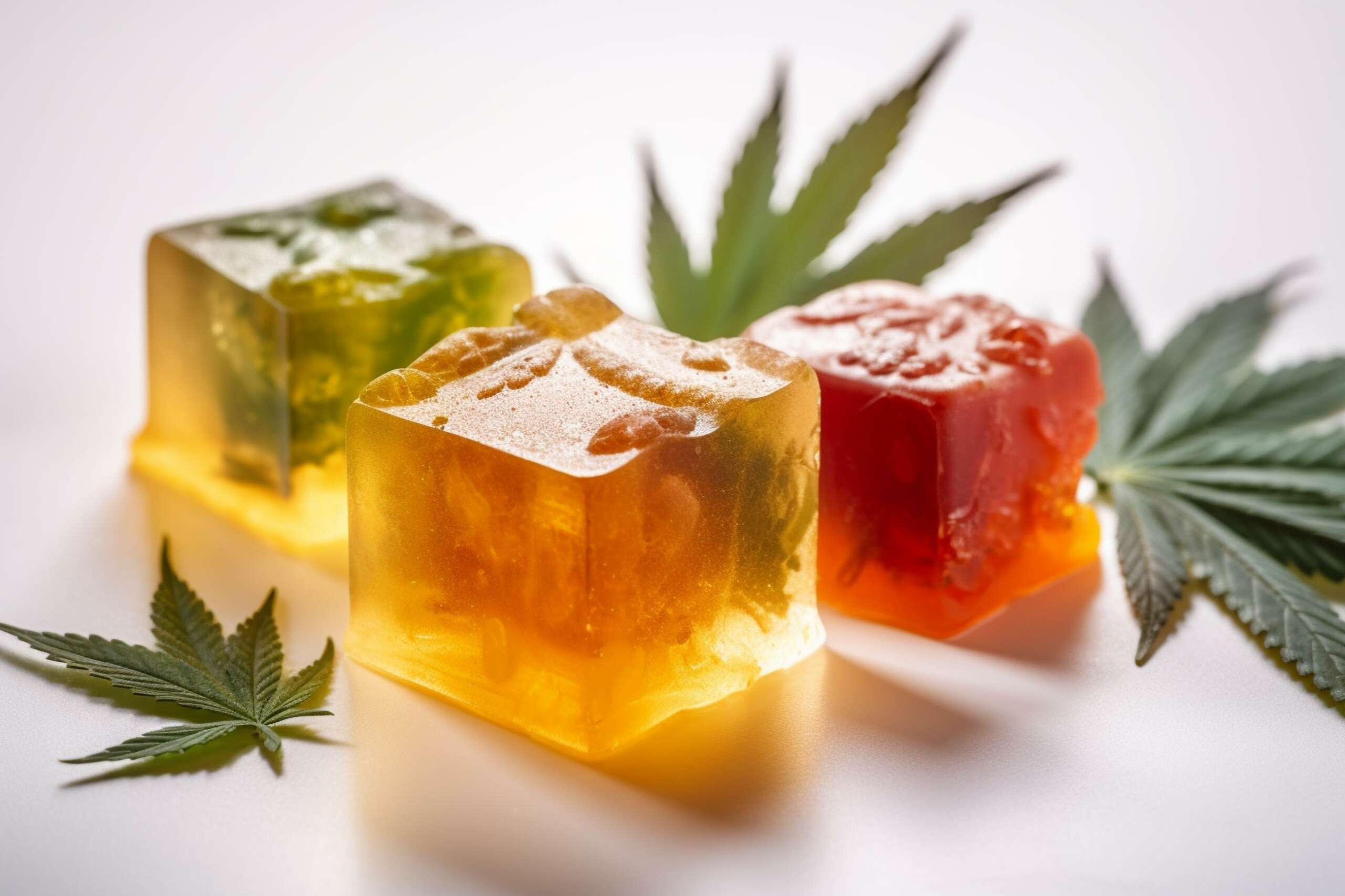
Following a report of a teenage boy becoming ill from ingesting ganja edibles ordered through a food delivery app, Chief Medical Officer Dr. Nick Gent has issued a warning that the use and sale of cannabis products for anything other than medical use in Cayman is illegal.
Gent, in a statement Thursday, said there was a “misconception” that cannabis products, such as the edibles the boy consumed, are allowed to be imported and offered for sale, because they are freely available in many US states.
“This is absolutely not the case,” he said, noting that Cayman is guided by the local law, the Misuse of Drugs Act.
“There are no exemptions in Cayman Islands law for the importation and sale of hemp-derived products,” Gent said in his statement.
The chief medical officer, following Cayman Compass queries, further clarified that “any product containing any quantity of cannabinol or cannabinol derivatives, whether for eating, vaping, or any other purpose is not legal under Cayman Islands Law, unless it is explicitly prescribed under Section 2A of the Misuse of Drugs Act (2017 Revision) by a registered medical practitioner”.
He reiterated that there is no general medical exemption from the law, that “every cannabinol and/or cannabinol derivative product used by a person must be linked to a prescription for that item”.
Gent’s warning on the use of these products came after the mother of a 15-year-old boy reported to police and media outlets that her son had become ill after accessing edible cannabinol/cannabinol derivative products from a local pharmacy through a food delivery app.
The mother said in an email in May that she had noticed her son displaying unusual behaviour after he returned home from a friend’s house.
She said he was nauseous and dizzy and had bloodshot eyes, “causing great alarm”.
She said his distress grew as his symptoms worsened, leading her to ask if he had consumed any substances.
“Eventually, he confessed that he and his friends had experimented with THC edibles, an admission that left me stunned. What shocked me further was his claim that these edibles were readily available for delivery through the food app,” she said.
The app has since pulled the product from its pharmacy section.
Misconceptions
Following his inquiries into the woman’s claim, Gent said, “it became evident, fairly early on, that some health care professionals are not certain of what relevant Cayman laws permit or prohibit when it comes to products containing cannabinol or its derivatives.”
He added, “There are concerning misconceptions where many professionals believe that local law allows for the importation and general sale of products containing cannabinols if derived from hemp and products containing certain forms of psychoactive cannabinol derivatives – mainly the tetrahydrocannabidiol isomers or THCs.”
The Compass reached out to the pharmacy involved for comment. We are awaiting a response.
When asked if further action would be taken, Gent said he encourages health care professionals to work with him on the basis of “a no-blame culture so that they have confidence that they can report accidents or unexpected outcomes, and we can then investigate and correct the root cause”.
Professional discipline, he said, has its place where there is overt wrongdoing, “but very often the problems that arise lie with the system, not the individuals”.
“This means that the solution to these issues is usually obtained via policy review, provision of advice, and training to improve outcomes and avoid accidents. This is what we have done in this case. This approach has been well established as the most effective way of reducing risk in many services and systems, and is common, for example, in the airline and health care industries in many parts of the world,” Gent added.
He has issued advisory notes to all local health care professionals registered as clinical practitioners in the Cayman Islands saying that they “should be careful to only prescribe, dispense, or use cannabinol and cannabinol derivative products by reference to the Misuse of Drugs Act (2017 Revision)”.
“Our aim is to ensure that all health care professionals are informed and compliant, so I encourage any health professional who needs further guidance and assistance to contact me directly,” Gent said.
As specified in the Misuse of Drugs Act, he said the use of “properly formulated medicines” is to be preferred when prescribing cannabinol and cannabinol derivatives for clinical care.
The Misuse of Drugs Act allows for the use “cannabis extracts and tinctures of cannabis for medical or therapeutic purposes”, where prescribed by a medical doctor licensed in accordance with the Health Practice Act as part of a course of treatment for a person under that medical doctor’s care.
Gent, in his guidance, said all isomers of tetrahydrocannabidiol (THC) are controlled under the Misuse of Drugs Act.
Related Videos










Having spent more than 10 summers in a US state that has both medical and recreational cannabis laws, I’m well aware of the plusses and minuses of these laws. As a long-term sufferer of spinal issues and multiple surgeries I found that the use of THC based products reduced my use of opioids