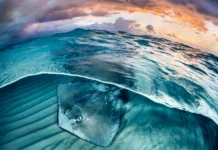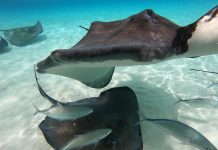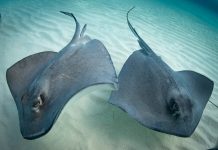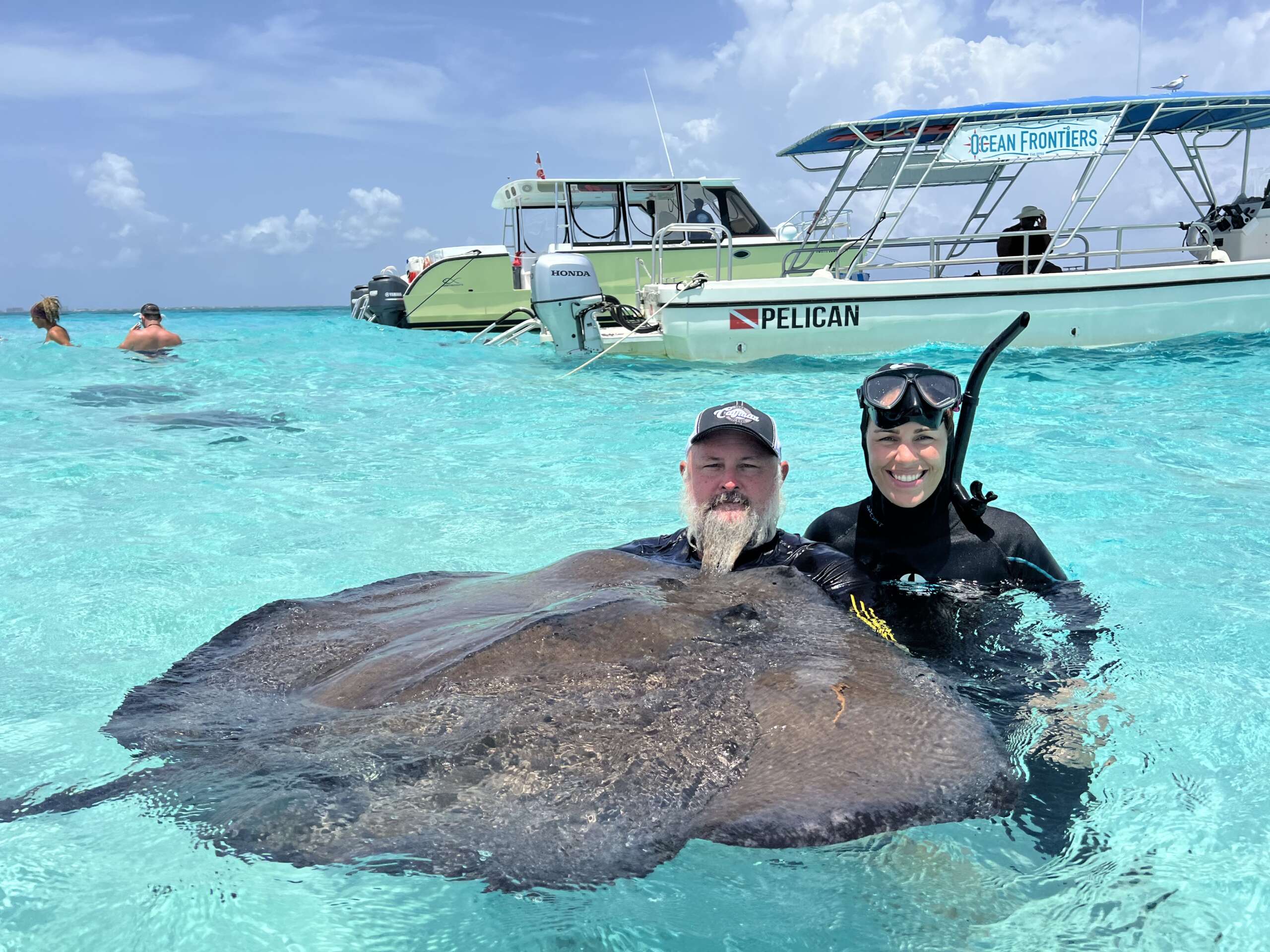
The stingray population at the Sandbar has bounced back, rebounding to almost pre-2020 figures, as twice-yearly censuses have been finding more than 100 of the animals at the site.
The latest census, conducted by the Guy Harvey Foundation, the Department of Environment and a team of volunteers, counted 106 rays, including 21 that had never been found there before. It was the largest number of newcomers recorded since the studies began in 2008.
“It’s promising that the stingrays are making a comeback,” Jess Harvey, CEO of the Guy Harvey Foundation, told the Compass. “It’s a new cohort. We had so many new ones, there might be a changing of the guard,” she said.
She added that while there were some older rays among those counted, most were younger animals.
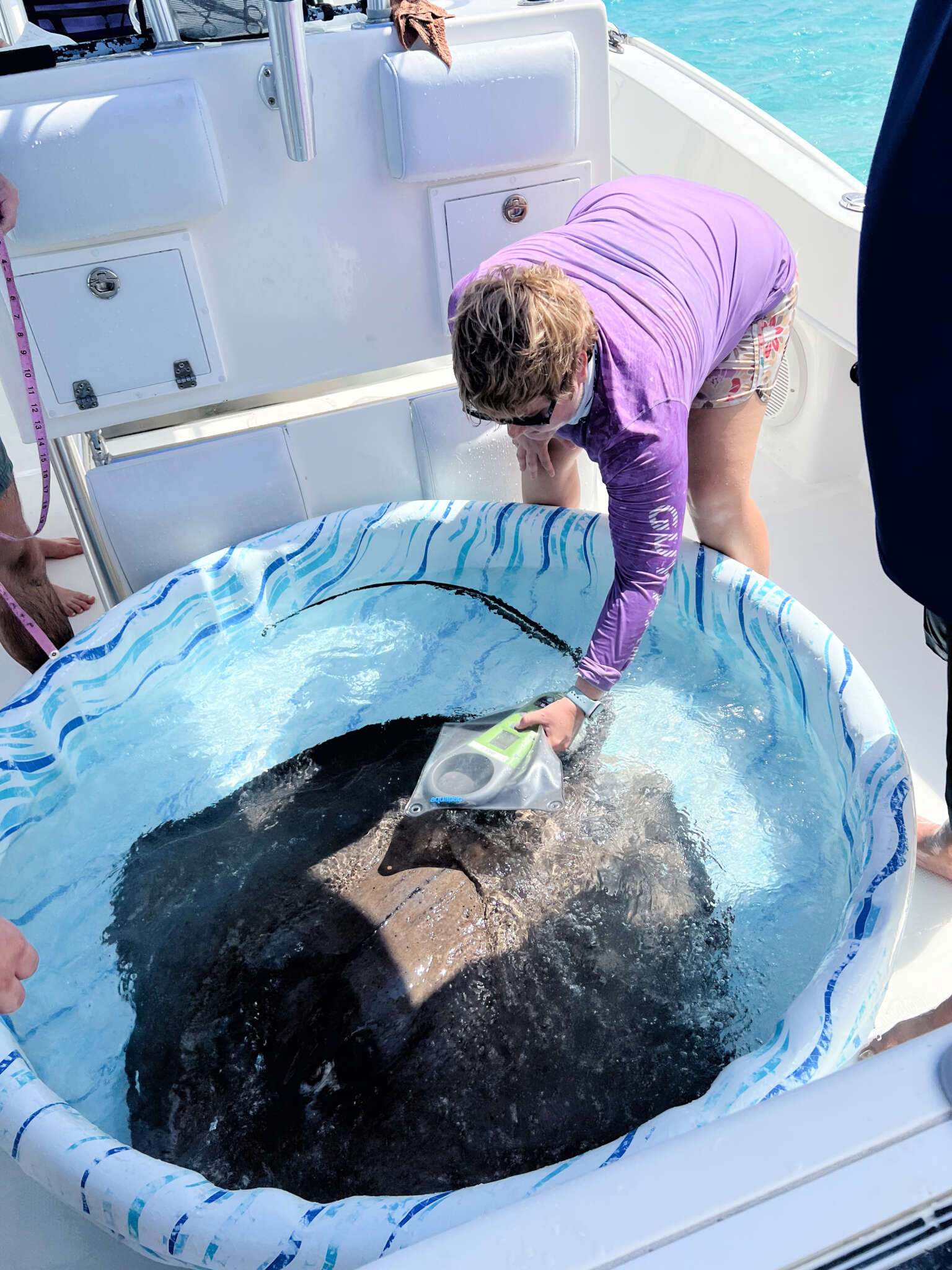
During the census, a team of scientists and volunteers tag the rays with tiny chips – similar to those used to microchip pets – so they can keep track of whether they are new to the popular tourist marine area.
The largest number of rays found at the Sandbar in past censuses was in July 2019, when 115 were recorded.
Numbers had been steadily increasing over the years, but when Cayman’s borders closed during the COVID-19 pandemic and there were no tour boats bringing food to the rays, the numbers dropped dramatically.
A census in October 2020 found only 47 rays at the Sandbar.
But with the borders reopened, and tour boats flocking back to the site with lots of squid and fish for the rays, the animals are returning to where they know food is plentiful.
To ensure they’re not overfed, under the Wild Interaction Zone regulations, each boat is restricted to feeding one pound of food to the stingrays.
The most recent census was carried out over three days in February, when 21 volunteers helped out, including representatives from the Department of Environment.
Among them were University of Rhode Island Department of Biological Studies professor Bradley Wetherbee, and his students Colby Kresge and Joshua Barney, who travelled on island to participate, and to discuss next steps for studies.

Genetic samples
While small samples are taken from each of the rays that are tagged and stored in a lab freezer, genetic testing of those samples is awaiting processing until more funding can be found. Until then, Harvey says, determining if these younger rays now populating the Sandbar are the offspring of ones tagged years ago, or where they’re coming from, or even if they’re male or female, has to wait.
“That’s one of the things we’re hoping to work on,” she said. “We won’t know until we have that, if they’re migrating from other places.”
She added, “It’s quite expensive to do the genetic testing. It’s $125,000 for a couple of years of work on it. The samples are put in a freezer, at -80 degrees. The idea is we should be able to access all the DNA samples we have taken over the years.
Geneticist Mahmood Shivji, professor of marine science at Nova Southeastern University, has the samples which are awaiting analysis.
“We’ve got samples from all the way back,” Harvey said. “I’m biting at the bit to do something with that.”
Stopped in its tracks
The team was mid-census in March 2020 when COVID restrictions brought them to a halt.
“We had one full day done, and then we had to shut down,” she said, adding that it was disappointing that they had not been able to complete the three-day census at the time, as that would have provided them with more recent information when comparing post-lockdown stingray population numbers and behaviour.
While just one survey was carried out this year, the foundation plans to get the census back on track, with two planned for next year.
The team attaches passive integrated transponder tags to the ray, which are the same types of microchips pet-owners use for their dogs and cats. It enables the scientists to tell if a stingray has previously been tagged and counted at the Sandbar.
Harvey says the team is working with St. Matthew University’s veterinary school students to give them an opportunity to work with exotic animals.
The next census is scheduled for February 2024.
There’s an art to catching stingrays in your arms and wrangling them into a little inflatable pool so they can be tagged. That’s where experienced operators who are used to holding rays, usually so tourists can experience touching a stingray and pose for photos with them, come in.
Some of the operators volunteer with the census team, while others just happen to be at the Sandbar with their tour groups. They bring rays which haven’t been tagged or sampled over to the team.
“There’s a really cool working collaboration between the volunteers and tour boat operators who are there,” Harvey said.
Related Videos