

From the shade of an East Indian mango tree in Rock Hole, George Town, a lifelong resident, who asked to only be identified as Ms McField, keeps an eye on passersby.
“You have to watch some of ‘um, they real quick to fling their garbage in your yard while they ride past on their old bicycles,” said the 76-year-old.
Armed with her rake and a grocery store plastic bag, she spends a few hours each morning tending to her little slice of paradise – a multi-home yard which has been in her family for generations.
“I do my best to keep it clean, I come out before the sun gets hot and I sweep the yard and make sure the chickens don’t get to my garbage,” she said. “Most of my neighbours do the same but some people who are new to the community don’t care and they just litter everywhere.”
But litter isn’t confined to McField’s Rock Hole community.
From East End to West Bay and, to a lesser extent on the Sister Islands, litter is strewn throughout the surrounding foliage.
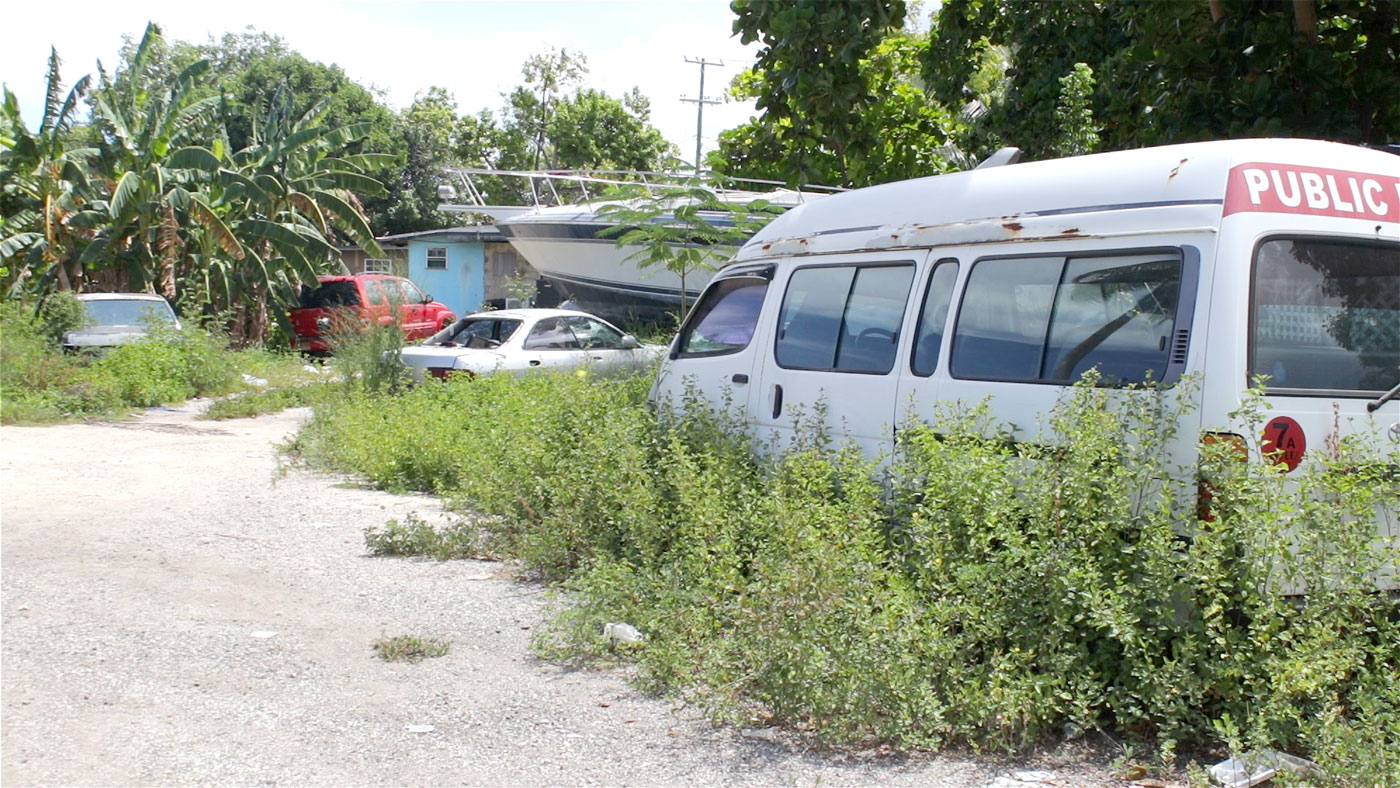
Derelict cars on cement blocks are visible from private residences, commercial parking lots, and even along community thoroughfares. Vegetable matter and a host of household appliances are abandoned in overgrown thickets and nature reserves – all despite a law that proscribes a fine or jail time for littering.
But a simple, yet landmark, sentence recently handed down by Chief Magistrate Valdis Foldats could signal a sea change in ongoing efforts to keep litter at bay.
Historic fine
On Tuesday, 22 Aug., Gayon Omar Harris, of West Bay, received a $100 fine and a $100 cost order for a guilty plea to a charge of littering in a public place.
The charge stems from an act of illegal dumping, in which Harris discarded an old sofa on a public plot of land. The location is normally used as a collection site for the Department of Environmental Health’s annual island-wide clean-up.
However, at the time of the offence, the DEH had already completed collection at the site and had erected signs warning people not to litter – signs that Harris apparently ignored.
He is the first person to have been successfully prosecuted, convicted and fined for littering since the Litter Act was initially enacted in 1982, according to DEH Director Richard Simms.
“I’m really excited about this because this is the first-ever successful conviction in the department’s history,” Simms told the Cayman Compass.
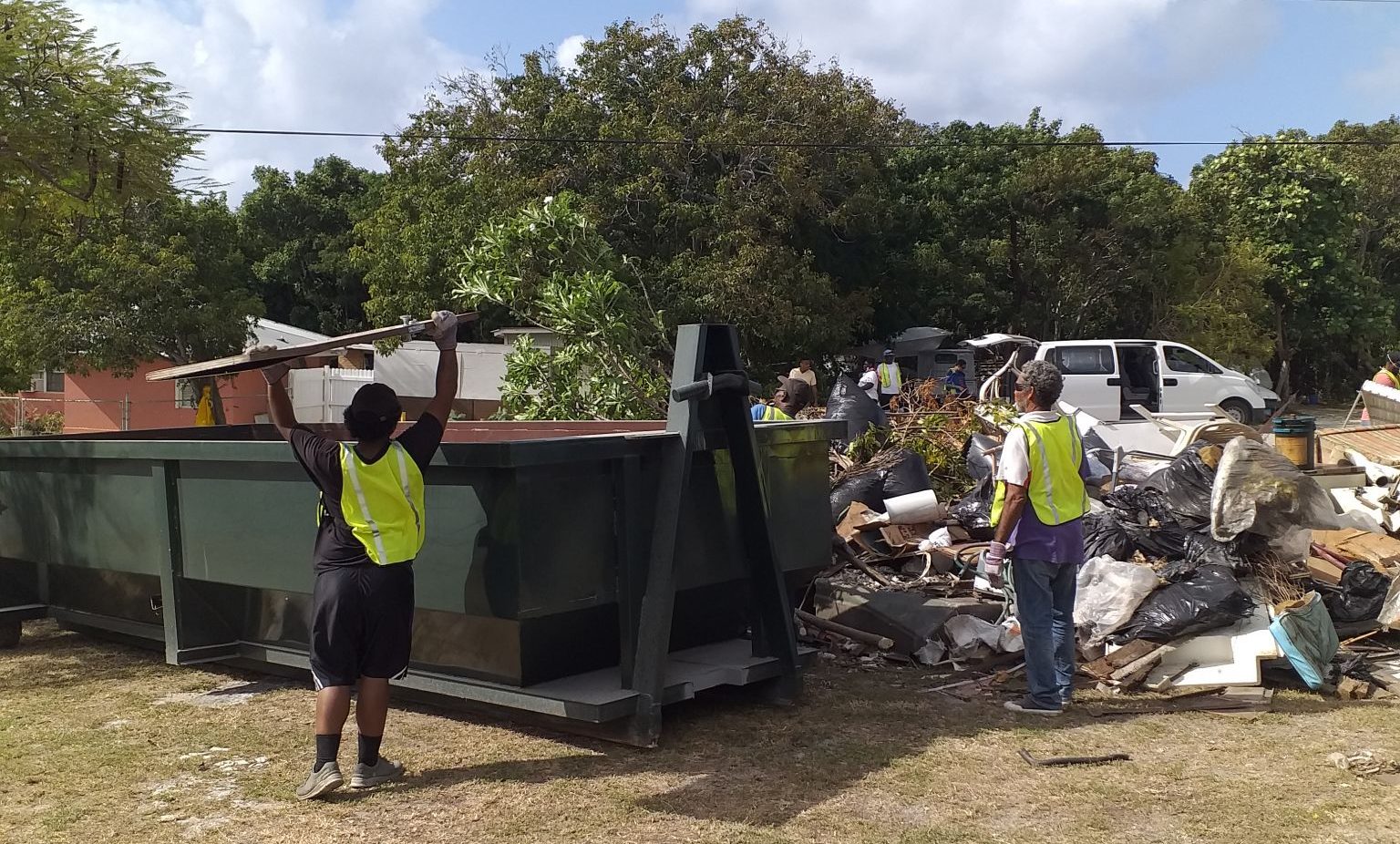
Harris was sentenced within 15 minutes and sent on his way. But Simms notes that the process to get to that point took a far more tedious eight months, during which his officers received training from police on how to prepare case files.
“As a result of [that] training, they started to go out and get the enforcement on the ground, which resulted in this first-ever case before the court,” said Simms.
Since its enactment in 1982 and its subsequent revision in 1997, the Litter Act has remained largely unchanged.
The penalties remain the same – a fine of up to $500 or a custodial sentence of up to six months – as does the process of securing a conviction.
DEH officers must either write a report themselves or team up with police officers and members of the planning department, and this eventually makes its way to the Office of the Director of Public Prosecutions.
After reviewing the file, if the DPP decides the case is strong enough to result in a successful prosecution, the matter is filed in Summary Court, a summons is issued, and the defendant is given notice of being required to attend court.
All of those steps combined can take anywhere from a few weeks to several months. However, before convictions can be recorded and fines issued, the defendant will have to enter a plea.
If they plead not guilty, the matter must go to trial, which could see the issue delayed even longer.
Although Simms was unwilling to comment on whether the fine and custodial sentence were still appropriate due to considerable inflation since the passing of the law, he does believe some things could make the process more efficient.
“Ideally what would work for us is ticketing procedures where we see things and we can write tickets and apply administrative fines; those would be the quickest way to prosecutions,” said Simms. “But as the law is currently, it means we will have to take the long route.”
He notes he has the personnel and the resources to initiate and maintain this new wave of prosecutions, and the added training means a new chapter in the fight against littering.

Residential responsibilities
In addition to the fines for littering in public places, Simms and his officers are also focusing on residential forms of littering, specifically in yards.
One resident who now finds herself under the spotlight is Darla Frederick who is before the court for failing to comply with an abatement notice.
When Compass staff visited her Bodden Town home, she was not present. In her yard, which meets the roadside, are half a dozen vehicles, jet skis and a moped, none of which appear to be in working order. The derelict vehicles are surrounded by an abundance of smaller litter – and everything is visible from the road.
“This is a real eyesore, but her place isn’t the only one. Just look down by the gas station near the [Bodden Town] library,” said a Bodden Town resident who lives a short distance away, and whose name the Compass is withholding.
“This is a bit dangerous. Yes, we want to keep the place clean but what about the fact that this is her private land and her property?” said another resident. “Should she not be entitled to with it as she pleases?”
The Public Health Act, which, in a roundabout way, helps to govern littering through its rodent-control clause, requires property owners to keep their premises in a manner that prevents the infestation and breeding of rodents and insects.
Section 46 of the Public Health Act sets out a $100 fine on the first instance and a $500 fine for the second.
“People don’t realise that, while they do have a right to peacefully enjoy their property and their home, they also have a responsibility to keep the area clean to prevent the infestation of rodents and other creatures,” said Simms.
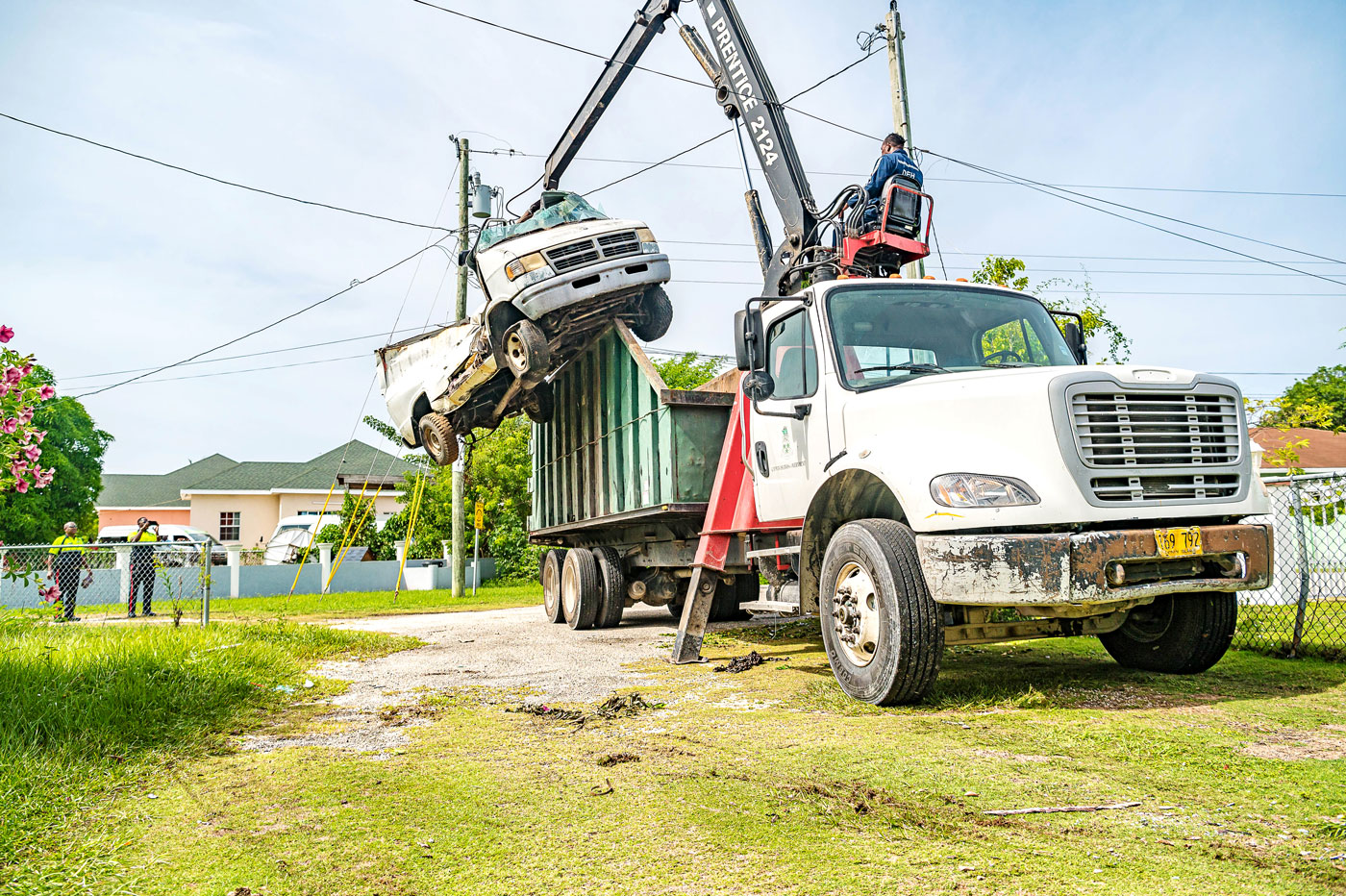
He added that in cases where derelict vehicles have accumulated, the responsibility for transporting them to the landfill is on the property owner/vehicle owner. However, in most cases, the DEH can facilitate the removal free of cost.
But the problem doesn’t stop there. Residents are also being warned to secure their receptacles and household refuse.
“The law requires persons to put their garbage out the night before collection,” Simms said. “This means it is the job of the homeowner to secure their trash from animals because, if they don’t, they could also be fined.”
A breeding ground for illegal activity
In addition to the potential health hazards that abandoned cars pose, the eyesores are also a safety concern.
In recent years. police have found guns, drugs and an assortment of other illegal items hidden in the derelict vehicles.
While police can recover the items, a lack of DNA evidence often means the perpetrators can escape justice, and simply seek another old car in which to stash their illegal items.
“Anytime I see them messing around them old cars, I call the police,” said McField.
Members of the public are encouraged to do their part in keeping the Cayman Islands clean and report any instances of littering and illegal dumping to the DEH at 949-6696, or via email to [email protected] or click here to submit a complaint.
Editor’s note: Gayon Omar Harris and Andrel Harris are not related to each other.
Related Videos












Instead of giving the job of getting rid of our garbage to Dart, Cayman Islands Govt should’ve looked to use the garbage as a means of renewable energy, like Denmark did.
I am a US Citizen that has been gratefully granted Residency status here on these Islands. When my husband and I first set foot here in our forever home on Grand Cayman in May 2022 the last thing I expected was to discover was pervasive litter – as though it is ok to just fling it into the bushes and assume that the foliage will consume it, So now, once to thrice weekly I do “”trash. walks” to pick it up.
In my opinion those that are part of the problem need to be part of the solution .
Specifically, offenders need to be tasked with “community service” time that forces them with picking up road side litter that had been tossed into the vegetation.
Additionally, there needs to be public and private school education that teaches that littering is not ok
Anne Evans
Spouse of Subscriber