Health officials are alerting the public to at least one case of local person-to-person transmission of dengue in the Cayman Islands.
In a statement issued on Tuesday afternoon, Chief Medical Officer Dr. Nick Gent said, “While previous confirmed cases of Dengue were linked to persons with a travel history, new evidence has identified that local transmission – meaning passed from a person in the Cayman Islands to another person in the Cayman Islands with no travel history – has occurred.”
Since the start of this year, 28 cases of suspected dengue have been investigated locally. Of those, four cases have been confirmed – three with travel history and one with no travel history.
Possibly more asymptomatic cases
“Thus far, we have had one confirmation of a person with no travel history,” Gent said, “but I caution that this a disease where there can be a number of asymptomatic cases, so we will remain vigilant and will continue our efforts to educate the public on how to protect themselves while taking measures to control the mosquito population.”
According to the statement from the Ministry of Health and Wellness and the Public Health Department, there are typically between zero and eight confirmed dengue cases each year in Cayman, with the exceptions of an outbreak in 2012 when 37 cases (18 imported and 19 locally transmitted) were confirmed, and again in 2019, when there were 24 cases (three imported and 21 locally transmitted).
Cayman has local testing capability for dengue at the Molecular Biology Laboratory, “putting it in a much better position than it has been in previous years by eliminating the need to send samples overseas for confirmation”, the statement noted.
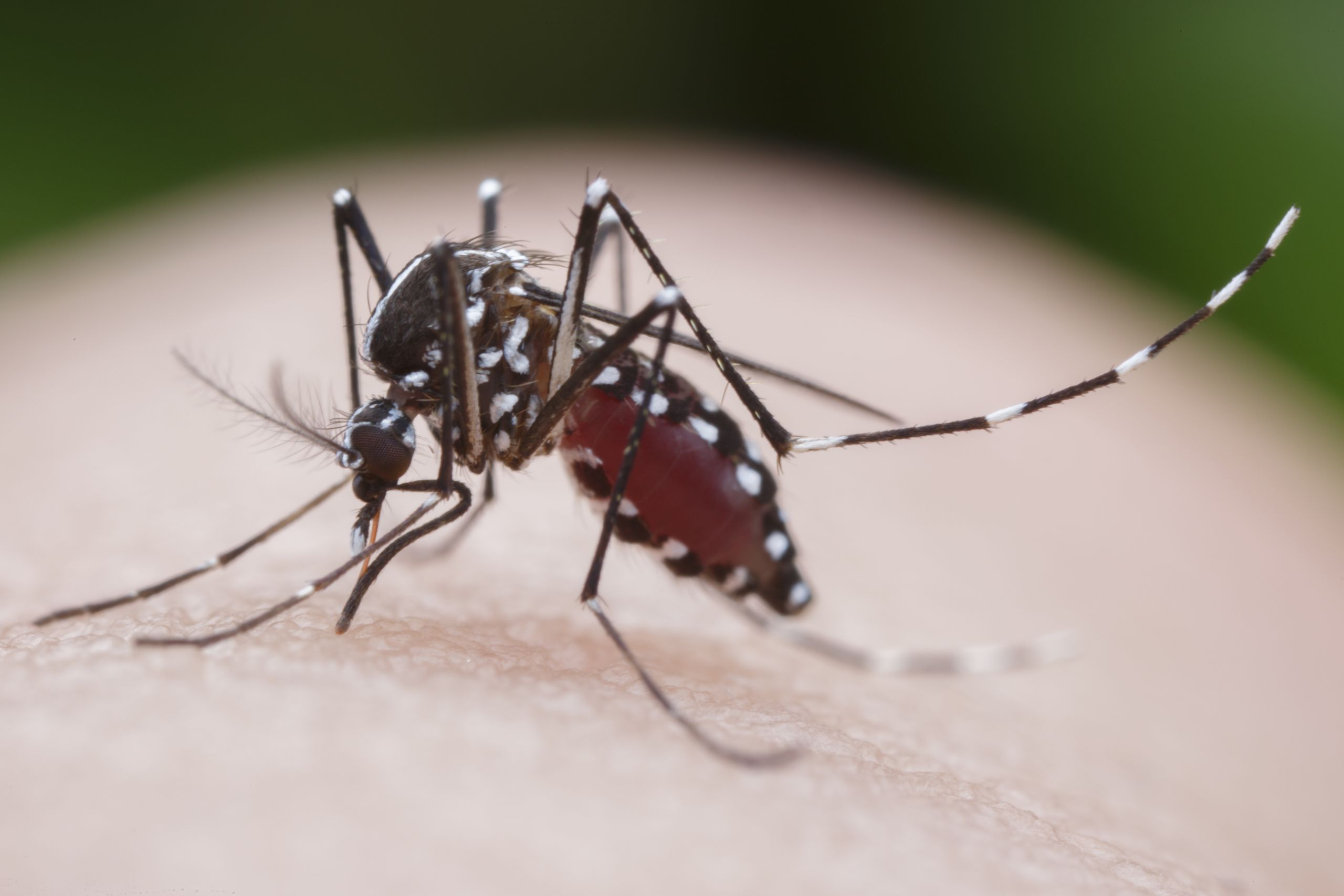
“These limited outbreaks in the last twenty years have happened after the introduction of the disease into the Cayman Islands, and aggressive mosquito control measures targeting the Aedes mosquito – which is responsible for the person-to-person transmission of the disease – were quite effective,” Medical Officer of Health Dr. Samuel Williams-Rodriguez said.

Control measures
Every time a suspected case of dengue or other mosquito-borne disease is reported, vector-control measures are carried out by the Mosquito Research and Control Unit, which liaises with the Public Health Department.
These measures often include targetted ‘fogging’ of insecticide in areas where an infected person has been residing or working.
Williams-Rodriguez added that in order for the Aedes aegypti mosquito to transmit dengue, they must bite infected individuals.
“For Aedes mosquitoes to transmit dengue, they must bite infected persons; otherwise, they can’t become infectious and transmit the disease,” he said in the statement. “Dengue fever is caused by a virus, but a mosquito biting a person with Dengue can spread the virus to another person.
“Hence, persons who develop Dengue symptoms within two to three weeks of returning from countries with Dengue cases are advised to consult their physician and inform them of their travel history.”
Jamaican outbreak
Countries that have reported cases of dengue include: Antigua and Barbuda, Argentina, Aruba, Bahamas, Barbados, Belize, Bolivia, Brazil, Colombia, Costa Rica, Dominican Republic, Ecuador, El Salvador, Grenada, Guadeloupe, Guatemala, Guyana, Honduras, Jamaica, Martinique, Mexico, Montserrat, Nicaragua, Panama, Paraguay, Peru, Puerto Rico, Saint Barthelemy, Saint Kitts and Nevis, Saint Lucia, Saint Martin, Saint Vincent and the Grenadines, Suriname, Trinidad and Tobago, United States of America, Uruguay and Venezuela.
Hundreds of cases of the dengue virus have been reported recently in Jamaica.
The Jamaican Ministry of Health and Wellness declared a dengue outbreak over the weekend, stating in a press release, “As of Friday, September 22, 2023, the country had recorded 565 suspected, presumed and confirmed cases of Dengue. Of that number, 78 cases had been confirmed with majority of the cases seen in Kingston & St. Andrew, St. Catherine and St. Thomas.”
Although no dengue-related deaths have been confirmed in Jamaica, six deaths are being investigated by the health authorities.
Officials in Cayman are advising people travelling from Cayman to Jamaica to “monitor the situation closely”.
Prevention efforts
Local health officials say the best way to prevent the transmission of dengue fever is by preventing mosquito bites.
“I encourage residents to familiarise themselves with the public health advice for travel and local prevention,” Gent said. “And, as always, early diagnostic testing is paramount, so if showing symptoms please contact your physician or the Public Health Department on 244-2648.”
According to the Public Health Department, typical symptoms of dengue include:
- high fever
- severe headache
- backache
- joint and eye pain
- nausea and vomiting
- Muscle and or bone pain
- A rash (sometimes) may be visible two to five days after the onset of fever
- Nausea or vomiting (sometimes)
- Signs of bleeding (such as pinpoint red or purple spots on the skin, nosebleeds, bleeding gums, blood in urine or stool, or vaginal bleeding) dengue fever is seen in a severe form known as dengue hemorrhagic fever, severe dengue, or dengue shock syndrome.
Most people recover without any complications, using pain relievers and bed rest. Once a patient has developed a fever, the infectious period lasts for one week only.
Related Videos