


As many as 85 guns on the streets of Cayman have been traced to various crimes, with police unsure how many of those weapons are still in working order.
And, over the last seven years, the RCIPS has compiled a database of more than 200 illegal firearms.
Of those weapons, several have been used in a range offences, from grisly murders in broad daylight to guns being fired in the air by drunken men in nightclub parking lots and a host of other crimes.
This information has been made available for the first time as the RCIPS has partially pulled back the veil of secrecy around the state of illegal gun use in Cayman – revealing that more than seven dozen illegal firearms that have been used have not been recovered.
During his first media roundtable discussion on Friday, 17 Nov., Police Commissioner Kurt Walton said the RCIPS’s ballistics hub had identified 85 unique profiles, each for an illegal firearm.
Of the 85 firearms, 19 had been used in two or more crimes.
“What we don’t know is, of the 85, how many are still usable and exist, because guns can have a shelf life, depending on the exposure to the elements and everything else,” said Walton, whose three-decade-long RCIPS career once saw him patrolling Cayman streets as part of the armed policing unit.
Of the 19 guns used in multiple crimes, the most deadly is thought to have been a 9mm Lugar handgun that first appeared on the police’s radar in 2011, when it was used in a homicide – one of several gang killings late that year.
What authorities know about the gun has been pieced together from bullet casings found at various crime scenes.
It was also used in two other murders, including the November 2019 shooting of Shaquille Bush, who was gunned down in a hail of bullets by his father Roger Bush. That gun may have been lost forever, though, as the prosecution’s star witness claimed at trial that Roger Bush threw the gun into the sea.
Another firearm for hire was a 9mm handgun used in the killing of retired prison officer Harry Elliott Jr., who was shot and killed in a gambling den on School Road during a botched robbery carried out by Justin Jackson and Eric Brian Williams-Soto, who have both been convicted of manslaughter.
Months prior to Elliott’s killing, the same gun was used by Luisto Hernandez, who shot his stepfather at close range. The weapon was never found, but ballistics evidence linked it to multiple other crimes – suggesting it was a gun for hire, available to those in the community with the right connections.
“The evidence would suggest that some of these weapons are being rented out by persons to commit various crimes,” said Walton, who acknowledged that finding the guns has posed a significant challenge to police.
Locating the mystery guns
During the past seven years, police have seized more than 127 illegal firearms. However, it’s not clear how many of those weapons were used in the commission of multiple offences.
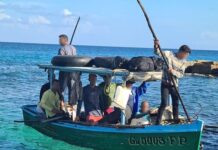
With no gun-manufacturing plants or retail stores selling firearms in Cayman, the main way that people get their hands on illegal weapons has historically been through Jamaican drug canoes and Honduran fishing vessels.
Although police have been able to make several successful drug interdictions on the high seas, there are vessels that get through undetected, loaded with an assortment of narcotics and guns.
“The prices vary from whether or not the guns is used, and the type of the gun,” one former convict, who has served prison time for possessing an illegal firearm, told the Compass. “Most times when a drug boat lands, there’ll be, like, two or even three guns, as well.”
Recently, police were also able to confirm a long-suspected theory – that illegal guns were being used in one jurisdiction and shipped to another by way of the drug canoes.
“To date we have seized three guns that were matched to incidents in Jamaica,” Walton said.
Of those three guns, one is said to have been connected to five murders, and police were able to seize it before it could be used to commit similar crimes in Cayman.
“I’ve said it before, and that is when the guns get across our borders we have failed and then it becomes our problem,” Walton said.
But police are finding that criminals are becoming more resourceful.
“The other day Customs and Border Control were able to successfully intercept three guns that were shipped to Cayman by way of a courier,” said Walton, who added that this was proof of an evolving threat.
Cayman’s gun laws carry stiff penalties with mandatory minimum sentences of 10 years in prison – barring exceptional circumstances. Nonetheless, many would-be criminals are not dissuaded by the potential lengthy jail times.
Convincing illegal gun owners to turn over their weapons is also no easy task.
In 2018, when police held a gun amnesty, 18 weapons were surrendered. At the time, police partnered with pastors and other religious leaders who served as a bridge between law enforcement and the community.
It is an option that Walton says he has not ruled out.
“We have found that the trust between pastors and the members of the community made it easy for some persons to surrender their guns to them,” said Walton. “The pastors in turn handed over the guns to us, and so that is not an option that we are ruling out just yet.”
Related Videos










I am reading about more shootings than ever. In 28 years coming to this island I can’t remember so many crimes. What happened to safe Cayman?? If these are gang related there must be a way to stop it