The scene has become iconic – a British cave diver asking a group of emaciated youngsters in a flooded cave in Thailand, “How many of you?” The reply – “13”. “Brilliant!”
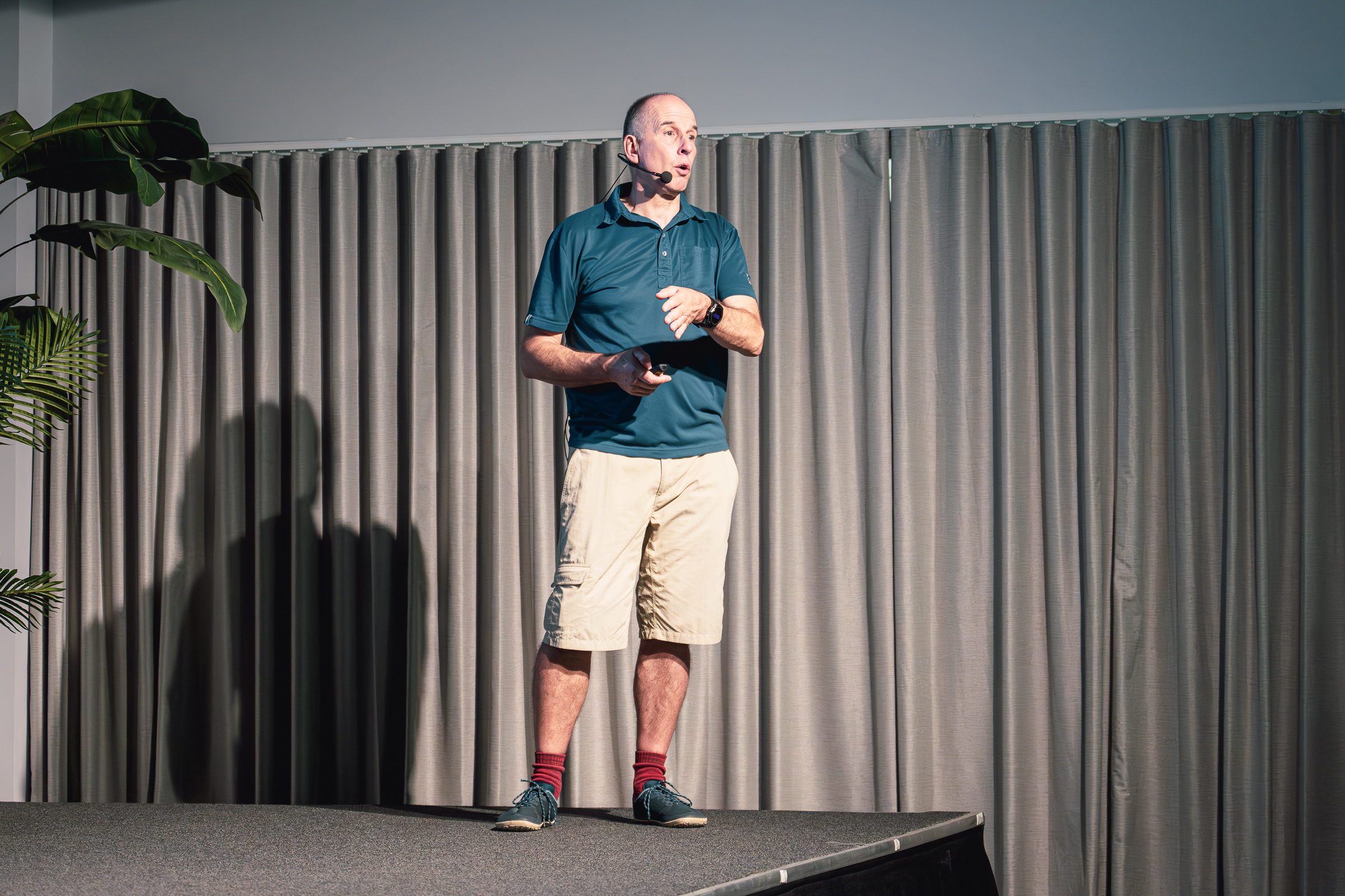
That scene was recounted and replayed on video in Cayman in person last week by one of the two divers – Rick Stanton – who was there when the Wild Boars football team players were found after nine days.
He was among a very small group of elite cavers called in when even the Thai Navy Seals couldn’t get to the 12 boys and their coach trapped in the Tham Luang caves in northern Thailand.
Stanton, in Cayman to take part in the first of Compass Media’s ‘Beyond the Talk’ series, enthralled local audiences over two nights last week with tales of the Thai rescue and others he has been involved in.
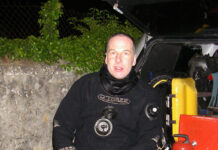
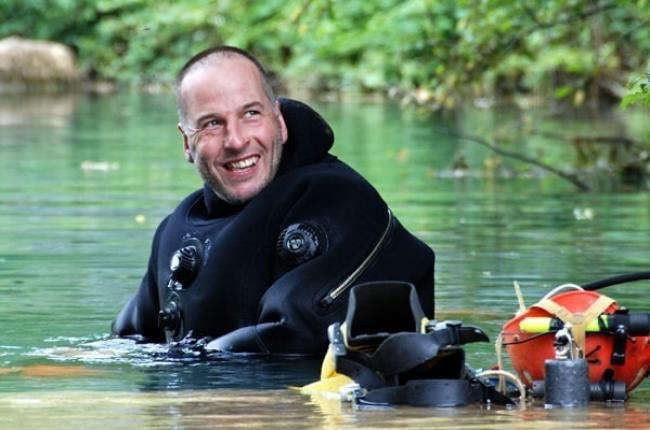
One of the first things Stanton points out in his talks is that he’s not a diver, he’s a “caver who uses dive equipment”. In fact, he holds no dive certifications, so he wouldn’t be able to hire an air tank in Cayman and go for a dive, unless he stayed at 40 feet or above and was accompanied by a dive instructor.
This hasn’t stopped him from exploring some of the deepest and longest cave systems in the world – though nowadays, it’s kayaking that interests him the most.
He has built most of his own dive equipment, including his rebreather, and he uses a tyre’s inner tube as a buoyancy control device (BCD). “It may not be pretty, but it works,” he says.
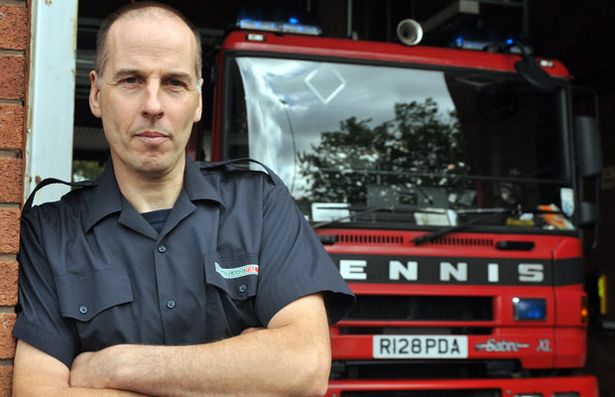
In June 2018, when it became apparent to the Thai authorities that specialist help would be needed to get the boys – aged between 11 and 16 – and their 24-year-old coach out of the caves, Stanton and fellow cave divers, John Volanthen and Rob Harper, were contacted.
Their names had been suggested to the local governor by Thailand-based British cave explorer Vern Unsworth.
In his presentations at The Vault at the Compass Centre on 11 and 12 Jan., Stanton showed in his slideshow the piece of paper containing their names that Unsworth had passed to the governor of Chiang Rai, Narongsak Osatanakorn. That note described them as the best in the world and urged the governor to contact them through the British embassy. Within a day, the trio had arrived in Chiang Rai.
Stanton, in his talks, said the cave side was “like a scene from the Somme – mud everywhere”. With rain continuously falling, the cave kept filling up with water, leaving many fearing the boys had drowned.
He said he’s often asked why the Wild Boars soccer team had gone into the cave, even though a big sign outside the cave warned of danger during the July-to-November monsoon season.
“They were boys being boys, just having an adventure,” he says. He also points out that they went into the cave in late June, rather than July – the ‘official’ start of the monsoon season.
As has been seen in Cayman and the wider Caribbean, where hurricanes don’t always adhere to the official June-November hurricane season, it’s the same with monsoons, and the first monsoon of the 2018 season came early. Its heavy rains flooded the cave after the boys had entered, on a post-soccer-training cave hike with their coach on Saturday, 23 June 2018.
Nine days without food
After days of searching the cave system, battling a strong current in water so murky they could barely make out their hands in front of their faces, trying to find higher, dry ground where the boys might be, Stanton and Volanthen came across them on 2 July. They were found about two and a half miles from the mouth of cave.
This was nine days after the boys had entered the cave. They had no food, but access to fresh water from rains that were flooding the cave.
The first thing the pair noticed upon surfacing in that particular part of the cave was a “horrendous smell”, Stanton told the Cayman audience. “Imagine 13 teenage boys in a room for nine days.”
He added, “Nine days without food, completely stoic. … their legs were like matchsticks.”
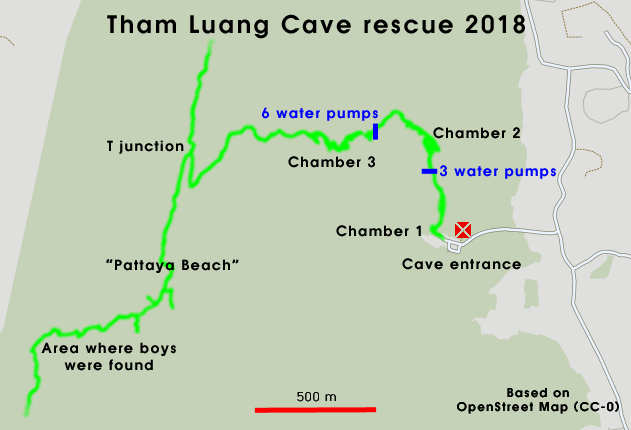
It’s Volanthen’s voice that is heard on the video, which was filmed on a camera the pair had brought with them to record a T-junction in the cave system so they could show other divers which pathway they had taken.
Upon finding the boys alive, Stanton says, his first reaction was relief, as he had expected to find 13 dead bodies in the water.
“The moment we found them all alive, it was a relief. That was the first emotion. The second emotion was ‘OK, now what?’ We had no idea how to get them out. Morally, it’s my responsibility, I’m the cave rescue expert on site, and I have no idea how to get them out.”
The kids were a mile from the “advance space” – a dry section of the cave system, set up as a kind of base camp, and well over half of that distance was underwater.
After being found, the Thai Navy Seals took over, saying they’d get the boys out. But that didn’t work out, and several of the Navy divers themselves had to be rescued because they ran out of air. That’s when the overseas cave dive rescuers were called back into action.
Stanton said he realised the only possible way to rescue the children, who had no dive experience and who would have panicked in near-zero visibility during the five-hour trip back to the mouth of the cave, was to sedate them.
He contacted Australian anesthesiologist, Dr. Richard Harris, who was also a cave diver, told him of his plan, and asked him to come to Thailand to help. Stanton showed the Cayman audience a message he had sent to Harris, asking if it would be possible to sedate a child and dive him out – Harris responded, “Sedation not an option.”
But it turned out to be the only option among a series of several unfeasible ones, Stanton said.
He, Volanthen, Chris Jewell and Jason Mallinson – accompanied by Harris – made their way back to the boys on 8 July – more than two weeks after the Wild Boars had entered the caves. Harris gave the initial injection of ketamine, but because the drug only lasted half an hour, the divers had to administer it to the children several times throughout the long, hazardous trip back.
Wrapped up in wetsuits with an air tank on their chests, and facing down, the kids were tethered to their respective diver, and carried “like shopping bags”, Stanton said.
Despite trying to stay dispassionate during the rescue, Stanton said, “Once you’ve got the child’s life in your hands, and you have a two-and-a-half hour swim, and you can’t see anything, and you can barely hear him breathing, you realise that’s not merely a package, that’s a lot of responsibility, and it’s a huge challenge navigating the way out.”
Over three days, all 12 boys and their coach were brought out safely.
Since the rescue, he has stayed in contact with some of the boys, including one, who is attending school in the US, where Stanton was invited to give the graduation speech recently.
In May 2019, Stanton received the George Medal, the highest award for bravery in civilian life, from Prince William, for his role in the Thai cave rescue.
Well before that rescue, Stanton had already been made an MBE in the 2012 New Year’s Honours List for his cave diving rescue services.
The entire rescue has been immortalised on the big and small screen in a number of documentaries, including National Geographic’s ‘The Rescue’, a Netflix dramatised six-part series called ‘Thai Cave Rescue’, and the Ron Howard-directed feature film ‘Thirteen Lives’, starring Viggo Mortensen as Stanton and Colin Farrell as Volanthen.
Stanton has also written about the cave rescue in his book ‘Aquanaut: A Life Beneath The Surface’.
Related Videos