


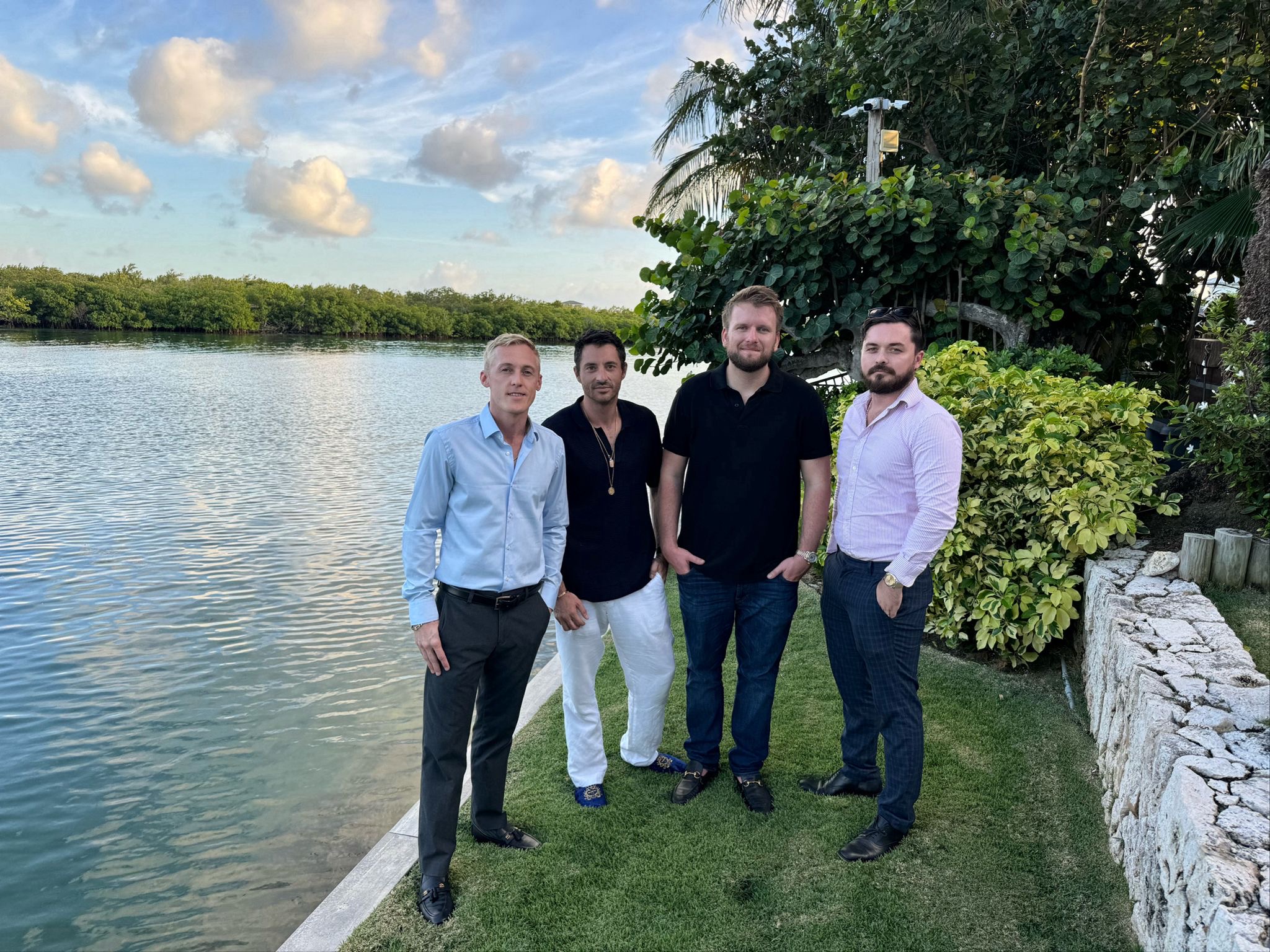
Four young Caymanian entrepreneurs have set up their own business, using drones to wash the windows and walls of the increasing number of Cayman’s high-rise buildings.
Tom Mann, Will Fenton, Petros Nomikos and Ben Tonge have obtained the local franchise for KTV Working Drone – a concept created in Norway, which involves specially built drones to clean building exteriors.
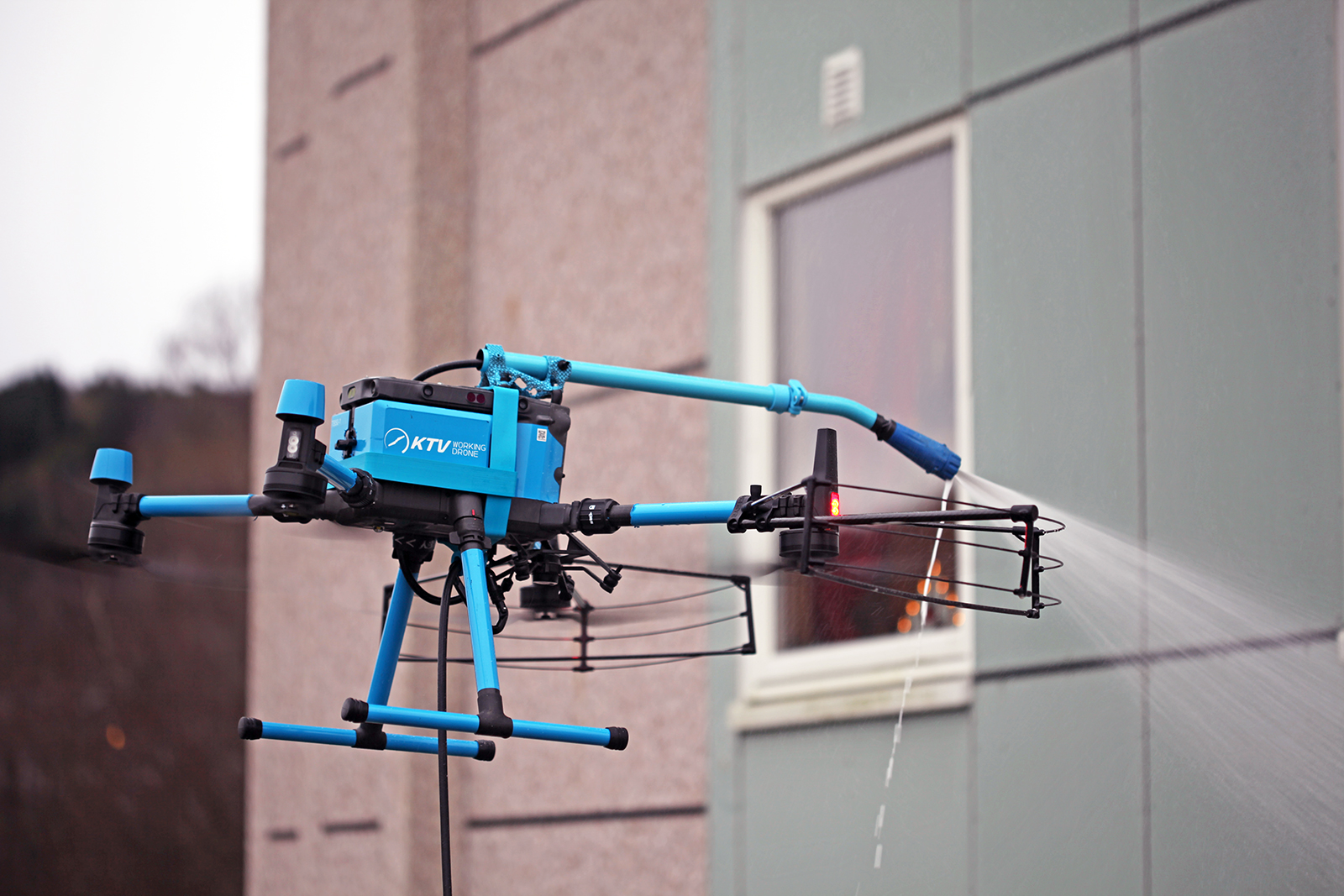
The idea is that instead of having to hire bucket trucks, workers and power-washing equipment for several days to wash tall buildings, property owners would hire KTV to send up its drones to clean the windows and walls of the new towers that are beginning to dot Cayman’s landscape.
Both Mann and Fenton work in the property management field, and say when they came across this venture, it really stood out to them as an alternative to the current expensive and time-consuming options available in Cayman.
“It ticked so many boxes,” Mann said. “Right now, if you want to power wash, say, a high-rise building, that is 10 storeys tall, you’d have to hire a bucket truck in order to be able to access those areas.
“In the US, they use abseilers or cranes with platforms that lower, but we don’t have those here. Right now, if you wanted to get a building of that size power washed, you’d have to rent a bucket truck, which is a huge overhead expense; you’d have to rent them at a daily rate.”
A faster solution
He said KTV drones will take up a “fraction of the time, with less overheads, because you don’t have to use the bucket trucks. It’s also a lot safer. Liability is also a big concern for commercial owners.
“Also they are quiet, they doesn’t make any noise.”
As well as washing high-rise buildings, the drones will also be capable of cleaning the increasing number of solar panels that are being erected on rooftops in Cayman.
Cleaning a large development can take up to two weeks, using the bucket truck and power-washer method, Mann explained, and cost hundreds of dollars a day. In certain complexes, the poolside-facing part of taller buildings often cannot even be power washed because there is not enough room at the poolside to position a bucket truck.
Tonge says the drones work “five to 10 times faster, with no noise, no safety concerns”, and also won’t involve the use of diesel-powered trucks.
KTV Working Drone evolved from KTV Group, a façade- and window-cleaning company which was founded in Norway by Kennet Nilsen in 1992. When technology made it possible for drones to be used for those services, Nilsen embarked on research and development, working with drone company DJI on the project and developed the product, which is now franchised across 41 countries.
Softer touch
The team of young businessmen in Cayman say the drones employ a softer method than the traditional power washing.
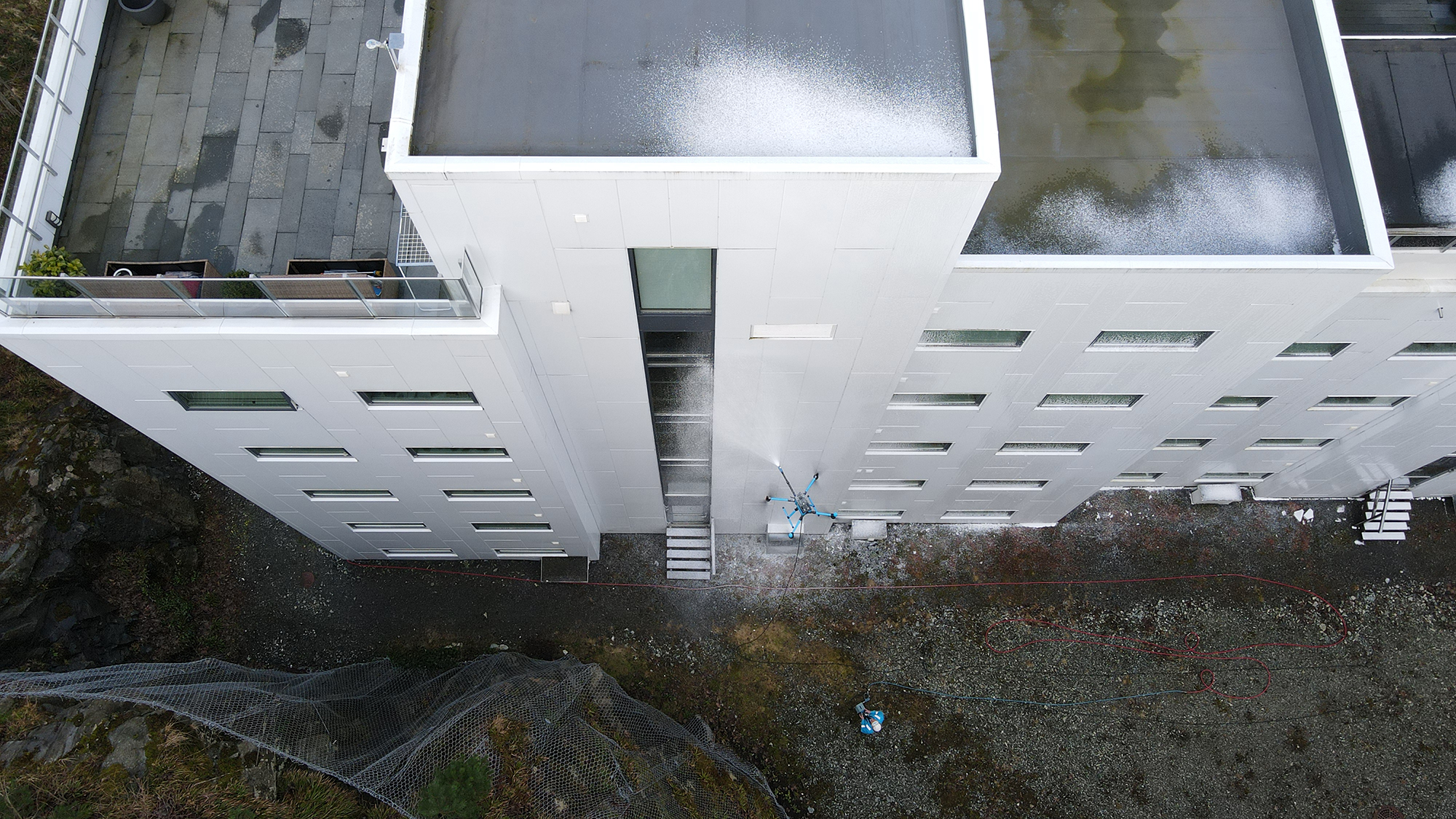
Mann explained, “The drones use a soft washing method. There’s a tank in the back of a van with a mixed cleaning solution that latches on to the muck and the grime, and washes it in a similar fashion to how you would shock a green swimming pool.”
Tonge added, “It’s a chemical formula that was developed over five years in Norway. You spray it on and, over the period of three months, the wind and the rain clean the building. You don’t take it off, you leave it on and you let it dry and over that period it cleans the building itself.”
They say the solution they use is environmentally safe, and is 98% filtered water.
A second method they use for washing involved purified water applied with high pressure by the drone, which prevents the appearance of streaks and spots on windows.
Mann said, “Our main aim is to demonstrate that we’re all Caymanians, we’re all young entrepreneurs, and we’re trying to show there is a safer, faster, cheaper way of providing this service in the Cayman Islands.”
The team, who say their method is “greener, faster, cleaner, quieter and more affordable”, will start off with two drones, one drone pilot and a labourer, and plan to expand if there is enough demand locally.
“We’re starting off small and feeling out the demand, and if the demand is sufficient, we can bring in another van and another team and bring in more drones,” said Mann, who added that the team has the sole franchise rights for the Cayman Islands.
Final touches
The Cayman franchise of KTV is in the process of finalising licences from the Cayman Islands Civil Aviation Authority to fly the drones, which will be limited to operating within five feet of the top of a building, so, the team says, there should be no issue with no-fly zones.
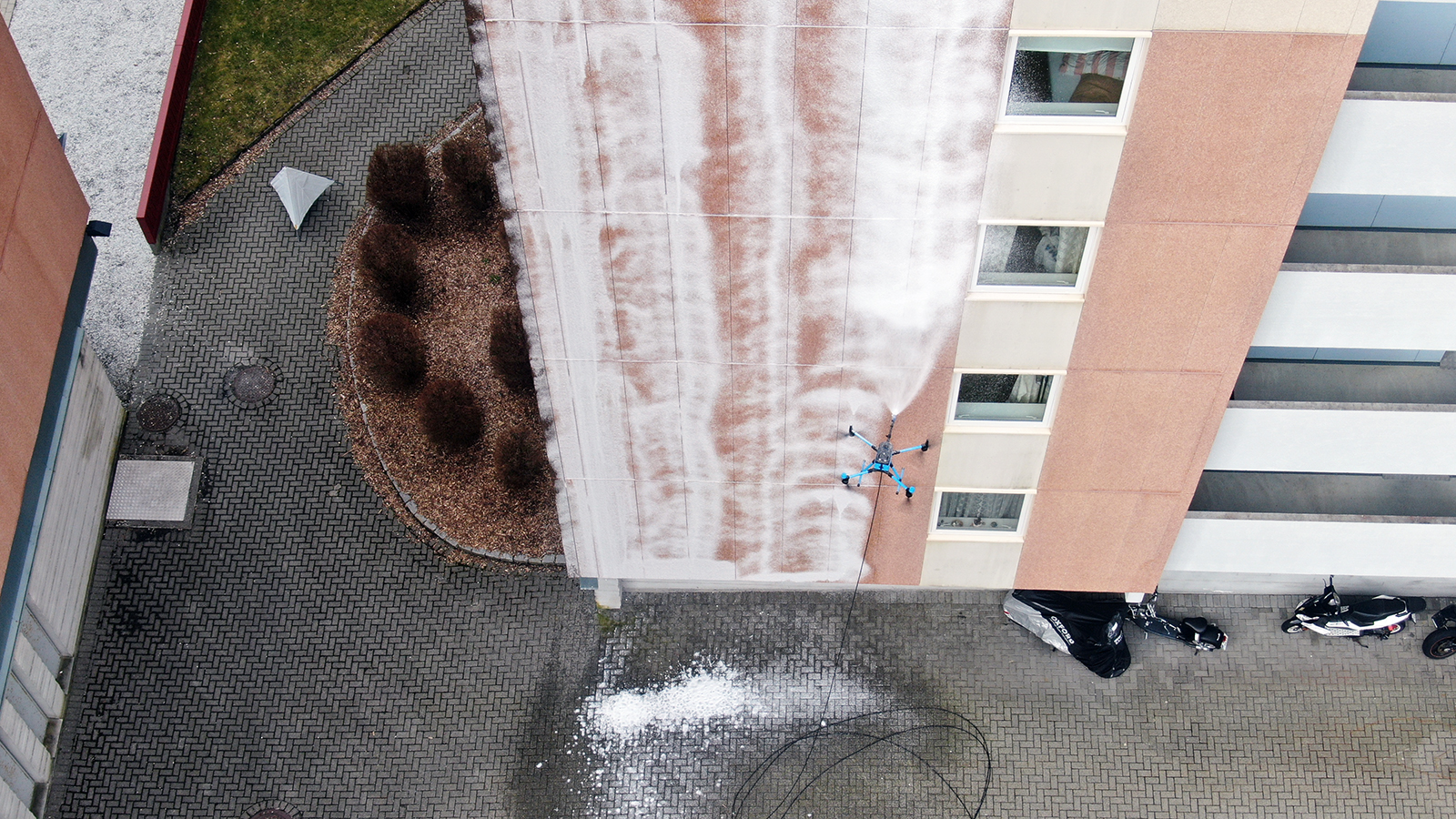
And if a building is more than five storeys tall, it will be tethered to the structure, so that even if there is a malfunction, it can’t fly out of control above the building or fall to the ground below, Tonge said.
Tonge says there is “virtually no risk” with the drones, so much so, that Chilean authorities have hired KTV in that country to clean the Nuevo Pudahuel Airport in Santiago.
The Cayman business is not quite ready to start taking on customers yet, as it is awaiting its van from the UK, and some other equipment.
A team from the parent company in Norway will be arriving in March to do some on-the-ground training with the pilot and labourer, after which the pilot will be able to train any new pilots.
Related Videos








This sounds great. I live in a 10 story building that needs the windows washed Please have them contact Seacrest when they are up and running