


Four years ago, a new Family Division court service was set up to offer former couples free mediation sessions to help settle the often contentious issues of co-parenting, maintenance payments and other terms of divorce settlements. Now, the programme is handling well over 100 cases a year.
In a reflection of Cayman’s rising divorce rate, in its first year, the mediation programme handled 83 cases. Last year, it handled 146. The vast majority of those cases were settled – meaning that the couples went before a judge with an already final version of their consent order.
Mediation not only takes the pressure off couples having to sort out their differences before the, at times, intimidating environment of a courtroom, it also frees up judges’ time, making the process speedier and more efficient.
Leslie Talbot, the courts’ mediation coordinator, says the number of settled cases has increased dramatically over the past four years. For example, in 2021, there were 58 fully settled matters; the following year, 69 were fully settled, and seven were partially settled; and last year, there were 107 fully settled and 12 partially settled matters.
“The settled designation is not indicative of the remainder having failed,” she told the Cayman Compass. “For example, I only reported 12 failures for 2023. By way of example, some remain engaged in the process, some were sent back for more information – valuations, etc. – there were reconciliations, dismissed cases, a death, some were unsuitable due to extenuating circumstances, and other factors that didn’t result in the matter moving forward.”
Chief Justice Margaret Ramsay-Hale recently noted that more than 40% of marriages in Cayman end in divorce, and that 286 certificates of dissolution of marriage were granted in Family Court in 2023 – up from 251 in 2022. There are an estimated 670 marriages per annum in Cayman, the chief justice stated at the opening of Grand Court last month.
In her speech at the annual opening ceremony, Ramsay-Hale commended the work of Talbot and the court’s mediation programme, which has been running since early 2020.
Free service
The mediation service provided by the court is free, on the insistence of former Chief Justice Anthony Smellie, who announced details of the programme at the January 2020 Grand Court opening ceremony.
He said at the time that there was a growing concern among the judiciary about the escalating costs of family proceedings, as well as the “disproportionate amount of court time being taken for resolving matrimonial property and child custody issues – matters which reasonable parties should be able to agree upon between themselves”.
He said the free service would assist participants in settling their family disputes “in a cost-effective and non-adversarial manner, minimising the emotional damage caused to families in the breakdown of marriage”.
Talbot said when she, at one point, queried whether a small fee might be charged, as she had seen in the US, “I don’t think I got the sentence out when [Smellie] said, ‘Absolutely not’. He said, ‘I want the community to understand that we recognise that the courtroom is not the place for family’. So, there is no charge at all to come to the mediation programme, whether they come one time, or however many times.”
The Zoom factor
Talbot, who worked as a family lawyer in Florida for 25 years before moving to Cayman with her husband, was appointed as mediation coordinator when the office was first set up by Smellie, just weeks before the COVID-19 pandemic struck.
Ironically, that did not stymie the mediation process as much as one might have expected. In some ways, it made things easier.
The advent of Zoom during the pandemic became a game changer for mediators and lawyers involved in divorce proceedings, Talbot says. It’s also useful in especially contentious divorces when emotions are running high.
“It could have been very tough,” Talbot said. “Zoom was fantastic. And what ended up happening is, some of the attorneys to this day say their clients prefer it, they can sit in the attorney’s office. It’s, in some ways, less intimidating than coming to court.
“But if I have any cases that have even just a whisper of domestic violence or concerns in that regard, Zoom also allows for having that distance to give them more of a comfort level.”
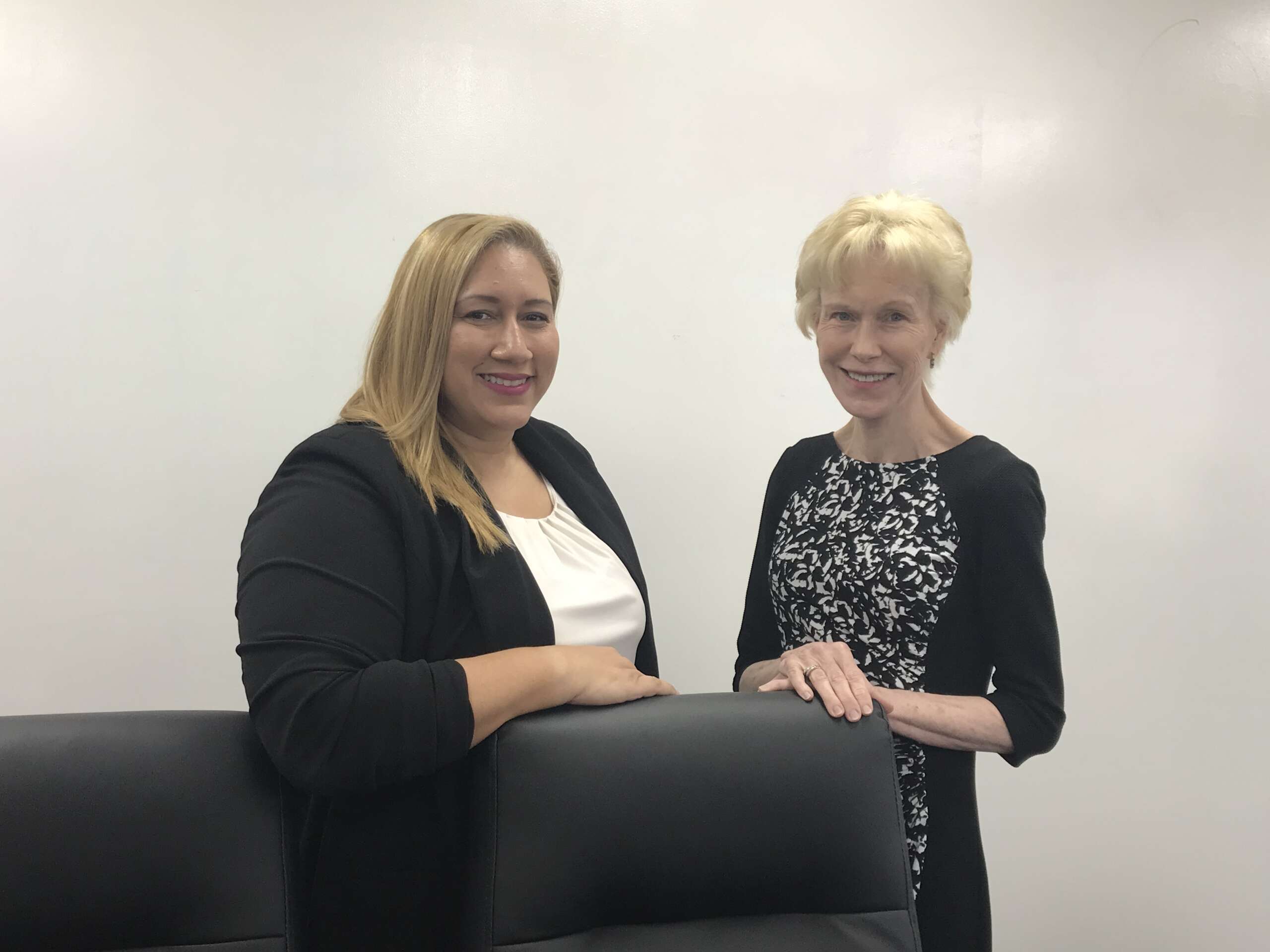
Talbot is on the verge of retiring from the mediation programme, with local lawyer and life skills coach Chanda Glidden taking over. The two are currently working together during the transition period.
It’s not only divorces the mediators handle, they also deal with couples who are not married, but who have children or property together. The divorces go through Grand Court, while the other matters go through the civil division of Summary Court.
Immigration issues in divorces
Talbot says there are some issues she comes across in divorces that are unique to Cayman, including rollover – the immigration policy that requires work-permit holders to leave Cayman after nine years for at least one year before they can return here for work, or to apply for permanent residency.
When one of the former couple’s year off island is different to the other’s, it’s a difficult issue to traverse when there are children involved.
“If someone’s got to leave the island, are they leaving with the child? Are they assured that they’re coming back? … [They ask], ‘What are we going to do about education and what are we doing about contact?’ How does child maintenance get impacted, because there’s obviously a job change that occurs,” Talbot said.
Another immigration issue facing some divorcing couples is the loss of Caymanian status through marriage, as under the current immigration regulations, a person who has the right to live in Cayman by virtue of being married to a Caymanian loses that right once that person gets divorced. That, in turn, becomes an issue for the mediators or the court, who must help the couple navigate where the children should live and contact arrangements for the parents.
These issues cannot always be resolved in the mediation sessions and end up back in the hands of the lawyers and judges, as mediators are not allowed to give legal advice. “We would point out that there might be an immigration issue here that you may want to think about,” Talbot said.
Glidden notes that it’s important to remind people that “these are temporary and fluid situations” that can and do change quickly, so they need to figure out the best way forward in that particular situation.
The mediation process
For mediation purposes, Cayman follows the UK model.
At the start of each case they deal with, the mediators hold a MIAM, which stands for ‘mediation information and assessment meeting’, which lasts less than a half hour and during which the mediation process is explained and any questions are answered.
“Sometimes, the attorneys participate in those meetings, and sometimes it’s just the clients. Over the course of the four years, we’ve had very few cases that someone was at a MIAM and said, ‘You know, I don’t want to do mediation’ or ‘No, I don’t want to attend that.’ So, almost universally, we ended up scheduling mediation there.”
The subsequent mediation sessions last for three hours, though participants are not limited to just one session – they can come multiple times.
“There are three major issues in family matters,” Talbot explained. “You’ve got children’s issues, dividing up of assets, and debts. And then once all of that is situated, you’re talking about maintenance issues.
“Sometimes we might have a mediation session that’s just focused on the kids and try to get [the parents] through that issue because, one, it should be the most important issue to them, but, two, it sometimes has the most emotional energy attached to it.”
Glidden added, “The most important thing, I would say is, are the parties willing to try… are they willing to try to get across the line?”
If matters can be settled to the satisfaction of both parties at the mediation stage, they can avoid having to go back to court, the mediators explained. They draw up a consent order that the divorcing couple signs, which is then submitted and dealt with administratively.
Financial challenges
To help divorcing couples navigate the financial challenges of splitting assets and debts, and determining child maintenance arrangements, when the mediation office was first being set up, a decision was made to treat those who chose mediation rather than litigation the same way.
“So they developed what’s called a financial disclosure booklet, which the parties are required to complete,” Talbot explained. “And it includes not only a written summary of different things, but it also requires filling out … a financial statement of income and expenses. And then, it has a requirement that they have a checklist of documents that they have to provide and exchange. Then they need to sign off with a notary that they have honestly provided those documents.”
The disclosure booklet was generated to ensure that people are on “an even playing field in mediation, no differently than they would be if they were in litigation”, she said.
Consent orders – the documents that outline the actions and responsibilities of the parties in a divorce – that are drawn up in mediation are the same as those drawn up if the couple had undergone litigation and settled their divorce in court, and are equally enforceable. If one or both of the parties fail to abide by the terms of the consent order, they can find themselves back in court before a judge.
Those matters are often referred to the court’s Family Proceedings Unit for action.
Mediation evolution
When the mediation service was first touted, Talbot says, some attorneys were quite sceptical, but have since accepted the process.
“The evolution over the four years has been just amazing,” Talbot said. “The attorneys have embraced mediation so wholeheartedly.”
“I think it’s added a new dimension to the family law bar here because they are having a lot more one-on-one contact with one another,” she said.
Before the mediation process became an integral part of the system, there was a time-consuming process of lawyers writing letters that their client would have to approve; if there were amendments involved, they would have to be written into the letter, and re-sent to the client to approve, and then that version would be sent to the other party’s lawyer, who would in turn send it to their client, and so on.
“It was such a cumbersome process, and expensive,” Talbot said, “and, something, I think, is lost sometimes when it’s just written communication.”
The mediation process allows the parties, and their attorneys as their advocates, to be face-to-face.
“There is a goal of saying, OK, yes, everybody who comes into this room has had great experiences and horrible experiences with whoever it is across the table that they used to be involved with, but let’s talk about solutions and moving forward from today,” Talbot said.
She added, “It’s a totally different tone than what they have to take in a contested hearing, and that, I think, has been the most professionally rewarding thing, to see that evolution.”
From adversary to ‘solutionary’
Her colleague Glidden said, in the mediation process, the lawyers are “switching from adversary to ‘solutionary’”.
“And, you know, the good thing about lawyers is we love a challenge, and we will usually rise to it just for our own fulfilment… I have found lawyers will rise to the occasion when they’re asked to do so.”
With some of the “more complex, unfortunate, very long-lasting, nasty matters” taking several weeks before a judge to resolve, Talbot says, the mediation process has freed up judges’ dockets in the Family Division to enable them to hear these cases without a huge backlog being created.
Related Videos













Are there any male mediators, to level the playing field?.