

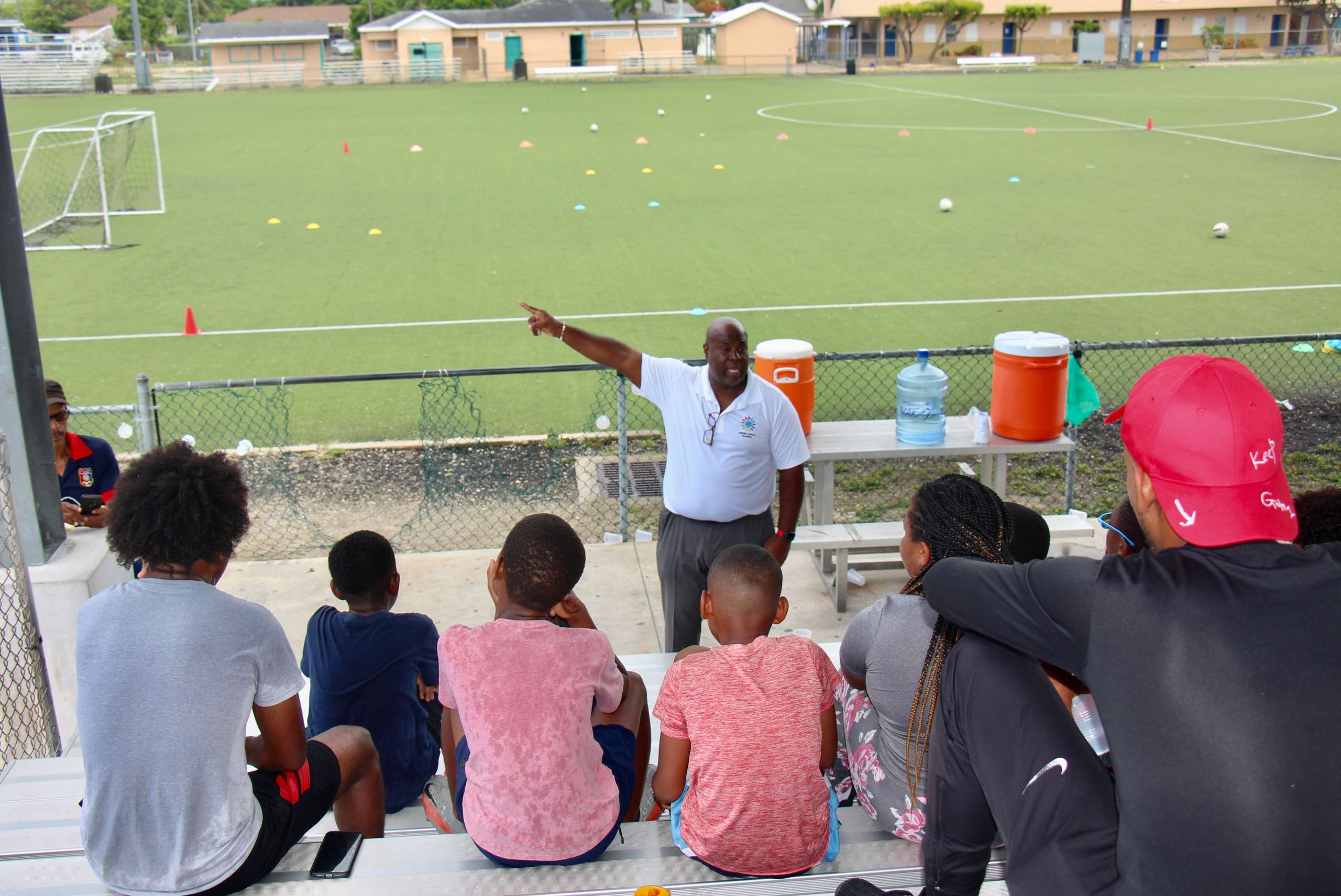
Efforts to stem gang and gun crime in Cayman must focus on youth development, training and education, rather than tougher policing and longer sentences, a host of community leaders have warned.
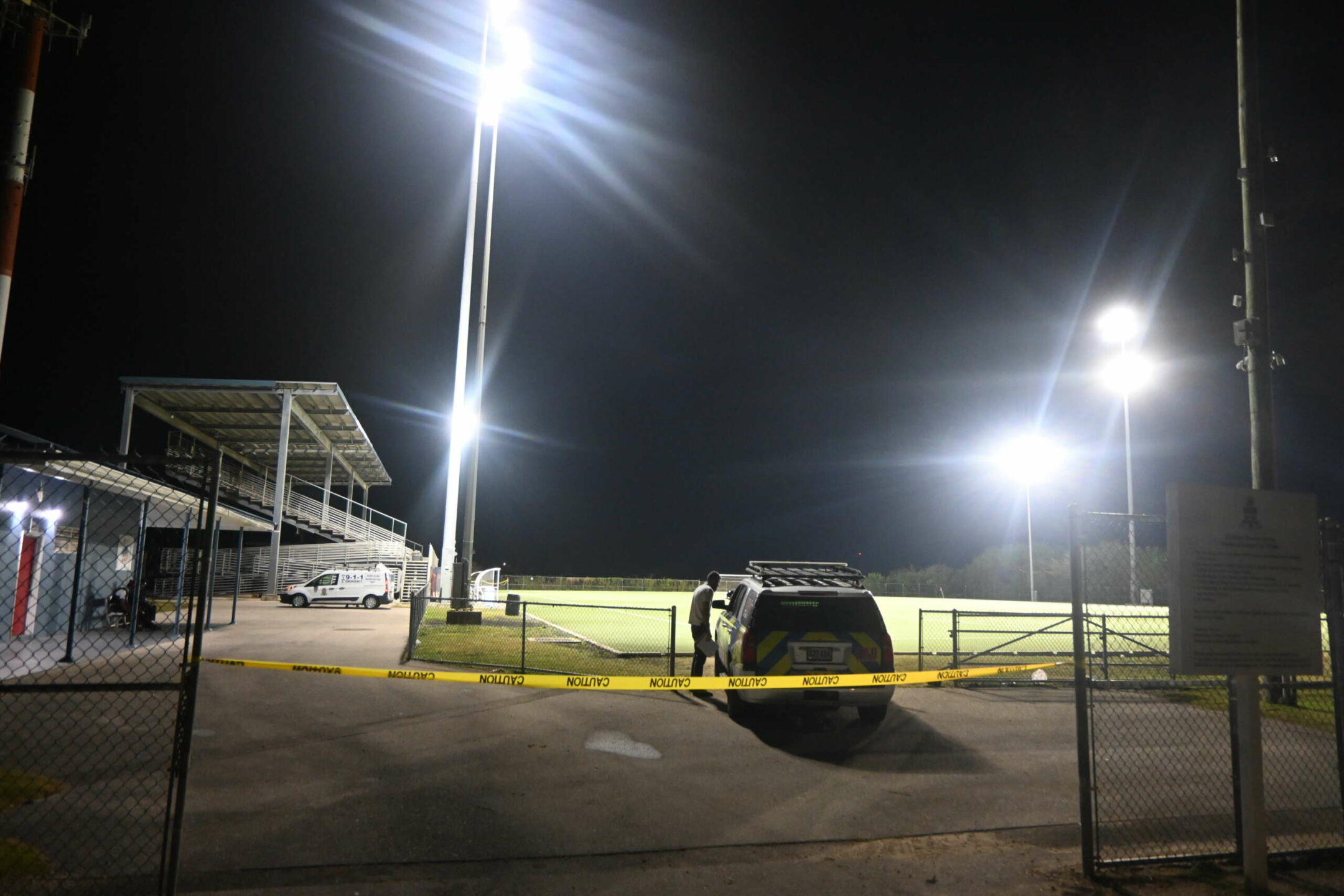
Last Sunday’s shocking stadium shooting in which seven people were injured while watching a football game has sparked outrage across the Cayman Islands.
And initial government responses have followed a familiar pattern – promising money for police task forces, clamp downs on weapons trafficking and reviews of anti-gang laws.
But several reports produced in Cayman over the last decade argue that lasting change can only be achieved through addressing the causes of crime in Cayman.
Michael Myles, who runs Inspire Cayman training centre and was formerly government’s at-risk youth officer, complied a summary of some of the key findings of a slew of consultant reports for government in 2017.
He says there is no need for any new experts to be brought in, the answers are there in black and white.
“The response has to be about addressing poverty, addressing education, dealing with trauma and mental health and ensuring people have skills and jobs that allow them to survive in this country and make a better life for themselves,” he said.
“By the time someone picks up a gun and shoots into a crowd of people something has already gone badly wrong.”
A far greater focus is needed on intervening in the often chaotic family lives of troubled young people who end up in gangs, he said.
If enough resources were invested in ensuring they graduated school as stable individuals with qualifications and a trade that could make them a living wage, government would save money on catching, prosecuting and imprisoning those people after they commit a crime, he insisted.
He said it was very easy in Cayman to identify who the next generation of gang members and criminals would be. But it would take a huge national commitment to reverse that trajectory.
Asked about efforts to deal with those concerns, Deputy Governor Franz Manderson said an anti-gang policy that focused on those issues had been presented to the National Security Council earlier this year.
He added, “The Government recognises that addressing the complexities associated with gang-related criminal activity requires a joined-up approach that goes beyond enforcement measures alone, and which focuses upon early intervention for those who are most vulnerable.
“This will inevitably require consideration to be given to the issues which cause or perpetuate gang-related crime.”
Multiple reports tell same story
Of the many reports that have been commissioned by government, perhaps the most oft-cited is a seminal 2006 study by criminologist Yolande Forde.
The report, based in part on more than 30 interviews with adult and youth offenders in Cayman’s prison system, identified key life experiences, behaviours and attitudes – many of them established in youth – that predisposed certain individuals to crime.
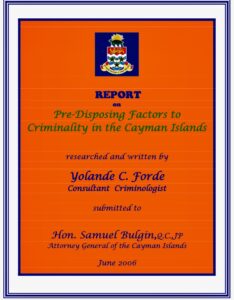
And it argued that Cayman had an imbalance in approach with an overemphasis on reactive measures like policing and insufficient attention to ‘proactive measures’.
“Every time a major crime is committed e.g. a bank robbery or a heinous murder, there is a public outcry about the horror of the incident but, comparatively, very little attention is paid to the underlying determinants of criminal behaviour,” the report said.
Though it is now almost 20 years old, Myles said its findings had been supported by numerous follow-up reports and that the key conclusions remained relevant today.
And while some programmes have been implemented, he believes Cayman has not properly embraced the core philosophy the report articulates.
“It is important to understand that there is a fundamental difference between controlling the incidents of crime and teaching people, from a young age, how to control themselves,” the Forde report stated.
“Everything must be done to address the circumstances that are crime generative in nature so that the individual does not develop a criminal pre-disposition.
“It is unfortunate that, over the years, myopic and blinkered views about crime prevention have led to an emphasis on situational crime prevention and control (i.e., policing) much to the neglect of more primary forms of prevention which would have ultimately meant less hassle for the police and also less expenditure.”
Non-profits have struggled for funding
Myles formerly co-ran the non-profit Youth Anti-Crime Trust, which brought former prisoners and police into public schools as part of a crime-prevention programme.
The organisation had plans to expand to develop a programme for children with incarcerated parents.
Bonnie Anglin, former chair person of Youth ACT, said the group folded due to lack of support both financially and in terms of participation from the then government.
She said it was terrifying to now see a mass shooting take place at a football game.
“No more anti-gang task forces, no more increasing penalties in the Penal Code, that is a waste of time – police can pick up your dead body but they can’t stop you getting shot in the first place,” she said.
“We need a national commitment to address the underlying causes of crime… by putting resources into programmes and funding relevant NGO and government agencies who are trying to implement prevention programmes.
“Forget about any new reports, there has been so many over the years and so few of their recommendations have been implemented.
“We need to pull them off the shelf and actually read and, this time, listen to what they are recommending.”
Lost generation
Since the Yolanda Forde report, Myles said a new generation of young people had grown up to become criminals.
Those wielding guns today were the same children identified as ‘at risk’ in schools a decade ago.
He specifically remembers two young men who committed a robbery and murder last year being identified as needing intervention from the time they were children. Though they were known to the system, not enough was done, he believes, to put them on a better path.
“They didn’t graduate high school, they had no skills and no employment and they ended up in jail and a man ended up dead.”
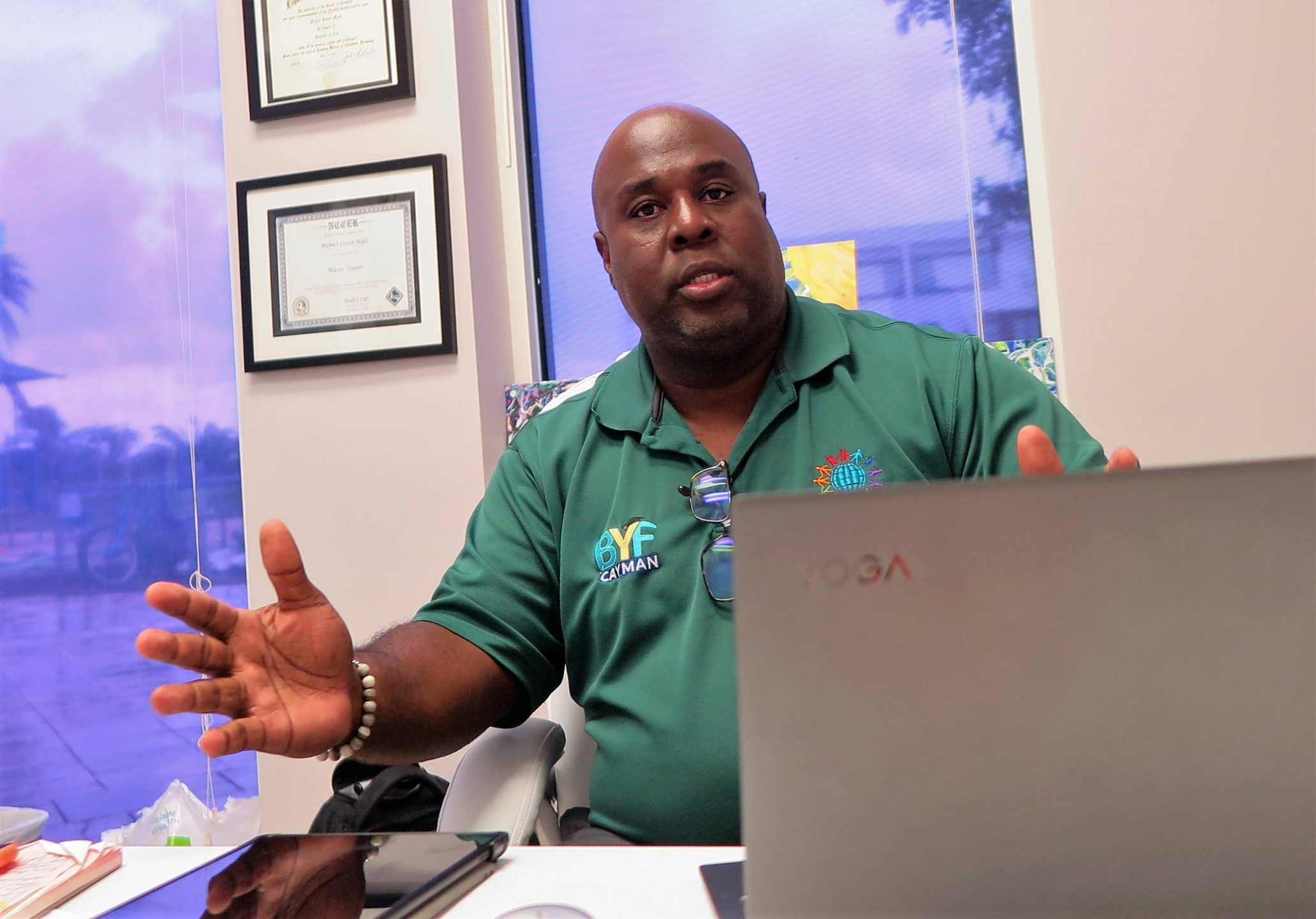
Myles sees the same pattern happening time and again. A youth who came through his Inspire Training programme was recently convicted of a murder.
“He hadn’t graduated school and we did a lot of work with him to get him trained as a divemaster but he got back in with the wrong crowd and now he is spending 32 years in jail.”
He said the community needed to get to such people earlier in life.
“We need to start intervention when they are 10, especially if we know they are growing up in homes where they are going to be drawn into that world.”
Training scholarship for gang members
Myles said he set up the training school out of frustration to help people “make money in Cayman without a gun in their hand”.
If people want to see the causes of criminality in Cayman, he invites them to look at the backgrounds of those who leave school without qualifications.
“I see it every single day. I have five single mums in my course with 15 children between them – if we don’t train them and make sure these people have jobs and money, how are those kids going to grow up? They are going to end up in a gang or committing some sort of crime.”
He has passed a referral form for his programme to community police officers to hand out to any gang members they come across.
“Any of the gang members that want to change, I will help them. I will give them a scholarship.
“We need to give them something they can do in this country to make money without a gun in their hand.”
Football is part of the solution
Myles, who is also a former national soccer team player, believes sport is part of the answer. He hopes the recent violence won’t detract from the fact that football is a primary means to reach young men with positive influences.

Paul Byles, Head of Youth Development and Head Coach of Academy Sports Club men’s team, who was at the game on 25 Feb. between his club and Elite SC where the shooting occurred, agrees that sports organisations have a major role to play in addressing a wide set of underlying issues that have been brewing in the community for years.
“For me, 14 years of coaching has demonstrated that sports is a powerful tool for many good things for our youth but one of those is its ability to guide and mentor young people positively,” he said.
“Cayman has a broader set of social issues that need to be addressed and there’s no better time than now to, not only acknowledge their existence, but to work together as a community to put solutions in place.”
He said players and coaches from both teams have come together for support and to help minimise the physical and mental harm in the aftermath of the incident.
Byles, who is also an economist, believes a community-wide approach to prevent at-risk youth from getting involved in crime is needed – involving government and the private sector.
“I’ve been listening to the discussion around guns. Dealing with access to illegal weapons is important but, to be honest, the source of the problem occurs long before someone obtains an illegal weapon. We need to get to the bottom of the issues that make a person even want an illegal weapon in the first place.”
He endorsed suggestions that the focus should be on addressing the causes of crime, recommending more ‘safe spaces’ for youth to get involved in constructive activities including sports and community service.
“Education programmes that focus on conflict resolution, emotional intelligence, and the consequences of gun violence can also help and even if those already exist we need to do more to get our youth involved in them in Cayman.”
Byles, who is also an economist, cites financial insecurity is a key risk factor for involvement in violence.
“Providing at-risk youth with job training and employment opportunities can offer them a viable path to economic stability and self-sufficiency, reducing the allure of engaging in illegal activities.”
He added that many youth organisations needed more volunteers, more funding and more resources.
“It’s always tempting to look solely to the government for solutions but this needs much more than the government. It takes support from parents, businesses, and other community leaders to tackle it effectively.”
Related Videos













Funny thing is, us older folks living here grew up with 90% less public spending on sports,
imported coaches, consultants, counsellors, youth groups and so on. But we had strong families
and a strong ethic to work together and not be a burden to others.
A guy who lived through the depression in North America told me there was very little crime —
poor people walked the dirt roads looking for work but didn’t even raid gardens. One carried a
sign “Will work for tobaccco”.
Sounds good now is the government going to do anything besides thoughts and prayers when someone dies
Informing everyone about crime consequences is important.
Lack of Law enforcement and applying the Law to the Criminals will Stop 🛑 Tourists from traveling to the Cayman Islands.
And use as an alternative ARUBA 🇦🇼 with a very low crime.
I visit Grand Cayman 3 times per year. Right now due to the weak law enforcement that appears to be in place by the Politicians, I may cancel my next two trips this years.