


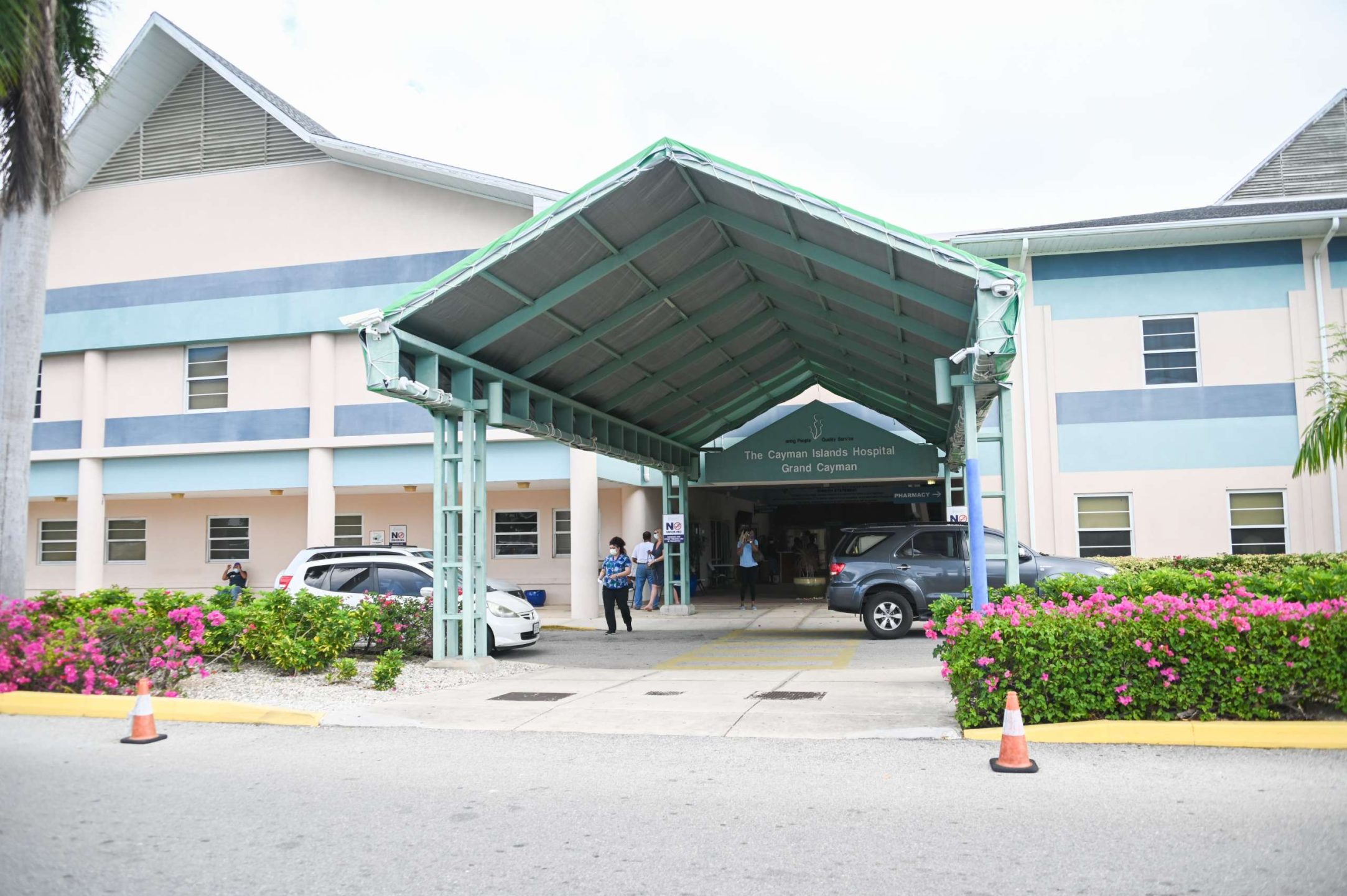
The United Nations has highlighted the Cayman Islands main hospital among a number of health facilities in the region that faces escalating risks from extreme weather.
A report, released last month, identified 1,400 key hospitals located in low-lying coastal areas across the Caribbean and Latin America as at risk.
Tens of millions of people living in coastal communities could see key infrastructure impacted, according to data analysis from the UN Population Fund.
Stronger hurricanes and more extreme weather events, bringing greater flooding and storm surge, are anticipated over the coming decades. The UN study team mapped out the areas within the region that would face the greatest impact.
The report focused on healthcare infrastructure and highlighted Cayman among the most at-risk areas.
The finding, based on analysis of satellite imagery, is unsurprising given that much of Grand Cayman is low-lying, but nonetheless provides a sobering reminder of the range of threats that the territory faces. The UN report highlights the ‘climate crisis’ as an ‘existential threat’ to small island developing states – a designation which is applied to Cayman as an ‘associate’.
Focusing specifically on healthcare, it warns of the need for coastal communities to protect their critical infrastructure.
“We need scaled up and targeted investments that safeguard their rights and strengthen their ability to adapt,” said Dr. Natalia Kanem, one of the report’s authors, in a press release.
HSA: ‘We’re ready for extreme weather’
Senior Cayman Health Services Authority staff say they are constantly analysing and upgrading their readiness for extreme weather.
In response to emailed questions from the Compass, Acting CEO Dr Vinton Douglas said the authority had multiple layers of redundancy to ensure continued operations during hurricanes.
These include back-up generators, multiple supply sources of medical gases, offsite storage of back-up medical supplies, back-up air conditioning systems, and disaster tents that can operate as field hospitals in remote locations.
The authority also has memorandums of understanding with local and overseas partners.
“In the unlikely event that the hospital becomes completely inoperable, the HSA has strategic partnerships with other healthcare providers for continuity of patient care,” Dr Douglas said.
“This collaborative approach ensures that, even in the most severe circumstances, we can continue to provide essential healthcare services to our community.”
The authority has a well-drilled action plan to ensure it can take care of its patients even in a severe hurricane, he added.
Its physical infrastructure is subject to multiple annual risk assessments which identify and rank potential facility and system weaknesses.
Recent upgrades include a project to incorporate more deep wells around the site to minimise flooding, and the installation of hurricane-rated windows.
Despite those measures, as the UN report highlights, hospitals in low-lying areas are unable to avoid some level of risk from catastrophic weather. The HSA is attempting to lessen this threat through partnerships with other health facilities.
“We acknowledge the concerns highlighted in the UN report regarding the vulnerability of critical infrastructure in the Cayman Islands, including our hospital, to climate-related threats,” Douglas said.
“We have started expanding our satellite facilities (eg. district clinics) to incorporate critical services, such as dialysis and emergency medical services. This includes added capacity in our Sister Islands.
“We remain dedicated to enhancing our emergency preparedness and response capabilities to protect our patients, staff, and facilities from the impacts of severe weather and climate change.”
Related Videos










Dr. Douglas whilst you have mitigated the risks one of the biggest challenge would be flooding. If there’s flooding how would one receive critical care if there’s no access to the property? Instead of a $60 million high school, the public would get better value if a new hospital was built on higher grounds.