Cayman football chief Alfredo Whittaker had a ringside seat when the biggest World Cup in history opened in front of a packed Azteca stadium in Mexico City Thursday.
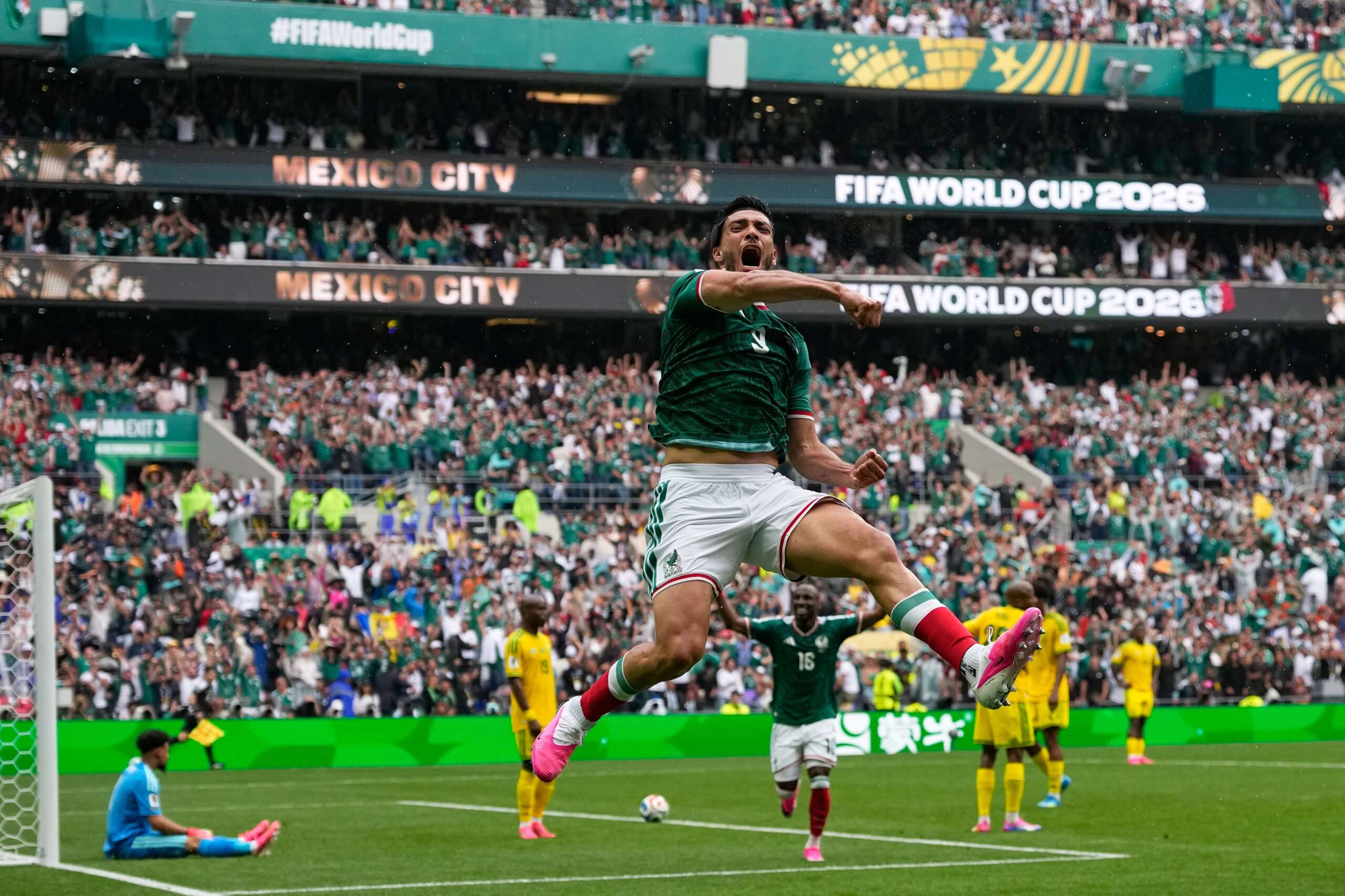
There were fireworks on and off the pitch, as the tournament kicked off with a star packed opening ceremony, before hosts Mexico notched a comfortable win over nine-man South Africa.
“The atmosphere was fantastic. When you’re in Mexico, it is special. The crowd here is special, and the opening ceremony was really good,” Whittaker told the Compass.
With 48 teams and three host nations in the Americas region, the tournament format gave small Caribbean islands a genuine shot at reaching the biggest stage of all.
It will be Haiti and Curaçao – a team that is more typically pitched against the likes of Bermuda and Cayman than Germany and Brazil – that fly the flag for the region over the next few weeks.
Whittaker recalls Cayman defeating Curaçao – an island of 150,000 people in the western Caribbean – in a regional tournament in 1998.
But this generation of footballers representing the Dutch territory have defied the odds to become the smallest ever country to qualify for the tournament.
Whittaker, who acted as match commissioner on occasions during Curaçao’s run to the finals, believes they will enliven the tournament.
“To work a game with Curaçao is absolutely amazing. They bring a very happy and healthy atmosphere to work with,” he said.

Tournament format gave Caribbean a chance
While many fans have mixed feelings about the expanded format, Whittaker is happy to see more chances for Caribbean teams to qualify.
The official, who will attend a two-day FIFA seminar in Miami this weekend before attending the Uruguay and Saudi Arabia match, acknowledged it remains an extreme long shot for Cayman, ranked 197th in the world, to make it.
But he said the dream is now real for Caribbean nations.
“Obviously, (the expanded format) gave a lot more opportunities for teams to qualify,” he said.
“At the end of the tournament, you would have to do a balance and see what was positive with it, and what didn’t work that well.”
The big risk is heavily one-sided fixtures in the group phase.
“The first test will be when Curaçao play against Germany. That can give you the first test of whether this can really work,” Whittaker said.
The tournament has not been without controversy. Whittaker, a retired referee himself, expressed sympathy for the Somali official, Omar Artan, who was barred from taking part.
“Referees go through a lot of hard work to get selected to be part of a World Cup, and unfortunately, for whatever reason, he was not allowed to be part of it.”
He noted that UEFA had intervened, inviting the referee to officiate the European Super Cup final between Paris Saint Germain and Aston Villa as a gesture of support.
The US leg of the tournament has also cast a shadow, with uncertainty over threats of immigration enforcement around stadium venues. Whittaker hopes that, once the tournament starts, those concerns will fade and the football will take centre stage.

Caribbean needs homegrown talent
Whittaker said he believes Haiti will be the real standard bearers for homegrown talent from the region.
He fears that, with the three regional heavyweights – Canada, Mexico and US – qualifying automatically, the 2026 World Cup was a missed opportunity for others in the Caribbean to make it to the big stage.
Even if the expanded format remains for 2030, the next qualification stage will be tougher.
Jamaica, he said, paid the heaviest price for missing out.
“That was Jamaica’s best opportunity to qualify for the World Cup again.”
And while Curaçao’s fairytale has already captured the imagination of the world, he believes many in the Caribbean have mixed feelings about a team that has only one player who was actually born in the territory.
Whittaker argues that football federation funds should be spent on training and developing young players in the region, rather than on paying professionals with diaspora links to represent a team.
Speaking not just about Curaçao, but of a trend generally, he said, “We continue to import players that don’t make an impact in our domestic league, that don’t make an impact in our youth leagues …. They come, they play the game, and you have to pay them, and they pretty much leave nothing behind.
“At some point, when they’re singing the national anthem, they don’t even know the national anthem of the country.”
He believes the region needs more competitive domestic leagues, more international fixtures and better youth programmes and opportunities for competition up to Under-23 level.
A European winner in the Americas?
Despite the regional concerns, Whittaker is relishing the tournament ahead. He will watch Saudi Arabia take on Uruguay and hopes to attend games later in the knockout phases. His affinity for the Americas region does not stop him predicting a European victor for the first time on the continent.
“I really think that the European teams are in very good position to win the World Cup this year,” he said.
He has three teams in mind – England, the Netherlands and Spain. He is not convinced by Argentina or Brazil.
“Brazil may have a good World Cup and is always a favourite, but right now it’s not a national team that reached the World Cup with convincing numbers and convincing style of football.”
Beyond the favourites, Whittaker is hoping for a few surprises and highlights Senegal, Japan and Iraq as interesting teams to watch.
Related Videos