

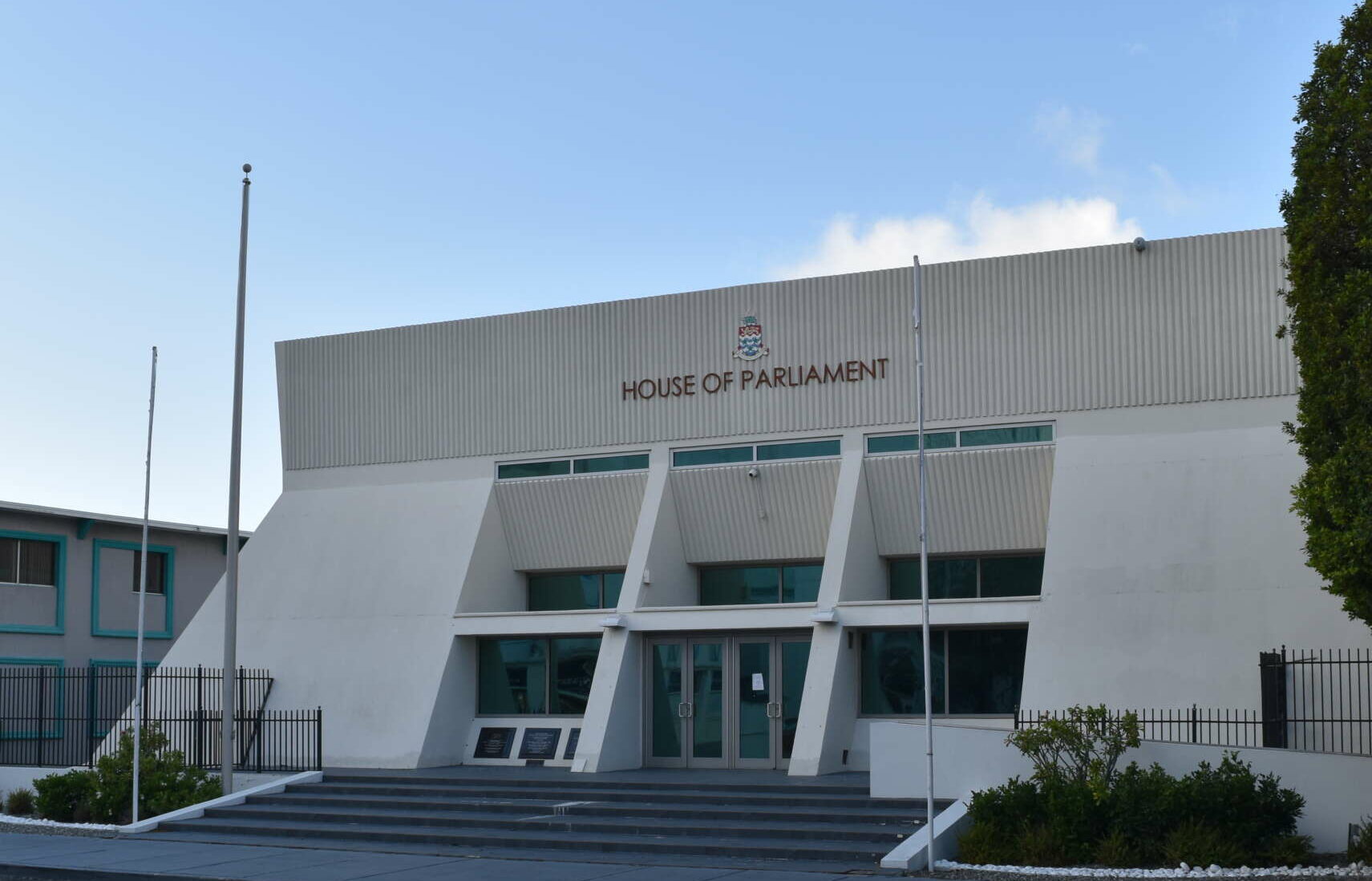
Government departments have come in for strong criticism from the auditor general in her yearly report on the state of financial reporting in the Cayman Islands.
Late and inaccurate accounting, not complying with regulations, not following procurement rules, building up cash reserves that should have been redistributed, incorrect valuations, poor financial controls and understatement of liabilities are just some of the charges listed by Auditor General Sue Winspear in her report.
In the Financial Reporting of the Cayman Islands Government annual general report, Winspear said there was a “mixed picture” for the 2023 results, and that she continued to “be concerned about the quality of some of the financial statements that are submitted for audit”.
She also warned that a “considerable proportion” of statutory authorities and government companies (SAGCs) showed signs of financial strain that would continue unless there were “changes in operations, business restructuring, or ongoing and further government support or changes in government policy”.
Cayman Airways, the Cayman Turtle Centre, the National Housing Development Trust and the Public Service Pensions Board consistently record year-on-year deficits.
Government reporting scrutinised
The auditor general’s annual report summarises the financial results of ministries, portfolios, offices and SAGCs.
It also provides audit opinions and information on the financial health of the public bodies.
The 2023 report shows the state of government reporting by the end of 30 Sept. 2024, when 39 out of the 46 public bodies’ financial audits were complete. Of those 39 audits, 18 were for government entities and 21 were for SAGCs.
Some of the outstanding audits described as “backlogged” are pending from the Ministry of Health and Wellness, Cayman Islands Airports Authority, the Cayman Turtle Conservation and Education Centre, the Ministry of Planning, Agriculture, Housing, Infrastructure, Transport and Development, the National Housing Development Trust, Cayman Airways Limited, the Maritime Authority of the Cayman Islands and the Entire Public Sector (EPS), which should produce consolidated accounts but whose 2021, 2022 and 2023 audits are still ongoing.
Overall public sector problems
Accounting problems have plagued the consolidated EPS accounts for years. The EPS account includes the 21 ministries and 26 SAGCs as well as government transactions such as revenues, spending, assets and liabilities. Between 2016 to 2020, numerous issues meant the accounts were given an adverse opinion, meaning that they contained such significant deficiencies and errors that they should be considered “unreliable and untrustworthy”. The auditor general said her office was currently finalising the 2021 accounts, but that they would also be given an adverse rating.
It isn’t just the EPS that came in for criticism from the auditor general, but accounts across government bodies. Winspear said she had noted “a large number of adjustments with a significant value were made to the 2023 financial statements during the audits, which affected the final financial performance and position of many bodies”.
Departments made over 360 adjustments worth $354 million after submitting financial statements to the auditor, the report said, with nearly 200 being made by the departments themselves, and the rest being done by the audit office.
This, she warned, “means that the financial statements submitted to my office by public bodies were inaccurate, creating a risk that some policy decisions during the year may have been made based on inaccurate information”.
She cautioned that public bodies needed to do more to ensure that the financial statements submitted for audit were fully compliant with accounting standards and urged them to improve transparency.
“The Government needs to continue to implement corrective measures to improve the quality of the consolidated financial statements of the entire public sector,” she said.
“The Ministry of Finance needs to focus on this account and take corrective action to resolve all the qualification issues.”
Non-compliance
Several government departments were held up as not complying with legislation around procurement, which ensures that tendering processes are fair and transparent.
The auditor general said, “I continue to be concerned about the extent of non-compliance with Acts and regulations. This is despite the Acts being in force for many years and reporting similar issues in previous general reports.”
There was outright non-compliance with procurement regulations on several occasions, she noted.
“Some public bodies have procured goods and services without approval from the public procurement committee, while others have directly awarded contracts for procuring goods and services or without approved business cases,” she said.
“I am disappointed that these issues persist. They must be addressed to ensure that public bodies get value for money when procuring goods and services using public funds.”
The auditor general highlighted that:
- The National Attractions Authority spent $667,000 on phase 1 of the Children’s Garden without an approved business case from its procurement committee or the Public Procurement Committee.
- The Ministry of Financial Services and Commerce paid $3.1 million for computer services, having signed a contract with the supplier 13 years ago and not issuing a tender or getting PPC approval since.
- The Ministry of Home Affairs purchased fire trucks for nearly $2 million and military vehicles and equipment for $509,000 without going through government’s public procurement portal Bonfire.
She also said that four years after Section 47 of the Public Authorities Act came into force, three SAGCs had yet to align staff remuneration and terms and conditions with the civil service.
Surplus and loss
The Public Authorities Act requires that SAGCs at least break even, Winspear said. However, of the 21 SAGCs with completed audits for 2023, 12 made surpluses, two broke even and seven reported deficits. Within this, some SAGCs made significant surpluses and some made significant losses.
The most notable of those were the Cayman Islands Monetary Authority, which ended up with a $21.7 million surplus.
In addition to the monetary authority, two other SAGCs recorded surpluses of over $5 million – the Cayman Islands National Insurance Company with a surplus of $8.4 million and the Segregated Insurance Fund with a surplus of $6.6 million.
On the other side of the coin, the Health Services Authority, despite recording a $7.1 million deficit in its operations, ended up with a $82.8 million deficit thanks to the re-measurement of post-retirement pension and healthcare liabilities.
Eight years ago, the Ministry of Finance decided that all SAGCs with employees entitled to receive post-retirement healthcare benefits should reflect this obligation in their financial statements, and this had meant huge fluctuations in valuations over the years for the different public bodies. In the case of the HSA, its liabilities were recorded as a $72 million loss in 2023, but a gain of $51 million and $27 million in 2022 and 2021, respectively.
Winspear added, “I also noted that the post-retirement healthcare obligations of ten SAGCs have increased significantly between 2018 and 2023, which is affecting the financial results of some SAGCs.”
Civil service spending
There was a $54 million or 10% jump in spending by ministries, portfolios and offices in 2023 compared to the previous year, much of which was due to increased payments to civil servants.
Personnel costs increased thanks to the cost of living adjustment payment made in September 2022, incremental payments made in December that year and the $1,500 bonus payments made in December last year.
Cash not repaid
Another black mark for government came from the auditor general on cash reserves.
Winspear said, “Some core government entities have significant current assets, some of which relates to them holding high levels of cash. I noted that several core government entities had not repaid their surpluses to the Ministry of Finance despite this being a legal requirement.”
Departments called out by the auditor general for this behaviour included the Cabinet Office, Ministry of Tourism and Ports, and Ministry of Sustainability and Climate Resiliency.
The process of tabling reports in Parliament also came under fire. By the end of September 2024, just 22 out of 39 annual reports had been presented to Parliament for MPs and the public to read. While it was an improvement on the previous year, Winspear said “more reports should have been ready to be tabled”.
She suggested that Parliament should either meet more frequently or find a way by which reports could be tabled when the Parliament wasn’t sitting.
The 2023 general report looks likely to be Winspear’s final report as auditor general, as she is understood to be stepping down from her role in February.
The full report can be read here.
Related Videos










How on earth can the Head of the Civil Service claim the Public Sector is “World Class”. The very fact that he seems to believe this when the facts demonstrate the opposite goes a long way to explaining why standards are so low in many cases, as detailed by the A.G. not only in her 2023 report , but in all her previous reports. Then we have the Premier giving them all a $2,000 bonus for Christmas! – a Winter Wonderland!.
All of these reports have one overarching reality which is no personal responsibility in law for any of the players apart from the rare occurrence of losing one’s job [which usually means being sent home on full salary for 5-10 years ] or losing one’s seat in the house which is the only light at the end of our tunnel.