The leaders of Cayman’s Monetary Authority have expressed concern that a section of the Public Authorities Act, mandating the same salary scale across public authorities, could put the jurisdiction at risk of receiving an adverse rating in its upcoming Financial Action Task Force evaluation.
They are calling for a review of section 47, which requires all 26 government entities’ salary scales, health and pension benefits to be aligned with the civil service.

CIMA CEO Cindy Scotland said she had “grave concerns” that the section directly impacts the “operational independence” of the authority, a factor which the FATF will be looking at in its fifth round evaluation of the Cayman Islands.
“We do not want to find ourselves back on that [grey] list,” she said as she appeared before Public Accounts Committee on Thursday morning.
Scotland, responding to question from PAC member Joey Hew on the delay in implementing the section, said the section, in its current form, also has the potential to cost the authority key staff needed to pass the FATF evaluation.
“There will be a brain drain within CIMA within a short period of time,” she said, if they were to implement the salary scale as required by the legislation.
Not a ‘one-size-fits-all’ legislation
When the FATF comes for its evaluation, she said, it will not just be about the number of staff that CIMA has, but the “calibre, the quality, the skill set of that staff”.
She said the authority is already at only 72% capacity, and if it were to implement the changes required by the Public Authorities Law, it could lose more staff.
“If we are already challenged on the current pay scales that we have to attract those people, it will be even more difficult to do so on another salary scale that’s compressed,” she said.
Scotland said the difficulty with the law remains that “it’s not a one-size-fits-all legislation”.
Each statutory and government company, she said, was established for a different reason.
“They’re all different creatures. CIMA requires a skill set that can’t be found locally, and those that you find local are ones that we’ve trained ourselves,” she said.
Garth MacDonald, CIMA chairman of the board, shared Scotland’s concern, as he fielded questions before PAC on the authority’s delay in implementing the section as part of its inquiry into the Auditor General’s report, ‘Financial Reporting of the Cayman Islands Government’ from 31 Dec. 2023.
MacDonald said his board and those prior have outlined their concerns with the legislation, which he said “would undermine CIMA’s independence, which is a requirement by international regulatory bodies, most notably the FATF”.
He said if anything, CIMA’s concerns about the legislation has only been magnified with “all the pressure on the jurisdiction by the likes of the FATF and the growing financial services industry”.
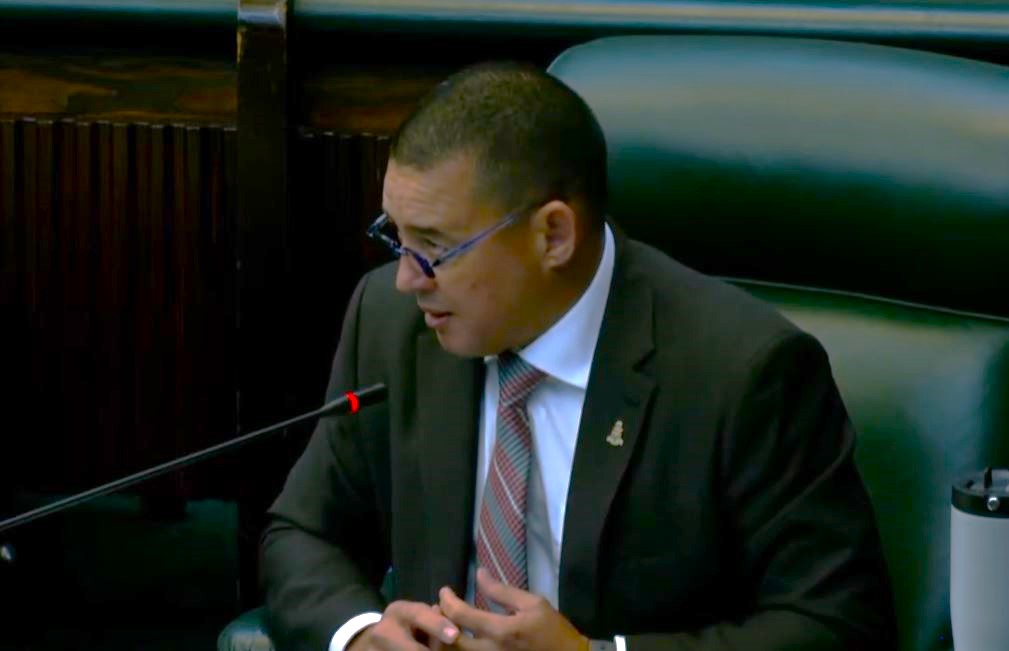
“The authority has always maintained with [the Portfolio of the Civil Service] that having a unilaterally imposed salary scale interferes with its operational independence. It also was concerned that the implications of other benefits weren’t properly taken into account, mostly pensions, health care and post-retirement benefits,” MacDonald said.
PAC member Joey Hew noted the CIMA official’s concern, saying that similar recruiting and salary-scale concerns have been raised by authorities such as the Health Services Authority.
“It is obvious to me that the government, and perhaps the next government at this stage, should make it a priority to look at,” Hew said.
Lack of qualified staff ‘could be a red flag’
MacDonald said this issue has always been brought up at CIMA’s human resources subcommittee meetings and “it’s a challenge”.
“Implementing section 47 (1) in its current form will only make matters worse. We have an upcoming fifth round evaluation by the FATF. I believe it starts in 2026. They will look heavily at effectiveness of regulation. If we don’t have a competent, qualified staff, that could be a red flag,” he told the committee.

Scotland said while CIMA is making “every effort” to implement section 47, its impact causes concern.
“We’re of the view that, once implemented, CIMA will lose a significant number of staff within 12 to 24 months, and will not be able to attract the quality of staff which we require,” she said.
She said, most notably, the impact of the changes directly impacts the authority’s largely Caymanian staff and its ability to continue to sustain a sizeable surplus, given the increased costs it will have to bear with pension and health benefit costs.
MacDonald added that, given the current environment, it is already challenging for the authority to recruit staff because they are in demand everywhere due to increased oversight for financial services.
Professionals, he said, can pick and choose where they go to work.
“So, we need to remain competitive to attract them both, whether it’s locally or from overseas,” he said.
Scotland said CIMA has awarded a contract for a market review looking at the job descriptions, which will form part of its proposal to government as to how it will move forward with the implementation of section 47.
Related Videos