


By Robert Whelan

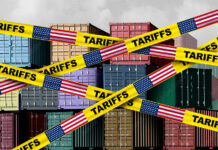
Markets are reeling from a whirlwind of tariff-driven chaos unleashed by President Donald Trump’s policy gambit, leaving US businesses paralysed with uncertainty. Caught in the crosshairs of relentless tariff threats, companies are slamming the brakes on investment and hiring, unable to pin down future costs or timelines.
Investors watching their equity positions have likely felt this fog creeping in, with the S&P 500 now testing its 200-day moving average – a critical long-term support level. Even if Trump’s policies eventually deliver a payoff, his recent spat with Ukraine’s Zelensky and the ongoing tariff tango have spooked markets. Negative sentiment, once a contrarian buy signal, is now seeping into hard economic data, raising red flags.
The Atlanta Fed’s GDPNow forecast, a real-time gauge of growth, has dipped negative for the first time since June 2020, driven by weakening consumer demand. Labour reports from Challenger Gray and ADP show fading momentum, with non-farm payrolls hinting at cracks, while business surveys like the ISM Manufacturing Index and the Beige Book highlight mounting pricing pressures and stalled corporate plans.
The murky timeline for tariff rollouts only deepens the unease. Beyond the numbers, sustained policy inconsistency risks eroding US credibility on the global stage. The economy isn’t cratering just yet, but Trump’s approach could grind American corporates to a halt.
Trump and his team frame this as hard medicine for an economy broken by trade deficits and unsustainable debt. Treasury Secretary Scott Bessent champions a “re-privatisation” playbook – slashing spending; gutting red tape; and wielding tax cuts, deregulation, and tariffs to jolt domestic production. It’s a calculated trade-off: short-term pain for long-term gain. Trump told Congress on 4 March, “There may be some turbulence as we reset this economy to a real economy, not an artificial one propped up by handouts.”
Commerce Secretary Howard Lutnick echoed this on NBC, on 2 Feb., saying, “Markets don’t like uncertainty, but recalibrating the economy is necessary for long-term strength.” If the vision pans out, the US could emerge stronger than ever, buoyed by tax cuts and deregulation. But tariffs, steep spending cuts – especially in defence and infrastructure – and immigration curbs cloud the outlook.
The editorial board of The Wall Street Journal called the tariff push “the dumbest tariff plunge”, while Elon Musk’s 75% staff cut at Twitter raises questions about how many federal workers Trump’s austerity might axe and whether the private sector can absorb them. Tighter immigration could spike wages and rekindle inflation, testing the depth of these cuts.
The risks are stark. The top 10% of US earners are currently driving half of consumer spending and hold most household investments in equity; any large market sell-off could crater confidence which would slash consumption and increase the probability of the economy tipping into recession.
Trump’s team have previously viewed the stock market as their scorecard of performance – how far will they let it slide before easing up? Meanwhile, the Fed is watching for labour market cracks. A steep S&P 500 plunge or jobs crack could signal a moment either the FED or Trump react to support the market and for investors to cautiously think about buying again.
Investors should brace for choppy waters as markets grapple with trade policy uncertainty. Trump’s strategy holds long-term promise, but execution remains a wild card. For now, patience is key – at NCB Capital Markets our core holdings look solid, but like many US firms spooked by the tariff haze, future big moves can wait.
Robert Whelan, a chartered accountant, is the portfolio manager at NCB Capital Markets (Cayman) Ltd.
Related Videos











Jamaica’s Kingston Port is 100% owned by China, since 2015. Jamaica could see large US tariffs being connected to the China-US trade war.