


More Cayman Islands children than ever are being diagnosed with attention deficit disorders, leaving doctors and educators divided over the causes and consequences.
Chief Medical Officer Dr. Nick Gent told the Cayman Compass he is concerned that prescription drugs, like Ritalin, are being ‘overprescribed’ to children.
“The sheer volume of prescribing is giving a great deal of concern,” he said.
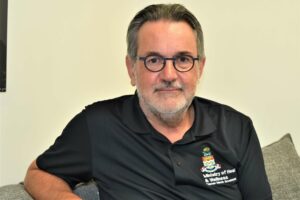
In many cases, Gent said, children need exercise and attention rather than medication, which he argues should be a “last resort”.
Several school leaders, who spoke to the Compass on condition of anonymity, concurred with this assessment, and warned that ADHD diagnosis and medication should not be a substitute for good teaching and classroom management.
One senior educator told us, “It is completely, completely, overdiagnosed, and drugs are overprescribed. Let’s deal with the quality of teaching, let’s deal with the classroom environment, let’s deal with the curriculum and all these other issues. If we’ve still got a problem at that point, then we might need to medicate.”
However, other experts have argued that, in the right circumstances, drugs can be life changing.
Dr. Marc Lockhart, of Behavioural Health Associates Cayman, is a leading psychiatrist and former chair of the Mental Health Commission.
He said the increased diagnoses were likely connected to greater awareness of mental health conditions, and that many children had thrived as a result of being properly diagnosed and treated, rather than dismissed as ‘troubled kids’.
He said prescription drugs were proven to be extremely effective, and there were relatively few issues of addiction and other challenges stemming from over-use.
“I am not seeing where that is a major issue,” he said.
“What we do have is a lot of people today that are serving time in Northward Prison or at Fairbanks and, if they were diagnosed 15 or 20 years ago and treated properly, they might have had much different paths in life.”
A greater concern for Lockhart currently is what he sees as a two-tier system of access to interventions. Wealthier families are able to afford good health insurance, private schools, or other interventions for learning disabilities, while poorer students are not.
Dee Clark, who runs an education programme focusing on disadvantaged children through the non-profit Acts of Random Kindness, sees similar issues.
She highlighted a number of occasions where children were presenting with indicators of ADHD but were not able to get assessments. If they do get assessed and diagnosed, she said treatment options were not always available or affordable.
Hard data is lacking in healthcare
There’s an ideological spilt about ADHD in both health and education.
Everyone seems to recognise that it is rising.
But whether that is a good or bad thing can depend on your perspective, generational differences in attitude to mental health, American versus European approaches to medicine, and resources in schools.
Good data is in short supply.
The Ministry of Education declined to provide statistics, requesting that the Compass file a freedom of information request – which is in motion, but can be a lengthy process.
The Office of Education Standards does record data on special needs, which include ADHD, among other categories, in schools.
The report on Cayman International School indicates 14% of students have special needs. At John Gray, the ratio is 20%.
Gent, as part of his role as chief medical officer, is beginning to gather better data on the prevalence of different conditions and prescribing across the sector as a whole.
But Cayman’s patchwork system of private and public medical providers makes it difficult to get comprehensive information from which to tease out national trends.
Nonetheless, the data Gent does have, since new monitoring arrangements were put in place around a year ago, has led him to some provisional conclusions.
“I think amphetamine-based drugs for ADHD are being overprescribed,” he said.
That’s borne out by the fact that Cayman surpassed its country quota for dextroamphetamine – one of the main drugs to treat ADHD – towards the end of 2024. That meant pharmacies could not import any more of the drug leaving patients to go without. Country quotas are set through the World Health Organization based on international treaties to limit the proliferation of controlled substances.
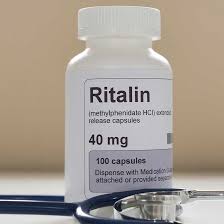
Gent believes different clinical approaches, depending on where medical practitioners are trained, accounts for significant differences in prescribing habits across Cayman.
“The disparity in guidance on ADHD between Europe and the US, for example, is huge,” he said, adding that the American approach – which places a greater emphasis on medication – is more common in Cayman.
He would like to see a standardised approach across the islands, with a range of interventions considered before drugs are prescribed.
Medication and classroom control
There’s a school of thought that views medication as an ‘easy out’ for parents, and even teachers struggling to deal with unruly children in the classroom.
The line between what is a genuine mental health issue requiring medical intervention and ‘children being children’ can be blurry.
Gent recalled a retired headteacher noting how eerily quiet his former school was during a return visit. When he enquired as to why, he was told a lot of the children were on medication for ADHD.
“I don’t like anecdotes as a basis for decision making, which is why we are working on the data, but I thought it was interesting,” he said.
“Sometimes, a child being naughty is not the end of the world. There are a lot of different ways to help children to grow up without taking the fun out of childhood.”
Gent argues that finding more time in the curriculum for sports and alternate approaches to teaching for different children might help reduce the prevalence of behaviours associated with ADHD.
Similarly, in the home, he says, parents that read to their children and play with them regularly will likely see some of the issues go away.
The counter point
Lockhart agrees that ADHD diagnoses are increasing in Cayman. A Mental Health Commission survey in 2022 showed it was the third highest rate of diagnoses among young people, after anxiety and depression.
But he believes it is a global phenomenon, driven by a combination of a broadening of the diagnostic criteria for learning disabilities, greater awareness of and treatment options for mental health conditions, and social factors including massively increased screen time and digital media impacts on children.
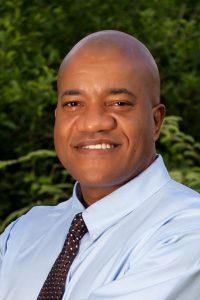
He says doctors do not use medication lightly, but drugs like Ritalin have proved extremely successful for ADHD.
“There is also a much greater awareness among teachers, parents and clinicians about the disruptive nature of ADHD,” he said.
“There’s been great efforts around the world to increase understanding of mental health conditions and an increase in the level of expertise in schools. What happened 20 years ago was that kids were put into behavioural programmes or labelled as disruptive.”
He said he has personal experience of numerous patients for whom medical treatment for ADHD has been life changing. Like with a lot of mental health conditions, there remains a stigma about discussing it.
“You see cancer survivors proudly telling their story. You still don’t see it too much with mental health.”
He highlights Cayman’s growing and diverse population and generational awareness around mental health issues as subtly shifting this dynamic, fuelling the increase in diagnoses.
“We are seeing higher numbers,” he said. “I do agree on that point, but I am not ready yet to say this is an issue of overdiagnosis or overprescribing.”
He supports increased options to deal with underlying factors – including adapting school curriculums to add more physical education. But, he said, that shouldn’t be at the expense of medication for those who need it.
He said leaving conditions like ADHD untreated could lead to worse outcomes, with children being wrongly stereotyped as poorly behaved.
In classrooms, a philosophical divide
Within the school system, there is a similar philosophical divide.
Some argue that prescription meds are overused and are nullifying children’s instincts. Others believe they are a valuable tool in helping address a serious issue that has been underplayed in the past.
One senior educator, with expertise in special needs, said she was concerned that an increasing number of children were being pushed towards a path of medication.
“What happens with Ritalin is all of that gets damped down, their personalities get damped down, their creativity, their imagination … because you are literally sedating them,” she said.
She believes improving teaching standards and classroom management skills, as well as equipping teachers with additional resources, would be a better solution.
Another teacher, who has worked in the public school system for more than three decades, agreed that teaching standards had declined. She said the curriculum has not sufficiently adapted to the needs and attention spans of a modern child.
In fact, physical activity has been reduced and the style of lessons has not adapted to attention spans that have been altered by social media and constant cellphone use.
Private and public schools are impacted
The increase in diagnoses of ADHD and other learning disabilities is across the spectrum, impacting rich and poor, Caymanian and non-Caymanian.

One-in-seven students at CIS has some form of special educational needs, according to its inspection report.
“Better awareness, changing definitions of ADHD, decrease in possible stigmas, and better access to healthcare and professionals familiar with ADHD tend to contribute to increased prevalence” said Urquhart.
He said the school takes a multi-tiered approach to addressing the issue with teachers, providing the first alert in the classroom and calling additional support, including educational psychologists, if needed.
He said the choice for children to use medication is entirely between the family and their doctor.
The Ministry of Education declined to answer questions for this article.
Schools have stepped up their provision of Special Educational Needs services, however. For example, John Gray High School, one of the first public schools to get a ‘good’ inspection report, was praised for its inclusion programme for students with special needs, including ADHD.
One Special Educational Needs teacher told us the range of support services was improving all the time. But the need continues to grow.
Access to support and medication can depend on wealth
There is still a sense that access to treatment for ADHD and other learning challenges depends on wealth.
Lockhart warns that some children who need medication are not getting it because their insurance is insufficient.
At Acts of Random Kindness’ hub in West Bay, Clark runs the charity’s Mentor-Educate-Reinforce (MER) programme, which provides one-on-one and small group tuition to a handful of students from disadvantaged backgrounds, who also have learning difficulties.
She said resources are a challenge across the school system. There’s a long wait list for educational psychologist assessments, which are the key to getting support for children that need it.

“We have so many children presenting with indicators of ADHD, but there is not always the resources to address it,” she said.
“The first challenge is the wait to get assessed and diagnosed. The second challenge is, even when you receive that diagnosis, you can’t always get the help you need.”
Medication is rarely the first step, Clark says, but other interventions for special needs, including occupational therapy, speech therapy and learning support, aren’t always available and affordable.
She’s sympathetic to the challenges of educators in mainstream classrooms.
“A teacher with 25 kids in the classroom, five with ADHD and one with autism, doesn’t have a chance,” she said.
What the MER programme is doing in a small corner of West Bay is providing some of that support from the outside.
“We work with children who are struggling with literacy levels, or they have dyslexia, ADHD, autism – often undiagnosed. They are struggling academically and come from challenged family backgrounds,” Clark said.
In her experience, she said, ADHD medication is not being liberally prescribed. She said some children do need medication and, for those, it can be life changing. For the children in the MER programme, she said, the result of having that extra attention and focus from a teacher helped make huge inroads.
Over time, it is something she hopes can be replicated nationally.
“We would love to be able to expand to offer that to every school on island,” she added.
Related Videos











I currently live in Canada and sadly, people get prescriptions for Ritalin for their children but the children often never get to take the medication because their parent sells it on the street! Here in Canada Ritalin is known as ‘Poor man’s heroine’!!! They only give it to their kids when they go see the doctor for more. It’s heartbreaking that kids aren’t getting the proper medication here in favour of a few bucks!!!
We need to find out why there is such a big increase in the proscription of these drugs,if we managed without them before, why all of a sudden they are so popular. I am a layman, but are some of these drugs habit forming?, many drugs have serious side effects. I for one would be much happier if the trend is reversed.