

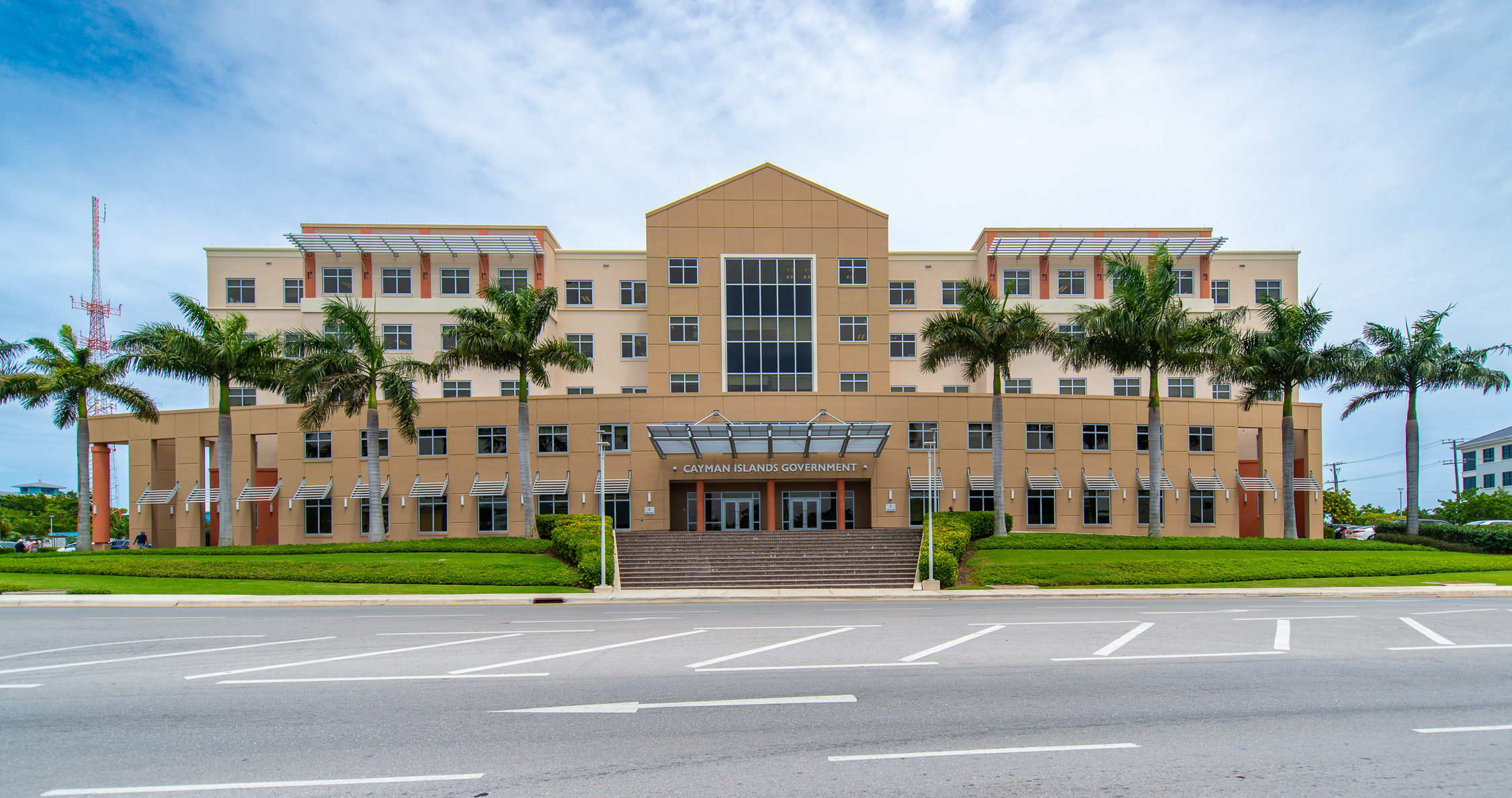
Better-than-expected financial results for the first quarter of the year have led to calls by the opposition PPM party to reevaluate a pre-election report that forecast a $26.2 million government deficit by the end of 2025.
As the newly inaugurated government, led by the National Coalition For Caymanians, says it’s working to tighten the budget to avoid a financial fallout, the opposition isn’t sure a deficit was ever on the horizon.
Former tourism minister Kenneth Bryan, now an opposition MP for George Town Central, said, in light of the quarterly results, he no longer expects a year-end deficit and wants the pre-election report, released weeks before the 30 April election, to be amended to reflect that.
“What should happen now is there should be a recalculation of what the end conclusion should be in light of the actuals, because it’s left a bad light on the previous administration, which obviously had an effect on the election,” Bryan said, adding that opposition members plan to voice their concern to the Governor’s Office.
The first quarter financial results, released Wednesday, show government’s overall surplus surpassing the original budget for the period by $54.6 million, with both higher revenues and higher expenditures compared to the same quarter of 2024.
Minister of Finance Rolston Anglin, who officially took his Cabinet seat a week ago, told the Cayman Compass that the surplus for the first quarter, ending 31 March, was “as expected” and suggested there was more work to be done to balance the budget by year’s end.
Typically, the majority of government’s revenues are collected during the first months of the year when fees from the financial services industry are paid. Fee collection in this area surpassed the original estimate due to increased registrations in several key categories, including exempt companies, partnerships and private funds.
These three categories combined brought in $56.2 million above the original projection, providing a significant boost to the quarter’s total coercive revenue of $534.3 million.
These fees are expected to favour the budget through the second quarter and then level out in the second half of the year.
“Under the [Public Management and Finance Law] we have to operate a surplus budget under the Framework For Fiscal Responsibility contained therein,” Anglin told Cayman Compass.
“With diligence and hard work I’m confident we will be compliant by the end of the year.”
Avoiding UK intervention
Balancing the budget and keeping government out of the red will be critical to maintaining Cayman’s good standing with the United Kingdom.
While government remains in compliance with its six established ‘principles of responsible financial management’, the end-of-year forecast, based on the original 2025 budget, anticipated notable declines across the board — even before consideration of the pre-election report, which shifted the year’s outlook from a surplus to a deficit.
The pre-election report’s projected deficit would mean Cayman falling out of compliance with these standards and having to seek permission from the UK for further spending or borrowing.
Minister Anglin, speaking Thursday on Compass TV’s Forefront, said Cabinet had received its first briefing on the state of public finances and remained alert but hopeful about stemming a possible deficit.
“The team has a lot of work to do across government, across ministries, across units, to ensure that we deliver a balanced budget. Because right now, the preview looks at a $26 million deficit, which, of course, is illegal. You can’t have a deficit,” Anglin said.
“Whilst there’s a projected deficit, we’re going to work hard, and I’m very confident that we’re going to produce a solid strategic policy statement that’s going to deliver on the majority of our campaign promises, but we’re also going to be able to produce a balanced budget by the end of the fiscal year 2025.”
Bryan, however, cast doubt on whether the deficit forecast reflected the reality of the islands’ actual financial situation, given the quarterly report’s strong results.
“We have severe concerns that the projections could be so off, knowing that the preview would have been a political tool in the election,” Bryan said.
“We’re fully aware that many people took [them] into consideration while selecting their representatives and their parties. The performance of the finances in this first quarter report showing very positive variances and savings showed, well, it’s obvious that there will not be a deficit from the end of this year, unless something drastic happens.”
He said the variation between the pre-election report and the first quarter report could only be described by intentional intervention or incompetence.
“The only people can answer it is the two who were responsible for this very important document at a very sensitive time,” he said.
First quarter revenue bump
While the first quarter results contrast the bleak pre-election update, they do not mean that 2025 is guaranteed to continue on an upward trajectory.
The overall quarterly surplus, $268.1 million for the entire public sector, was buoyed by higher coercive revenues (up $60.6 million above the original budget), lower expenditures for personnel costs (down $5.9 million) and lower spending on supplies and consumables (down $8.7 million).
The quarter’s lower personnel costs, which also contributed to the higher-than-expected surplus, were not expected to last, as they resulted from vacant posts across several ministries, portfolios and offices.
“It should also be noted that year to date savings in expenses, such as personnel costs and supplies and consumables, may not translate into full year savings and may be due to timing differences. Vacant posts and delayed projects will impact current costs reflected in personnel costs and supplies and consumables, respectively,” the quarterly financial report noted.
Growth in revenue and expenses
Another uplift to government revenue came from real estate. A higher volume of property transactions, complemented by higher property values, increased the stamp duty collected by government to $7.7 million more than expected.
Overall, total revenues for core government increased by $41.7 million compared to the same quarter of 2024.
Government expenses were higher than budgeted as well, surpassing the original forecast by $31.3 million.
The quarter saw an excess of $4.6 million in expenditures for statutory authorities and government companies, an extra $11.4 million in outputs for non-government suppliers and an additional $19.5 million in transfer payments beyond the original budget.
The increased spending for statutory authorities and government companies was driven by an additional $5.5 million in payments to the Health Services Authority, with “care of indigents” surpassing the budget by $6.6 million.
In contrast to the HSA, other statutory authorities, like the Cayman Islands Monetary Authority, Port Authority and the Water Authority Cayman, performed better than expected. Their favourable variances, however, were offset by the HSA spending.
The increased output for non-government suppliers was led by an extra $8.5 million spent on tertiary care locally and overseas.
Regarding transfer payments, the excess resulted from $11.6 million more in spending on scholarships and bursaries, and $4.8 million in financial assistance beyond budget.
Related Videos










Has the annual “donation” to Cayman Airways for last year been processed yet, it has exceeded $30 million previously.
Does this mean that the government is going to fix the West Bay dock and replace the sand on SMB????