


Despite concern that the Cayman Islands has lost its place on the Caribbean’s cruise map, recent data from within the sector reveals the jurisdiction is still in the game.
“We’re not out of the cruise business; we still have cruise ships coming,” said Director of Tourism Rosa Harris on Compass TV’s Forefront political talk show that aired on 26 June.
Nevertheless, with a projected decline in passenger volumes, government technocrats and parliamentarians alike are considering how best to adapt and support the Cayman Islands cruise industry’s evolving needs.
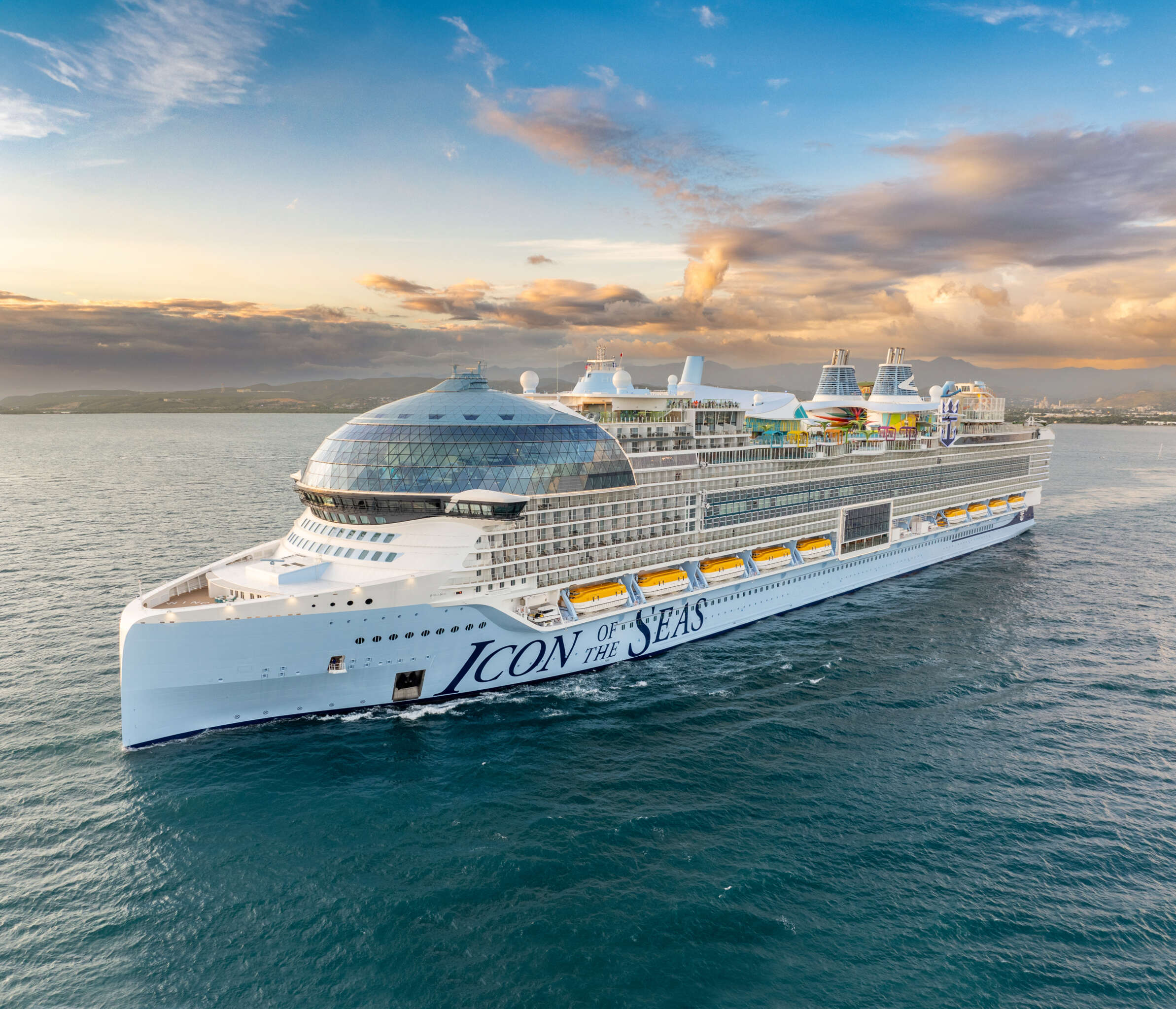
“The reality is there are cruise ship corporations that are building mega ships,” Harris said. “The Icon series, like Icon of the Seas, carry 10,000 people, passengers and crew, and being able to tender that logistically is something that cruise line would not entertain.”
However, she noted that many ships carrying between 2,000 and 4,000 passengers continue to include Cayman in their itineraries, with the island able to tender vessels of up to 5,500 passengers.
In the 30 April General Election, voters had their say on the matter in a referendum, with 65% rejecting the proposed cruise-ship berthing facility – prompting speculation that Cayman could be stepping back from the cruise industry.
The recent discussion for the sector comes at a challenging time for a significant number of cruise destinations across the region. According to an analysis by regional economist Marla Dukharan, 15 of 22 Caribbean destinations saw declines in cruise passenger arrivals in 2023 compared to 2019. Among destinations boasting modern cruise piers, 13 of 20 ports lost visitors, demonstrating that declining cruise numbers aren’t unique to Cayman.
Projections based on current commitments to 2027, however, do show that the local industry will experience more modest volumes in the years to come.
Harris noted that the peak of cruise tourism in Cayman occurred in 2018, when the islands welcomed 1.9 million passengers. In 2019, just before the COVID-19 lockdown, arrivals reached 1.8 million. In recent years, passenger numbers have stabilised at around 1.2 million, with projections indicating 1.15 million passengers this year and a similar figure expected next year.
Cruise analysis
A Compass analysis comparing data from the region’s tourism bodies on the busiest ports – including Aruba, the Bahamas, Bermuda, Cozumel, the Dominican Republic, Jamaica, Turks and Caicos, and the US Virgin Islands – shows that Cayman is still holding its own.
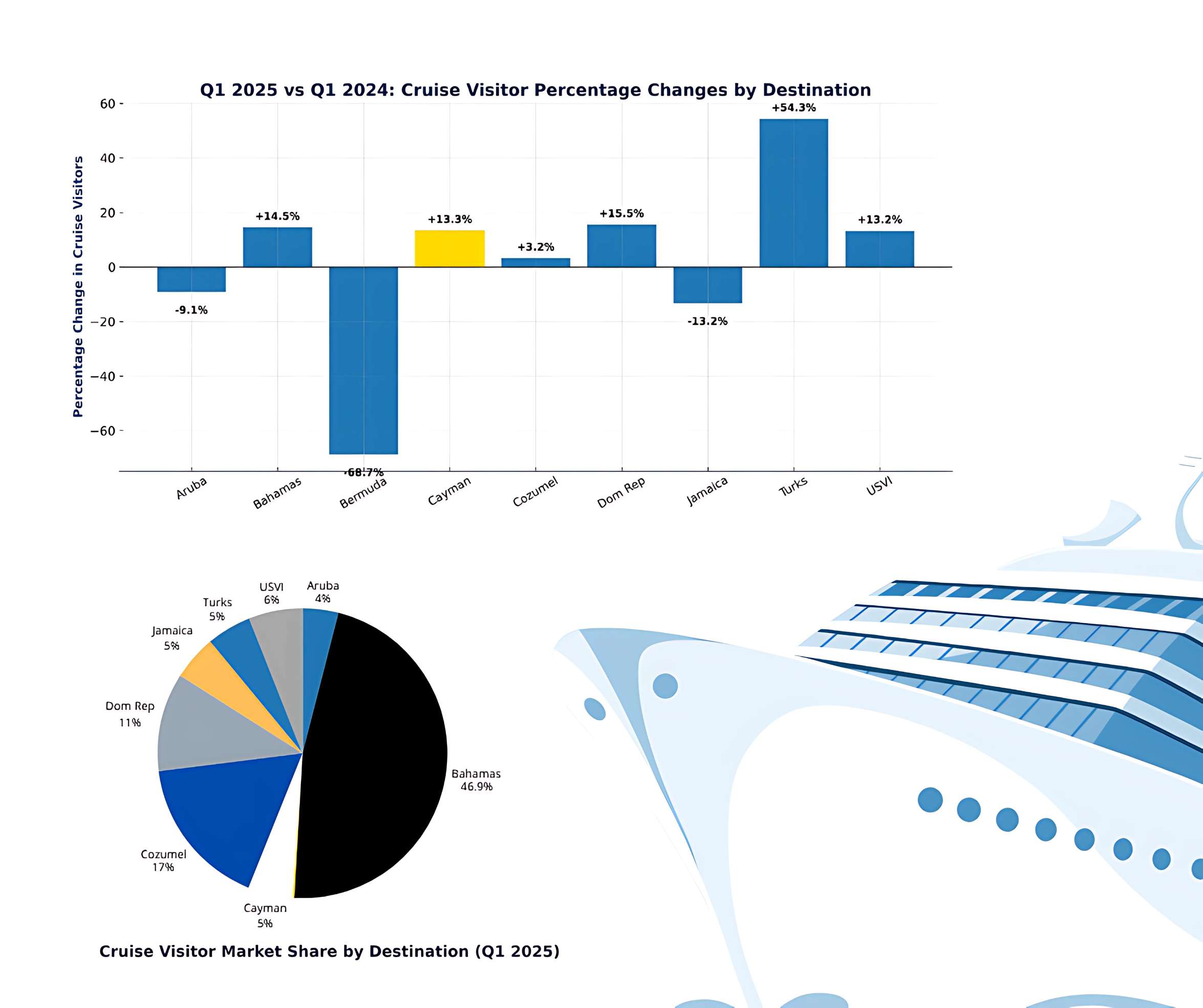
In the first four months of 2025 alone, Cayman welcomed well over half a million cruise passengers, up 13% over the same period last year. That performance put Cayman on par with Turks and Caicos and Jamaica, each commanding roughly 5% of market share among these major destinations.
In comparison, the Dominican Republic saw a 15.5% year-over-year increase in arrivals during the first quarter of 2025, claiming 11% of the market, while the Bahamas experienced a 14.5% increase, maintaining the region’s largest share at 47%.
Cozumel’s growth was more modest, with a 3% rise translating to a 17% market share, and the US Virgin Islands accounted for 6% of the market despite declines in some months. Meanwhile, Aruba, Bermuda and Jamaica experienced drops in visitor numbers.
This surge challenges the narrative that Cayman’s decision to reject a cruise pier project would relegate it to the industry’s sidelines. Dukharan’s analysis shows Cayman still ranks among the Caribbean’s leaders in key indicators, like disembarkation and spending.
Dukharan said that, despite the drop in passenger volume, smaller ships are still willing to tender and will continue to visit in the near future.
“Data on cruise ship builds for the next 10 years show that only roughly 11% will exceed the 5,500 passenger capacity, while roughly 39% will have 2,000 to 5,500 passenger capacity, and the majority 51% are below the 2,000 passenger capacity,” Dukharan noted. “So the trend we observe with ship builds is increased smaller ships, not bigger ones.”
Regional headwinds
The broader region, however, isn’t without challenges, according to the Compass analysis. Aruba, Jamaica, the US Virgin Islands and Bermuda all recorded declining arrivals in early 2025, despite having modern piers. Even Turks and Caicos, which posted a 54% jump in cruise visitors in the first quarter, faces uncertainty after Carnival Cruise Line announced in April it would drop Grand Turk from multiple sailings, rerouting ships to the Dominican Republic’s Amber Cove instead.
For Cayman, April brought a sudden downturn: cruise arrivals dropped over 26% from the same month in 2024, reflecting a regional slump that spared only the Bahamas, Dominican Republic and Turks and Caicos, among the destinations in this analysis. Harris attributes this volatility to the seasonal nature of the business.
“Cruise has distinct seasons too,” she said. “The ships are moving to Europe in the summer period. It’s already gotten a bit quieter.”
Looking ahead, Harris expects cruise arrivals to remain stable, even as numbers continue to lag well below pre-pandemic highs. Harris noted that, despite the drop in passenger volume since 2019, the number of local operators serving cruise visitors has stayed largely unchanged.
“It’s probably not where our operators want us to be,” she said, with respect to the decline in volumes. She added that local operators are “very keen” to hear what steps will follow the referendum, pointing to ongoing discussions in Parliament on the issue.
Government response
In parliament on 27 June, Premier André Ebanks announced plans to support businesses reliant on the cruise industry, given the public vote against building a cruise berth and the projected drop in numbers.
“This government is committed to honouring the will of the Caymanian people, as expressed through the democratic process,” Ebanks said.
He added that Deputy Premier and Minister of Tourism Gary Rutty and his staff were currently compiling a “short-, medium- and long-term plan to assess the options”.
Ebanks said they would be looking at “how you can transition some of those business owners, whether or not there can be [some] financial assistance either through the Development Bank or the Centre for Business Development, and then also whether or not there could be training programmes to move [people] to other industries.
“So, give us some time to be able to put those strategies forward, because, at the end of the day, we have to take care of our people economically.”
Editor’s note: This article has been amended to reflect updated information.
Related Videos












The tourism director should be coming up with a sargassum solution.
And the cost of the referendum was how much again?
Thanks Rosa for transparency of Cayman’s Cruise History & Future. You are a proven Ambassador for the Cayman Islands.