

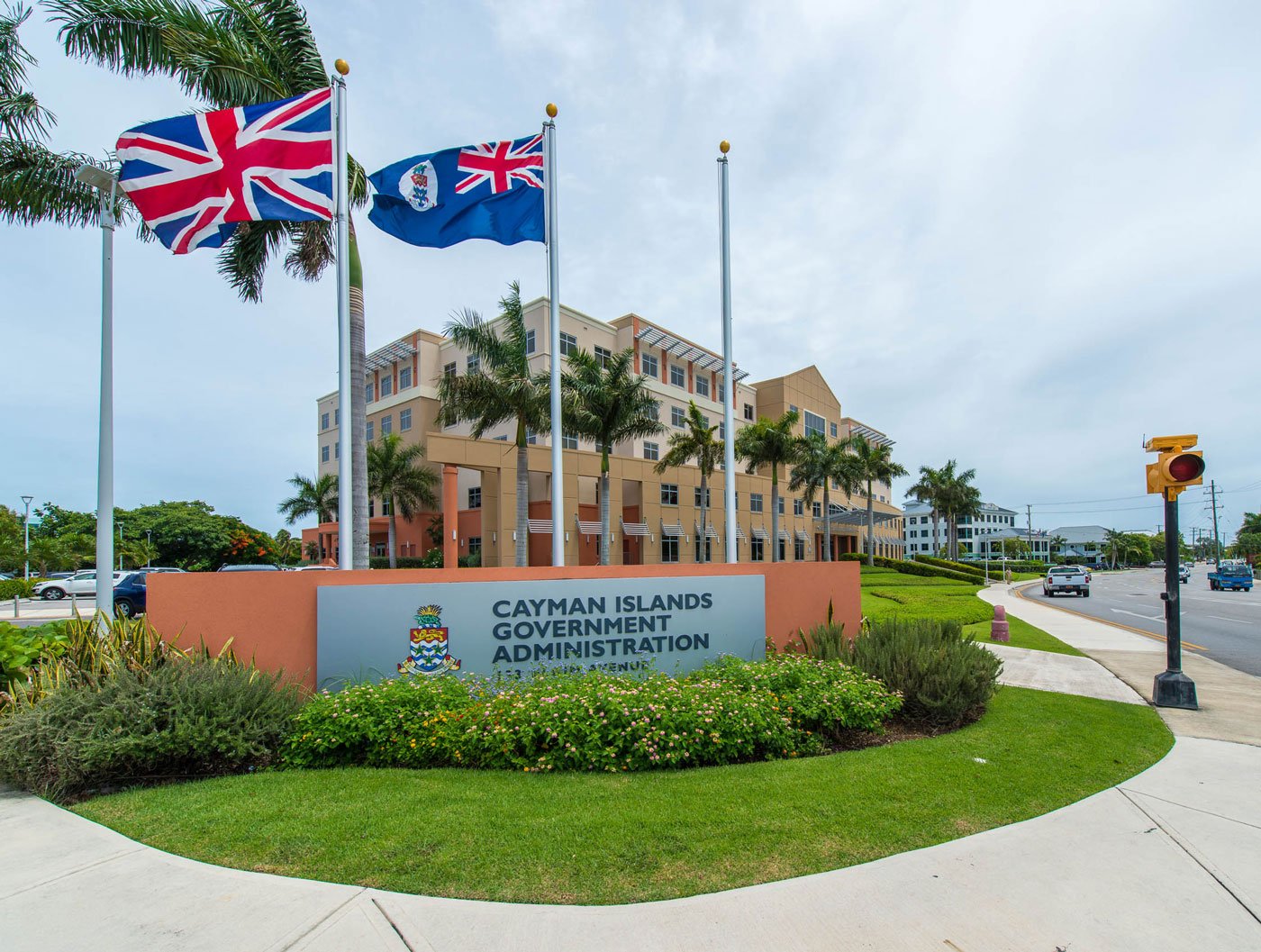
Government has released a bill with its planned immigration law amendments, which the public has until mid-November to respond to.
A statement by government accompanying the announcement of the public release of the proposed amendments, said this as a “decisive crucial point in national policy with the launch of sweeping immigration reforms designed to realign the system with the priorities of Caymanians, while preserving our competitiveness and social cohesion.”
Among the amendments is the extension to 15 years for the timeframe during which a person married to or in a civil partnership with a Caymanian or a permanent resident has to hold their Residency and Employment Rights Certificate (RERC) before they can apply for naturalisation or permanent residency.
The proposed amendments include extending the length of time a person has lived in Cayman from 15 years to 20 years, and from five years to 10 years after being naturalised, before they can apply for the right to be Caymanian.
The amendments also include the introduction of term limits for civil servants, details of which the government announced in May.
The proposed reforms also state that work-permit holders would not be permitted to change employers within the first two years of their permit being granted, “in an effort to curb job-hopping and encourage stability within the labour market”, the government statement noted. A permit holder would be required to leave Cayman for at least a year before being allowed to apply for another permit.
The bill also includes a clause that states that people who have been granted the right to be Caymanian, known as ‘status’, will be required to provide annual declarations for themselves and their dependents for seven years after being granted the right. Failure to do so will be a ground for revocation of their status.
Holders of RERCs also would be required to provide an annual declaration, or have their certificate revoked.
The amendments also include an age limit to the list of criteria for a Certificate of Specialist Caregivers. They also have a stipulation that holders of Certificates of Specialist Caregivers and Certificates of Commercial Farmhands would cease to be valid once those individuals turn 65.
Surviving spouses or civil partners, with dependents, will be required to have specific financial standing if they were married for fewer than seven years as part of their application to live permanently in Cayman.
A holder of the right to be Caymanian by entitlement, who after reaching the age of 18, resides outside Cayman for five years or more, and who fails to notify WORC, will lose that right, under the proposed amendments.
The public consultation period for the bill runs from 17 Oct. to 14 Nov.
Minister for Caymanian Employment and Immigration Michael Myles in the government statement said, “Public consultation of a bill is a cornerstone of good governance. This process ensures that every voice is heard and that the Immigration Bill reflects the realities, needs, and aspirations of the people it will serve.
“By engaging with the public, we can craft a fair, transparent, and effective immigration system that upholds our national values and supports both our citizens and those who wish to contribute to our society.”
Members of the public can give their feedback on the bill to government via email at [email protected].
The Compass will bring a full report on the bill next week.
Related Videos












So basically you need to live in Cayman more than 30% of your adult life to get status. Lol.
Communist China will become a more attractive financial hub than Cayman. This is taking it from A tier to basically a D or F on a global scale. Expats will just go to Dubai or HK. There not much left to offer in Cayman with these policies rolling into place.
Without grandfathering in people who have been on island by the rules when they got here, the government may just move the goal posts further in 5 years or 7 years when people today could apply. Pretty much a slap in the face to so many people and goes to show to the expats that the Cayman government shouldn’t be trusted.
Frankly I can’t imagine birth rates of Caymanians are high enough to do the jobs so give it 20 years and they will be wanting people to take care of the elderly. They will reap the damage they are going to inflict on the economy.
Based on this, seems like a good time to raise rental prices and price some people out. Heck, they won’t be able to change jobs anyways so any capitalist would take advantage of this opportunity.
Very low brain cell proposals with this government administration as they don’t think about the financial and job sector growth of Cayman for the future. What was once know as a financial hub will likely just be a vacation destination now.
This newspaper ran an article a few days ago about how the economy of these islands before the 1970s depended greatly on the weaving of the silver thatch leaves into rope.
The population was small and this was a subsistence economy. There were billions of mosquitoes.
Since then we have had the Cayman miracle supported by the tourism and financial services industries.
We are not unique and are in competition to other low tax jurisdictions such as Dubai and Singapore. Both of which are already more welcoming to those foreigners that will benefit their countries.
With this law we will be even less attractive to people who want to start businesses, retire or join an existing business.
Every Caymanian today, even the poorest, is better off than 60 years ago.
Let’s not take our country backwards.
My wife and I have lived in Cayman for almost eight years. We’ve built our lives here, contributed to the community, mentored and trained Caymanian colleagues, and proudly called this island our home.
We’ve always understood and respected the Caymanian desire for fairness, opportunity, and national identity. Caymanians should have priority in their own country and we’ve done our best to support that through mentorship, training, and by hiring locally whenever possible. But this new immigration bill feels like it goes beyond protecting Caymanians; it risks pushing away those who’ve spent years helping build Cayman’s success right alongside them.
The proposed changes — twenty years before true security (maybe even 27), years of ongoing declarations and potential revocation, limits on mobility – don’t just change policies. They change lives. They make people who have already given so much feel like they will never truly belong.
It’s especially painful to see what’s already happening around us. Many of our close friends, good people who’ve lived here for over a decade, who earned Permanent Residency and thought they were finally safe, have quietly started planning their exit. They love this island, but they no longer feel it loves them back. We were hoping we wouldn’t have to follow them. But we also have to think about our own future, a future that we can’t allow to be taken from us after years of loyalty and contribution.
This isn’t anger. It’s heartbreak. We still believe Cayman’s strength has always been its balance of opportunity and compassion, a place where people from all over the world can work with Caymanians, not instead of them.
I truly hope the consultation period brings empathy and balance back into the conversation. Cayman’s future will be brightest if it can remain a place that values not just where someone was born, but also what they give, how they treat others, and the love they show this island.
This will be a sugar high to those who support “Cayman for Caymanians”. But at best this is incomplete and at worst will have many negative repercussions for Cayman.
Real reform is needed to address opportunity for Caymanians, cost of living, overdevelopment and simply quality of life for everyone, Caymanians and Expats. Other than extending the time to achieve PR and ultimately Status this does nothing to improve life in Cayman.
The labour pool of Caymanians is too small to supply all the needed workers for the economy as we know it. This is before you consider the skill mismatch created by a flawed education system. So, there will be Expats working and living here for a long time to come.
Successive governments have failed to address education and labour market realities. In this bill I see nothing related to the Points System or Residency by Investment. Both of these are believed to have driven up the cost of real estate. The restrictions of labour mobility will concentrate power in the hands of larger organizations, surely there was a better way to deal with job hopping.
I hope to be proved wrong, but I see these changes increasing the cost of business in Cayman and making society overall less pleasant live in.
To those who are celebrating these proposed changes, I suggest you should be careful what you wish for.
If you are saying that a person of Cayman status must make a declaration, do you mean that they must declare their net worth? This is going to seems oppressive(1) many people will be embarrassed because they have not attained what can be viewed as even a low average net worth. (2) if they attained even the minimum net worth for citizens at the late stage of their lives, they might have “unwelcome visitors” to rid them of the little they might have remaining or set them up for hate by others. It takes little for envious people classify another as their enemy.
I assume the declaration will be days on island, property owned etc.
If you are ordinarily settled outside Cayman for 5 years and don’t maintain ties you are meant to lose Status under the current law.
We have many overseas Caymanians that should have likely been stripped of Status and some of them are fronting as the Caymanian partner in businesses etc.