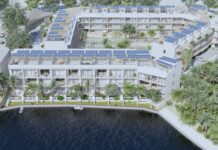
The Planning Appeals Tribunal has overturned the planning approval granted to the International Mall Development and National Builders Ltd. for the $40 million project along Walkers Road in George Town.
The hearing took place on 3 Oct. and the decision was issued on 15 Oct. The proposed development included three retail buildings, two restaurants, seven townhouse blocks containing 44 units, and a clubhouse with a gymnasium and swimming pool.
As a result of the tribunal’s ruling, work must stop on the site and new plans and documents must be submitted to the Central Planning Authority if the developer intends to proceed.
Tribunal findings
In its written decision, the tribunal said the planning board’s approval was affected by “a number of errors of law and fact” and found that the process was both procedurally unfair and legally deficient in several respects.
While noting that the developer’s original appeal was filed outside the usual time limit, the tribunal ruled that the delay was due to an error in the notification process, allowing the appeal to proceed.
A key issue arose when the developer subdivided the land into two separate parcels; one zoned for Neighbourhood Commercial use and the other for Low-Density Residential, after the original approval had been granted. The Central Planning Authority had considered the application on the assumption that the land would remain a single parcel.
The tribunal said this subdivision was “a fact of some importance,” as several of the authority’s calculations, including site coverage, parking and setbacks were based on the original configuration.
The tribunal found multiple legal errors, including:
- Exceeding the 75% site coverage limit under the Development and Planning Regulations. The CPA accepted a figure of 74.95%, but the Tribunal ruled that calculations were flawed and no variance had been granted.
- Parking violations: Only 49 of the required 118 commercial parking spaces were located on the commercial parcel, with the remainder on the residential lot. The Tribunal noted that this arrangement was “manifestly unreasonable” and should only be permitted through a formally approved Parking Management Strategy, which was never submitted.
- Setback violations: The two-storey clubhouse encroached into the 15-foot setback required for buildings of that height, with the upper floor only 10 feet from the boundary.
- Failure to notify consultees and objectors: The Tribunal found that the CPA did not re-consult government agencies such as the Fire Department, National Roads Authority, Water Authority, and Department of Environment, nor did it invite objectors to review significant revisions made before approval was granted.
“These breaches collectively amount to procedural unfairness,” the tribunal stated, adding that the CPA’s decision was “manifestly unreasonable” and must therefore be set aside.
Environmental and community response
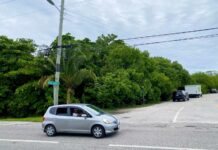
In its original feedback to the Central Planning Authority, the Department of Environment had warned that the 4.36-acre site was “primary habitat,” containing mature dry forest and ecologically important native species, including the silver thatch palm.
Carla Reid, one of more than two dozen objectors, said it was “a travesty that the developer was allowed to clear the silver thatch trees and the old growth forest while the appeal was pending.”
Earlier, former CPA member and objector Sharon Roulstone told the Compass that the developer had been allowed to continue building “at his own risk” while the appeal was unresolved.
Reid added that the appeals process took too long. “I know the Tribunal members are volunteers, but that is just too long to wait for both the appellants and the developers,” she said. “The law needs to change. There should be an automatic stay in place pending an appeal and a six-month time limit unless extended by the courts.
Developer response
A spokesperson for the developer said, “We acknowledge the recent decision of the Planning Appeals Tribunal and thank both the CPA and the tribunal for their efforts and timely deliberations. While we are disappointed with the outcome, we remain committed to working constructively within the planning framework to support responsible development that benefits the community.”
The spokesperson added that while the tribunal identified flaws in the approval process, it also found the site itself to be suitable for development and that the company intends to continue working with stakeholders “to ensure that projects align with both local needs and long-term sustainability.”
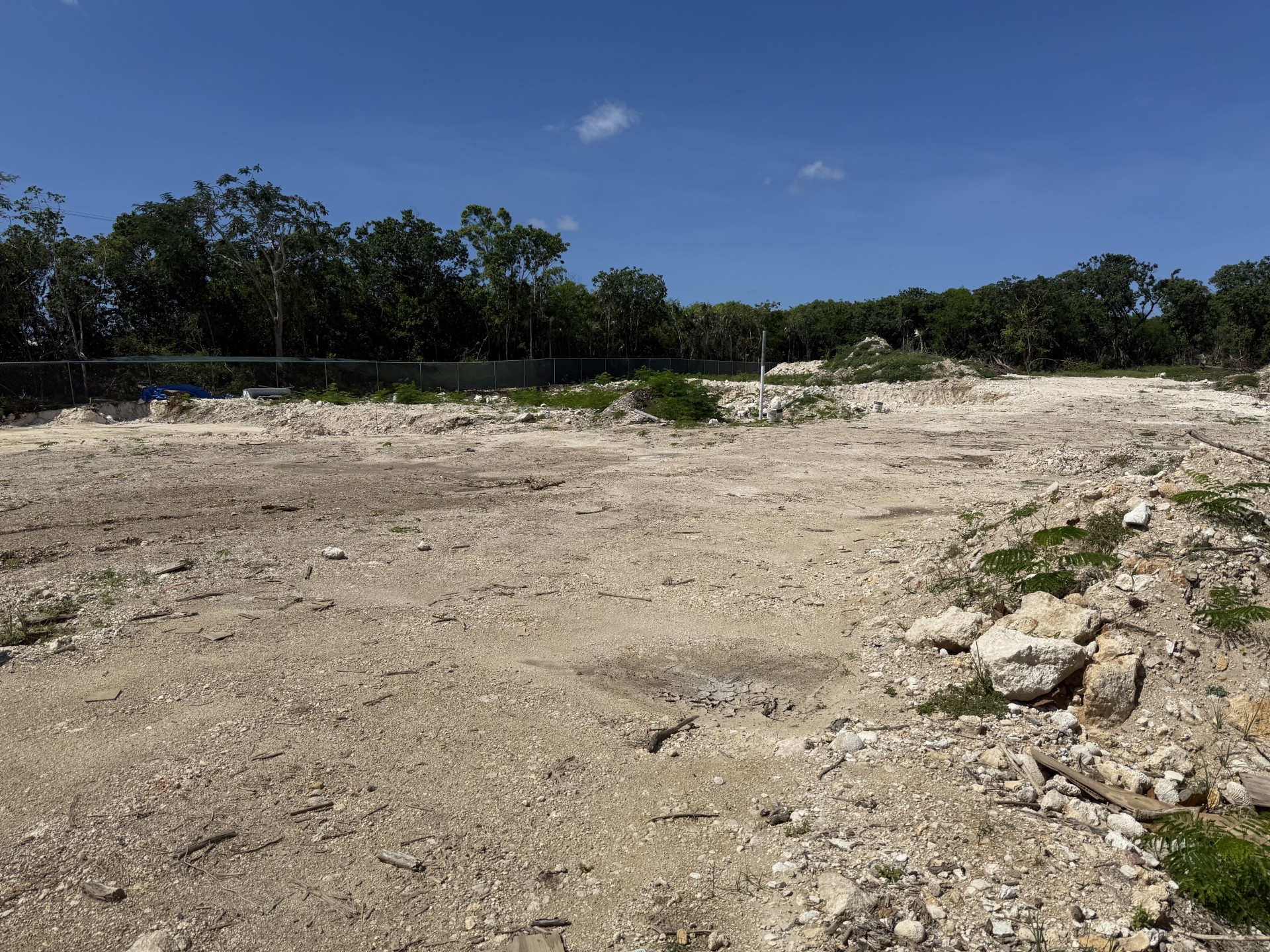
It remains unclear whether the developer will be required to replant trees cleared from the site, or if that is even feasible. Most of the soil and trees have already been removed and crushed rock has been placed over a large percentage of the property.
Related Videos