

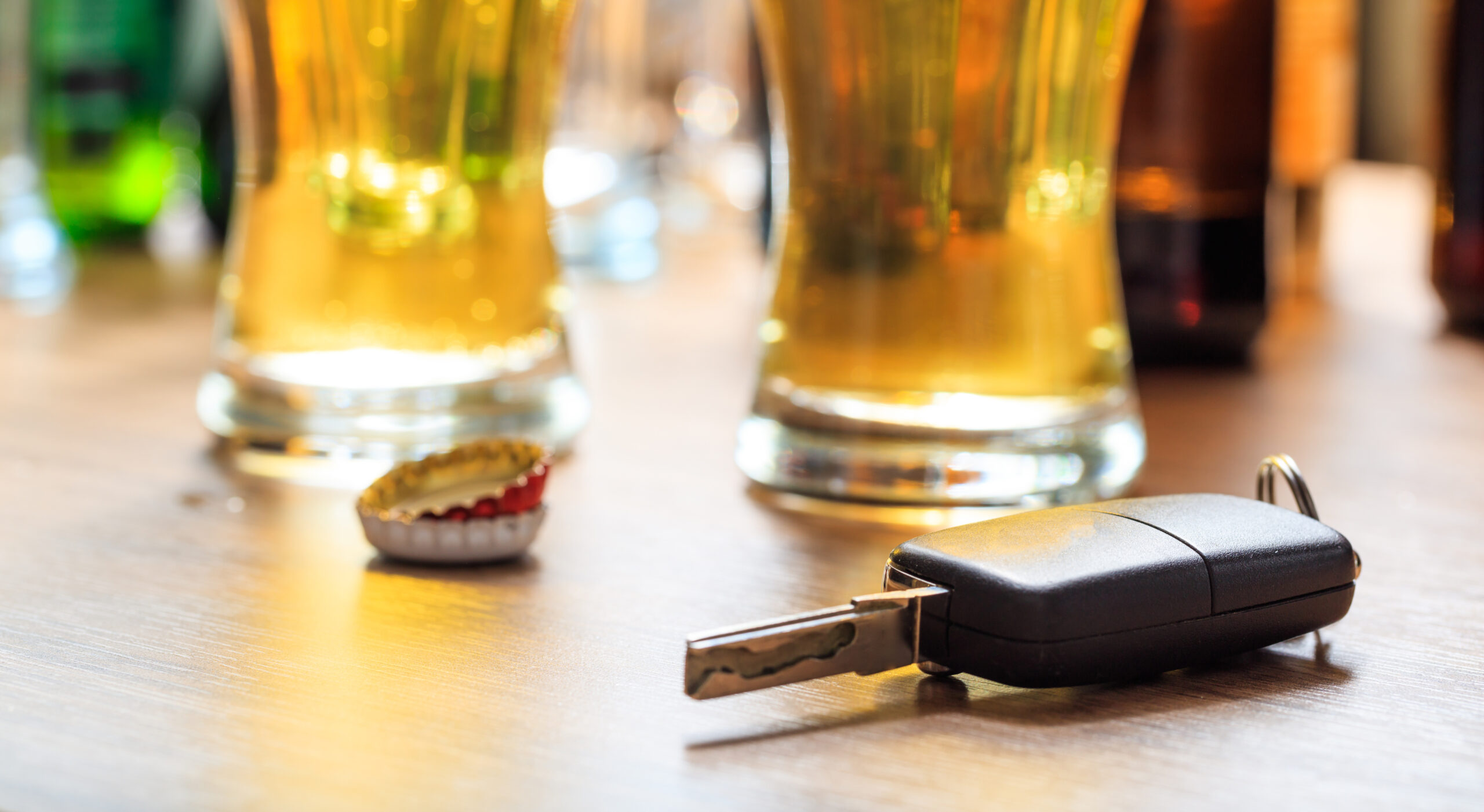
Counsellors who lead court-mandated and private drink-driving rehabilitation sessions say the overwhelming feedback they get from attendees is “Why did no one tell us this before?”.
It may seem obvious that driving after drinking alcohol is, at best, inadvisable, and, at worst, potentially fatal, but for attendees of these sessions, the message that even a little bit of alcohol can impair reaction time and sight was not one that was fully understood, the counsellors say.
Teaching drivers early on, at the point they’re applying for their licences, about the effects of alcohol, could be instrumental in lowering DUI offences, counsellors the Cayman Compass spoke to as part of this series said.
The Counselling Centre, a government-run unit, facilitates a DUI programme to which a Traffic Court magistrate can send offenders.
Jason Dunkley, clinical supervisor at The Counselling Centre, says the programme, which consists of psycho-educational sessions spanning three days over a month, offers up to 120 seats a year, which are consistently filled.
Those sessions explore the impact of alcohol and other substances on driving and provides tools to avoid driving under the influence.
‘Why didn’t we know this information before?’
“The one common thing – and it happens probably halfway through the second session, if not before – one person will say it, and then the whole group will say it, ‘Why didn’t we know this information before?’,” Dunkley said.
“We’re giving them this really good psycho-education, but it’s after they’ve committed a traffic offence, after they’ve had a bad accident and could have really hurt somebody. There’s a frustration there for them, and for us. I can’t disagree with that,” he said.
Dunkley says he is personally trying to push for working with the Department of Vehicle and Drivers’ Licensing on making DUI education compulsory when people apply for a driver’s licence.

“When they apply for a new licence or to renew a licence, I think it would be a good idea for someone to watch, say, just a short 10-minute psycho-educational video and then have to answer … six basic multiple choice questions. So, at least, you start to think about it, and you can’t say you were never told,” he said.
“At the point of getting your licence, that’s where the intervention should be. Intervention after the offence is too late,” he added.
This was echoed by veteran counsellor Terry Delaney, who has worked on such programmes in the public and private sector for decades.
Delaney says when a person attends sessions following an incident, it’s not about tackling addiction or abuse, but about education and future prevention.
He says the predominant message he gets from attendees in these sessions is “I wish I had known this when I was doing my driver’s education. Why am I only getting this information after I’ve violated the law?”
Most people think, when it comes to drink driving and accidents, “it’ll never happen to me”, said Delaney, who also advocates for educating drivers early on about the effects of alcohol on their bodies and reflexes.
In his sessions, for example, he said he explains how alcohol impairs sight and how even drinking a small quantity can blur vision.
For those who argue that they feel safe to drive home so long as they remain below the legal limit, which was reduced last year from 0.1 to 0.07, Delaney said, “The practical problem with that is, I have never heard of anyone having a drink with a friend or at a party who says ‘I think I’m at 0.6 now, I’d better slow down’.
“Nobody can know the level they’re at.”
‘Socially acceptable’ to drink and drive
During the courses, counsellors and participants also discuss attitudes and beliefs about drink driving.
“Like it or not, drink driving has become socially acceptable in Cayman,” Dunkley said. “We talk about challenging that belief, and we do a really deep exploration about some of the excuses we give ourselves that give us permission to drink and drive.”
He said there appears to be an attitude in Cayman that if a person loses their licence because of drink driving, friends and colleagues shrug it off, often simply responding, “You’ll get your licence back. Do you need a ride?”

The social acceptability, not just of getting behind a wheel while over the limit, but of being caught and prosecuted and losing one’s licence, is a problem, Delaney says.
“It’s almost a rite of passage here,” he said. “People aren’t embarrassed to bring it up. You get a friendly slapping on the back and told, ‘Don’t worry about it. I got mine two years ago’.”
This contrasts strongly with attitudes in some other countries, like the UK, both Dunkley and Delaney say.
“If that happened in the UK, you’d be a pariah,” Delaney said.
Learning from mistakes
At The Counselling Centre sessions, participants complete a pre- and post-programme test. Results of those tests have shown that the percentage of participants who had increased their knowledge about the risks of drink driving as a result of the programme was 78% in 2022, 84% in 2023 and 77% in 2024.
Dunkley explains that the sessions, which are run over two evenings and one full day, explore alcohol misuse in general and the impact of alcohol on driving.
“I will talk specifically about when you drink, this is what alcohol does to your body and this is how it would impact your driving,” he said.
“We also talk about the idea of being in a country where, in a culture, it’s very much a free-pour society. You rarely see somebody actually measuring the drinks, so it’s actually really difficult to keep track of how much you are drinking,” he said.
He added, “A lot of the time, you hear people saying, ‘Well, I’m only drinking beer, so it’s not as bad as drinking liquor’, but then we break it down for them. There is the same amount of alcohol in one glass of beer as there is in one glass of wine or one shot of whiskey. There’s just different amounts of liquid in the three of those. That’s a new concept for a lot of people.”
The perception of being legally under the limit not automatically equating with being safe is also discussed.
“The idea that I’ve only had one or two drinks, well, that doesn’t mean your driving isn’t impaired. We talk about the fact that as soon as you take your first sip of alcohol, your judgement is already impaired. It may only be by a fraction, but it’s impaired nonetheless,” Dunkley said.
“Your reflexes are impaired. Your eyesight is impaired. Again, it may only be by a fraction, but it’s impaired, and that fraction could be the difference between taking somebody’s life or not, if you’re travelling at 40-50 miles an hour.”
Related Videos













Earlier education will surely help. But why can no one in authority seemingly conclude what the wider population has concluded? Drink driving is socially acceptable because there isn’t a good enough taxi and bus system. Fix the taxi issue and drink driving will quickly become socially unacceptable. People will quickly judge their peers who drink drive when there is a viable alternative. Until then, they won’t.