

By Cayman Compass Contributor Simon Cawdery
Last week, I wrote the first part of a two-part article bemoaning the quality of driving standards in Cayman and exhorting that something be done. In the spirit of ‘don’t criticise an issue without offering solutions’, this, part two, is designed to offer some solutions that I think could help make Cayman’s roads safer for all and help reduce our road fatalities.
Taxi drivers
Why doesn’t Cayman allow competition in its taxi industry through ride sharing apps and systems? London does it. New York does it. Miami does it. Hong Kong does it. Singapore does it. Tokyo does it. The list of those who allow ride sharing apps is vast. Cayman sits on a lonely and curious pedestal of countries that actively choose to harm consumer interests by requiring everyone to pay too much for a mediocre quality service. A product, remember, that if improved would save lives.
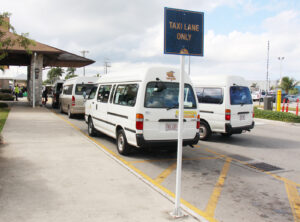
The government should throw caution to the wind and liberalise the taxi system. Some may complain, but thousands would rejoice and the demand for affordable, safe and reliable taxi alternatives would explode. This, in a heartbeat, would dramatically reduce the incidence of drink driving and go a long way to justify a stronger clampdown on such behaviour.
We could even go a step further. Why doesn’t Cayman consider reaching out to the various companies around the world looking at launching or operating robo-taxis. Why don’t we offer to be a technology pioneer right here in Cayman? Distances are small, road complexity is low, and opportunities could be huge in terms of time and lives saved, as well as bringing a novel technologically forward-thinking solution to Cayman, its residents and its visitors.
Road layouts and intersections
Driving standards are pretty atrocious in Cayman, but the authorities need to take responsibility in some instances, too.
Some of Grand Cayman’s road layouts need attention and thought. Why is the northern end of the Esterley Tibbetts Highway (ETH) a T-junction? It simply creates conditions for accidents. It should be switched to being a roundabout. That would reduce speeding and potential for accidents.
Why can’t the entrance to A.L. Thompson’s be an access point off the Butterfield roundabout instead of the dangerous crossing it currently is with cars jumping across two lanes to enter?
Why is the entrance to Public Beach in West Bay a dangerously unpainted road obstacle?
Why are so many road signs carefully hidden behind shrubbery?
Why isn’t there a pedestrian bridge across the ETH from the canals to the beaches, particularly given the number of Airbnb units that now advertise beach access in that area.
I am absolutely certain that there are probably 20 improvements to Cayman’s road system that would immediately reduce risks. The only requirement is to ask Cayman’s drivers what those are. They are the ones seeing the issues every single day so let’s ask for feedback and ideas. And then once we have the ideas let’s prioritise them so as to reduce accidents.
Fast and the furious
Can anyone explain to me why the single-lane dimly lit Bodden Town Road is 50mph in some areas, but the expensively constructed, well-lit, crash-barrier-setup, ETH is 40mph? The authorities need to be honest with themselves and with the country’s citizens. Very few people drive at 40mph on the ETH because very few people think 40mph is a sensible speed limit for that road. The road is wide, has all modern safety features and is perfectly safe to drive at 50mph on.
Adherence to speed limits is much greater when those same speed limits are sensible, proportionate and appropriate. If people respect the speed limits as being reasonable they are far more likely to adhere to them. Many of Cayman’s current roads have antiquated speed limits, seemingly for no better reason than no one thought to change them.
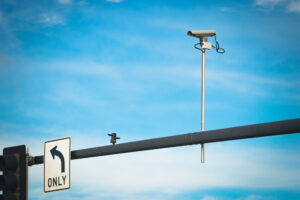
At the same time, once speed limits are set and ‘fit for purpose’ let’s actually enforce those limits. Right now, they are sporadically enforced and the limits distrusted for being illogical. Make the speed limits sensible and then install speed cameras. I can’t think of a single reason not to install speed cameras if the speed limits are set reasonably. So, let’s cut the talk, cut the committee meetings, and let’s actually do something practical and forward-thinking about road safety in Cayman. Excess speed is a known contributor to road accidents and yet we have speed limits that make no logical sense in many areas and limits that are barely monitored or enforced.
As a Cayman Compass article from April 2025 observed, hardly anyone is adhering to the speed limits on the ETH (and many other roads). Against this backdrop, the authorities need to wake up and smell the coffee and realise that for drivers to respect the speed limits the speed limits need to be reasonable.
Electric equality needed
How can something travelling at 20mph (or often, more) on an electric skateboard or scooter, on a main road be, in effect, completely unregulated? No licence to operate needed. No knowledge of the highway code. No protective equipment. The status quo of electric bikes and scooters hurtling down the highways completely unregulated (and, for what it’s worth, often on the wrong side of the road) is madness and a serious safety risk.
Cayman’s not alone in raising my ire in this regard. The situation exists in so many places. Cayman should pay much closer attention to what other countries around the world are doing in this regard and be thoughtful about what unregulated machines it lets on our roads as I have recently seen all sorts of things from electric bikes to electric skateboards hurtling down the bypass or around a roundabout with no safety equipment or adherence to the rules of the road remotely in sight.
There should be minimum testing obligations (including simulator use), licence purchase requirements and mandatory insurance so that those on such contraptions, using them on public highways are actually aware of the rules of the road and follow them and have insurance when they inevitably cause an accident.
Big brother
Many countries are trialling moveable cameras powered by AI technology to spot drivers who are not concentrating on the road, either because they are using their phone or otherwise distracted. That seems an incredibly good idea. Too many times, have I seen people veer across lanes or drive dangerously slowly because they have been distracted by the latest Tik-Tok video or WhatsApp message.
Cayman should acquire some of these cameras and install them in ad-hoc locations and monitor the level of distracted driver behaviour. It will, I am sure, be dramatic. Once the problem is clear then use the same cameras to fine people for such distractions thereby improving attention and road safety.
Restrictions on unsafe cars
It has always struck me as curious how, for instance, (and I appreciate the howls of anger that will follow from the Tesla supporters club), Tesla cyber trucks are banned from sale in the UK because they are considered unsafe for pedestrians in the event of an accident, due to their weight and shape, but the same vehicle is completely acceptable on Cayman’s roads. Why?
Are pedestrians in Cayman somehow less valuable than pedestrians in other countries? Cayman’s roads in many ways much more closely resemble those of European countries than the wide expansive freeways of the United States. So why on earth don’t we follow the guidelines that the UK and other European countries have with respect to protecting human lives in the event of accidents.
It would be far better for Cayman to adopt road safety standards that optimised the safety of everyone using the roads and took a more active stance on vehicles that put the lives of others in genuine danger. A handful of people may shriek that their freedoms are being impinged by nasty bureaucrats, but who cares. We have road safety rules for a reason: safety. Once we accept that, which surely everyone does, then it’s completely reasonable to block the sale of dangerous cars.
Talking of unsafe cars, let’s also look much more closely at the state of cars on our roads. Apparently, Cayman has a car inspection system, but it is clearly not working given the number of broken lights you see on any given evening. Also, what about emissions? Road safety shouldn’t just be about accidents but can be about health as well. I say this having sat, earlier today, behind a bus belching out toxic black smoke for five miles and then overtaken by a motorbike emitting a sound that surely exceeded the safe limit for hearing health. Surely, it’s high time that Cayman introduced emissions and exhaust sound testing as part of its road safety systems.
Bike lanes
Cayman’s roads are dangerous for cyclists, there’s no question, but the simple fact is that some cyclists add to their peril by their own actions. Some cycle without any lights at night. Some cycle with no helmets on and some cycle on the opposite side of the road. It’s madness and the rules of the road are seemingly completely unenforced in this regard.
First and foremost, we need to hold all users of the road to the same expectations and standards. Dangerous behaviour on the road should be penalised whether its cars, cyclists, scooters, trucks, taxis or busses. Everyone should be treated equally (including, let’s be honest for a moment, the police who are often culprits themselves in the speeding game without lights or sirens on).
Secondly, can we do something slightly more meaningful than buy green paint and bicycle stencils. A dab of paint dissuades no one. Low rise bollards (as they have in London, New York and Paris) should be installed to give a proper lane in which cyclists can travel. This would do far more for cyclist road safety than any number of trips to the paint shop, for not that much more money.
Not all of Cayman’s roads are set up to have cycle lanes. That’s ok as it’s a common global problem. What other countries have already realised is that you can dramatically improve road safety if you identify corridors in which cyclists can move and establish segregated lanes or routes for them down certain roads. That way they are clear of the thundering cars and able to get to their destinations quicker and more safely, thereby encouraging others to do the same and in turn reducing congestion.
Points mean prizes
Last but not least, let’s discuss a points system. Many countries around the world have a points system for drivers where if you commit a traffic offence, you get points on your licence. Pick up too many points and you risk a three-, six- or 12-month license suspension, fines and potentially mandatory online road safety training.
Since all traffic offences lead to points and too many points can lead to the loss of a licence – and an increase in insurance costs as points are incurred – people become much more careful about obeying the rules of the road. Cayman has no reason not to try such a scheme. There really can’t be many downsides – except for those who are bad drivers, which is precisely the point and they’re the people who need re-educating on proper driver-behaviour.
Currently all drivers pay for the abominable standards of many in terms of higher insurance premiums. Money talks. Charge those who drive the worst much more, and soon perhaps their behaviours may change, to the benefit of everyone. Encourage insurance companies to offer telemetry-boxes to drivers in return for reduced premiums if they drive safely. Take this idea a stage further and require it for all new drivers, and new-to-island-drivers for the first 12 months of their driving. That way bad behaviours can be caught early and training given to correct.
An unintended benefit of increased testing and more suspended drivers is that there would be lots of people needing to take buses thereby generating the necessary revenue to fund a comprehensive national bus network that would run later and across the island.
Newtonian issues
Cayman’s roads are plentiful and occupied by an incredible array of vehicles many of which are extremely large and fast. Newton’s second law of motion succinctly says that “force equals mass times acceleration”. As cars have become heavier and bigger, and their engines more efficient, their acceleration and speed increases. Any accident is thus more catastrophic. If Cayman ever went the ‘Bermuda route’ and mandated a maximum size of cars then this problem might be managed.
But that’s seemingly not a realistic solution. Therefore, it is vital that our roads are better designed, our drivers better educated and our monitoring and supervision more robust, coupled with genuine options for people to replace their car with ridesharing or buses. All for the common goal of reducing deaths right here in our Islands.
Simon Cawdery, CFA, is an investment manager and governance professional who lives and works in the Cayman Islands. He writes regularly for the Compass.
Related Videos







Multiple issues have compounded. This article reflects most of them — albeit as an opinion piece. I love the pedestrian bridge over the ETH. You could even put it out there to the schools to design one, then work with local architects and structural engineers AT COST. The community would fundraise for that, no doubt. Nice award etc.
The driving safety problem, in my opinion, has three major pillars:
1. Infrastructure: Road layout and design. Walking paths, bike paths.
2. Availability: Poor taxi solution. Poor public transport solution.
3. Enforcement: RCIPS need more solutions and staff.
We need a good old Task Force to think this over and be accountable.
Some ideas:
1. Infrastructure: Find budget and adjust road designs, build/paint walking paths, cycle paths, elegant bridges.
2. Uber: Start with only Caymanian drivers until saturated, then allow some other permit solution.
3. Enforcement: Find budget. More RCIPS, more administrative fining ability (on the spot), more driver checkpoints in concerned areas. Use the Regiment to assist the police — pretty sure no one’s driving around those guys.
As is often the case, elsewhere in the world they’ve figured it out. It’s always just about money, putting the right think tank together, and getting people who are not progressing the issues out of the way.
Drive safe — it’s Christmas, don’t hurt anyone!
We need a minister for road safety. Most of my journeys are under 5 miles and seemingly each journey I am subject to someone else’s dangerous driving. Not careless, but willfully dangerous. The lack of any meaningful action from those in authority is leading to a gradual but nonetheless significant reduction in the standard of acceptable behavior. That will quite quickly reach a tipping point where law and order becomes optional and the silent majority suffer.
With respect to reducing traffic-related issues, one solution that will make a huge difference is related to school-related traffic. Solutions could include (1) requiring all students to be bussed into the core area of multiple schools, i.e. the Walkers Rd area; (2) establishing bus depots outside of the George Town area where parents can drop their children, in order for them to be bussed into the Walkers Rd. area “schools zone”.
An important point to ponder is that the “schools zone” in the Wakers Road area is very close to two potential hazards: one, the sea coast; where a tsunami warning creates havoc, and a real tsunami could find both parents and children on trapped on our roads. The other hazard is the proximity of fuel storage tanks (at Jackson Point) on the Western coastline, and the propane “plant” on Walkers Rd. It just makes safety sense to reduce the amount of traffic in this area by instituting bussing as mandatory for students attending schools in this general area.
No need to worry.
With the loss of 7 mile beach and tourists being robbed in broad daylight there’ll soon be a reduction of tourists and consequently less traffic.
The loss of income from tourism will force the government to look for new revenue sources, including speeding fines.
while on the subject of road saftey enforcement, fine should be income assessed a la Finland. The gov has access via your pension contributions so it should be easy enough to implement.
~0.5% of your monthly wage is enough to sting but not enough to bankrupt, perhaps 1% for egregious violations?
on the subject of emissions and exhaust noise, why is nearly every truck on the island equipped with an exhaust system outputting noise to rival that of a jet aircraft while they trundle at 40mph on ETH?! It boggles the mind that this is overlooked.
Simon – you have made some truly on point suggestions. I hope that the Roads Authority will embrace this discussion piece and act on it.
It is appropriate to ask “Are pedestrians in Cayman somehow less valuable than pedestrians in other countries?” Are bicyclists?
Not that we can’t walk and chew gum at the same time, a revamp of public transport needs to be the base of all these changes.
This will allow us to make fundamental changes to the way people currently use our roads independently without denying people who depend on being able to get around a means to make a living, forget improving options for tourists (another issue for our roads) and generally providing a better quality of life for our people.
I have been thinking about our roads/drivers/solutions for months so welcome Simon Cawdery taking so much time to point out problems and propose solutions. So here is my contribution on a number of issues.
Most of our problems on the road stem from a lack of respect–for rules, for others, for life. It is shocking that we have a higher number of road deaths per capita than the US.
The police, the ministry, the NRA, the Education Department, the DVDL all have a critical role to play.
1) FIRST AND FOREMOST. We need Driver Education in every high school–not Driving Education. I am convinced that the Driving Schools are doing a fairly good job and the Driving Licence protocol is reasonably rigid. It is not a matter if people on the road CAN drive, it is a lack of concern and respect for the law, others, protection of other road users and even themselves that we have extreme issues in speeding and poor driving. Driver Education would not deal with manipulating a car or knowing road signs etc., but applying sense, care and respect and concern for others while driving AND OBEYING THE LAW. It could be a part of a Life Skills course. All students should go through the Driver Education program at their school and be issued a certificate (some minimum standard could be established) before they are allowed to have a Learner’s Permit and start Driving Education. The roll out of this curriculum could deal with the human issues behind driving–respect of others and the law. The curriculum needs to be a bit graphic–videos of crashes caused by speeding and poor driving, maybe even a gravestone or brief funeral clip of an imaginary victim, the trauma of family and friends, the guilt of those causing the accident if they remain alive, a possible custodial sentence, and a life snuffed out before its time. Also, there could be points earned towards a citizenship grade. Perhaps this could earn the new driver and immediate discount on the insurance or licence. We can’t teach common sense, but we can teach respect.
ROLE OF DVDL
2) Laser lights that seem to pierce right through to the back of your eye are a problem. I have had to actually stop or slow down considerably until a car goes by with some of these piercing, blinding lights as I virtually can’t see where I am or where I am going. Can the Vehicle Inspection Department do something about that? I recall years ago buying a car in the US and before I could get it on the road in Cayman, the DVDL required me to have the lights changed. Bright lights are simply not necessary. Back in the day before so many street lights and building lights a high beam may have been needed for a while, but with the amount of light flooding our roads and highways, there is absolutely no need to use the high beam. A high beam is dangerous to both drivers approaching and following. I am assuming that the piercing, blinding lights are high beam. If they are low beam then something drastic needs to be done.
3) Cars should not be allowed to park on a main road within 20 feet of an exit. Condos on SMB attempted to impose this restriction to save lives, but there are other places that need to do the same.
4) Stronger Consequences. I fully agree with the person that suggested that Serious Consequences in the form of a letter which is on the car for at least a year should be meted out to drivers who (S) speed, drive dangerously (DD), or drive intoxicated (DI). If we can alert drivers that a student driver is on the road (L) why can’t we alert people that a driver who has been cited for speeding, dangerous or drink driving is on the road. This provides an alert as well as a consequence and a second offense should result in the automatic loss of a licence for the driver for a year, whether the car owner or not is driving. This info could be published ahead of time to give adequate warning and increase success. They are then without excuse. Sounds harsh? Do we want results or not? Do we want to punish perpetrators or not? Do we want to save lives or not? Do we want to reduce pain and stress or not? Any negative behaviour or attitude without consequences WILL BE repeated.
Let’s face it testosterone is part of the problem and that is not going to change. That is the way males are built and that powerful hormone given by God for men to assume their God-given roles, is expressly demonstrated on the road in a negative and dangerous way as I would venture to say 95% of the speedsters, weavers, dangerous drivers and drink drivers are male. Sorry guys facts are facts!! Let your protective instinct show up on the road.
I hope and pray that this letter reaches the hands and eyes of people who can do something and they will set out to do what is necessary for a better safer Cayman.
Busses don’t come out to East End after 6:00, in fact, I’ve heard they often don’t even come to Bodden Town. A taxi from downtown to East End is $125 ci. Most people can’t afford that. So, they get in their cars, even though they’ve had a few drinks, and drive home. And there have been many bad accidents along the perimeter road due to drunk driving.
One solution to the traffic injury problem would be to reduce the Cayman Islands’ BAC from 0.07 g/dL blood alcohol content for drivers to 0.05%, or even lower. Currently, one hundred countries have a BAC of 0.05% or lower.