By Cayman Compass contributor Christopher Tobutt
The courtyard of the Cayman Islands National Museum was alive with rhythm on Saturday morning 10 Jan.
More than a dozen people had gathered – children, parents, young professionals, elders – drawn together by curiosity and the promise of learning Cayman’s traditional dance, the quadrille.
The free quadrille class was part of a collaboration with the National Gallery of the Cayman Islands and its current biennial exhibition, ‘Archipelago‘.
At first there was hesitation. Feet shuffled, eyes darted and smiles flickered nervously. But the Museum’s marketing, events and design coordinator, Brian Watler Jr. – who was leading the class – had a quiet way of dissolving self-consciousness. He took the participants through each of Cayman quadrille’s six ‘figures’ – characteristic and distinctive movements that define quadrille. Many of them, surely, could be seen in other quadrille dances across the region, but some are where the local population had stepped in and, like so many aspects of local culture, given it a uniquely Caymanian badge.
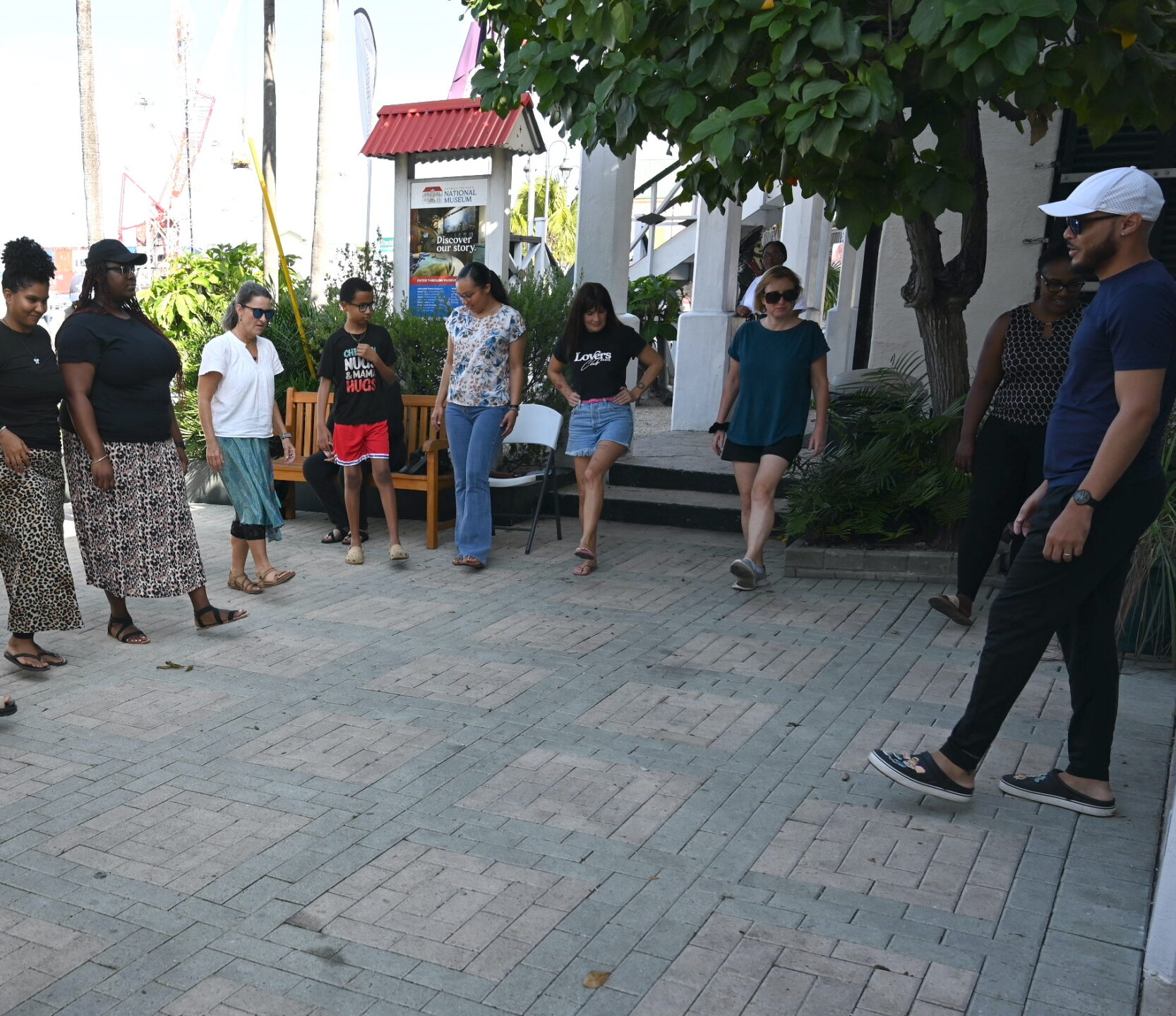
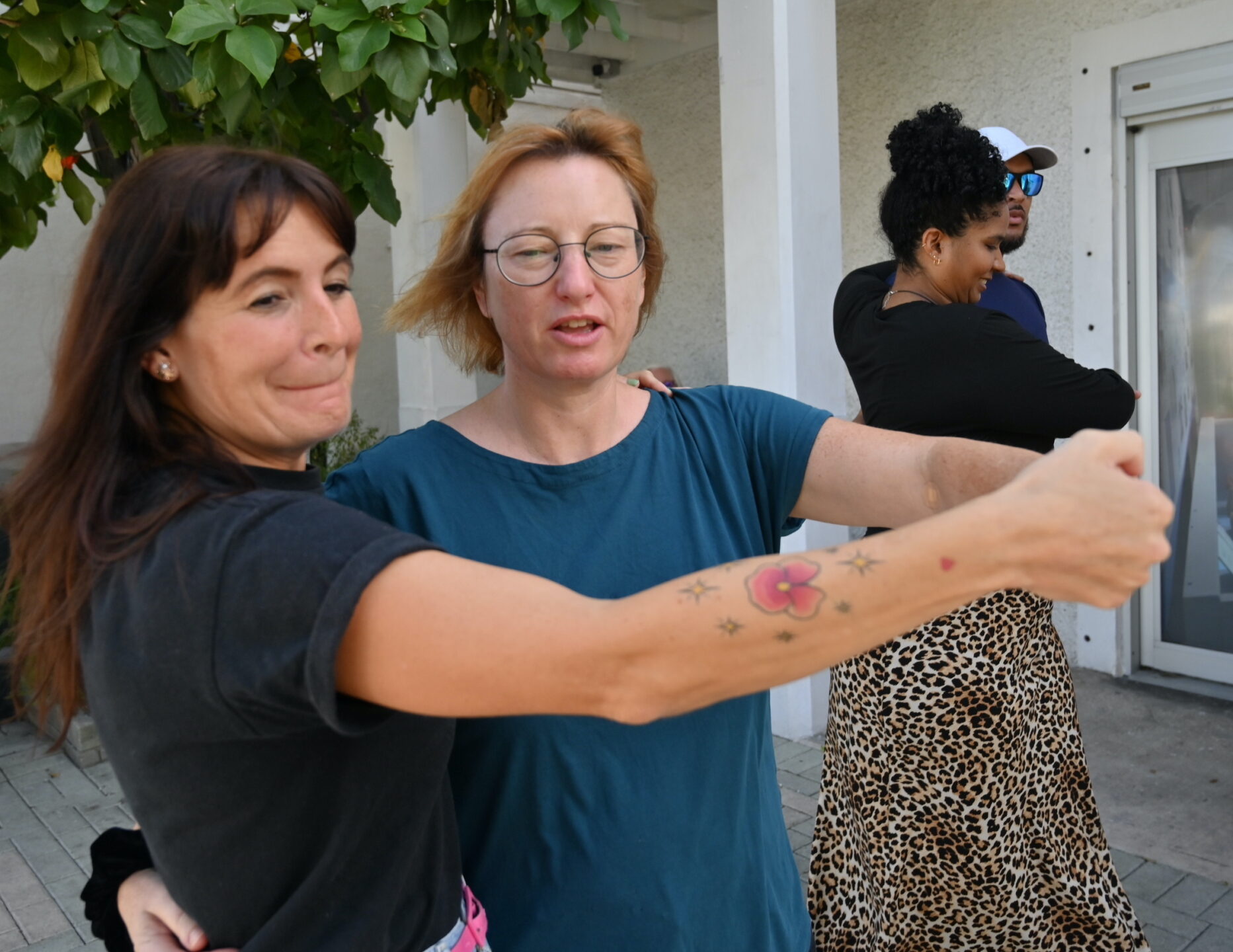
“This is the chip step,” Watler Jr. said, demonstrating the rhythmic shuffle that keeps dancers moving even while waiting their turn. Soon the courtyard echoed with the sound of shoes brushing stone, tentative steps becoming confident rhythm.
Born in French ballrooms, carried across the Atlantic, reshaped by enslaved Africans who infused it with their own spirit, the quadrille became something uniquely Caribbean. In Cayman, it grew into a national treasure, performed at gatherings and celebrations to the bubbling and undulating rhythms of bands like Radley Gourzong and the Happy Boys.
And here were Cayman residents, stumbling through its figures, rediscovering its quiet and gentle joys. Slowly the self-conscious grins became mixed with looks of pride in knowing “Yes! I can do this. Yes, I am keeping Cayman’s culture alive!”
Couples spun into wheels, hands joined, faces lit with recognition: “Yes, we are not experts, but we are learning.”
Kari Fraser and her son Thierry grinned as they circled, spun and weaved. Soleil and Kenneth, dancing side by side (but having to change partners now and again, as the dance demands) spoke about how important it was to reconnect with Caymanian roots.
“With all the development going on, it’s good to get events like this to remind us of who we are,” Kenneth said, catching his breath.
Alanna Warwick-Smith admitted she had always wanted to learn quadrille but never had the chance in school. “It’s important to me as a Caymanian that I know our traditions,” she said.
Katie Edwards, who works at the National Children’s Voluntary Organisation, added that learning these dances was about more than fun – it was about passing heritage on to the children with whom she interacted.
The figures unfolded one after another: couples meeting and retreating, partners exchanged, circles spinning, arms and hands holding one another. The dance became less about precision and more about connection. The courtyard was a celebration – a place where history and community met in rhythm.
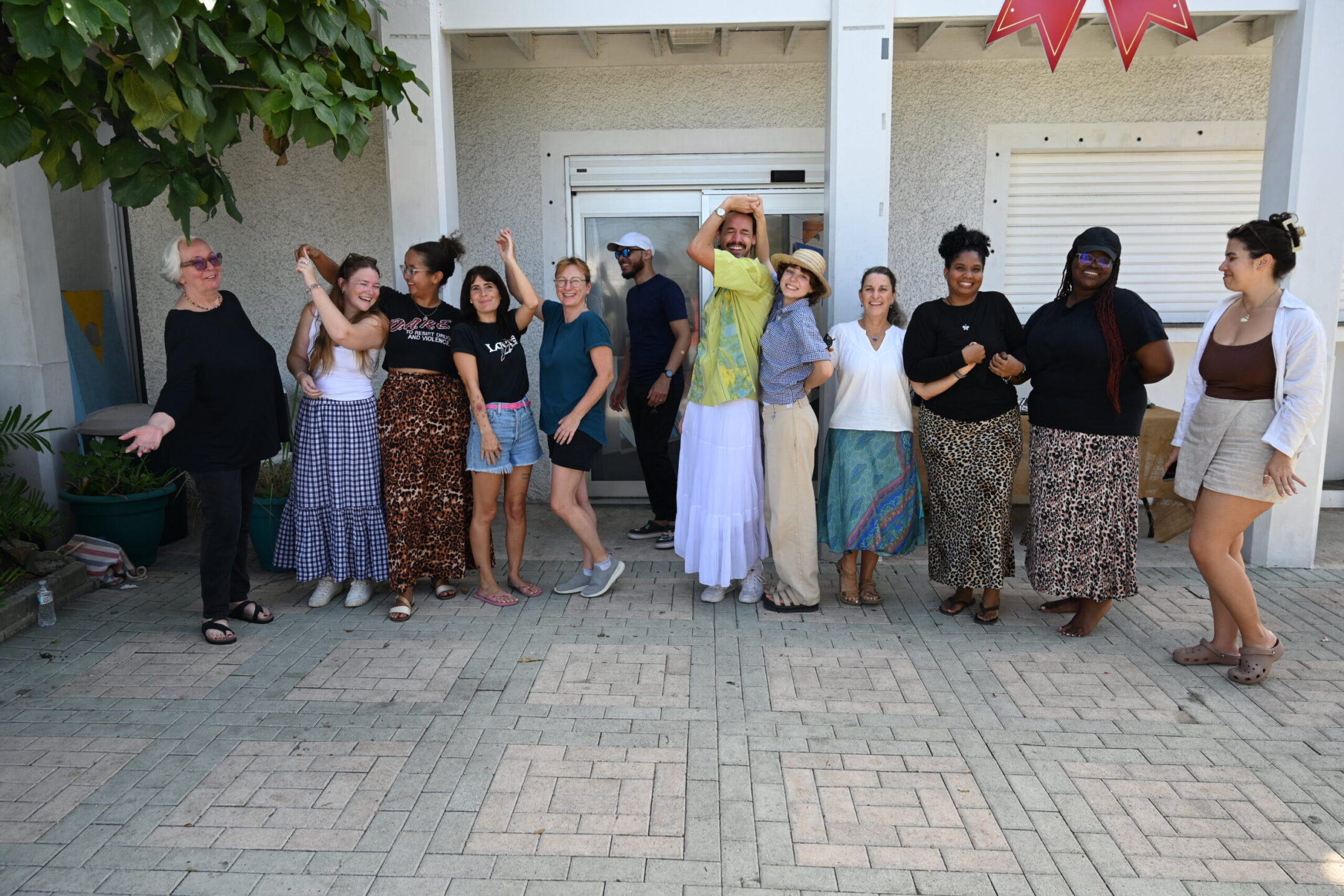
In that courtyard, overlooking Hog Sty Bay where the proclamation of emancipation was once read, new chains were breaking. This, too, was freedom. Freedom to try something new, to falter without shame, and to find delight in the simple elegance of Cayman’s quadrille.
Christopher Tobutt is a freelance journalist who has written for various publications in the Cayman Islands since 2003.
Related Videos