A new bill being drawn up by government will propose mandating doctors to report cancer cases to a national cancer registry, the Ministry of Health has confirmed.
As part of the government’s recently announced national cancer policy, the Cancer Registry Bill (2015), is being resurrected, with new additions addressing data protection concerns that stalled the proposed legislation from being passed more than a decade ago.
Cayman’s current cancer registry was established in 2010, but is an entirely voluntary system, where patients can register their cases, which are stored on a confidential database. Doctors can also register cancer cases, with the permission of their patients.
In response to queries from the Compass about the proposed changes to reporting requirements of cases, the Ministry of Health said on 4 Feb., “Mandatory reporting is recommended to ensure the registry can provide accurate information to guide policy and clinical practice that improves and saves lives. Any adjustments to reporting requirements are being developed with a focus on data protection, including enhanced privacy safeguards and governance measures in line with the Data Protection Act.
“Public consultation will be undertaken before any final approval, allowing stakeholders and the community to provide input on the proposed requirements.”
The ministry noted that Health Minister Katherine Ebanks-Wilks “will be championing mandatory reporting by all physicians”.
Cabinet in December approved drafting instructions to amend the Cancer Registry Bill, with the aim of modernising it to “support a complete and accurate national cancer registry to inform policy development, planning, and service delivery”.
A Ministry of Health spokesperson told the Compass that the legislation “is over a decade old and requires updating to reflect current data protection standards, governance expectations, and reporting requirements, with cancer identified as a national health priority”.
During a public consultation of the draft bill in 2014 – five years before data protection legislation was implemented in Cayman – a perceived lack of protection over the information submitted to the cancer registry was highlighted by the Human Rights Commission.
It stated that the 2015 draft bill raised “many of the issues surrounding privacy and data protection that the Commission has commented on before”, and called for data protection legislation to be implemented in Cayman – which eventually happened on 30 Sept. 2019.
The current government administration and health ministry officials say a ‘national cancer registry’ is vital to understanding the true prevalence of cancer in Cayman, which is currently unknown, other than the fact that it is the second leading cause of death, after heart disease.
In a public statement issued for World Cancer Day on 4 Feb., the Ministry of Health said, “A comprehensive, population-based cancer registry would systematically capture information on cancer incidence, type, stage at diagnosis, treatment and survival.”
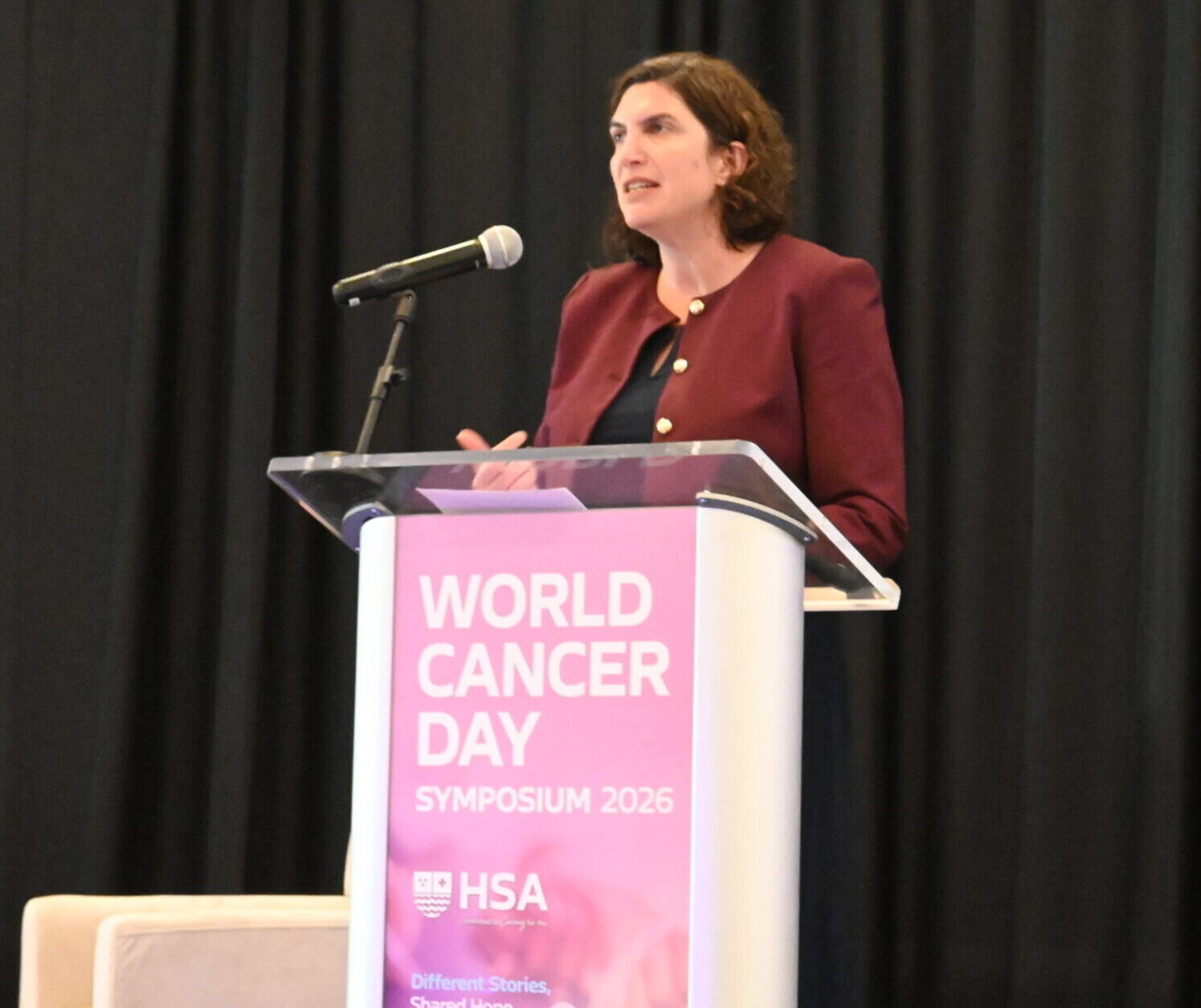
A registry that tracks every case that is diagnosed and treated in the public or private health sector would also inform healthcare and prevention policies in Cayman, Dr. Hilary Wolf, the government’s chief medical officer has said.
Speaking at the World Cancer Day Symposium in Cayman on 2 Feb., Wolf acknowledged that health officials do not know the cancer rate here. “We do not currently have a national cancer registry; without one, we cannot accurately measure incidents, track trends over time, or fully understand where prevention and early detection efforts should focus,” she said.
She added that creating a true national cancer registry would be “done with utmost respect for data protection, with strong privacy safeguards, clear governance and public trust at its core”.
Wolf also addressed the cancer registry plans in an interview on Compass TV’s Forefront show, which is scheduled to air on 12 Feb. She said the registry, which currently falls under the Health Services Authority, will come under the Ministry of Health, and that, as well as a cancer registrar, an existing role, there will also be a surveillance officer “who will be in charge of collecting the data and identifying what will be shared in an aggregate way with the public, in terms of the numbers but not with any patient identification”.
Ebanks-Wilks, in the 4 Feb. statement, noted that there is a perception in the community that the incidence of cancer is high, but said, “Yet, we lack the data to be able to know for sure. The first step to taking meaningful action is understanding what exactly we are dealing with, and that is what this registry will provide us – the ability to take decisive action that can help to save people’s lives.”
The current cancer registry, which is operated by the government’s Health Services Authority, on its website notes that its process is “entirely anonymous, ensuring that personal details remain confidential”, and that all data is recorded using the World Health Organization CANREG (cancer registration) system following the standards set by WHO’s International Agency for Research on Cancer.
Related Videos