At a glance
- New commander for regiment as Colonel Roger Carter is set to retire
- Plans for permanent headquarters
- Regiment valuable resource for country
- Graham Muir to be promoted to lieutenant colonel
Cayman’s soldiers are in line to get a purpose-built headquarters to be used as a joint services training centre, as officials also announced a change of command.
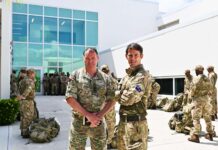
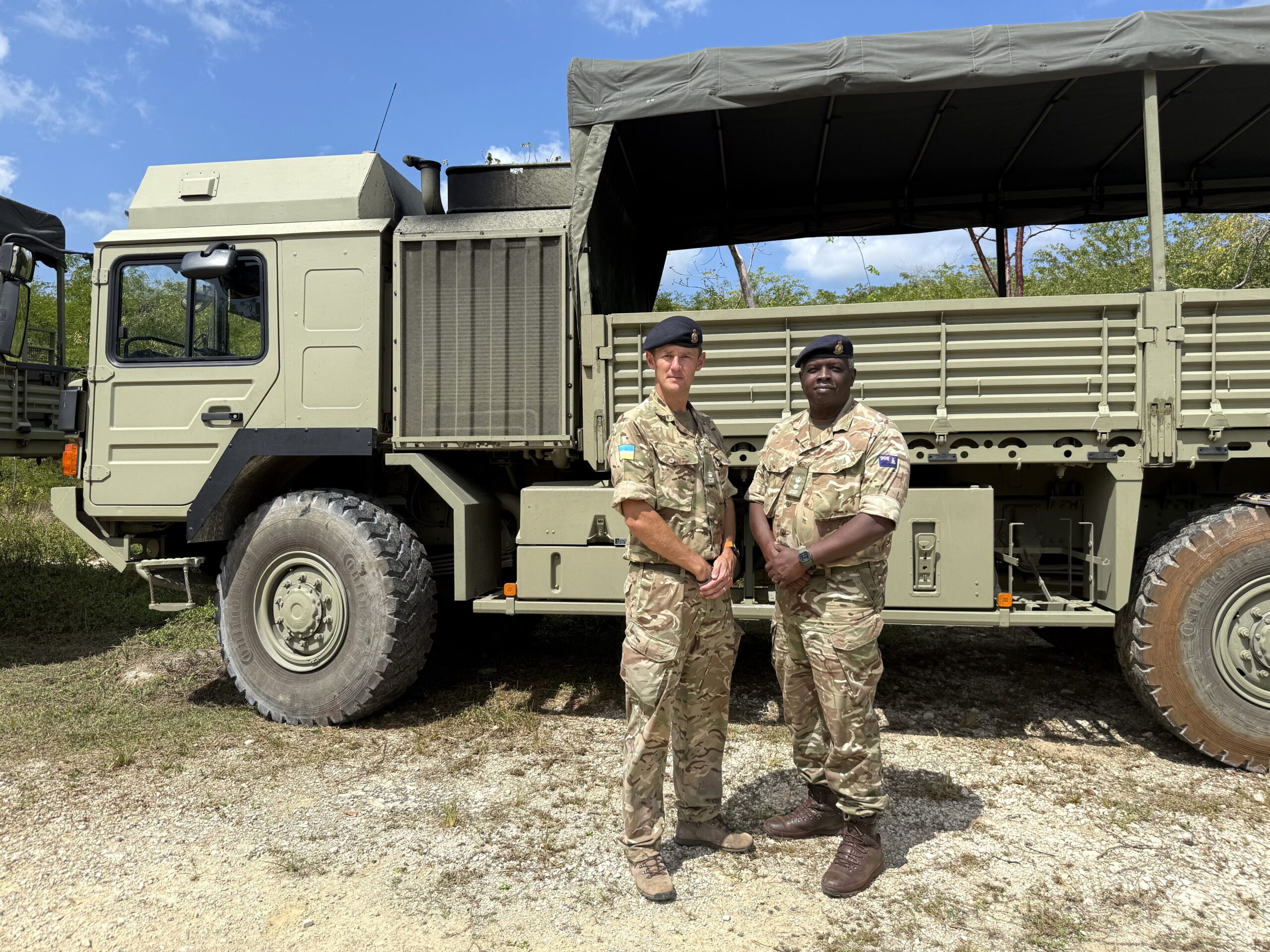
Major General Mark Lancaster, the honorary colonel of the Cayman Islands Regiment, said that the military force was now five years old and should have a permanent home as Colonel Roger Carter prepared to hand over to Major Graham Muir, who will be promoted to lieutenant colonel.
Lancaster added, “Now that the regiment is established, it’s important to establish a permanent home.”
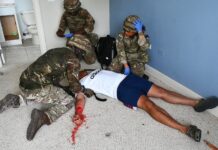
The former Conservative armed forces minister and now Lord Lancaster, sitting in the House of Lords, was speaking on 22 Feb. as the regiment carried out a weekend humanitarian aid and disaster relief training exercise at its new training ground near Northward Prison in Bodden Town.
He said the service’s vehicle park, currently located near Fairbanks – home to the women’s prison and the immigration detention centre – would be first to relocate to the new 20-acre site once clearing work is completed.
The administrative offices of the regiment are presently located at Windjammer Plaza on Walkers Road in George Town.
Lancaster added, “The next step, I hope, will be the building of a permanent facility for work and for training.”
He told Compass TV on Monday’s Daybreak show that young Caymanians who were “looking for something different, out of their comfort zone” should sign up with the regiment.
He told host Tammi Sulliman, “We are absolutely committed to having a Caymanian in charge of the regiment by 2030, but it’s important to understand, unlike some professions, you can’t just walk into the leadership of a regiment.
“In the British Army it traditionally takes about 16 years to become a lieutenant colonel because you have to have the foundations of experience to do that.
“But we expect to accelerate that, and we have just got transition now. We’ve been so blessed to have Lieutenant Colonel Roger Carter over the past few years, who came from the Trinidad and Tobago Defence Force to lead the regiment.”
He earlier highlighted that the Northward site was close to the centre of Grand Cayman and close to main roads.
Lancaster said, “It will be an excellent place for the regiment to grow.”
Carter is preparing to retire as commanding officer after more than 35 years in uniform and will be replaced by Muir who is currently the training and operations officer.
Carter, a former senior officer in the Trinidad and Tobago Defence Force, said, “Major Muir will be an excellent commanding officer.
“I would not have left if I didn’t have another commanding officer who will get the job done.”
Regiment priorities
Carter earlier told the dozens of troops on the exercise that the three most important tasks for the regiment was ensuring there were enough well-trained soldiers, the equipment needed to fulfil their roles and a comprehensive plan for deployment.
He said the new Bodden Town vehicle park – which will house the fleet of heavy trucks, earth-moving equipment and light trucks, along with a proper workshop – was a priority, followed by integrated “administrative and training facilities”.
Carter added, “We are hoping to get that done in the shortest possible time.”
He explained a permanent home would help to “build a sense of identity” for the relatively new force.
Carter said, “Military forces have bases. They are a place to live and work and train.”
Lancaster praised Carter’s “tremendous contribution” to the regiment and said that he would be “sorely missed”.
Muir, who was also responsible for leadership training in the UK, added, “It’s a real honour and a privilege to continue serving alongside the regiment and to continue the good work of Colonel Carter.”
He said that Cayman should be proud of its troopers, who were drawn from all walks of life to serve the community in Cayman.
Muir added that the recent avian flu crisis had underlined the value of a volunteer force to back up the full-time emergency services.
He said the regiment included trained medics and search and rescue specialists, and that troopers had provided extra personnel for major events such as music festivals and the annual agricultural show. He added that the regiment currently has troops in Jamaica carrying out hurricane relief work.
Muir said, “It’s a really adaptable organisation which can train and organise a workforce to work with other agencies.”
Governor visits troops
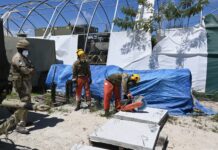
Lancaster and Governor Jane Owen earlier tried their hand with chainsaws, both cutting down trees as part of the clearing work.
The two also broke ground at the site using a regiment JCB equipped with a hydraulic hammer to pulverise rocks.
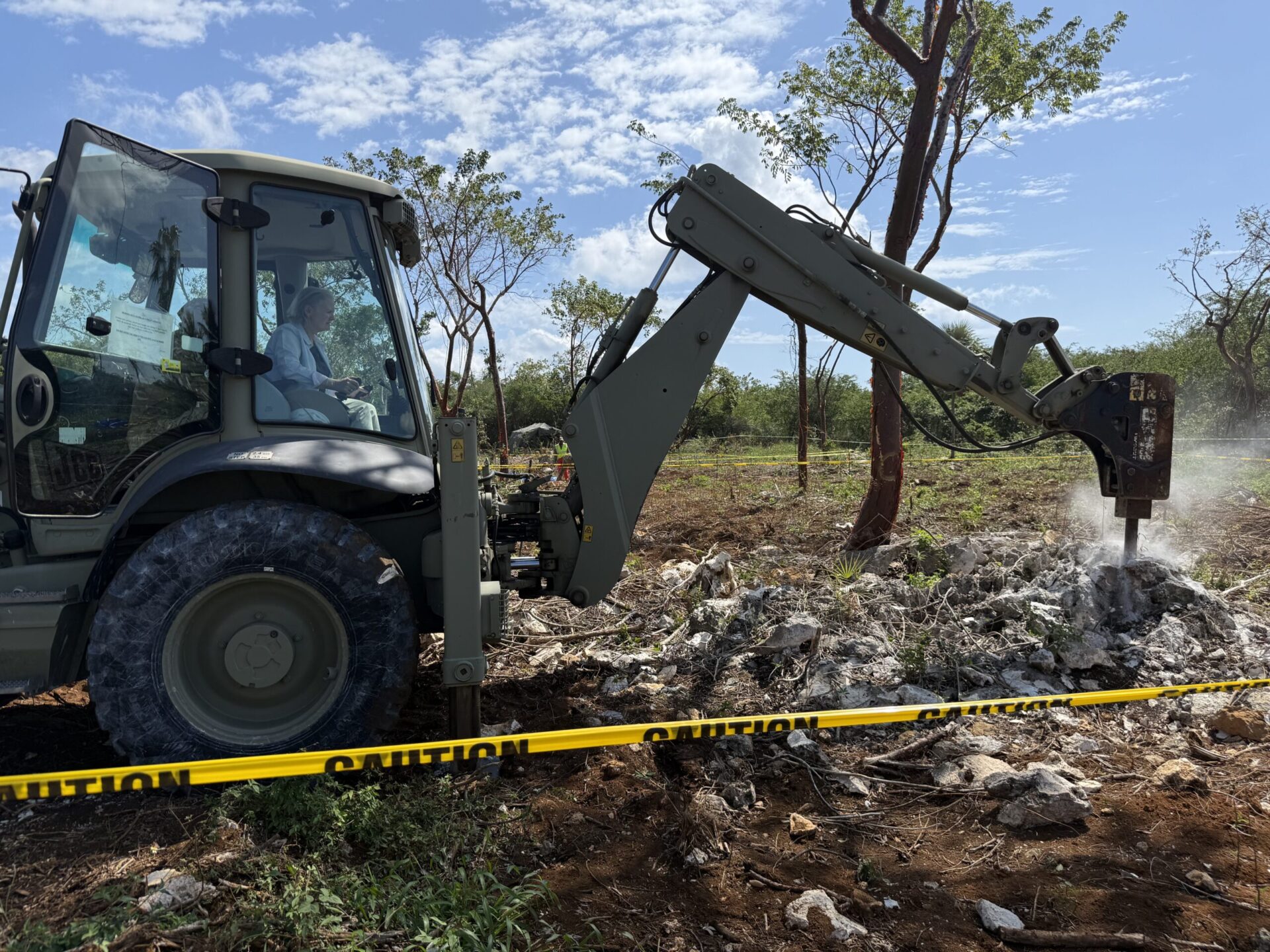
Owen told the troops she enjoyed visiting training exercises because “it gives me a little bit of direct experience – a tiny inkling – of the amazing work you do”.
She admitted, “I was struck this morning by just how difficult it is to cut down one tree.”
Owen told the soldiers, “You are essential – and that’s what I will be saying to Premier [André] Ebanks the next time I see him, and to ministers.”
She added, “It’s a wonderful mix of full-time staff and reservists.”
Ceremony and awards
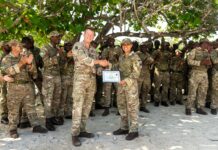
The training weekend was also used for a promotions ceremony and awards for outstanding performance.
Corporal Julius Blackwood was given the non-commissioned officer of the year award for his efforts, voted for by all ranks of the regiment.
Blackwood, 50, a supervisor for installations and repairs with telecoms firm Flow, said, “It is indeed a prestigious award and one I didn’t see coming.
“I think it’s just recognition of my hard work and dedication to the regiment.”
Related Videos