


A new regional agreement between the Caribbean Tourism Organization and Airports Council International-Latin America and the Caribbean could carry implications for airlift strategy in Cayman, as Caribbean leaders place renewed focus on connectivity as a driver of tourism growth.
The two organisations signed a memorandum of understanding on 24 Feb. at the close of the first CTO Air Connectivity Summit in Bermuda. The non-binding agreement establishes a framework for cooperation aimed at improving regional air access, strengthening aviation–tourism coordination and supporting sustainable growth across member states.
For Cayman, the discussions are particularly relevant. Director of Tourism Rosa Harris, currently serves as chair of CTO’s Airlift Committee, positioning the jurisdiction at the centre of regional connectivity planning. Air service development remains a key pillar of Cayman’s tourism strategy.
Recent data reflects that emphasis. Cayman is projected to record an 18.1% year-on-year increase in inbound flight capacity between January and April 2026, during the peak winter season. January 2026 has already marked the strongest January on record, with 47,047 stayover visitors, underscoring the impact of sustained efforts to expand and diversify airlift.
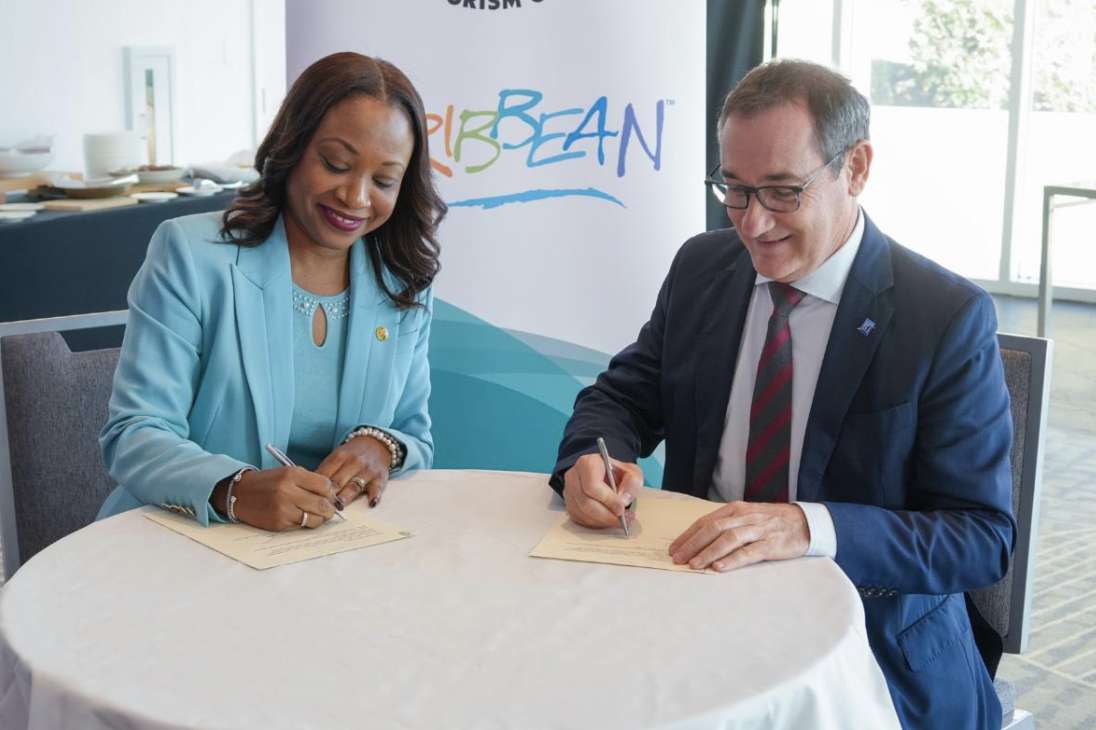
Under the agreement, the Caribbean Tourism Organization and the Airports Council International-Latin America and the Caribbean will collaborate on joint research, policy dialogue and advocacy related to sustainability, resilience and regional competitiveness. Areas of cooperation may include technical training, executive education, data sharing, joint studies on air connectivity and coordinated industry events.
Dona Regis-Prosper, secretary-general and CEO of the Caribbean Tourism Organization, said the partnership reflects growing recognition that closer alignment between aviation and tourism stakeholders is essential in an evolving global travel landscape.
“By working closely with ACI-LAC, we are creating new opportunities to strengthen air connectivity, enhance our regional aviation network, and ensure the Caribbean remains competitive, accessible and resilient in a rapidly evolving global travel landscape,” she said.
The emphasis on air service development is supported by broader economic research. The International Monetary Fund has found that a 1% increase in flights is associated with an immediate 0.3% rise in tourist arrivals, increasing to approximately 1% over the course of a year.
The Memorandum of Understanding will remain in effect for an initial three-year period.
Related Videos











Now they just need something similar for the cruise industry. The sooner the Caribbean countries start negotiating as a bloc against the cruise industry the sooner the power shifts to the countries and the sooner they can start collectively raising their rates on the cruise companies.