Recent pressure on US carriers is affecting airlines that serve Cayman, with capacity changes and operational disruptions impacting multiple networks in recent weeks.
Delta disruptions linked to staffing and scheduling
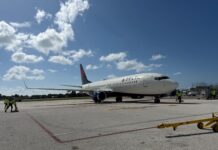
Delta Air Lines has been dealing with a wave of cancellations and delays in recent days, driven in part by internal staffing and scheduling constraints that have added pressure to its operations.
Since 1 May, the airline has cancelled more than 500 flights, compared with a combined total of around 80 cancellations by American Airlines and United Airlines over the same period.
Internal data points to a sharp drop in pilots accepting additional assignments, with uptake falling to just 2% from 37% a year ago. As a result, crew-related issues are now accounting for a larger share of disruptions, highlighting strain within scheduling systems.
The impact has been visible at key hubs. At Miami International Airport, Delta recorded six cancellations and 17 delays on 3 May alone.
Delta operates four nonstop routes from Grand Cayman, linking the island with Atlanta, New York JFK, Minneapolis and Detroit. Atlanta remains the most consistently served route, with up to two daily flights, while the others operate on more limited weekly schedules. There are 31 scheduled Delta flights scheduled to depart from Grand Cayman in June.
Spirit shutdown follows earlier Cayman route cancellation
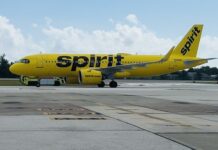
Spirit Airlines confirmed on 2 May that it had begun an orderly wind-down of operations, cancelling all flights after failing to secure additional funding amid rising fuel costs.
The airline had accumulated losses exceeding $2.5 billion since 2020 and entered bankruptcy proceedings in both 2024 and 2025, before a last-minute $500 million government bailout proposal collapsed.
Spirit had already exited the Cayman market prior to the shutdown. Its Fort Lauderdale-Grand Cayman service, launched on 4 December 2025, was cancelled effective 13 April as part of wider international route reductions.
The three-times-weekly service had been introduced as an expansion of airlift from Florida, and providing one-stop access to more than 30 US cities via Fort Lauderdale.
Operating with Airbus A320-family aircraft, typically configured with around 180 seats, the route contributed more than 2,000 seats per month during its brief period of operation.
The collapse has removed millions of seats from the US market, forcing other airlines to absorb displaced passengers. Competing carriers, including United, JetBlue, American and Southwest, have had to reaccommodate passengers while already under strain.
System under pressure
The US airline industry is in the midst of a volatile period, as rising jet fuel costs and broader economic pressures collide with operational constraints across major carriers.
Staffing shortages, tight crew scheduling and air traffic control limits at key hubs are constraining capacity. In recent weeks, this has translated into delays and cancellations across networks that also serve the Cayman Islands.
But even as disruption builds across the US aviation system, Cayman continues to post strong performance, supported by a sustained airlift strategy led by the Department of Tourism.
Much of that momentum is being driven by expanded capacity out of core US markets, with airlines maintaining and, in some cases, growing service despite ongoing operational strain.
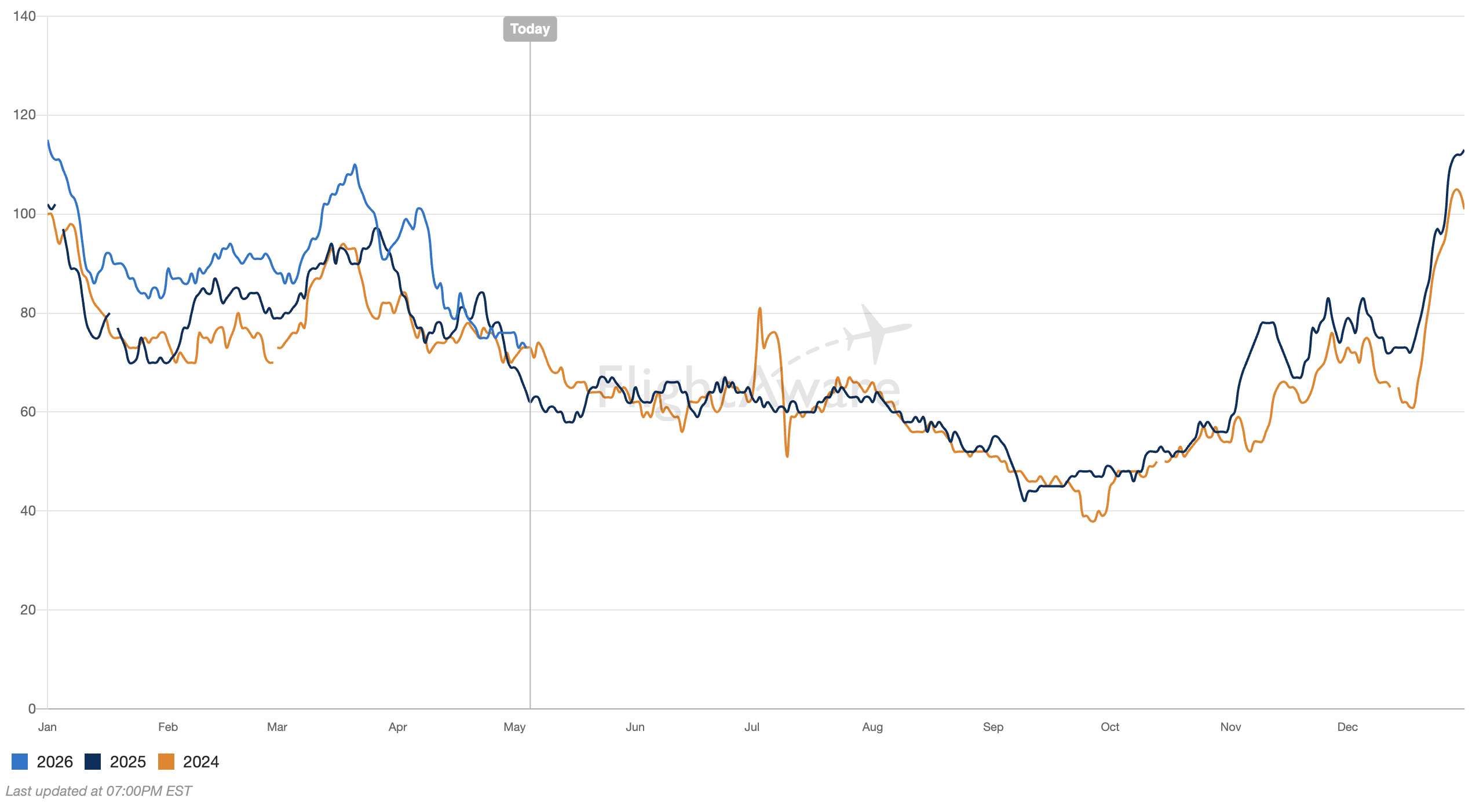
Scheduled airlift to Cayman rose 18.1% year-on-year between January and April, delivering more than 358,000 inbound seats and reinforcing air access as a central pillar of the islands’ tourism strategy.
US demand remains the dominant driver of stayover performance. In March alone, a record 53,050 visitors arrived from the United States, accounting for more than 82% of the 64,213 total stayover arrivals that month. The figures underscore Cayman’s ability to capture growth even as broader airline networks face pressure.
Flight data shows a network heavily anchored in North America, with the majority of departures concentrated through major US gateways. Miami leads, followed by New York, Charlotte, Newark, Houston, Atlanta, Chicago, Orlando and Tampa.
Related Videos