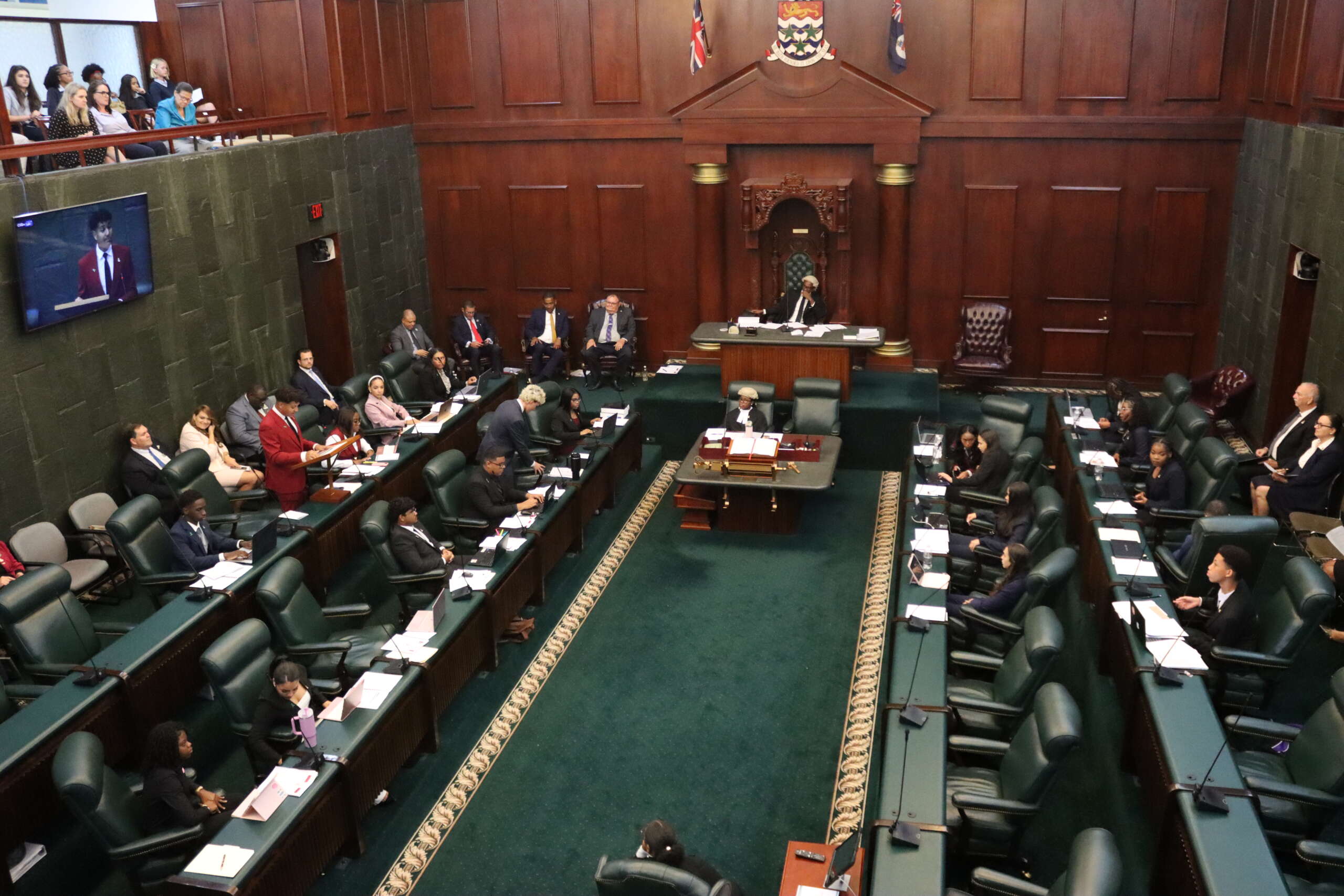
Potential politicians of the future debated one of the hot topics of the day at the first-ever summer meeting of the Cayman Islands Youth Parliament.
The inaugural session lasted more than four hours and focused on a single question: whether government should consider introducing legislation to ban access to social media platforms by people under the age of 16 years within the Cayman Islands as a child protection and public health measure.
While the topic had been debated in the Cayman Islands Parliament earlier in the year, as part of a motion moved by Deputy Speaker Pearlina McGaw-Lumsden, the Youth Parliamentarians presented arguments for and against the motion based on their own research and perspectives.
Direct impact on young people
Introducing the debate, Speaker De-Andre Beckford said, “This is exactly the kind of issue that Youth Parliament exists to examine,” adding, “It affects young people directly and it requires young people to speak with maturity, evidence and conviction.”
The motion was moved by Johanah O’Connor, leader of the opposition and MP for Bodden Town West, who said it “addresses one of the most important issues facing our generation – the well-being of children in the digital age.” Unusually for a mover of a motion, O’Connor started by saying that while she supported the principle behind it, the wording was “contradictory” and not carefully thought out. The issue was a complex one, she said, but “good intentions alone do not make good policy”.
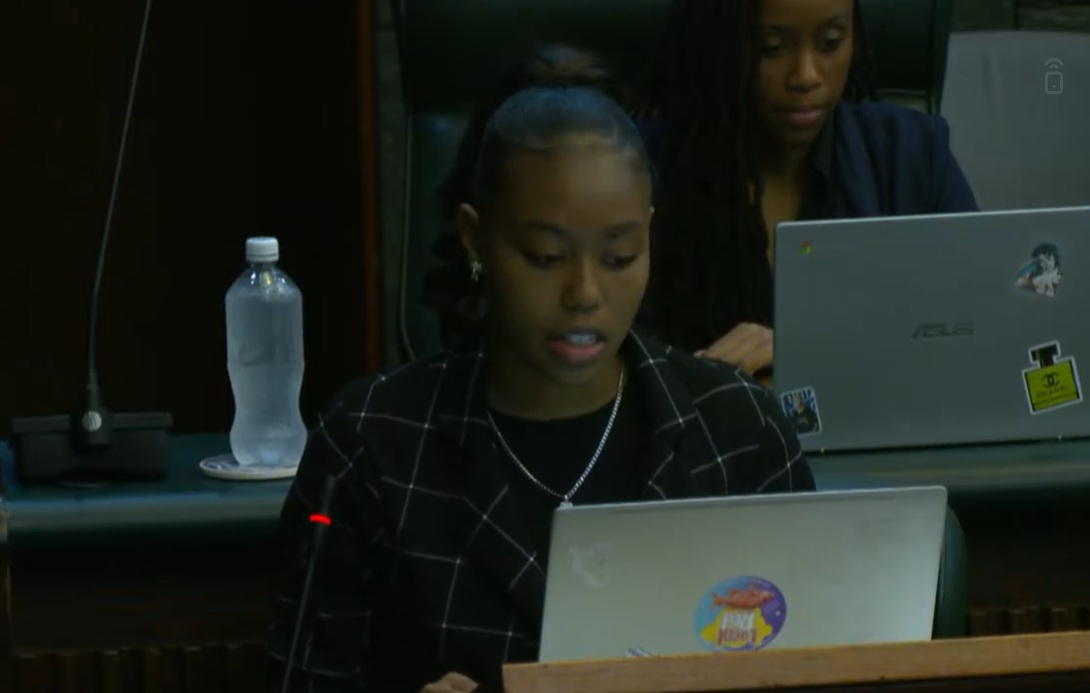
In a confident opening speech, which set the tone for a well-researched and well-argued debate from all sides of the chamber, O’Connor said that she was concerned that the motion placed the main responsibility of enforcement on social media companies.
“Are we really comfortable leaving the safety of our children in the hands of billion-dollar corporations whose business model depends on keeping people online for as long as possible?” she asked. “No law can replace good parenting; no algorithm can replace guidance; and no age verification system can replace conversations around the dinner table.”
Laws reflecting Cayman
MP for George Town East, Reeci-Lee Dewar, followed in the debate to say that while there was growing evidence to show that intensive use of social media could lead to increased risk of anxiety, depression and exposure to age-inappropriate content, it was important for Caymanian laws to reflect the people of Cayman and the amount of other activities available for young people here.
She added that social media not only added to young people’s creativity but informed them about the world, and, in a salvo directed at their adult counterparts, said, “The House of Parliament, with an average age quite above 30, is not able to experience the effects of social media like my fellow youth Parliamentarians.”
Fittingly for a debate that was being transmitted online, there were well-crafted soundbites from all debate contributors.
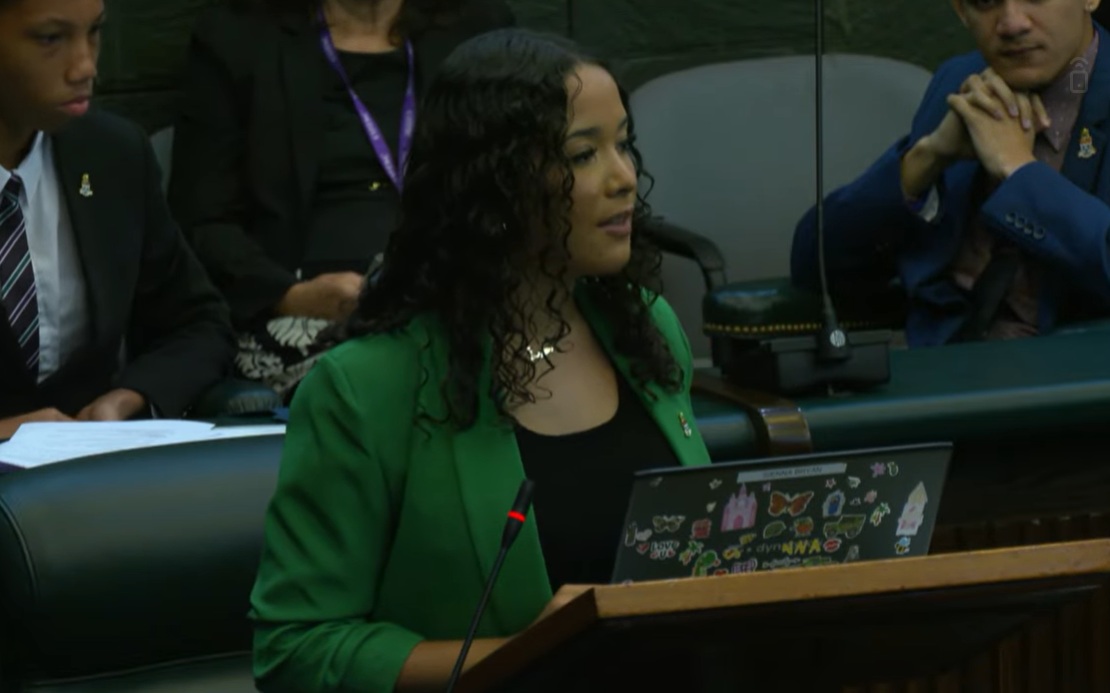
“Restricting young people from social media in 2026 will not suddenly take us back to the 1980s – technology is here to stay,” said George Town Central MP Sienna Bryan, who addressed head-on the issue of restricting access until the age of 16. “We do not prepare our young people for the digital world by locking the door until their 16th birthday. We prepare them by teaching them how to navigate it safely, long before they get there.”
Jerrin Reynolds-Velasquez, MP for West Bay North, said he began using social media when he was just 8 years old, and grew up with it being a part of his everyday life. He said that greater consultation with young people would have strengthened Parliament’s own debate, saying, “Young people are not simply the subject of this discussion – we are active participants in it. Protecting young people should not only be something done for us; it should also be something done with us.”
Jhene Sturdivant, MP for West Bay West, said while the drafting of the motion was imperfect, it was “right in principle” adding, “Right now, tonight, there are young people in this jurisdiction being groomed by strangers in their direct messaging, exposed to violent content on an algorithm that decided to keep them scrolling, and torn apart by cyber-bullying, with no adult and no systems watching.” As the oldest member of the Youth Parliament, she said that there were certain dangers that young people might be exposed to, which they would not recognise as harmful until many years later.
“We owe it to our young people to create a safe environment … and I believe this motion is the direction we need to create that safety,” she said.
House vote
After an impassioned and reasoned debate, the house divided to register each MPs vote, with the motion ultimately being defeated by 12 votes to 7. Summing up the debate, Chairman of the CPA Youth Parliament Organising Committee and Deputy Opposition Leader Kenneth Bryan said members of the Youth Parliament should be proud of themselves for their insight, passion and wisdom.
He said they had raised points that the main Parliamentary debate had not, alongside “vital arguments that were reiterated and supported with brilliant new clarity … You are the key stakeholders of this policy and today you have given your country the authentic consultation that it desperately needed.”
Related Videos