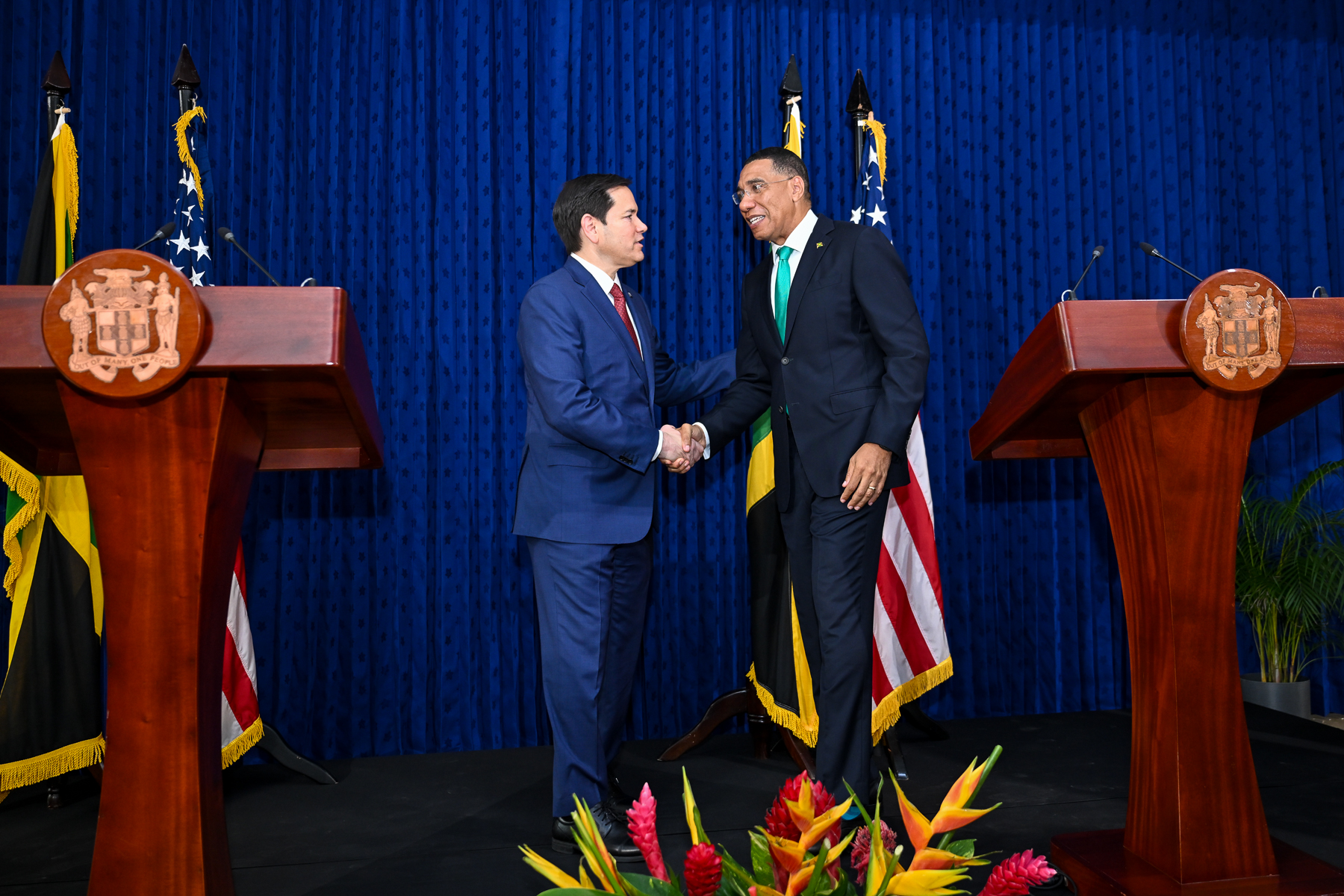
The Jamaican government is defending a controversial agreement with the United States to facilitate the transit of third-country nationals, as CARICOM leaders seek to clarify that similar arrangements across the region are intended for temporary transit rather than permanent resettlement.
The issue has sparked weeks of political debate and public protests in Jamaica following reports that the country had signed a memorandum of understanding with Washington allowing certain migrants deported from the United States to transit through Jamaica before travelling to their final destinations.
The full memorandum has not been publicly disclosed by either government.
In June, Jamaica announced it would accept up to 25 third-country nationals every two weeks under a US transit agreement. The migrants would remain on the island temporarily before travelling on to other destinations, National Security Minister Horace Chang said in a statement.
The arrangement prompted hundreds of people to protest in Kingston, with critics accusing the government of failing to adequately explain its terms and raising fears that dangerous criminals could be brought to the island.
The controversy was also fuelled by a leaked US diplomatic note revealing that Jamaica’s former ambassador to the United States, Audrey Marks, had proposed a separate arrangement under which Jamaica could eventually receive up to 10,000 third-country nationals from the United States as part of a skilled migration programme.
The proposal was widely conflated with the government’s transit agreement, fuelling claims that Jamaica had agreed to accept thousands of deportees.
Prime Minister Andrew Holness has sought to separate the two initiatives, stressing that the proposed skilled migration programme is distinct from the memorandum of understanding governing the temporary transit of third-country nationals through Jamaica.
Chang added that the individuals covered by the MOU are not permanent migrants but people transiting through Jamaica to another destination, including their home countries.
He said Jamaica retains the authority to reject any proposed transfer and that all individuals would undergo health screening, identity verification and criminal background checks before arrival. People with criminal antecedents would not be accepted, he said.
Under the proposed operational framework, transfers would be limited to up to 25 people every two weeks, with the process suspended if more than 10 people remained in Jamaica within any 30-day period. The United States has also agreed to cover the costs associated with the programme.
In a further effort to dispel the rumours, Marks said in a 6 July interview with Jamaica Information Service that the two programmes had been wrongly conflated, describing the claims as “total misinformation” and stressing that they were entirely separate initiatives.
She said her proposal related to a long-term skilled migration programme aimed at attracting qualified workers to support Jamaica’s economy and had no connection to the government’s third-country national transit agreement.
Caribbean countries accepting third-country nationals
Similar agreements have been signed by other Caribbean countries and governments around the world.
According to the Third Country Deportation Watch, run by Human Rights First and Refugees International, the United States has signed 34 third-country transfer agreements and transferred more than 19,000 people to 24 countries. Seven of the countries listed are in the Caribbean: Antigua and Barbuda, Belize, Dominica, the Dominican Republic, Guyana, St. Kitts and Nevis, and St. Lucia. Jamaica’s agreement is not yet reflected on the tracker.
In a statement issued on 9 July, CARICOM Heads of Government said they recognised public concerns about the ability of small island states to manage such arrangements but stressed that the agreements were designed to facilitate the return of individuals without criminal records to their home countries, not to establish them in Caribbean states.
“The proposed MOUs were intended to provide for the transit of individuals without criminal antecedents to their home countries rather than settlement in Member States,” the leaders said in a statement that was published after CARICOM Heads of Government met in caucus to discuss a range of regional issues.
Related Videos