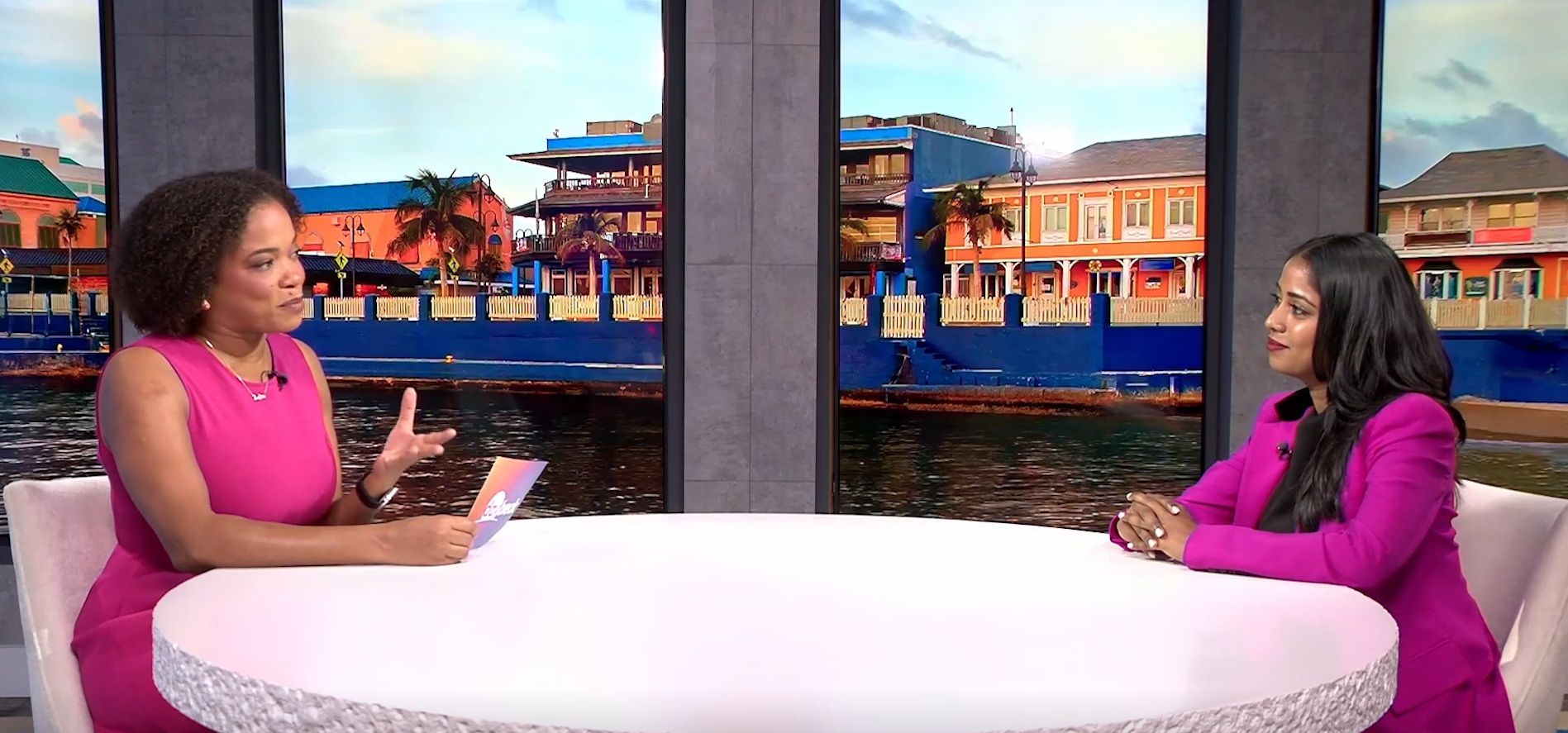
Cayman Islands Intellectual Property Office Director Terita Kalloo says AI is upending long-held intellectual property assumptions.
Speaking with Compass TV Daybreak host Tobi Brennan on 9 July, Kalloo raised concerns that rapid advances in AI were creating legal uncertainty about how IP rights may be applied.
Intellectual property protects the expressed creation of the mind, she said. So artistic creations are protected by copyright, while brands and logos are protected by trademarks and technical inventions are protected by patents.
The challenge, said Kalloo, is that IP protects original work, but if the creator uses AI then it can become unclear if the work is original.
“If you have an AI model where the owner of the AI model contractually claims ownership” of the work produced, then the human using AI to create the product will not be able to claim ownership of the IP, she said. However, she added that most AI models allow the creator to own all inputs and outputs.
The importance of input
But even if the AI model doesn’t contractually claim ownership, there still could be IP challenges, Kalloo said. It comes down to how much creative input the human had. “If something is 100% created by AI, then the chances are, you will not have IP protection,” she said.
She cited the example of someone asking an AI model to “make a song” and noted that type of generic prompt or instruction would not give the human IP rights. “But if there is some level of creativity in the input, so some level of intellectual work being put into whatever you’re prompting,” then you will “maybe” have some IP protection. It all depends on how much input and direction that human has contributed.
Meanwhile, companies using AI to create official material, such as a logo, should also be aware that the prompts they use could determine the IP status of the final product. “If you asked it to copy the Gucci logo, then you could have problems,” she said.
The IP status of the material used to train AI models is another consideration, said Kalloo, who was appointed director in 2026.
“Right now, there is a lot of debate in terms of AI scraping,” she said.
Some AI models were trained on copyright-protected works, which creates a danger that the work produced by those models constitutes a copyright infringement. “It is highly debated, with two jurisdictions coming to different conclusions,” she said.
Creators need to be aware that when they make content with AI, there is a chance that it contains infringing material, said Kalloo.
Kalloo believes that the jurisdiction’s existing IP legislation will be sufficient, but noted that court cases may be needed to settle some of the ambiguity created by AI.
The Cayman Islands Intellectual Property Office was established in 2016.
Related Videos