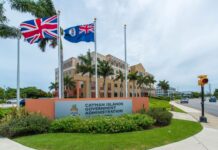
Adding a wrinkle to the continuing controversy over a “ban” on the export of Filipino labour to 41 countries and territories – including the Cayman Islands – the Philippines government released a statement late Thursday advising the ban be “deferred”.
“The Philippine government gives the highest importance to the safety and welfare of the overseas Filipinos and we continue to reinforce our partnership with congress and other stakeholders on this crucial issue,” said Foreign Affairs Secretary Albert Del Rosario. “However, the Department of Foreign Affairs believes that there are compelling reasons to defer further action on the list.”
The 41 jurisdictions include Afghanistan, Libya, Iraq, and Zimbabwe. The list included countries and territories that, in the view of the Philippines government, did not have adequate labour and human rights protections in place for migrant Filipino workers.
“[According to the] Migrant Workers and Overseas Filipinos Act of 1995, which took effect on 8 March, 2010, the deployment of overseas Filipino workers will only be made to countries which protect [those workers],” Mr. Del Rosario said. “This list does not seek to pass any value judgment on any country. It serves as a crucial benchmark for all government agencies concerned to work for the betterment of the safety, welfare and working conditions of our nationals.”
The announcement of the 41-country labour export ban on Wednesday caught the Cayman Islands government and also the unofficial local consul for the Philippines completely off guard.
“All I can think of is that the person who made the negative recommendation did not perform a proper research on the Cayman Islands, which led to this burning issue,” said Arturo Ursua, the Honorary [unofficial] consul for the Philippines in the Cayman Islands.
Mr. Ursua said the Philippines resolution which led to the labour export ban against the 41 countries stated that existing labour and social laws must protect the rights of all workers, including migrant workers.
“While the Cayman Islands Labour Law may not be specific about migrant workers, the law is protecting the workers, as well as the employers,” he said.
If such a ban was to be implemented, it is unclear what effect, if any it would have on the Cayman Islands. Roughly 2,400 Filipino workers are employed on permits in the Cayman Islands.
Cayman’s Labour Law sets strict guidelines on how many hours a worker can be employed per week [45] prior to receiving some overtime payment, and only allows a worker to forego extra pay if they agree to do so. However, there have been cases brought before the Labour Tribunal in recent years involving accusations that employers were forcing their workers to sign those declarations.
Mr. Del Rosario said further discussions on the worker ban issue would be needed. “There is a need for the Department to have ample opportunity to dialogue with these countries,” he said. “Such a dialogue would be to the benefit of Filipino workers already there and those planning to seek gainful employment in those countries.”
“We will do all that is necessary to protect our nationals overseas,” he said. “Ultimately, good and friendly relations with all nations allow us the ability to work on behalf of our nationals overseas.”
“This list does not seek to pass any value judgment on any country.”
Albert Del Rosario, foreign affairs secretary, Philippines
Related Videos