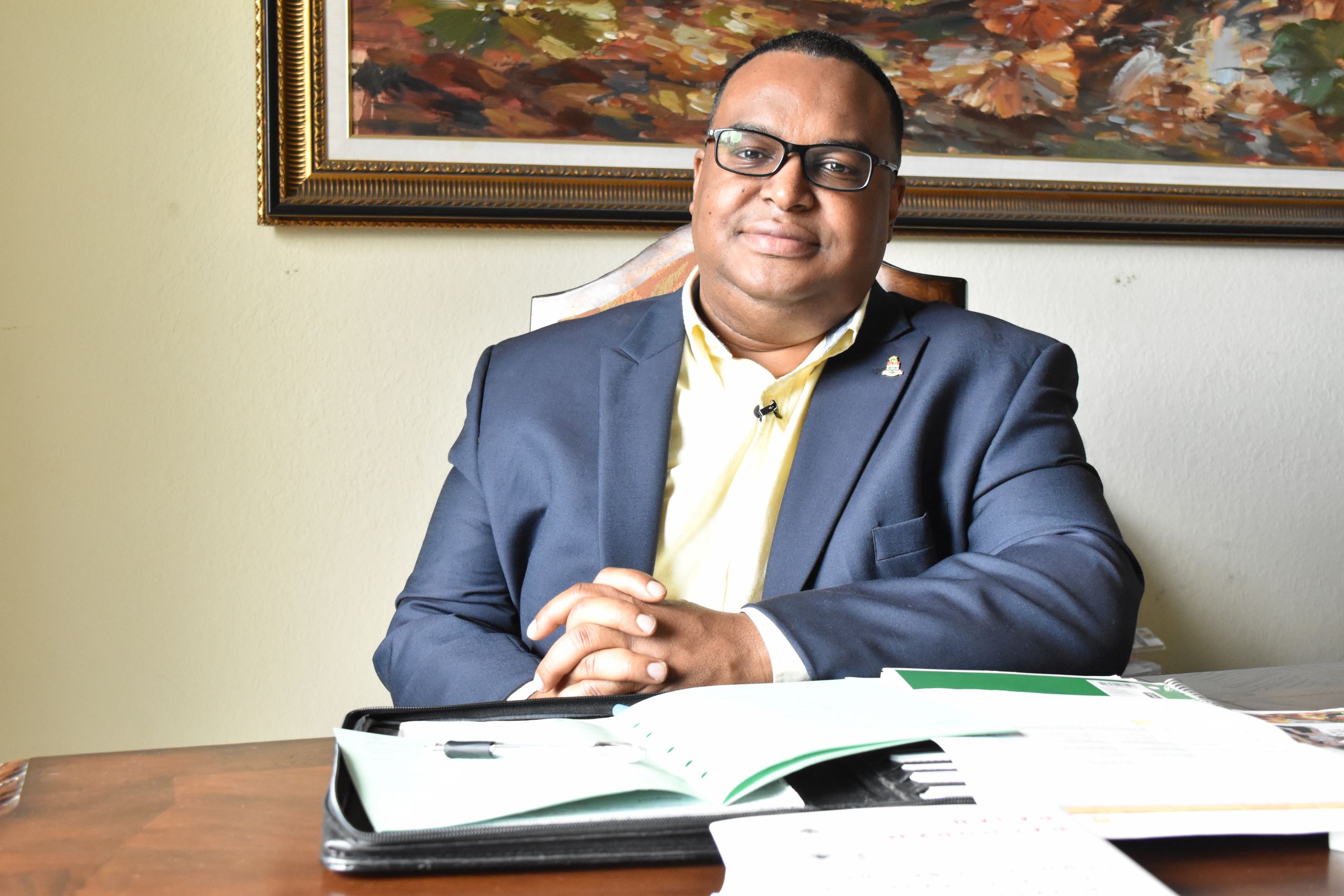
Bodden Town West MLA Chris Saunders has raised the red flag on government’s proposal to have one national counting of ballots on Referendum Day.
“That is not something I support, and my colleagues have raised concerns about it,” Saunders said on Wednesday in an interview with the Cayman Compass.
He said such a plan runs counter to democracy and puts legislators at a disadvantage when it comes to knowing how their constituents feel about the proposed $200 million cruise berthing and cargo facility.
“Ultimately, as a representative of the people, I would very much like to know the thoughts of the people of Bodden Town West and ultimately know what my constituents would feel on the project, whether it is a yes or a no, from that standpoint,” he said.
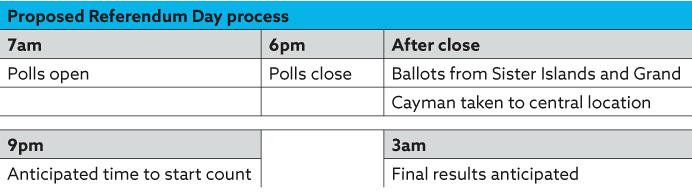
The government’s proposed Referendum Bill will head to the Legislative Assembly for debate on Monday. Contained in its provisions is the proposal for ballots to be counted in one national count.
This means all ballots boxes, including those from Cayman Brac and Little Cayman, would have to be transported to a central, secure location at the close of polls on 19 Dec. for Elections Office officials to count.
Elections Supervisor Wesley Howell, in a recent interview, said the ballot boxes will be accompanied by international observers and will be transported under police guard to the venue for the counting process to be conducted.
He also indicated that the count will be done in the presence of officials from Cruise Port Referendum Cayman, the group that triggered the people-initiated referendum, and government representatives, as well as the international observers.
Saunders said he believes such a process will delay the results of the vote.
“As per the draft bill that is being proposed, the counting cannot start until all the ballots have been received and I am concerned particularly about the votes coming from Cayman Brac and Little Cayman. What are we going to do? Sit down and wait for them to come in?” he argued.
Saunders said the proposed process was not one that was used in the previous referendum.
He questioned why there was a change this time around.
“Why are we going through to such lengths? Why are we departing from the normal process? Just to hide the results in terms of how each constituency voted. It is my understanding that the premier and his followers are concerned,” he said.
He said having the breakdown of the votes is essential to mapping out how the project will be handled thereafter.
“If it is a situation of the bulk of the votes come from the eastern districts or the bulk of the “no” votes come from George Town or the “yes” votes, it is good for us to have an idea, from a voters’ education standpoint, to basically to go out and further educate people on the certain pros and cons,” he said.
Saunders urged his government colleagues to insist that the counting provision be changed so they too have an idea of how their constituents feel.
While the provision may be subject to change, depending on Monday’s debate, Saunders said he does not think it will.
“Majority rules and, at the end of the day, the premier has the votes and, unfortunately, there is no one on that side that will challenge him and, in effect, it is what he says, goes,” he said.
The Premier’s Office, in response to queries from the Cayman Compass on Saunders’ concerns, said the national count was not a new practice locally as it was used in the 2009 referendum.
“The Government has carefully considered the matter and has determined that it is in the national interest to provide a national count for a referendum on a matter of National Importance. Just as was done in the 2009 referendum,” the statement said. “Between the Elections Office officials, local observers, and international observers there should be no concern around the integrity of the process.”
The Premier’s Office said logistically the Elections Office has confirmed that it is satisfied with its ability to efficiently carry out a national count as they did in 2009, while also handling the election count.
“Our Elections Office has for decades successfully carried out efficient elections that meet a high standard. The Law allows for local observers selected by the Premier, Leader of the Opposition, and the referendum campaigners to monitor proceedings,” the statement added.
Related Videos