DoE officials urge drivers to slow down
The Department of Environment has renewed its call for drivers on Cayman Brac to slow down when travelling through areas inhabited by rock iguanas.
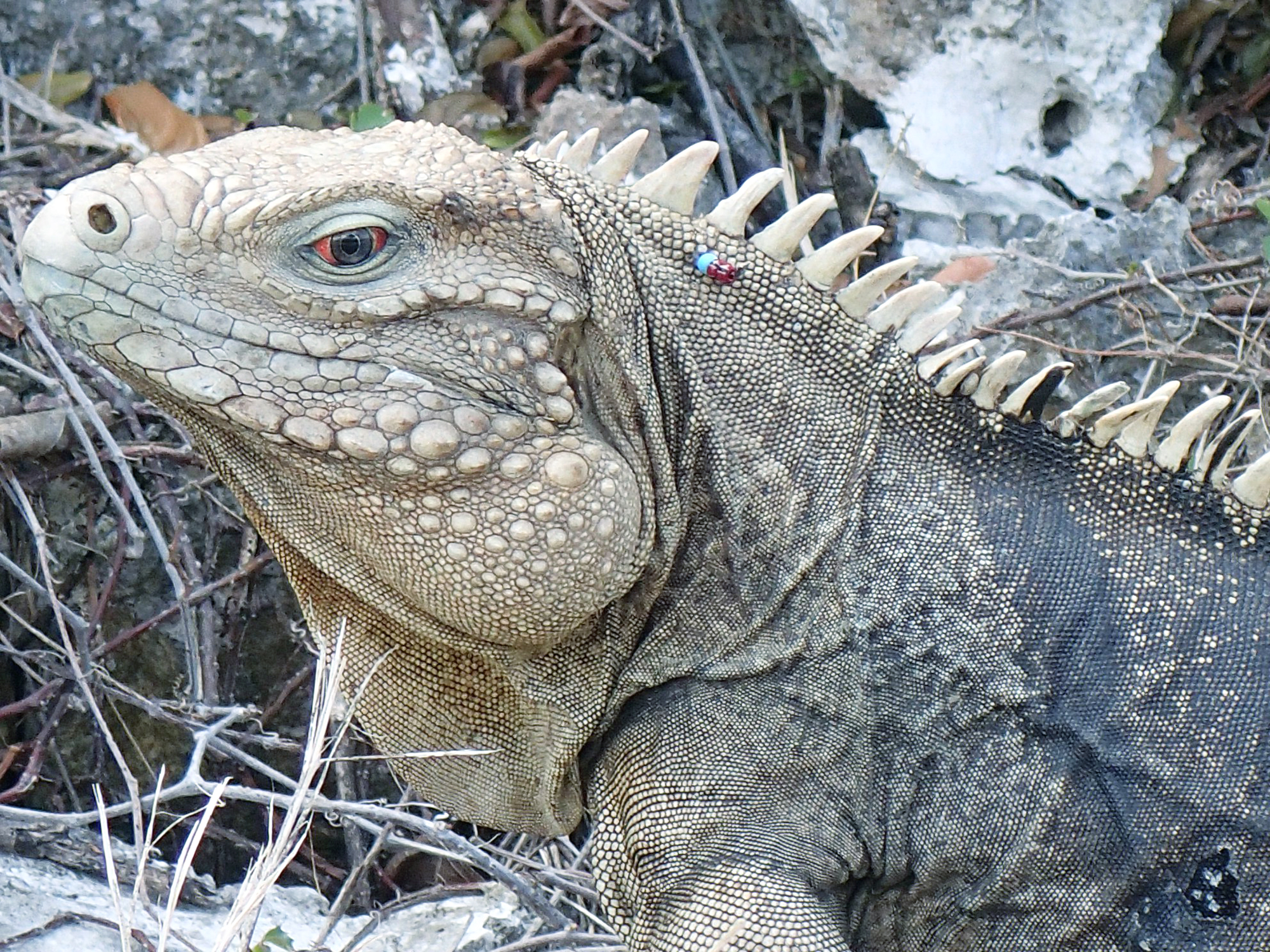
This comes as local conservationists mourn the death of Gungchul, a rock iguana, after the animal was run over by a vehicle on Tuesday near The Bat Cave, on South Side Road.
Gungchul, a 49-year-old iguana, was popularly known on the Brac as ‘Stumpy’ because of his shortened tail.
He was among the first rock iguanas tagged by the DoE in 2012. The animal has been one of the faces of conservation efforts on the island to protect the critically endangered species.
“Speeding is a big problem,” Martin Van Der Touw, DoE field officer on Cayman Brac, said. “It is virtually impossible to keep them [the rock iguanas] safe. Other than putting up signs and begging people to slow down, that is the most I can do.”
He said he has met with Cayman Brac police about the issue and they have set up speed checks on the south side of the Bluff to net errant drivers, adding they are travelling well over the 40mph speed limit.
Van Der Touw said the loss of Gungchul was a blow for those who have been working to protect the indigenous iguanas.
“Personally, for me, I am pretty sad. Every week you get a call and there is a dead iguana. I would not say demotivating but it is a sad story,” Van der Touw told the Cayman Compass Wednesday.
He said the Sister Islands rock iguana species management team has registered four deaths so far this year.
“Unfortunately, people do not understand how significant this iguana is to the Cayman Islands. It is only found in the Sister Islands; you do not find it anywhere else in the world. The population numbers are declining,” he said.
The DoE told the Compass it will do a survey of Cayman Brac’s Sister Islands rock iguana population next year.
It said there are more dangers to the rock iguanas on the Brac than on Little Cayman since there are more people living on the larger island, and therefore more traffic, “which poses greater danger to the iguanas.
Each road fatality on the Brac involving the rock iguanas is a serious cause for concern due to the small overall population. The busiest known nesting site on the Brac has a road going through it and Sister Islands rock iguanas are often hit on that road,” the DoE said.
Van Der Touw said he had one message for Cayman Brac drivers.
“Please change your driving habits to be more alert of the iguanas. Pay attention to the signs that are put up,” he urged.
If you see an injured or dead Sister Islands rock iguana on Cayman Brac, you can report it to the DoE at 917-7744.
Related Videos