

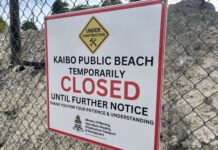
With Cayman’s border reopening projected for March, property owners and businesses impacted by beach loss along Seven Mile Beach are racing against the clock to ready themselves to receive clients.
However, they say they are receiving little government support to help them as they move to replenish their beachfront that was lost due to storm surges during the hurricane season and persistent battering from rough seas.
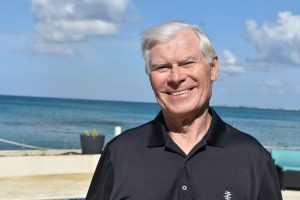
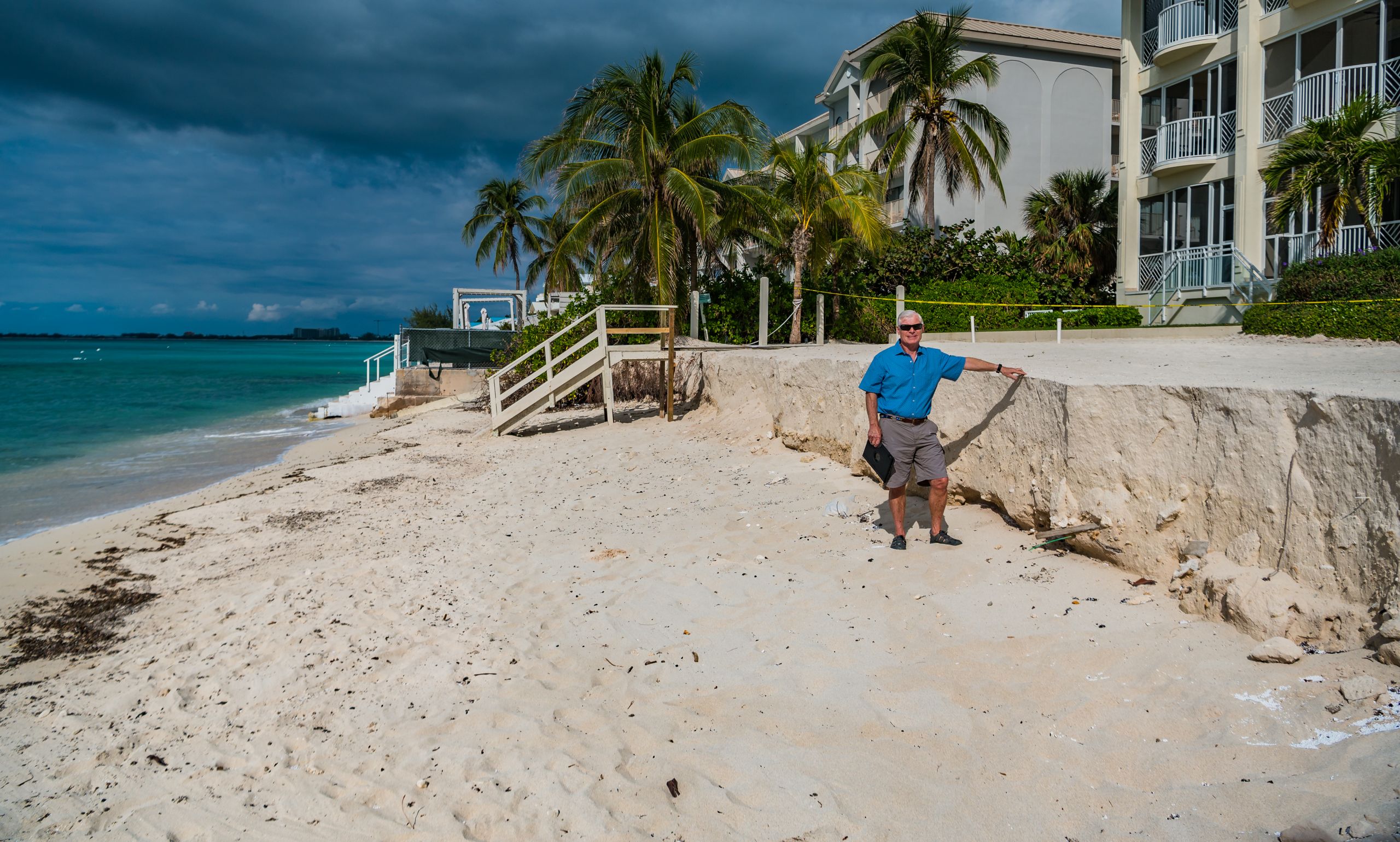
Dr. Gregory Richmond-Peck, executive board member and condo owner at South Bay Beach Club, has said time is of the essence if properties like his are to be ready for a March reopening.
“Every poster you see of the Cayman Islands has a picture of a pristine beach and people expect that. If they don’t find that they’re going to go elsewhere and consequently, we’re going to lose income and it’s going to cost the government a lot of money in the long term from lost revenue from tourist taxes and from stamp duty on condos,” Peck said in an interview with the Cayman Compass.
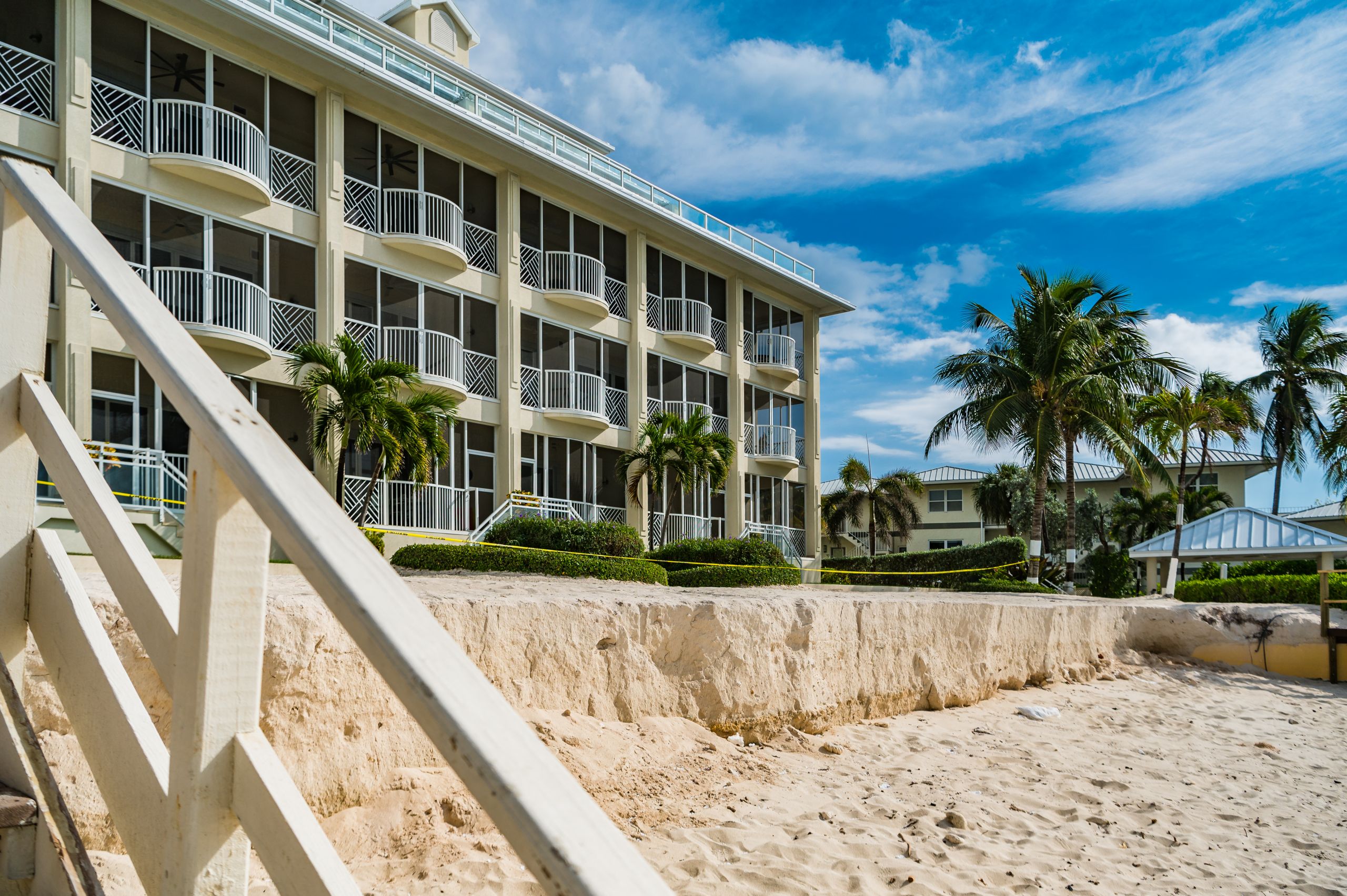
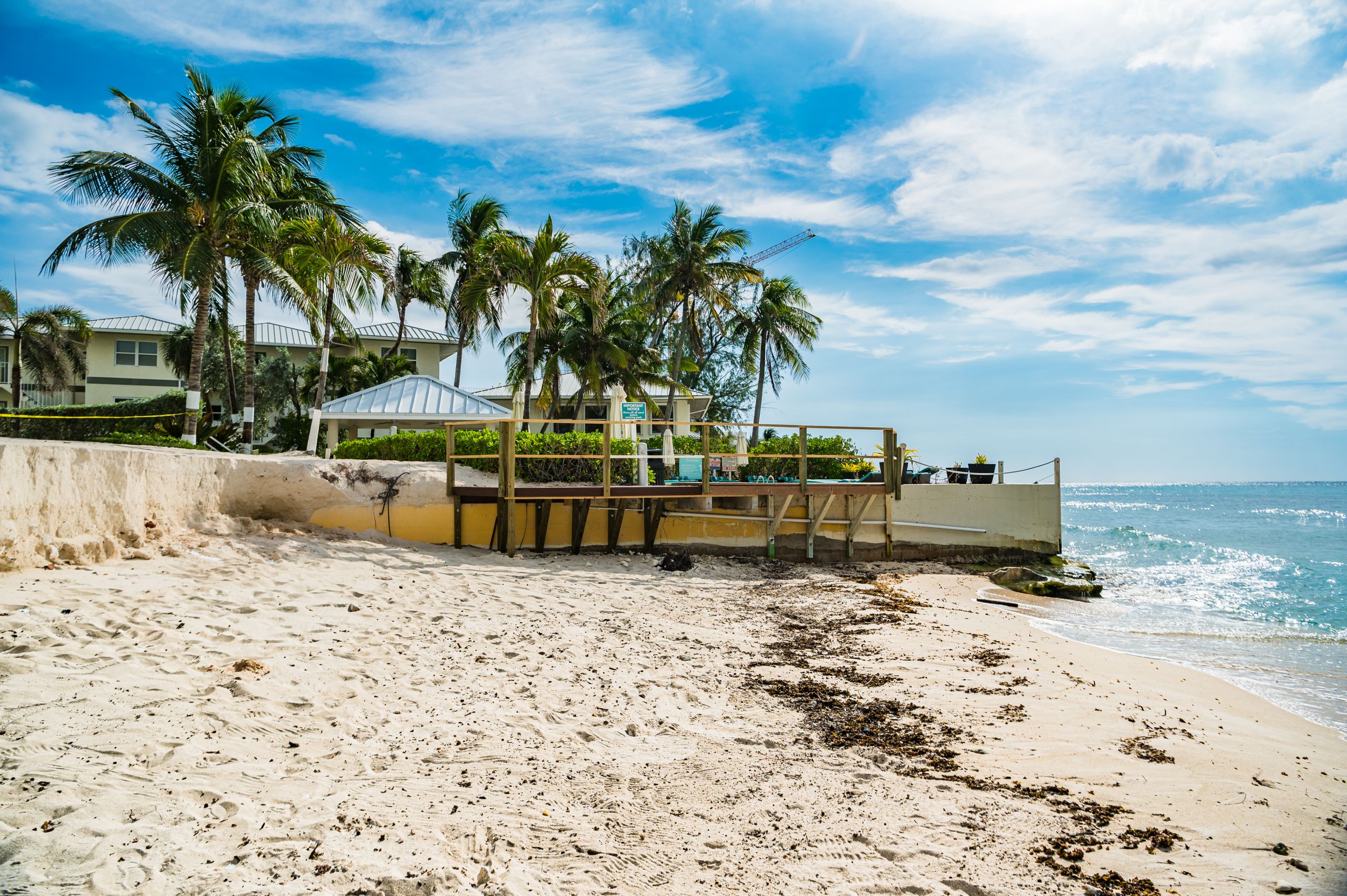
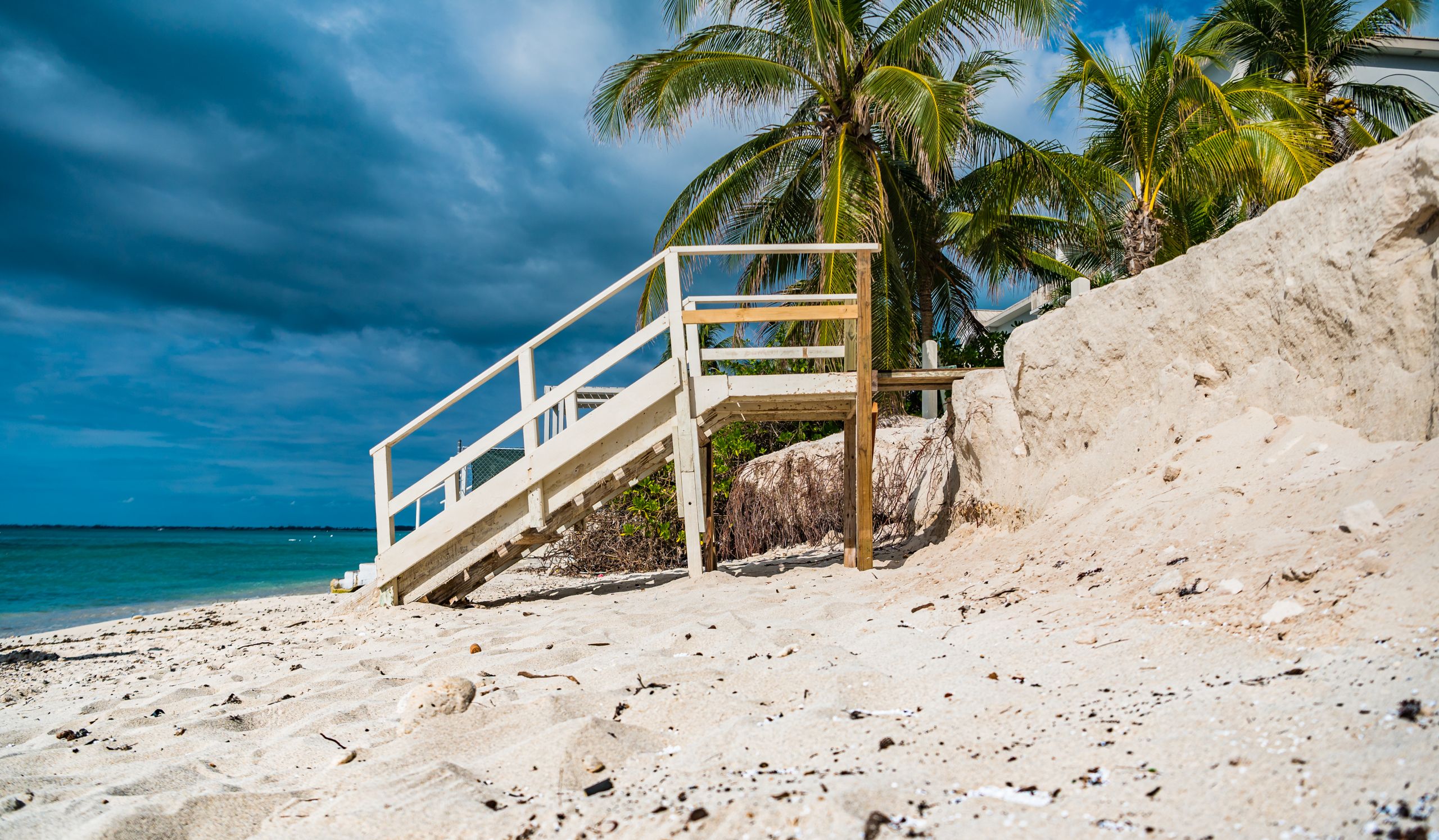
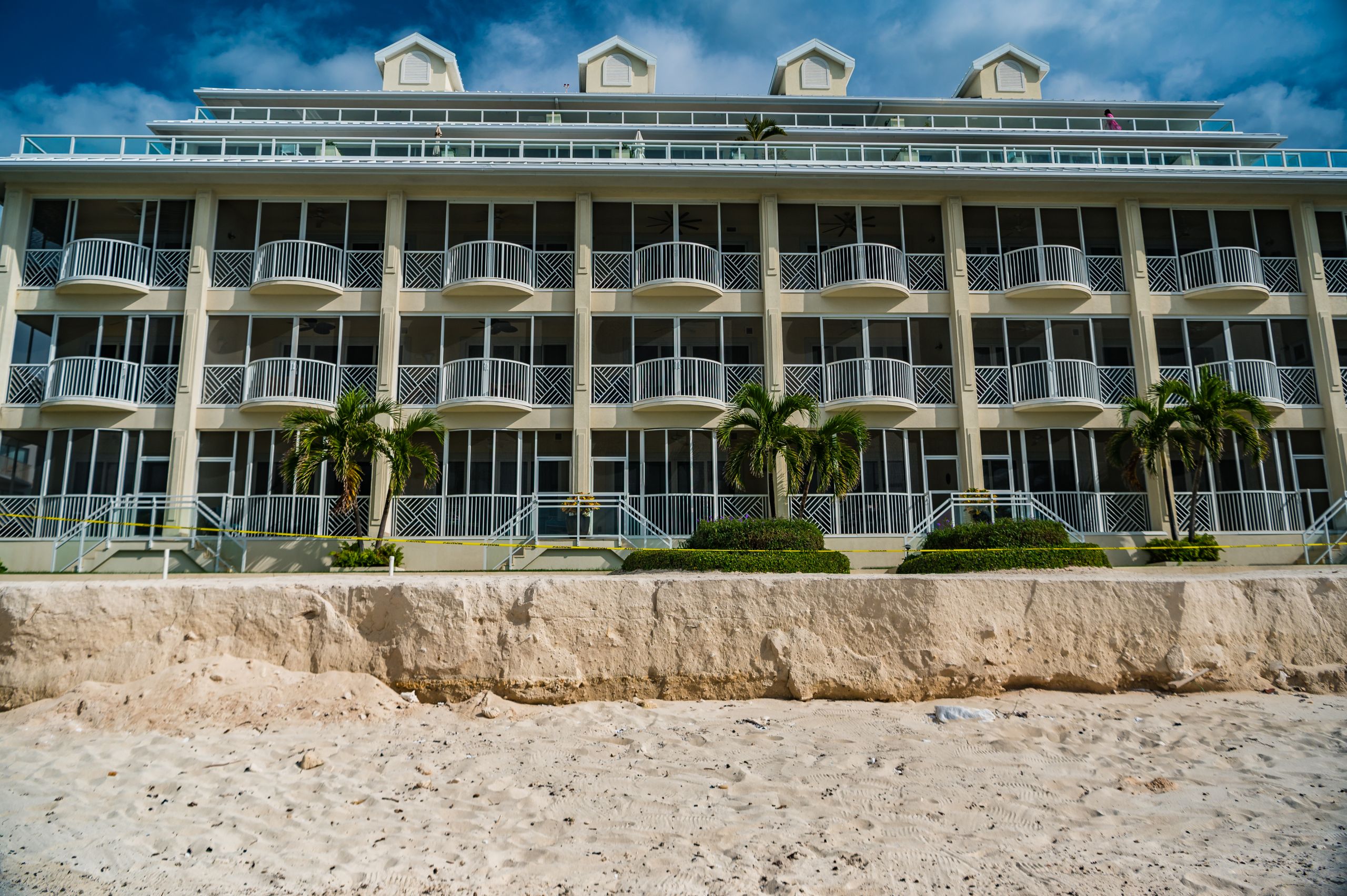
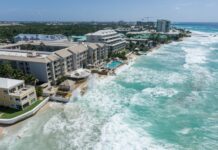
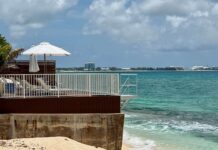
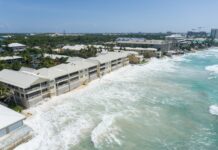
Gina Ebanks-Petrie, director of the Department of Environment, previously told the Compass the erosion was the worst they had seen in many years. The beach loss along the southern end of Seven Mile Beach caused places like the Grand Cayman Marriott, Royal Palms and Coral Beach to lose almost all their beachfront.
Richmond-Peck said the loss at the luxury condos was equally devastating, one he blamed on the growing effects of climate change.
“We’re losing coastline all over the world, not just the Cayman Islands, but we are losing a lot of coastline… ” that has been exacerbated by the hurricanes and storms that come in, he said, adding that is what takes the sand away.
Richmond-Peck suggested that a man-made cove similar to the one built at Sunset Cove may be an option for long-term protection of the beach.
John Hazard, Grand Cayman Marriott director of sales and marketing, in a written statement to the Cayman Compass, agreed with South Beach Bay Club that there should be a sense of urgency regarding finding a workable solution to the beach-loss issue.
“Ideally, we would like the Government’s approval and support of previously proposed plans and discuss a viable beach re-nourishment strategy. The hotel is currently in discussions with third-party local marine consultants and we request the immediate engagement of the Government to re-start the conversation about receiving permission to pursue our initial proposed plans.
“If the Government does not support our proposal, we ask that they provide workable alternatives so that they can be explored and implemented as soon as possible,” Hazard said.
The resort’s proposal included installing geotubes along the impacted area to stop the beach loss.
The DoE, in a recent assessment of the beach loss, suggested beach nourishment as an option, as well as removing/rebuilding infrastructure away from the sea, to combat the erosion.
Margaret Mendes, manager at South Bay Beach condos, said the property owners are actively looking at beach nourishment and have secured DoE approval to extract 200 cubic yards of sand from the Watermark development site.
However, after applying for planning permission to commence the exercise, the Seven Mile Beach property was told it would need a coastal works application to move forward with its plan.
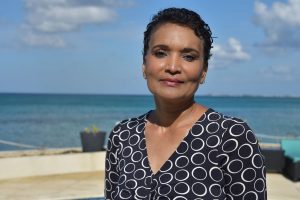
Mendes said decisive action is needed from government to deal with the beach loss.
“If we’re planning to reopen the borders fairly soon in the next three months… six months, it is pressing. They need to come up with a long-term plan. Right now we will have to re-nourish with the sand; that’s a short-term plan, but we would like to see or hear of some long-term plan from the government as to how we can really mediate the problem that we’re having with the beach,” she said.
She said beach nourishment will be an expensive exercise and suggested that government assist through funding and sourcing the sand.
Hazard added, “We believe that the success of such an endeavor which addresses this ongoing beach loss issue relies on the collaboration of all the properties involved as well as us working together with the Government. It is in all our collective interest to find a viable resolution to ensure that the whole of Seven Mile Beach is on its way to be ready for international tourists to enjoy when they do finally return to Grand Cayman.”
In preparation to the airport reopening, the resort was proactively engaging and communicating with all its international partners to regain their interest and confidence.
“We are also ensuring that we have the resources available and ready for international guests when they do arrive. Having said that, we welcome the announcement of the Government’s reopening plan of our borders so that we can ensure that we are fully aligned with their strategy,” he said.
Gov’t working to address issues
Infrastructure Minister Joey Hew, responding to concerns, said the issue of beach loss in that area is very much on the government’s radar, but it is not a simple fix.
“The only way to address the current issue is to move the sea walls. We do hope to address this in the Plan Cayman review of Seven Mile Beach corridor by adjusting set backs and land uses,” he told the Compass.
At the moment, he said, government is dealing with the safety issues caused by the beach loss.
“We were assisting the property owners and replenishing that sand in order to firstly… improve the safety of the area and the security of the property, but also to help with the aesthetics,” Hew said.
In South Beach Bay’s case, he said, a coastal works application is required and that has not been submitted as yet.
“This is a necessary component to be in compliance with the National Conservation Law. The National Conservation Board would have to approve the relocation of the sand. Firstly, to remove the sign from the donor site and, secondly, to place it at the South Beach site, this has apparently received pre-approval by DoE or their blessings. We now need a formal application to be submitted to the [Central Planning Authority,]” he said.
Although he has not formally met with the affected owners of the properties, Hew said, government has given them its full support.
“We have indicated that once an application has been received, that we would prioritise that application. We have not offered any sort of monetary concessions. However, the planning department have been in meetings and correspondence with the Department of Environment and we’re working on a few proposals towards the replenishment of the beach on the southern side of Seven Mile Beach,” the minister added.
This beach loss issue is not a new one, nor was it unforeseen.
Back in 2003 a Beach Review and Assessment Committee interim report recommended the line of permanent vegetation as the best baseline for the measurement of setbacks as it is “reflective of the energy level of the coast over the long term”.
“No development should be permitted seaward of the permanent vegetation line with the obvious exception of jetties and docking facilities (except for Seven Mile Beach where no docks and jetties should be permitted). In addition there should be a minimum setback of 20 feet landward of the historical vegetation line for seawalls,” it said.
However, looking at locations along the coastline, this recommended setback did not appear to be followed.
It’s a point the DoE also raised in its statement on the ongoing beach-loss issue. It said back in December that it consistently advocates for developments to be positioned away from the active beach to reduce the vulnerability to development and to preserve the coastline.
“However, it is for the decision-making bodies to ensure that they follow these recommendations,” the DoE said then.
Hew said Cayman will have to look further down the road at how it incentivises the developers to move their seawalls back onto the land and “how we can best accommodate them in doing so.”
“This I believe will require some amendments to the Planning Law that we hope to address in the Plan Cayman Seven Mile Beach review in the near future and perhaps some government assistance in planning, et cetera,” Hew said.
Related Videos








Best amendment to the Planning Law would be to limit building heights on the beach back down to 3 stories, (grandfather in those buildings that are already over that height – but not allow any more “towers” on the sand). Follow DoE advise regarding building footprint proximity to the high water mark / permanent vegetation. Encourage taller buildings to be placed inland – that way everyone has a view of the ocean. Developments could us a shorter building on the beach and a tower further inland. Allow for residences to have a view over the seafront buildings. Place retail /restaurants / offices / above ground parking on the lower levels of tower structures where a water view is not as valuable. Prepare for the shrinking of our coastline as global water levels rise.
I have been saying for years that something has to be done. This is my 15th winter in the Caymans and for 12 I could walk the beach with no problem In the last 3 years it has been getting worse. It has been almost impossible to get around the wall in front of Plantation Village for the last 3 years. Now there is no beach from the tip of Crescent Beach to the outcropping next to the Sovereign. I am not an engineer but I think a wall made out of the same boulders as Sunset Cove from Crescent Point to the Sovereign. Maybe 30-40 feet from the walls and filled with sand. There was a time when the sand went out 50-100 feet so this would just be restoring what was there
If nothing is done there will be NO SMB in a few years
There are so many comments accusing properties of building in breach of the setback, there are MANY properties who DID NOT do so and over the course of the last 20 years have lost between 75-100ft of sandy beach. So before throwing stones GET YOUR FACTS STRAIGHT.
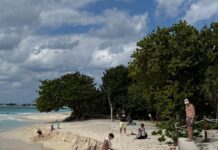
In fact over the latter part of 2019 there seems to have been a net loss along the whole length of Seven Mile Beach. There are empty lots, with no development, along the beach that have lost not only depth of beach 25-50ft or more, but also the beach has dropped between 2-4ft in height in many places, exposing tree and plants roots to the elements. This is now a systemic problem along the whole length of the beach, except a few areas in the middle of the beach, with the northern and southern ends of the beach being more noticeably affected, BECAUSE, they are the last areas of sand due to being at the end of the beach!
Ever since Treasure Island, now Sunset Cove, was allowed to build massive rock groynes protruding out into the sea, ( HOW WAS THAT ALLOWED TO HAPPEN) coinciding with an El Niño event, and continued summertime, southerly wave action over recent years, the southern part of Seven Mile beach has struggled with loss of their large 75+ft beach, which has not replenished properly, because of weaker and less frequent Nor’westers.