

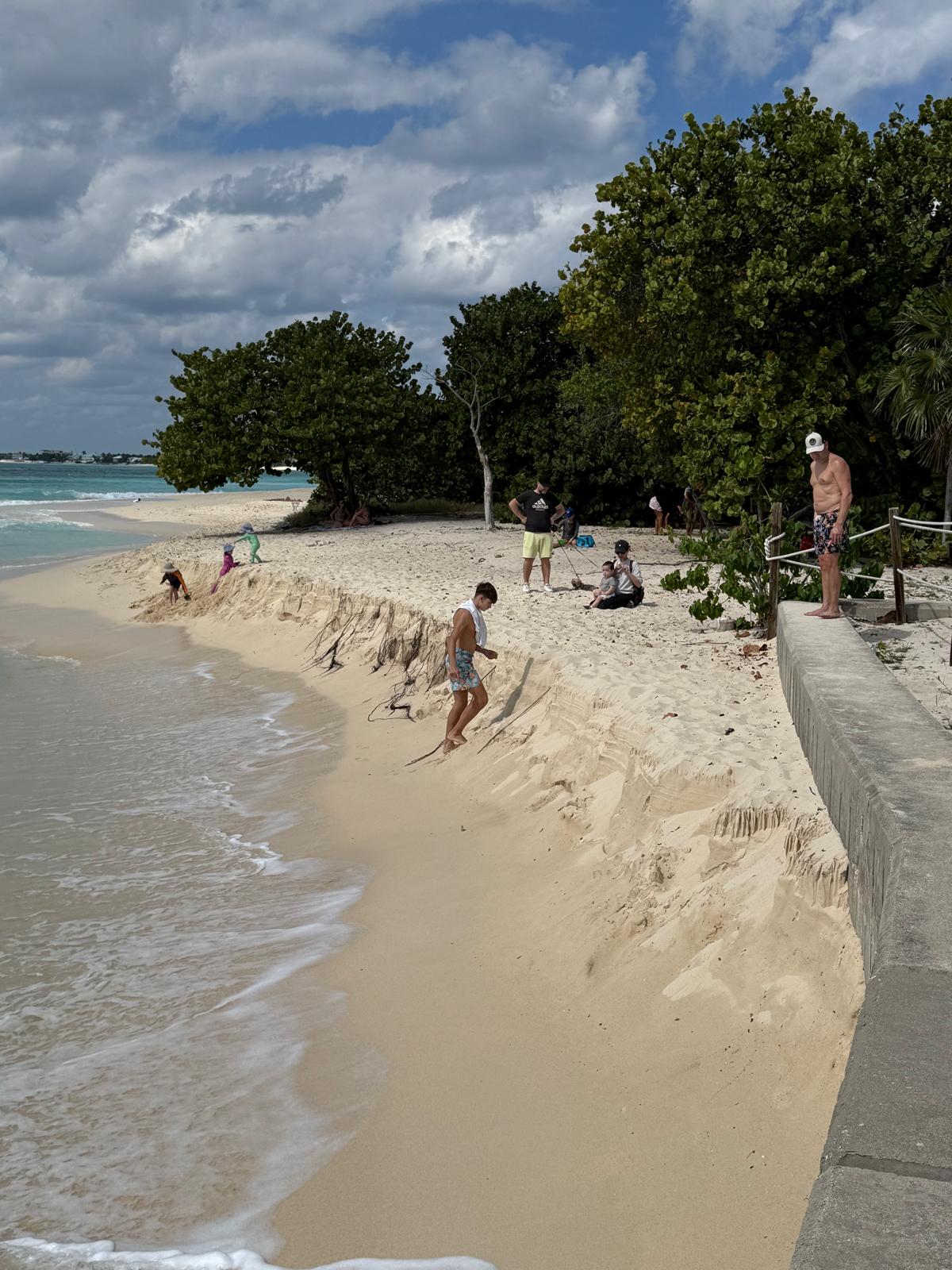
Several occurrences of northerly and northwesterly winds affecting Grand Cayman have resulted in significant changes in the amount of sand on parts of Seven Mile Beach.
On the northern areas of Seven Mile Beach, like Boggy Sand Road, sand was stripped away, while southern sections of the beach – including areas that have experienced heavy erosion in the past decade – saw significant amounts of sand return.
The phenomena of sand movement along Seven Mile Beach is not new and was explained by scientist Richard Seymour of the Scripps Institute of Oceanography in a 2000 report titled ‘Seven Mile Beach: A Natural History’, prepared for the Cayman Islands Government and the Department of Environment’s Beach Erosion Committee.
In the report, Seymour wrote that nor’westers can “cause flooding and wave impact damage, (and) are responsible for delivering replenishment sand to the beach and moving it southward”.
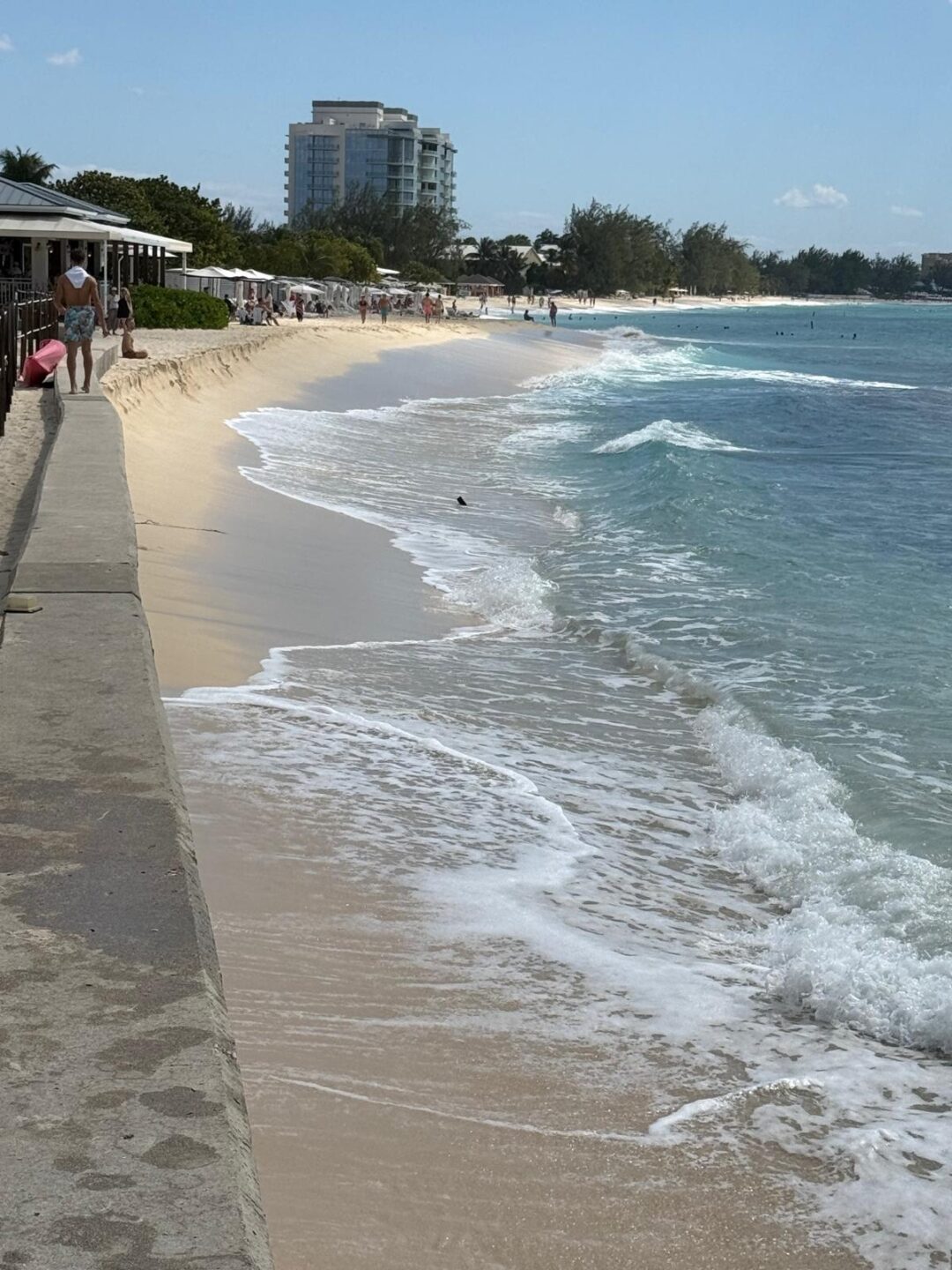
Over a period of two weeks, Joe Carson, a visitor from Juno, Alaska, saw big changes to a small stretch of beach in front of his condo rental on Boggy Sands Road.
“I witnessed more than two feet of sand disappear in a matter of days,” he said, “It was stripped away; but I am sure it will come back again.”
A little further north, by West Bay Public Beach, the beach now shows a sharp, vertical drop off; evidence that a large amount of sand shifted away from the area during the recent nor’wester.
The same sharp incline is present just north of the volleyball court on Public Beach and by the Bonny Moon Beach Club.
On the southern stretches of the beach, it is a completely different story – some properties now have more sand than they have had in years.
Most notably, the Royal Palms property has benefited from the strong northerly winds and north-westerly swells.
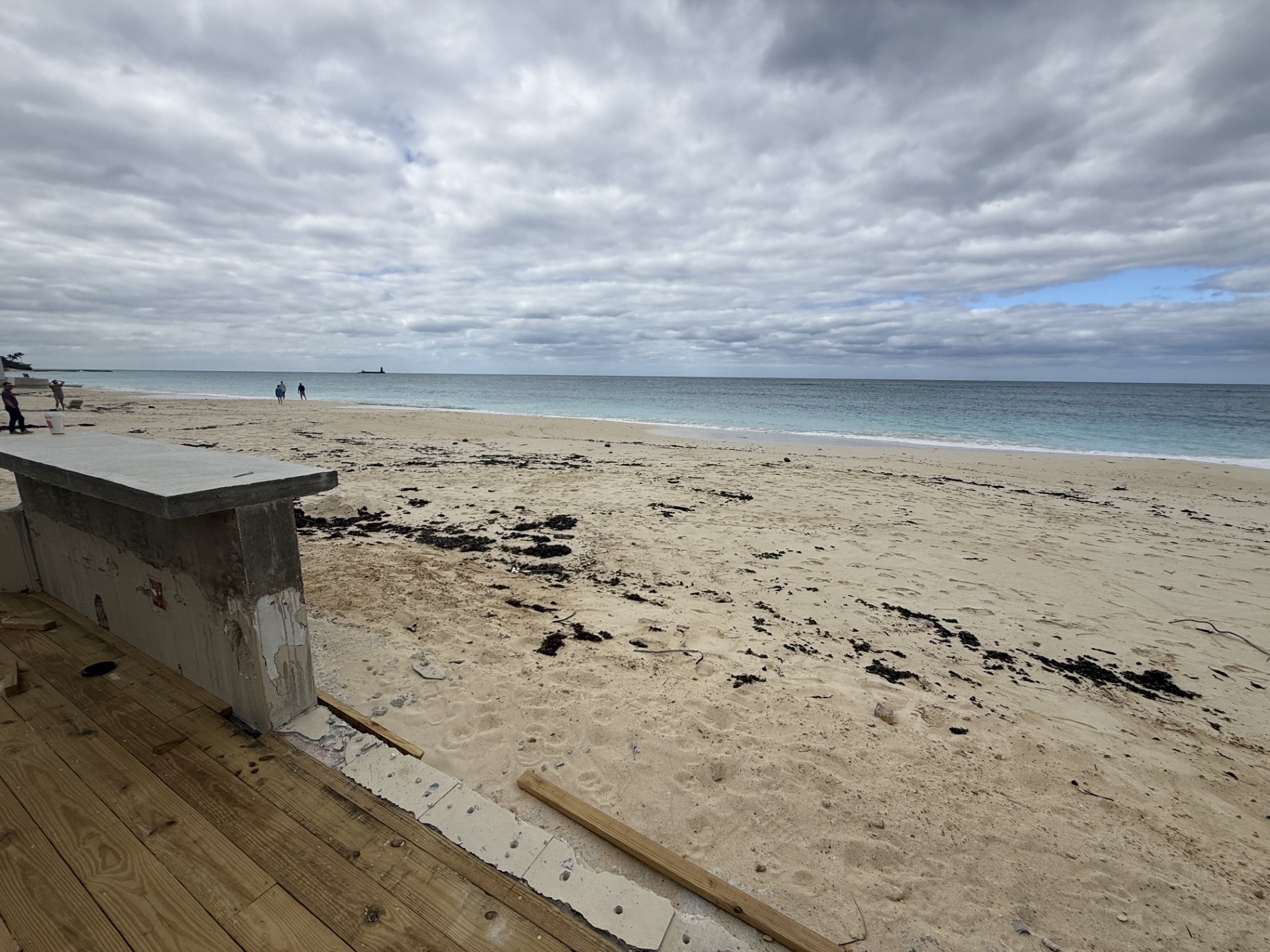
The property has been undergoing redevelopment and in January 2025, the developer decided to move the building structures further back from the sea, removing the oceanside bar, kitchen and dining area.
That decision appears to have paid off; without the hard structures reflecting high energy waves, the beach has made a stunning return.
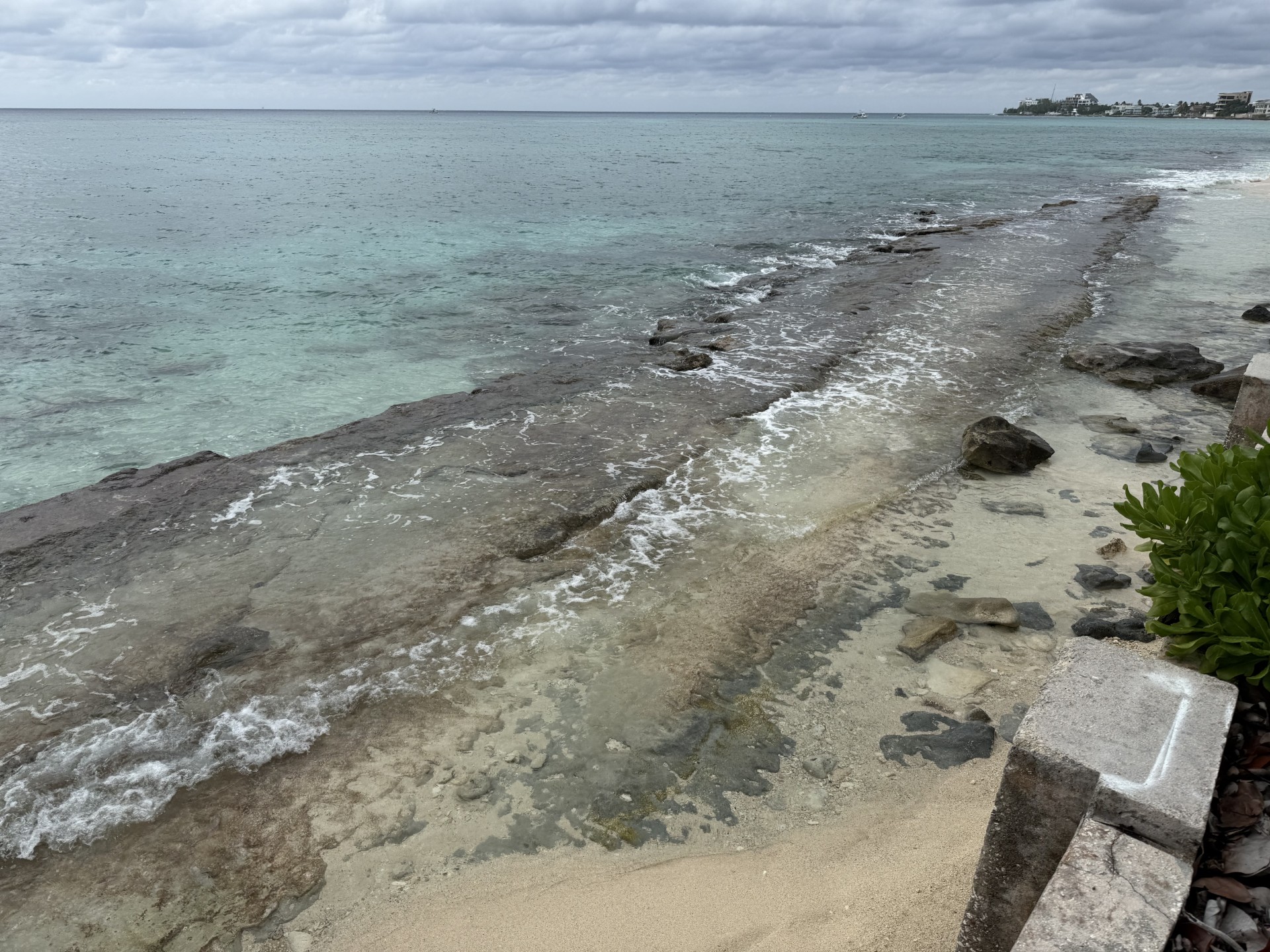
Next door at Coral Beach, where just a few months ago several feet of water was lapping against the wall, there is now a strip of sand in front of the property.
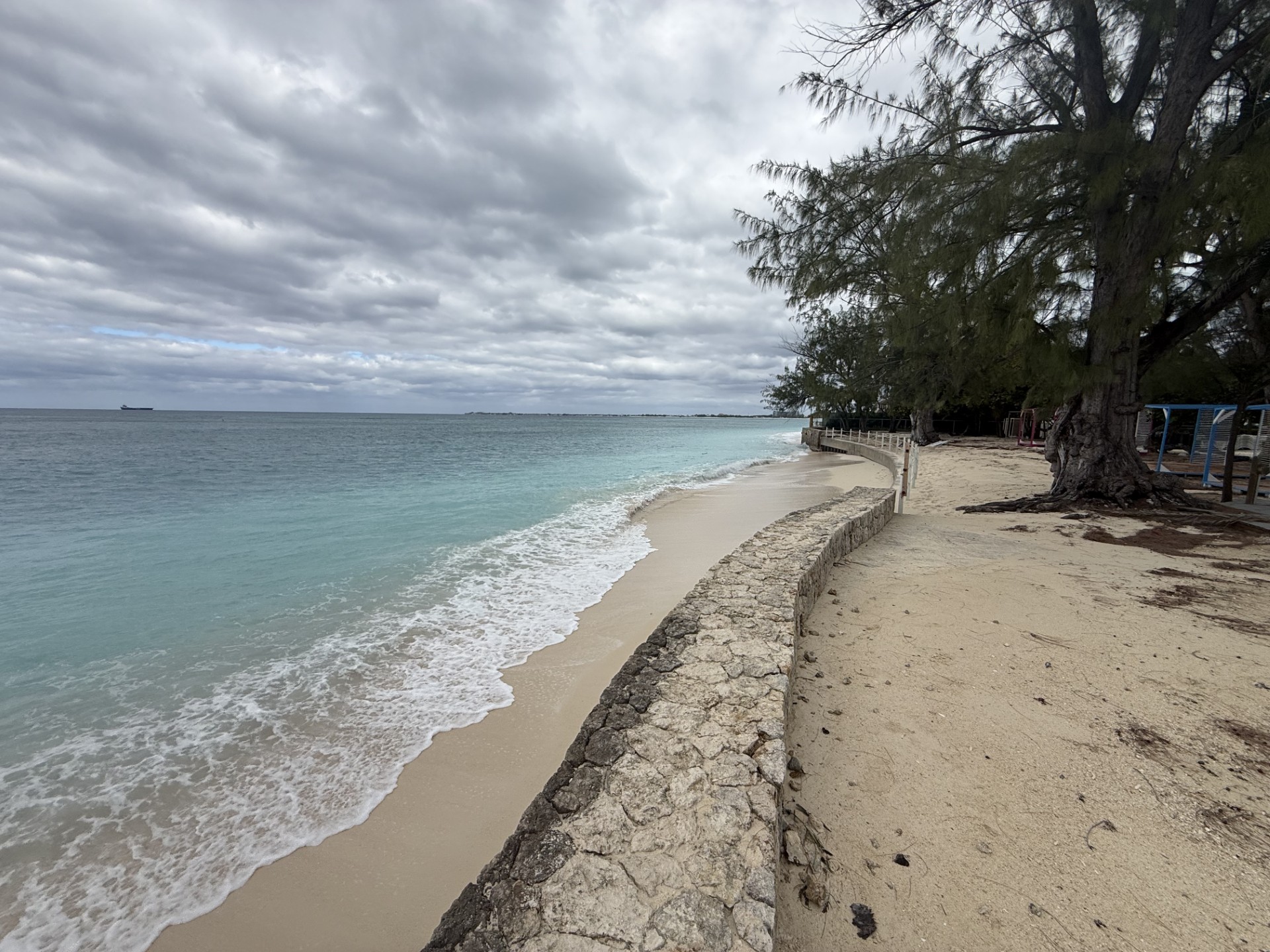
Even the Grand Cayman Marriott resort, which for years has been ground zero for Seven Mile Beach’s erosion problem, now has a modest beach in front of the property.
The reasons for the sand migration
Many regard the beach as a fixed asset, but Seven Mile Beach has never been fixed. It is a vagrant shoreline, migrating north, south, landward and seaward in response to wave energy, sea level, sediment supply and particle size.
Northwest swells arrive at an angle, setting up longshore currents that tend to push sediment southward, while simultaneously stripping sand from the northern sections of beach.
Because these weather systems persist for several days, the effect compounds hour by hour. What feels like a mild winter event to people, becomes, for the coastline, a sustained re-sorting exercise.
Peril for boaters
In the past, northwest storms created some of the most dangerous conditions Caymanian sailors faced; not because they were the most violent, but because they were deceptive.
They arrived quickly, often lingered longer than expected, and drove seas directly onto normally tranquil lee shores and boat anchorages.
For sailing vessels, small trading schooners and for some watersports operators and dive boats, a nor’wester can turn a normally safe harbour into a trap.
Vessels sometimes drag anchor in the northwest winds, and can get pushed toward the ironshore coastline or beach where they may wreck.
Sailing ships attempting to run south from the rough seas found themselves fighting both wind and current. In the past, not all made it clear.
Not all vessels that make it to South Sound or other leeward anchorages are safe from the peril. In the recent nor’wester, the strong winds caused a support boat for Yellow Submarine Cayman to get loose of its anchorage or mooring and wreck on the South Sound reef.
Related Videos










There’s been a big improvement at the southern end. You can walk as far as the Marriott again, but probably only for a short while. Of concern is outside the Caribbean Club (Luca) where a lot of sand has been lost and there is a substantial (4-5 ft) cliff. If much more is lost here in further storms it will cut the beach in two again. What we must not lose sight of is the overall amount of sand that was previously beach but is now sitting underwater 50-100ft offshore. Pump that back all the way up and down the beach and it will 30 years before it has to be done again.
The comparison of the sand replacement and displacement at the Royal Palms site compared to Coral Beach site says it all. Erecting walls or structures near the water is definitely an offender! The Jury has spoken….”I rest my case”.