

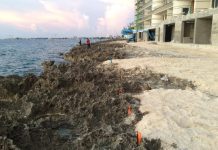
A bank of silt emanating from the construction of a tidal pool at the FIN development on South Church Street stretched along the coast for several hundred feet on Wednesday.
Developer Mike Ryan told the Cayman Compass in an email that silt screens had been set up to mitigate the work – which involves removing part of the ironshore to create a saltwater tidal pool – but an unexpected change in sea conditions meant the silt spread.
He said the weather had been forecast to be calm throughout the week and workers at the site had put silt screens and other measures in place, which were “being checked in a regular basis by DOE staff”.
“Shortly after work commenced [Wednesday] morning, the current and swell shifted and began coming across the shoreline. We immediately ceased work and devoted all our resources and attention to removing materials from the shoreline and mitigating any impact,” he said.
Department of Environment Director Gina Ebanks-Petrie said FIN has an operational plan – which the DoE reviewed and signed off – that requires the development, among other things, to monitor turbidity and take certain identified corrective actions.
“However, I think it must be understood that it is almost impossible to conduct excavation work in ironshore that close to the water without causing major turbidity events. The only way to prevent this from happening was to not have approved the pool to begin with,” Ebanks-Petrie said.
Ryan said the FIN team met with the DoE inspector who visited the site Wednesday, 17 Feb., and implemented his suggestion to add strategic sandbags to the site to further mitigate the impact of the silt.
“We continue to monitor the situation and take whatever actions are appropriate,” he said.
Ryan added, “We spent a long time developing a careful program for this work that was approved by the DOE and we are working closely with them to monitor it as we progress. We have, and remain fully compliant with that approved program.”
View from above
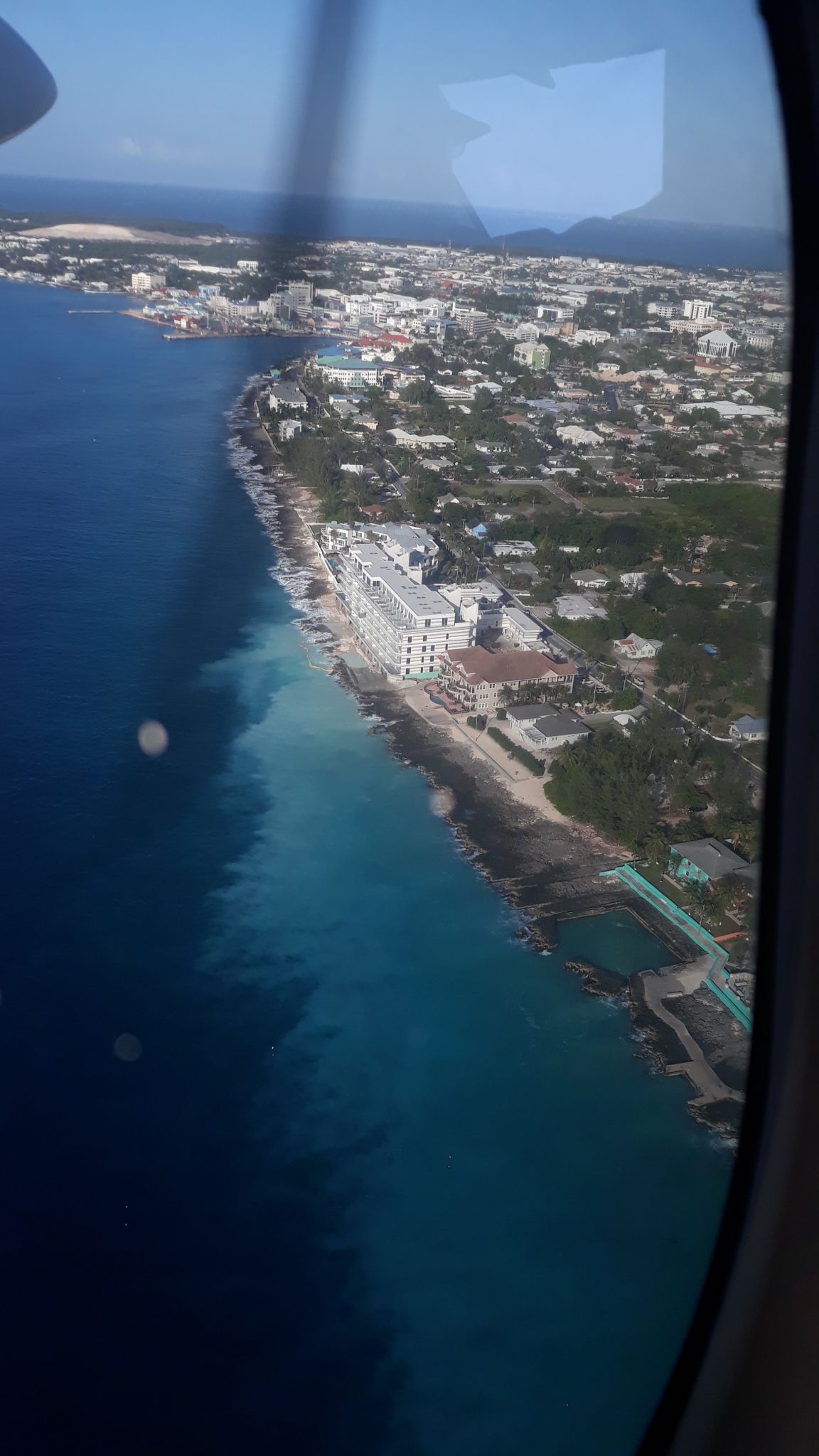
Grand Cayman resident Tracy Candish was flying back from Little Cayman when she spotted the plume of silty water from the window of the Cayman Airways Twin Otter plane. She captured the scene on her phone.
“Many of the passengers on the plane were shocked and saddened, knowing the damage it would be doing to the ecosystem. They said they had no idea anything like could happen because they cannot typically see the shore side of construction,” she said in an email to the Compass.
Candish, a regular snorkeller and diver in that area for 25 years, said she believes the silt may have suffocated nearby coral, sponges, sea fans and marine life in the area, adding that she had seen similar impacts from other developments along the coastline.
“I snorkel, swim and dive that whole reef system from Eden Rock to Sunset House. I have seen the ‘Dead Zones’ that excavating have caused in the past from two previous condo projects north of Fin. The sponges, sea fans and coral get choked and die. The fish have nothing, leave, and it is barren. It seems unsustainable that the very thing that may attract a buyer, is destroyed during construction.
“What’s done is done and it breaks my heart.”
Sustainable Cayman’s Linda Clark also recorded a video with commentary (attached to this story) from the shoreline, of the silt as it travelled down along the coast as far as Sunset House’s sea pool.
In her video, which was posted on social media, she said she believed the silt posed a major threat to endangered elkhorn coral in the area.
Planning background
Under the terms of its planning permission for the tidal pool and an artificial beach, which was granted in 2019, FIN was required to submit its ironshore-removal plan to the DoE before the work could go ahead.
The DoE, and the National Conservation Council, in their submission to the Central Planning Authority at the time, raised the potential negative effect of sedimentation during construction of the pool.
Their submission stated, “The sea pool is located directly adjacent to a Marine Protected Area. The sea pool is likely to negatively impact the Marine Protected Area during construction and operation. These potential adverse impacts arise directly from the construction of the proposed sea pool (e.g. severe sedimentation as a result of excavation of iron shore etc.) and the indirect and ongoing impacts associated with maintenance of the pool and beach.
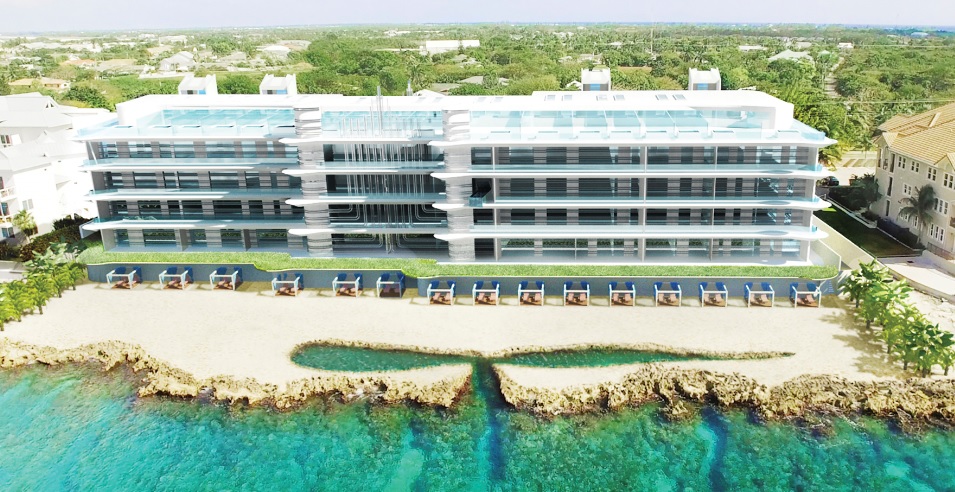
“We are of the view that placement of excavated sand adjacent to the sea pool to maintain a beach is likely to lead to the introduction of organic material and other contamination and also do not believe that the artificial beach will survive the wave action and overtopping that this site regularly experiences. Additionally, we are concerned that elevated water temperatures and poor circulation will cause persistent poor quality in the pool itself which will periodically be flushed into the offshore environment.”
Prior to commencement of work at the site, the developers were mandated to prepare a Construction Environmental Management Plan detailing the scope of third-party monitoring agreed in writing with the DoE on behalf of the National Conservation Council.
According to the minutes of the Central Planning Authority meeting at which the application was considered, the scope of that plan included “duration of monitoring, monitoring locations, control site locations, parameters to be measured, the threshold level of 4 NTUs (Nephelometric Turbidity Units) and reporting requirements as well as any other information which may be deemed required by the DoE. The Plan shall be complied with during construction.”
The development also required an Operational Environmental Management Plan and agreed, in writing, with the DoE for water-quality monitoring before construction.
To facilitate the creation of the saltwater tidal pool, sand would have to be added. As a condition of the approval, the CPA stated that the placement of the sand should be on a trial basis for 18 months.
“During this time, the DoE shall be afforded access to the site for monitoring purposes. If the supply of site-derived sand is exhausted during the trial period, then no additional sand shall be placed at the site at any time. If the supply of site-derived sand is low during the trial period, and the importation of sand is expected, then a Sustainability Plan shall be prepared by [FIN Development] and agreed in writing with the DoE on behalf of the NCC,” the CPA conditions stated.
The minutes stated, “Given the conditions required to be imposed by the National Conservation Council, it would appear that the environmental impacts associated with the tidal pool’s proximity to the sea will be minimal and this is a material consideration to allow the proposed setback.”
Related Videos








I moved to Grand Cayman in 1982 and learned to SCUBA dive. One of my favorite dive spots was Eden Rocks. It was alive with beautiful corals and you immediately attracted the attention of sergeant majors and yellowtail snappers.
All that is left now is dead rock.
… and what would the dredging for the cruise ship dock have done???