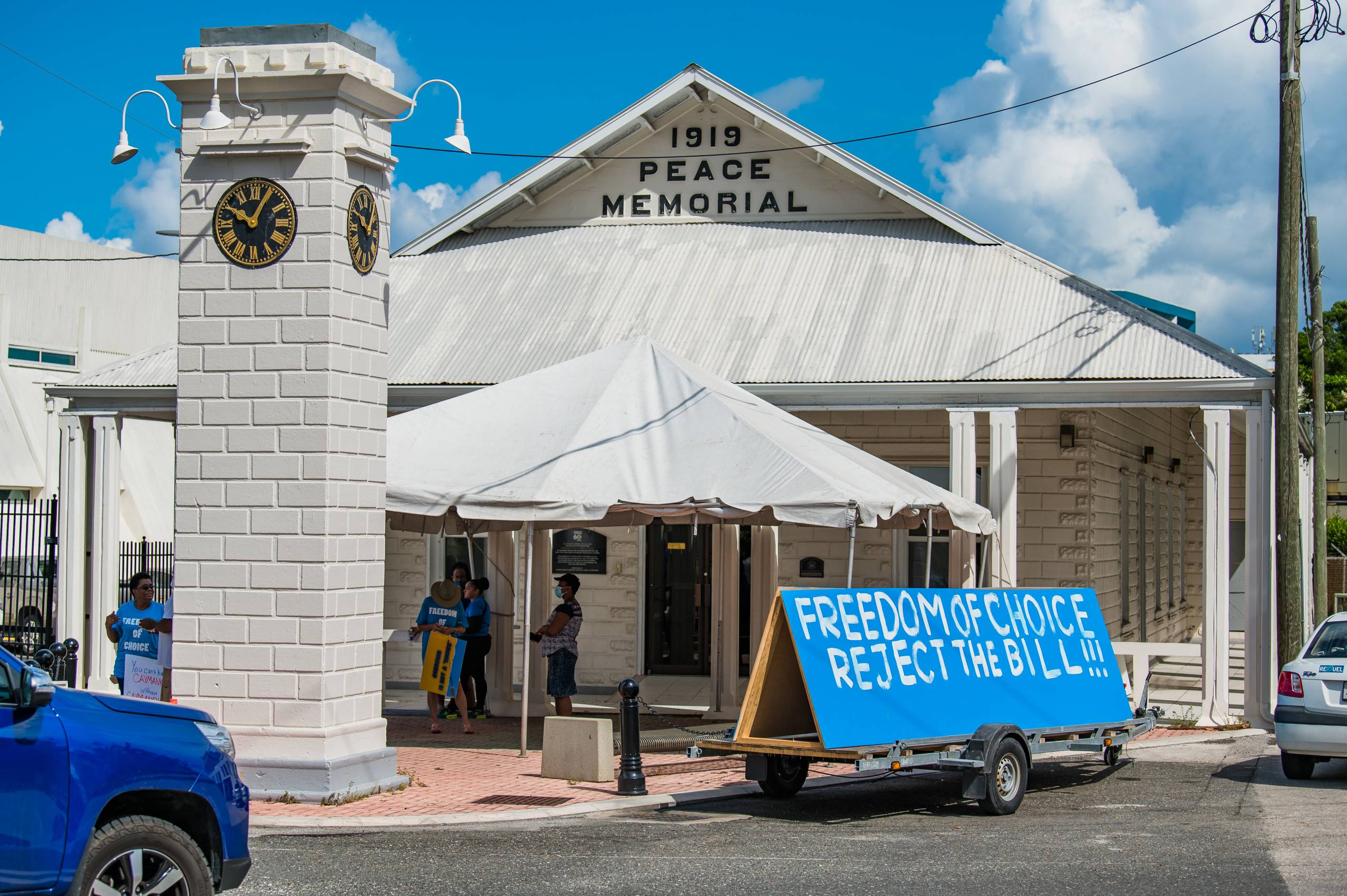
Lawmakers on Monday morning began debating the first of two pieces of legislation that would mandate COVID-19 vaccinations for non-Caymanians.
Before the debate began, protesters gathered outside the Parliament building in downtown George Town chanting and holding up signs showing their opposition to the amendments to the Customs and Border Control (Amendment) Bill and the Immigration (Transition) (Amendment) Bill.
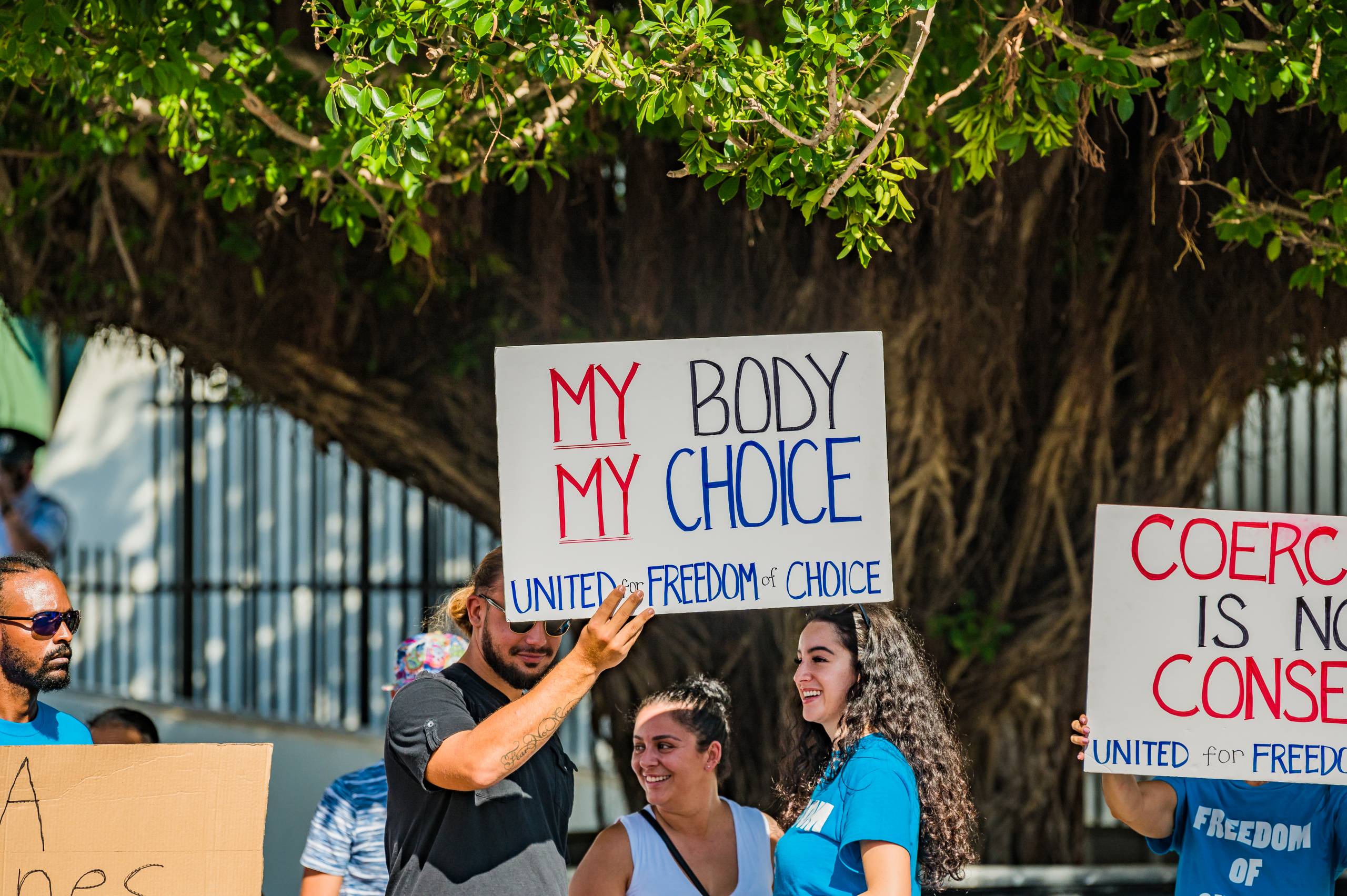
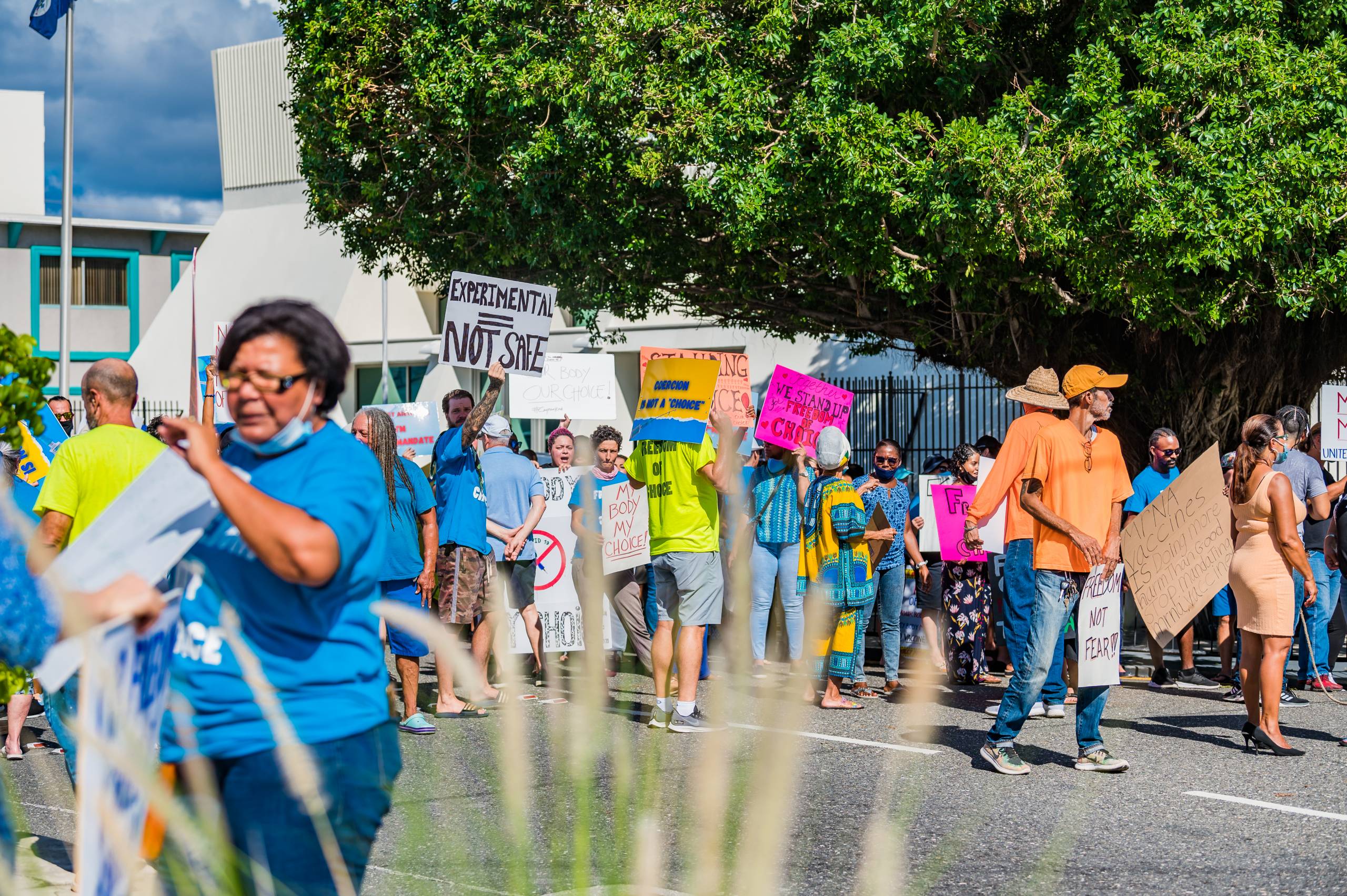
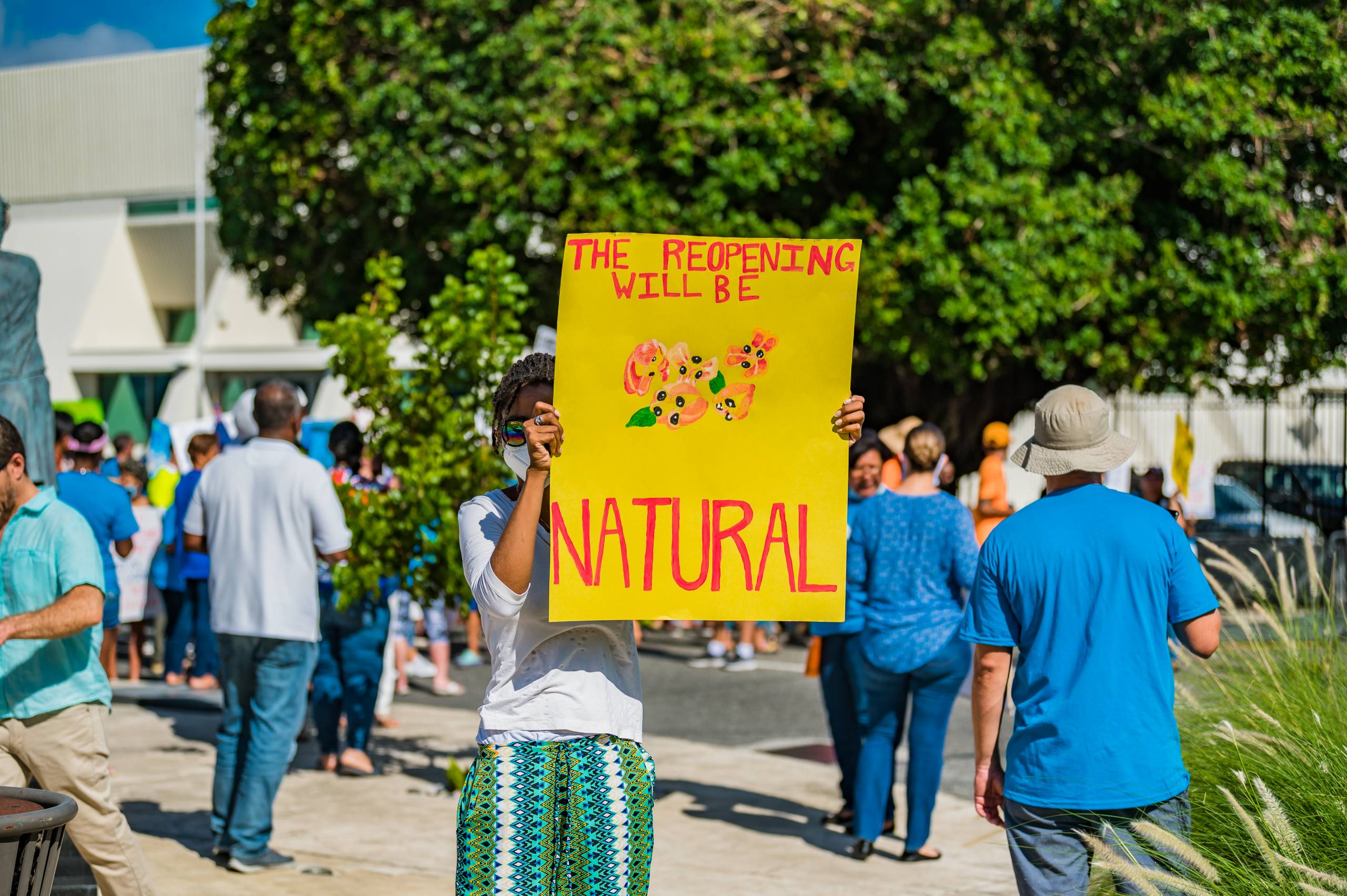
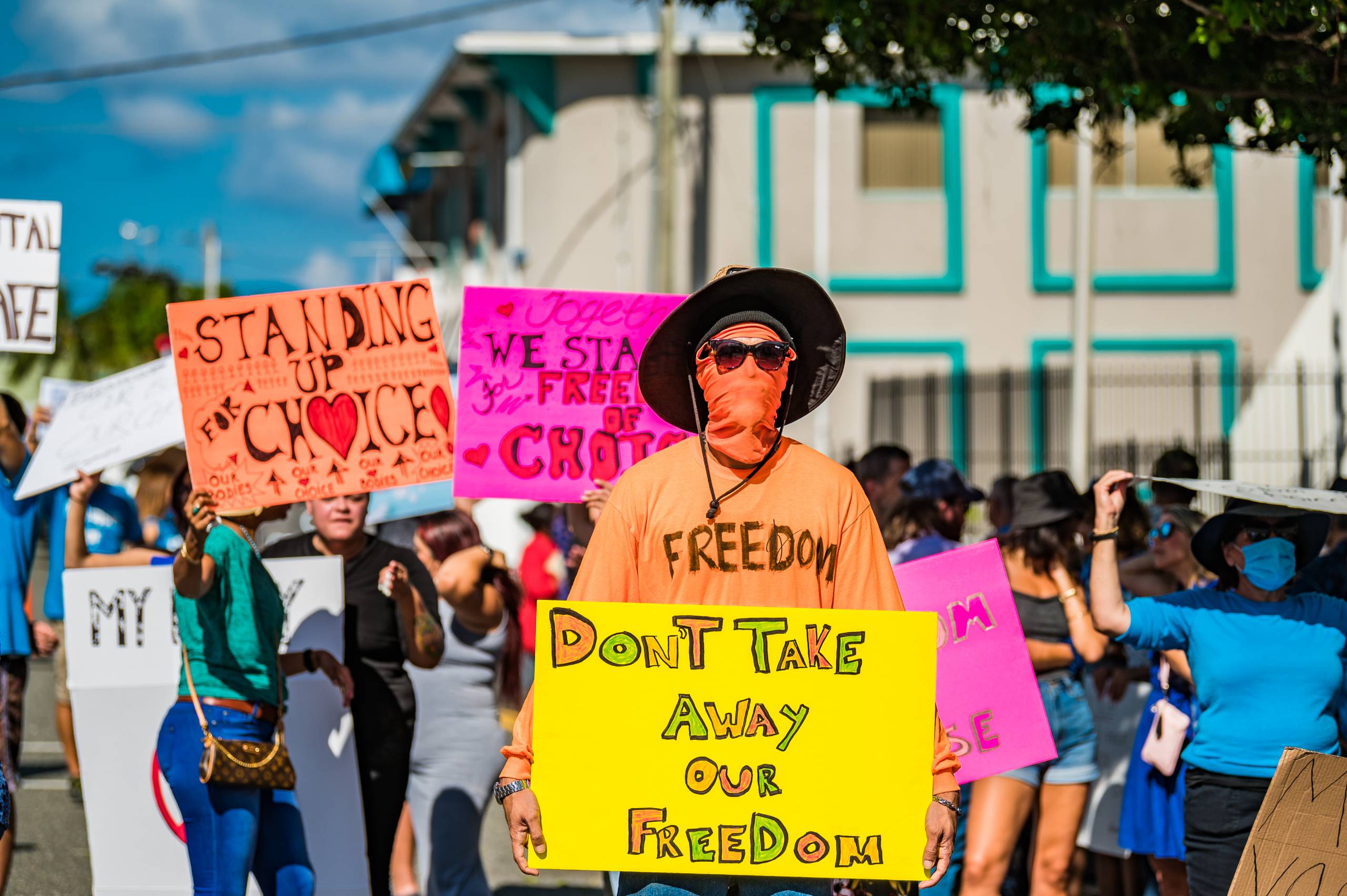
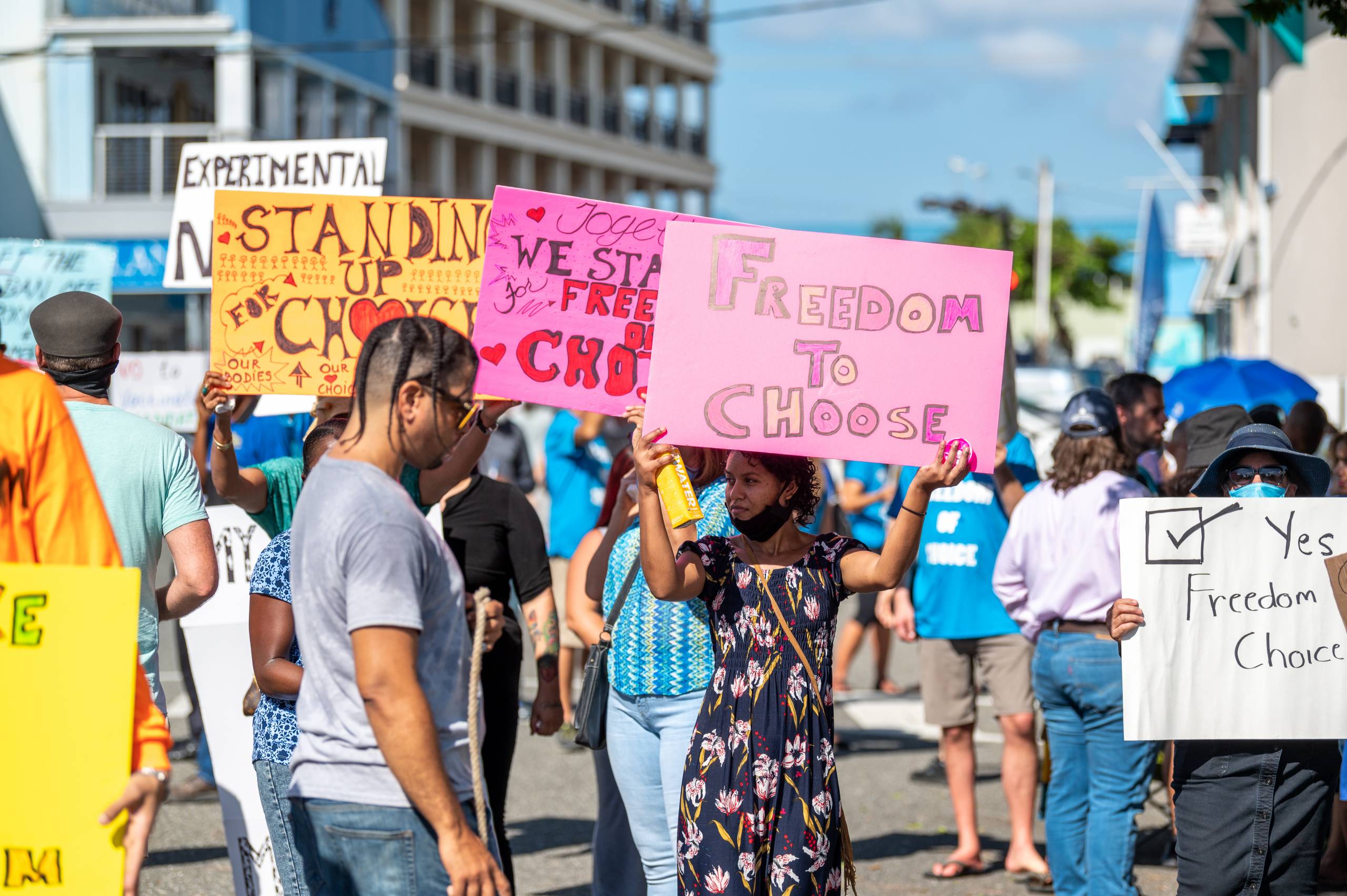
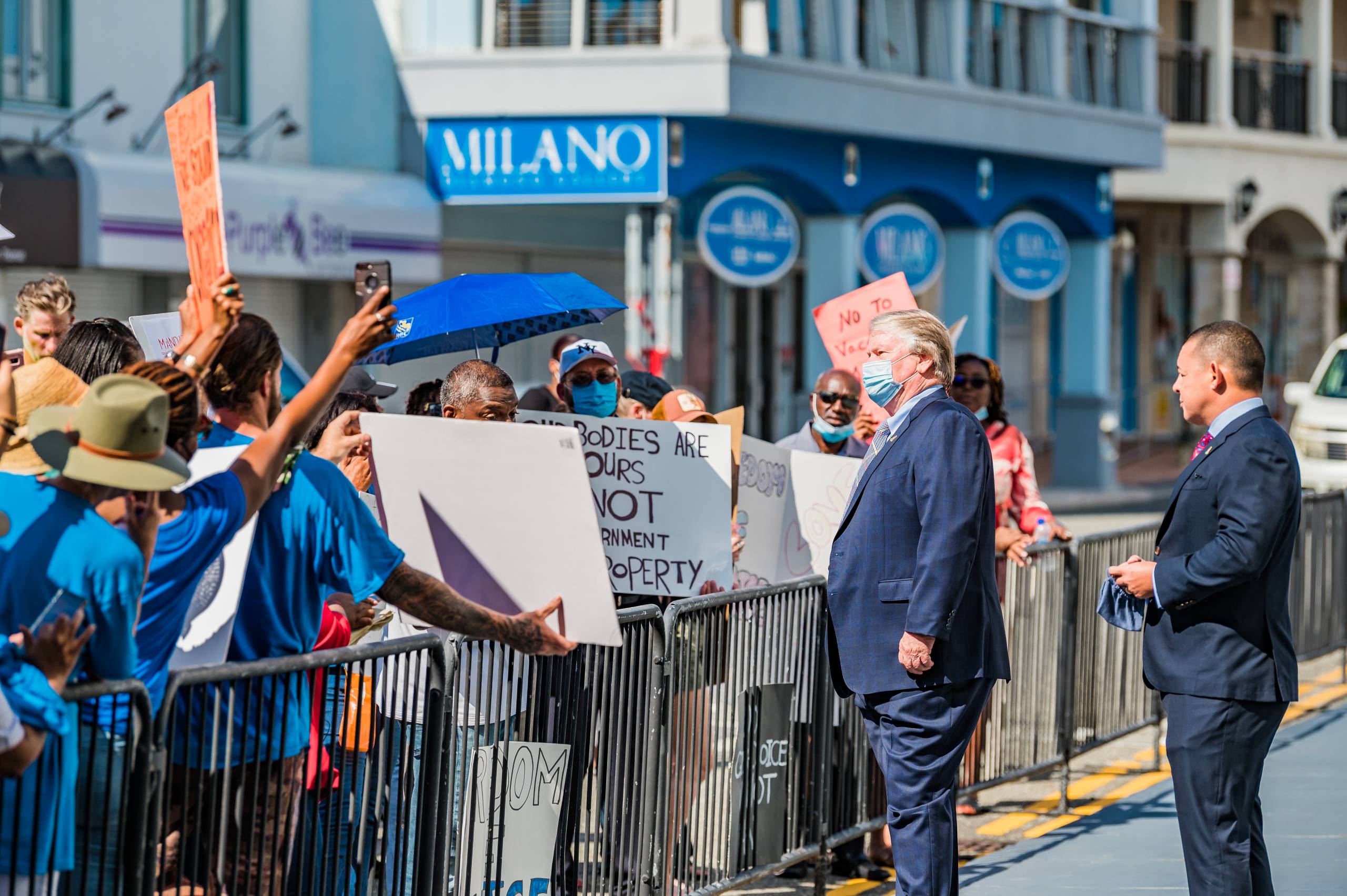
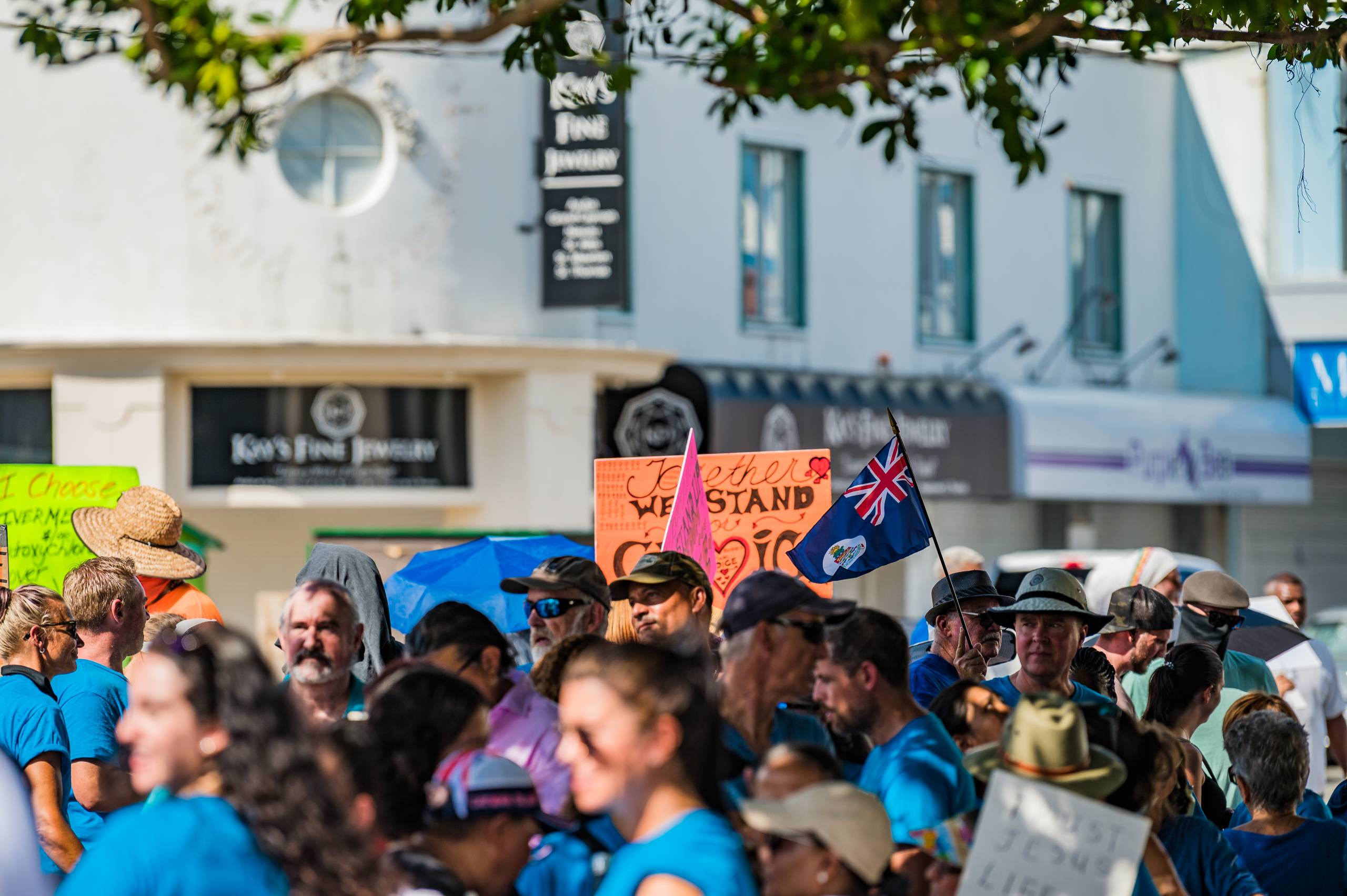
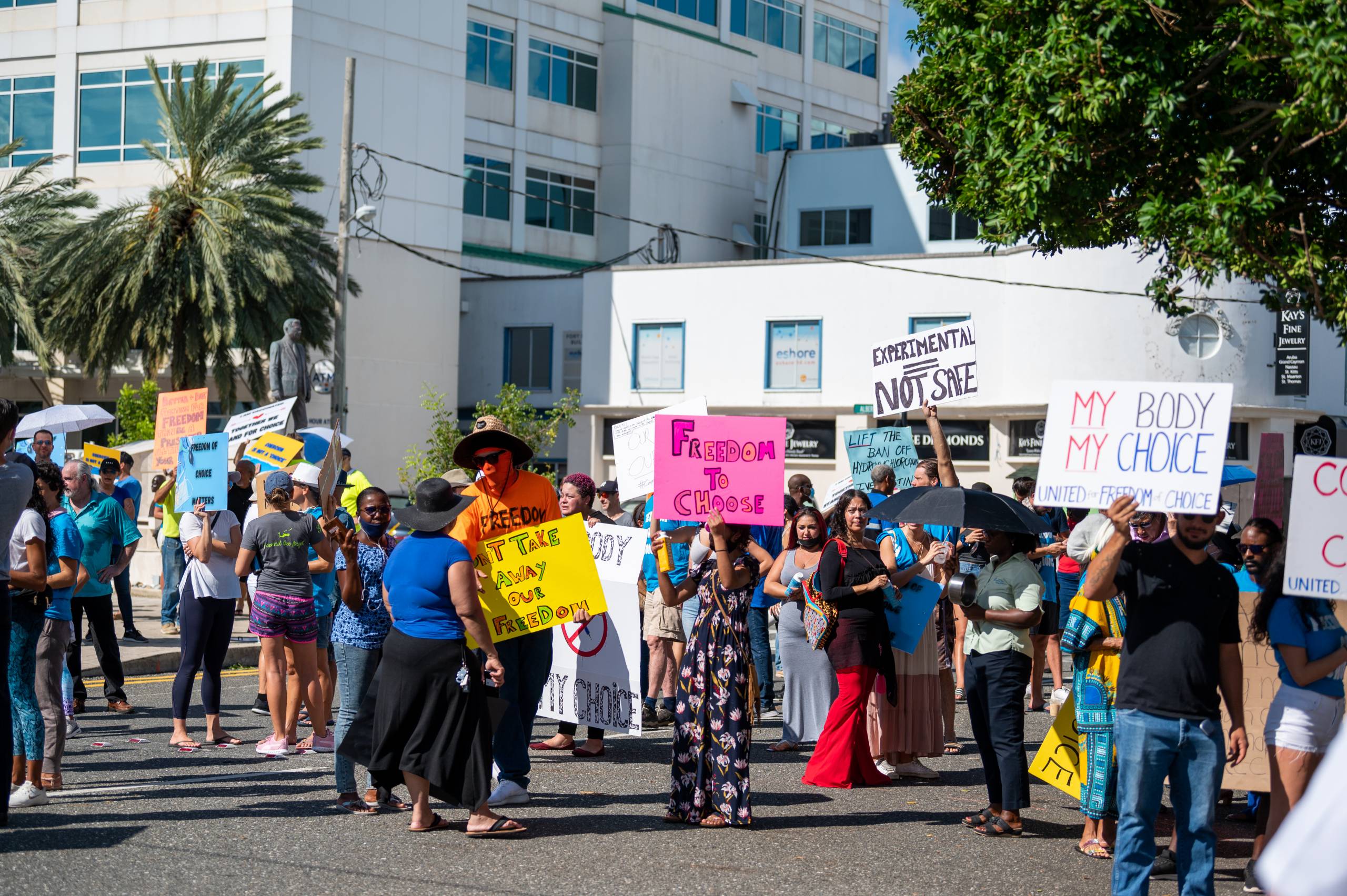
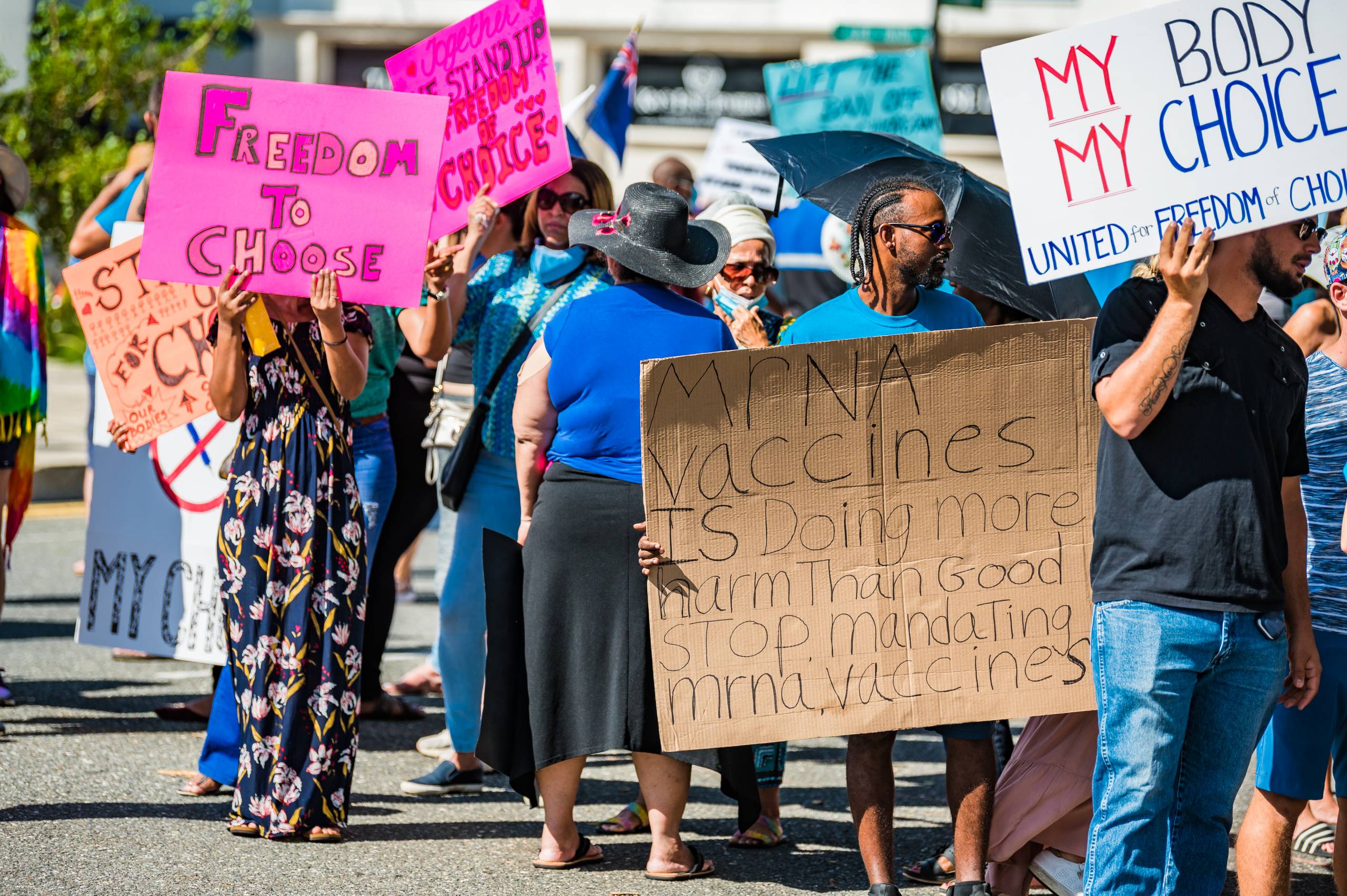
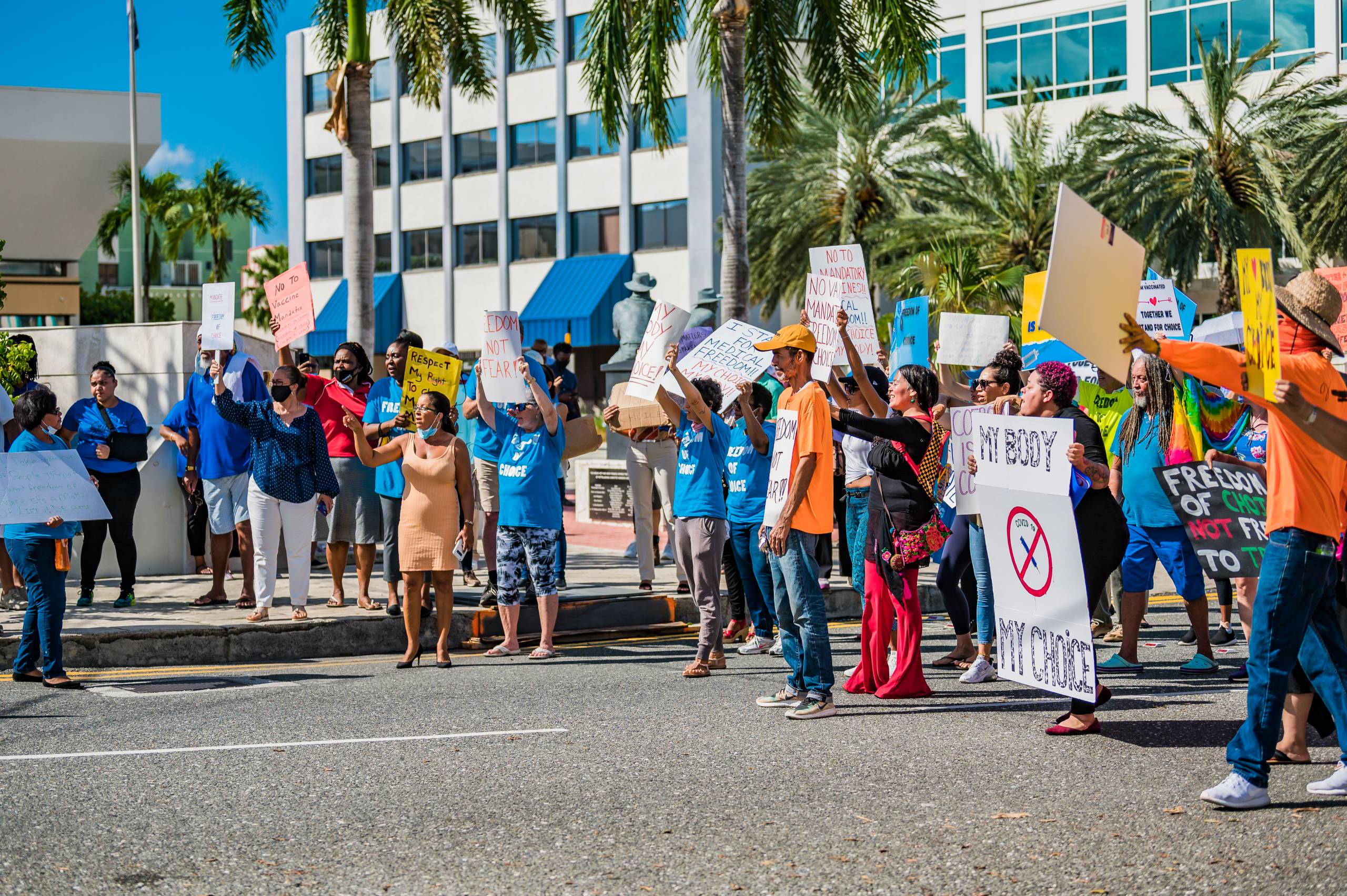
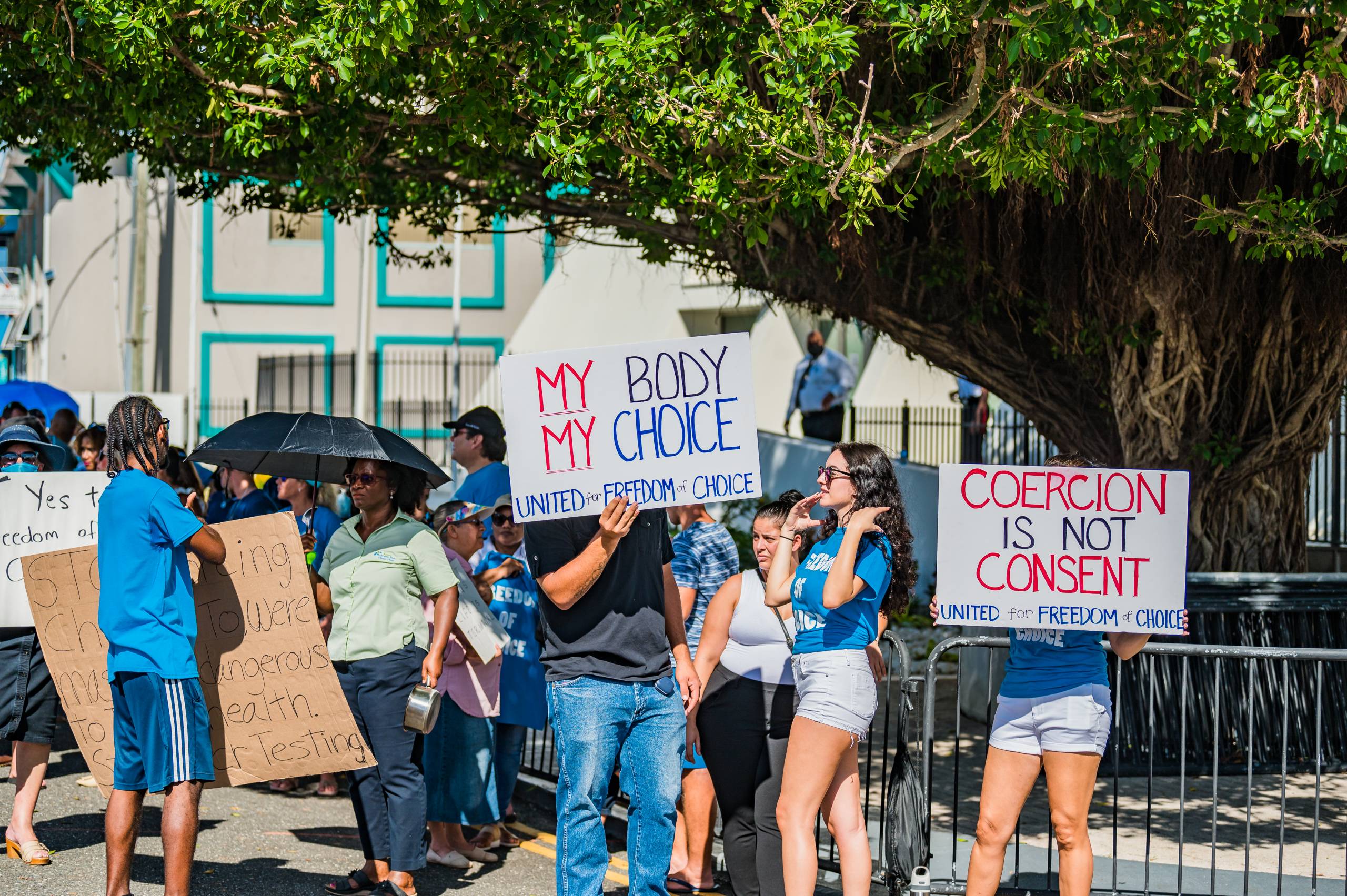

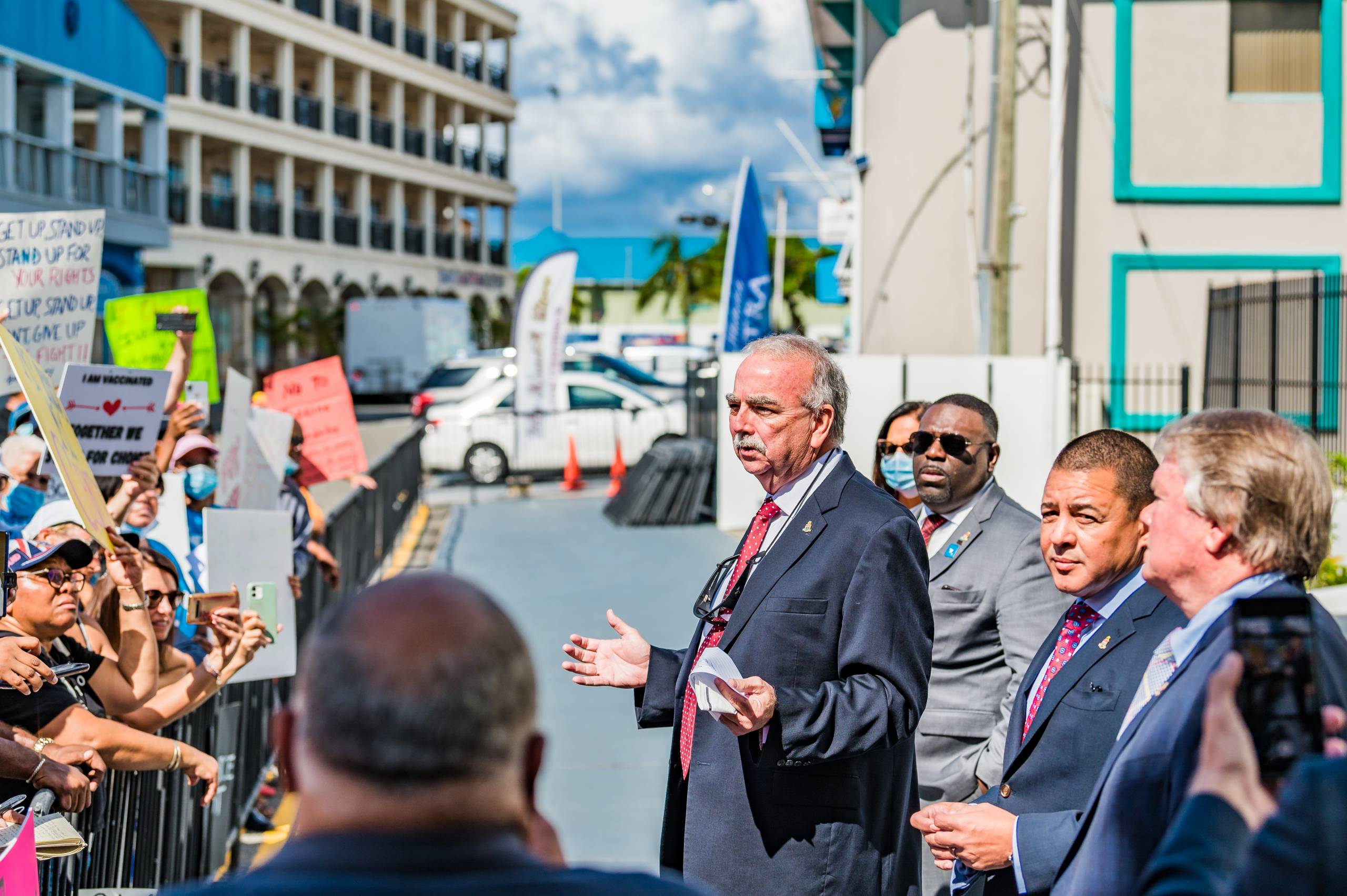
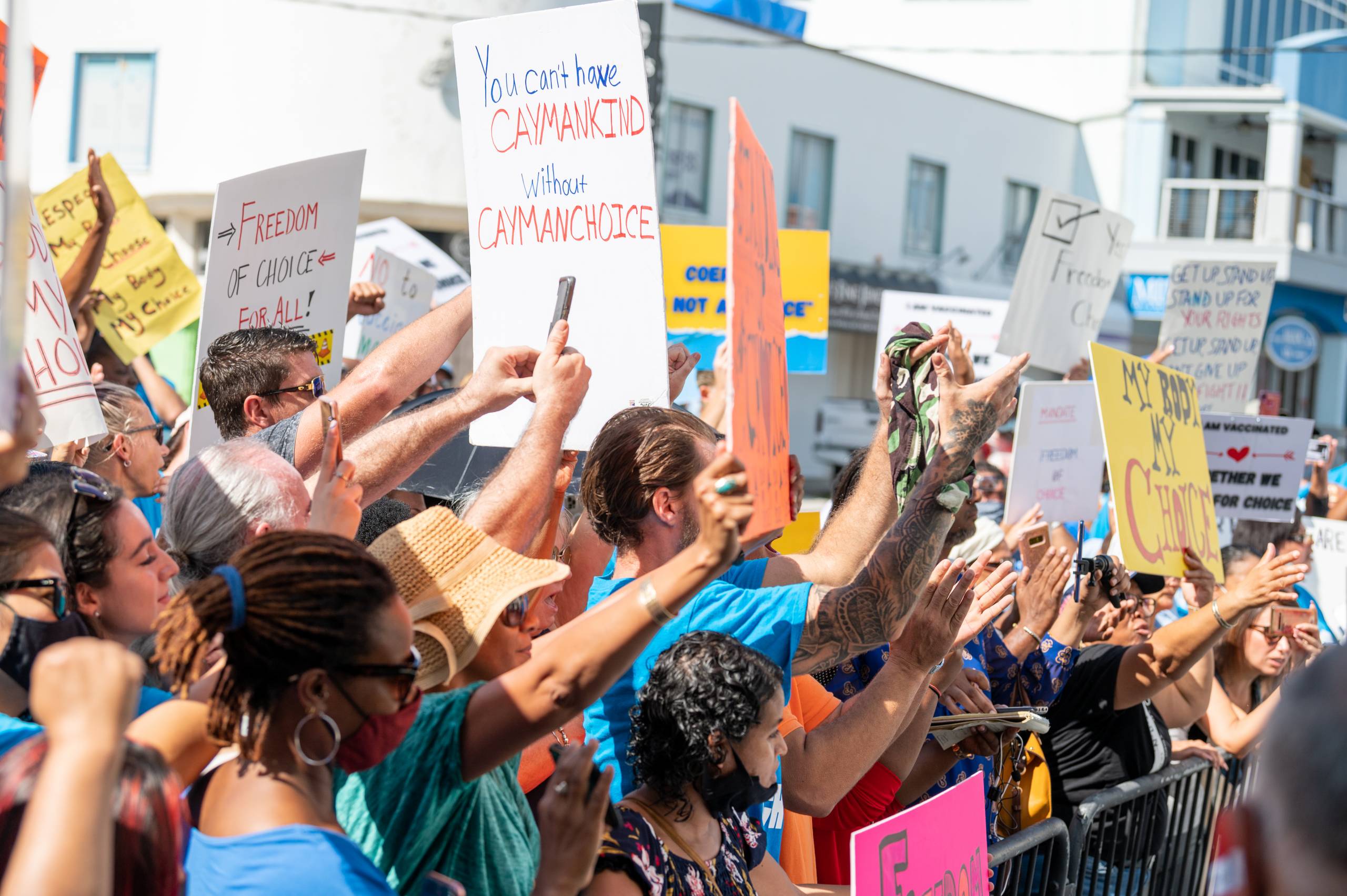


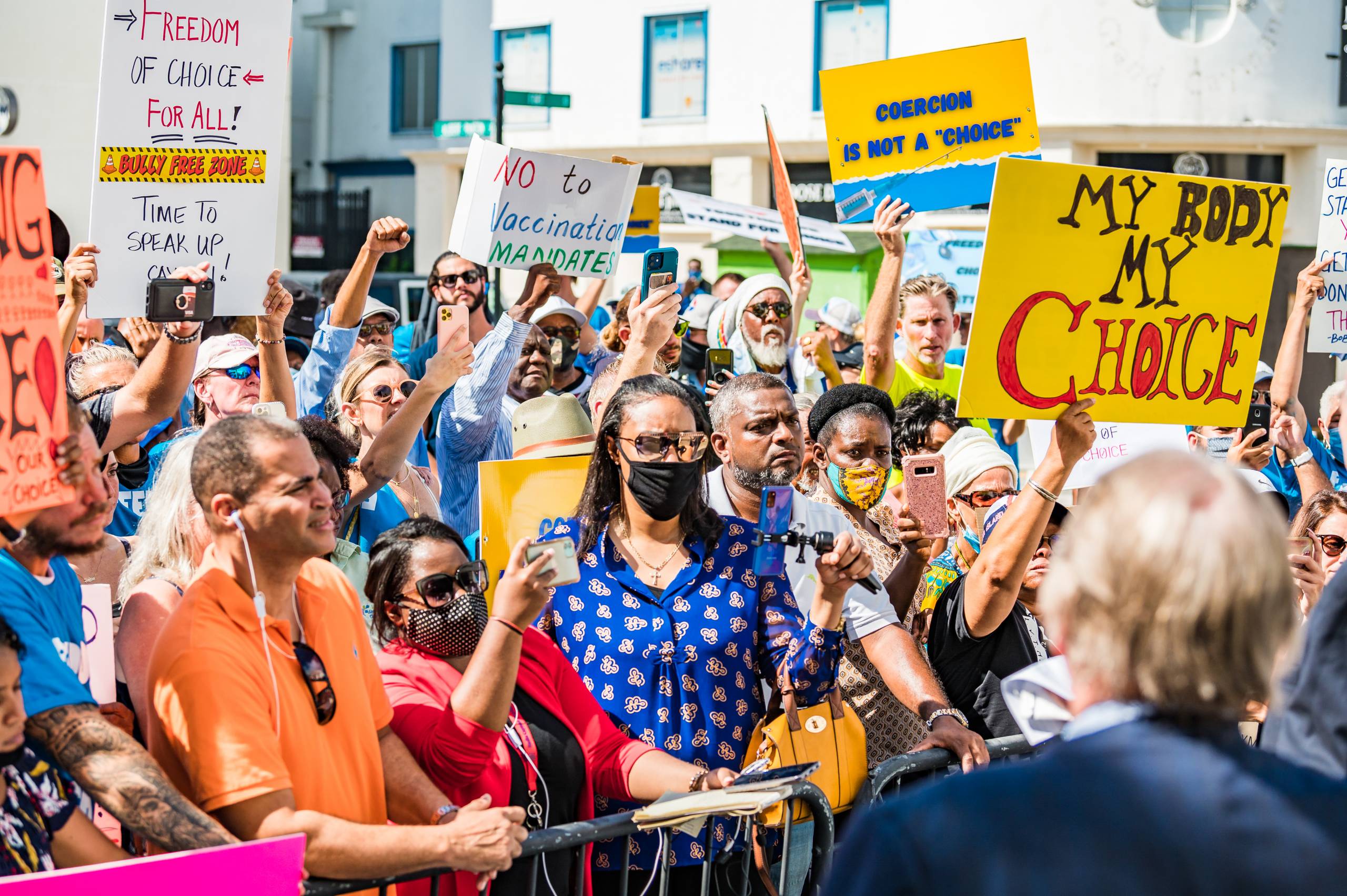
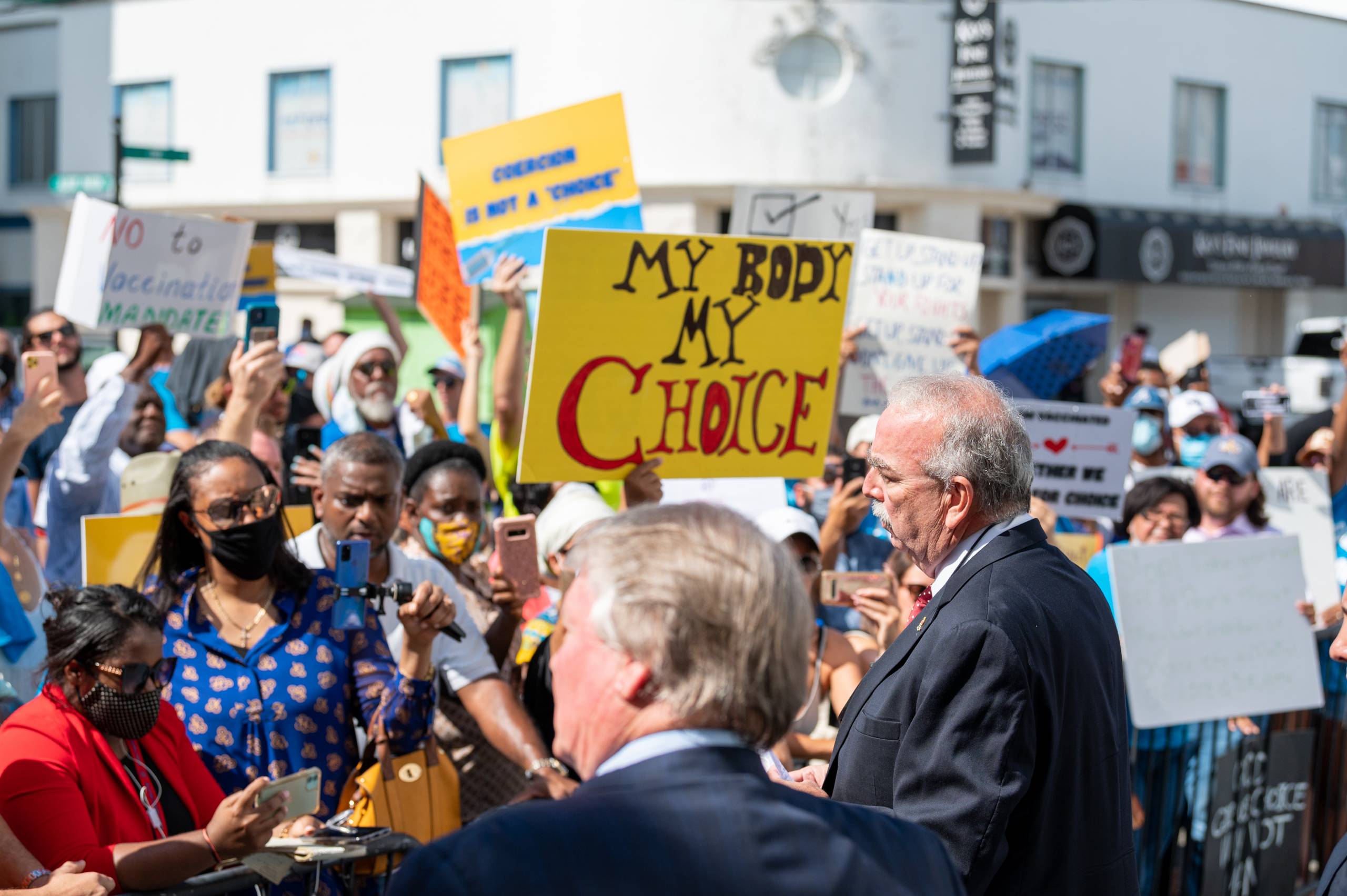
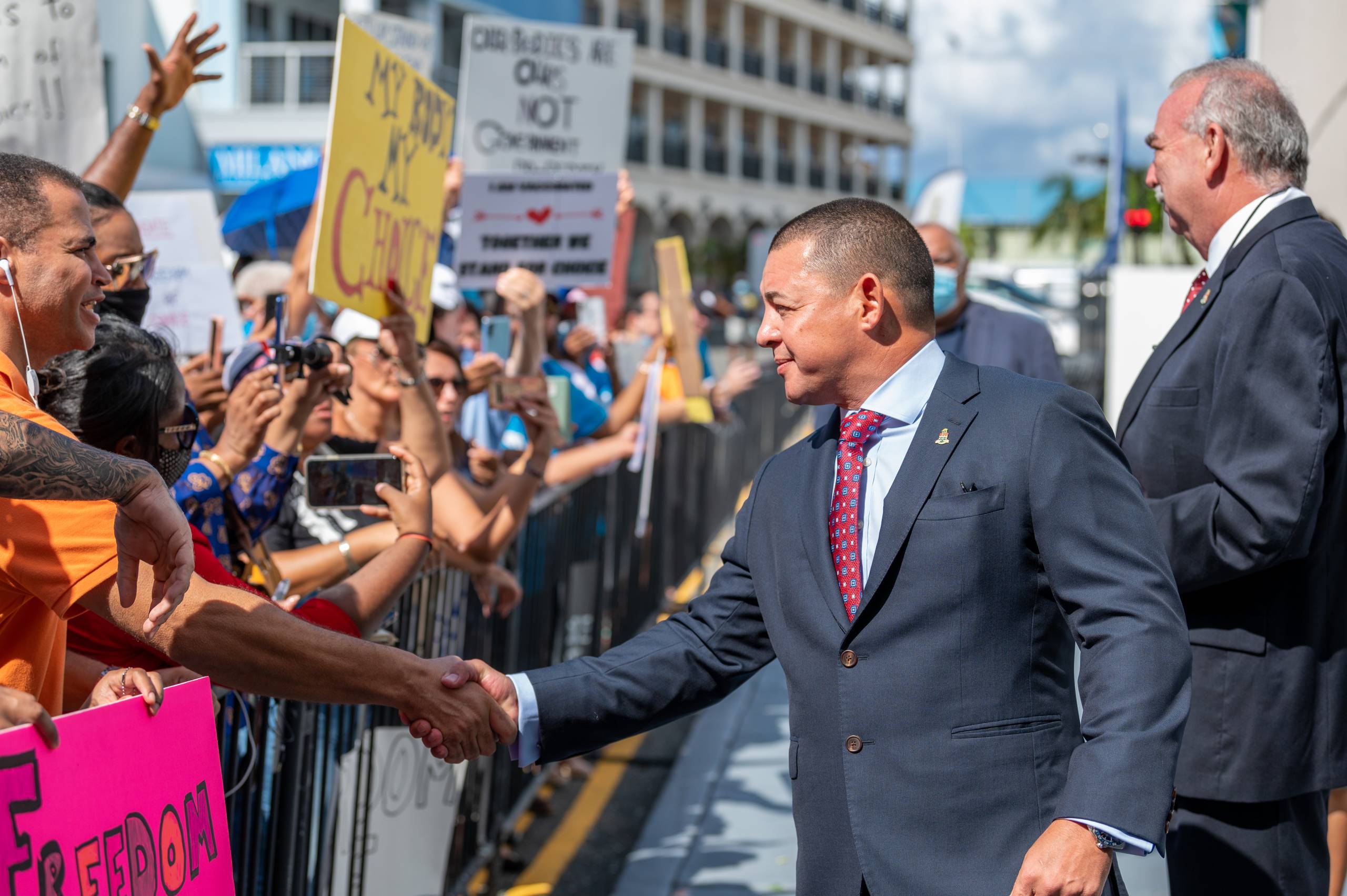
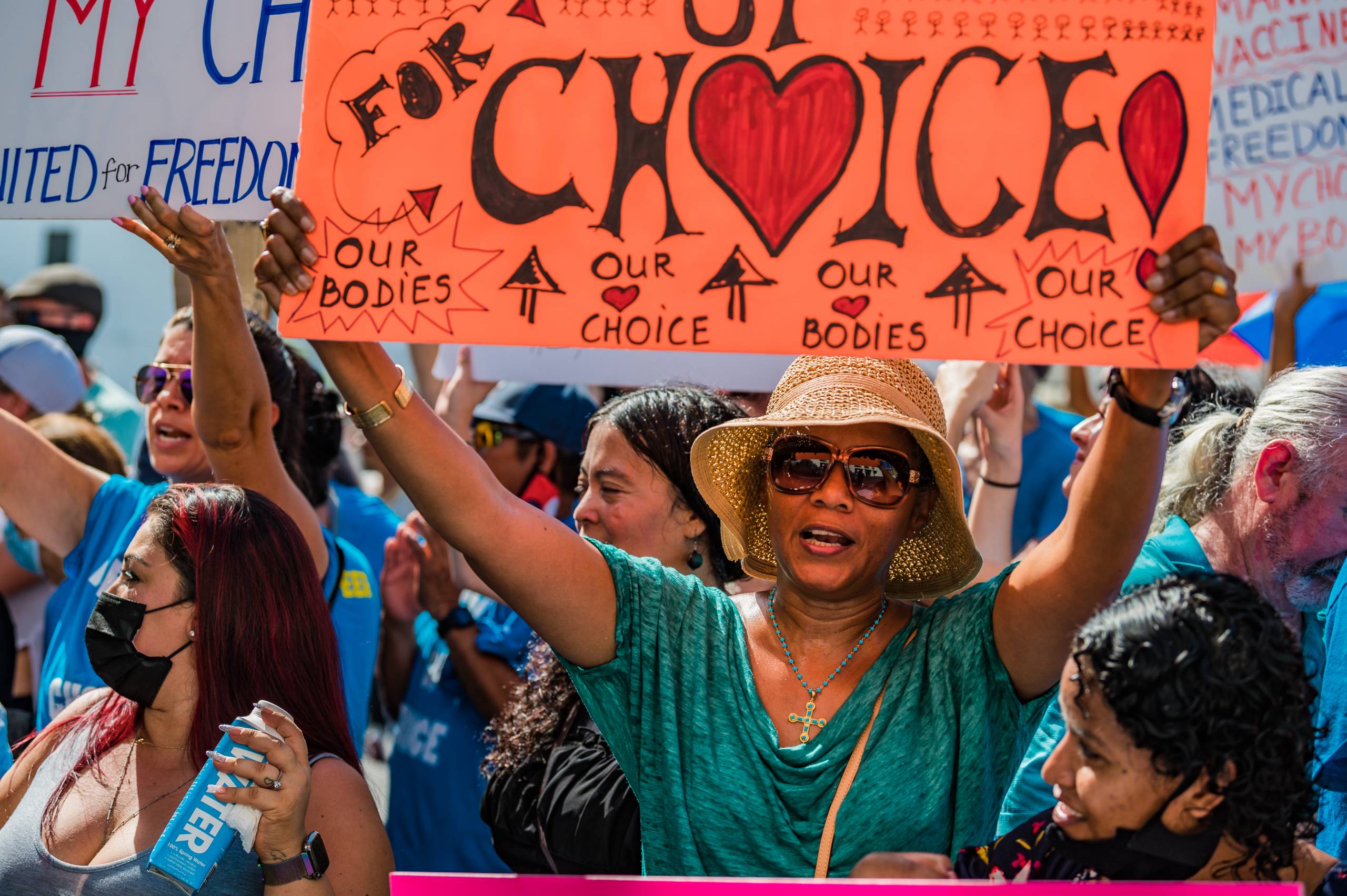

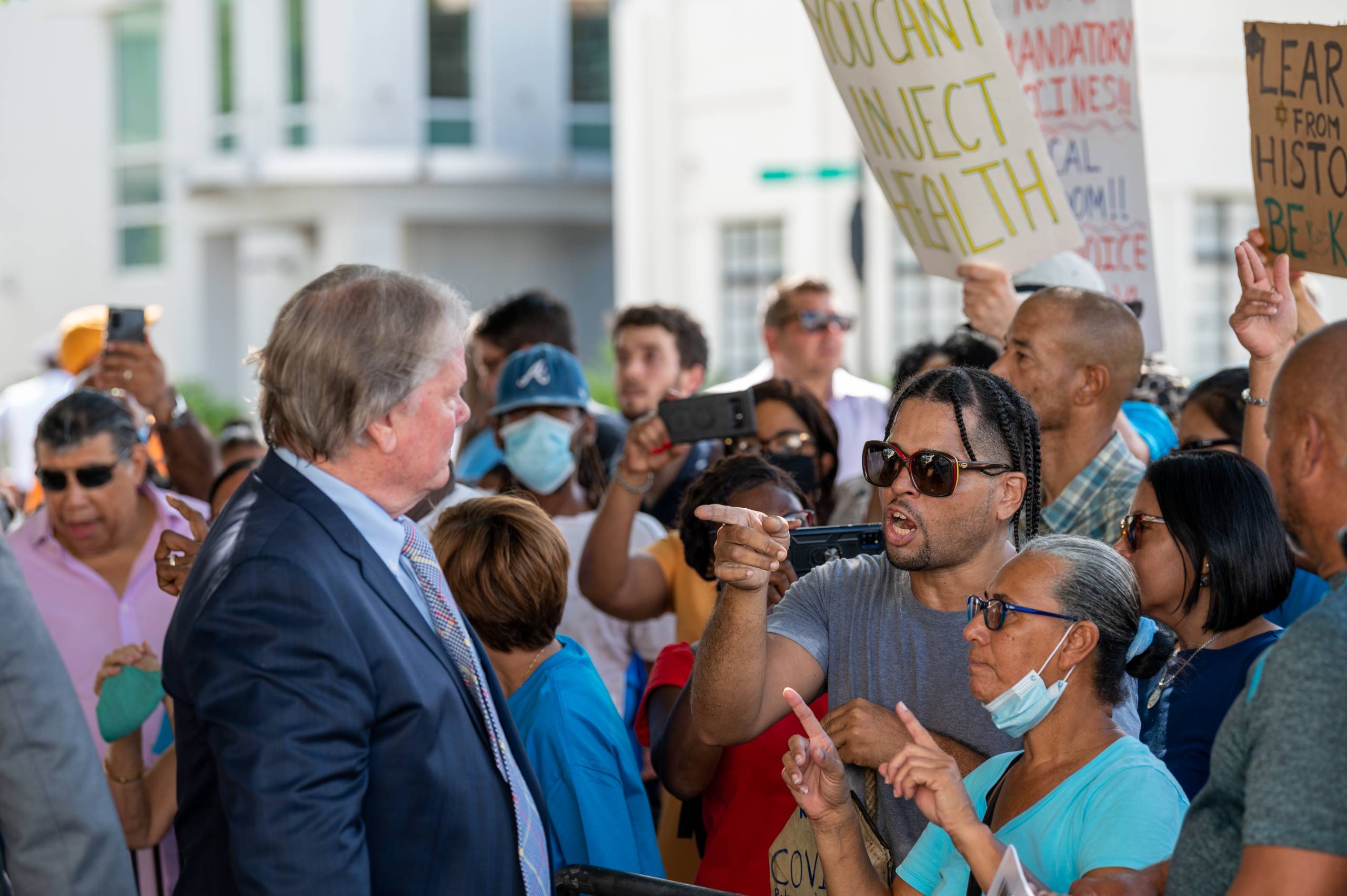
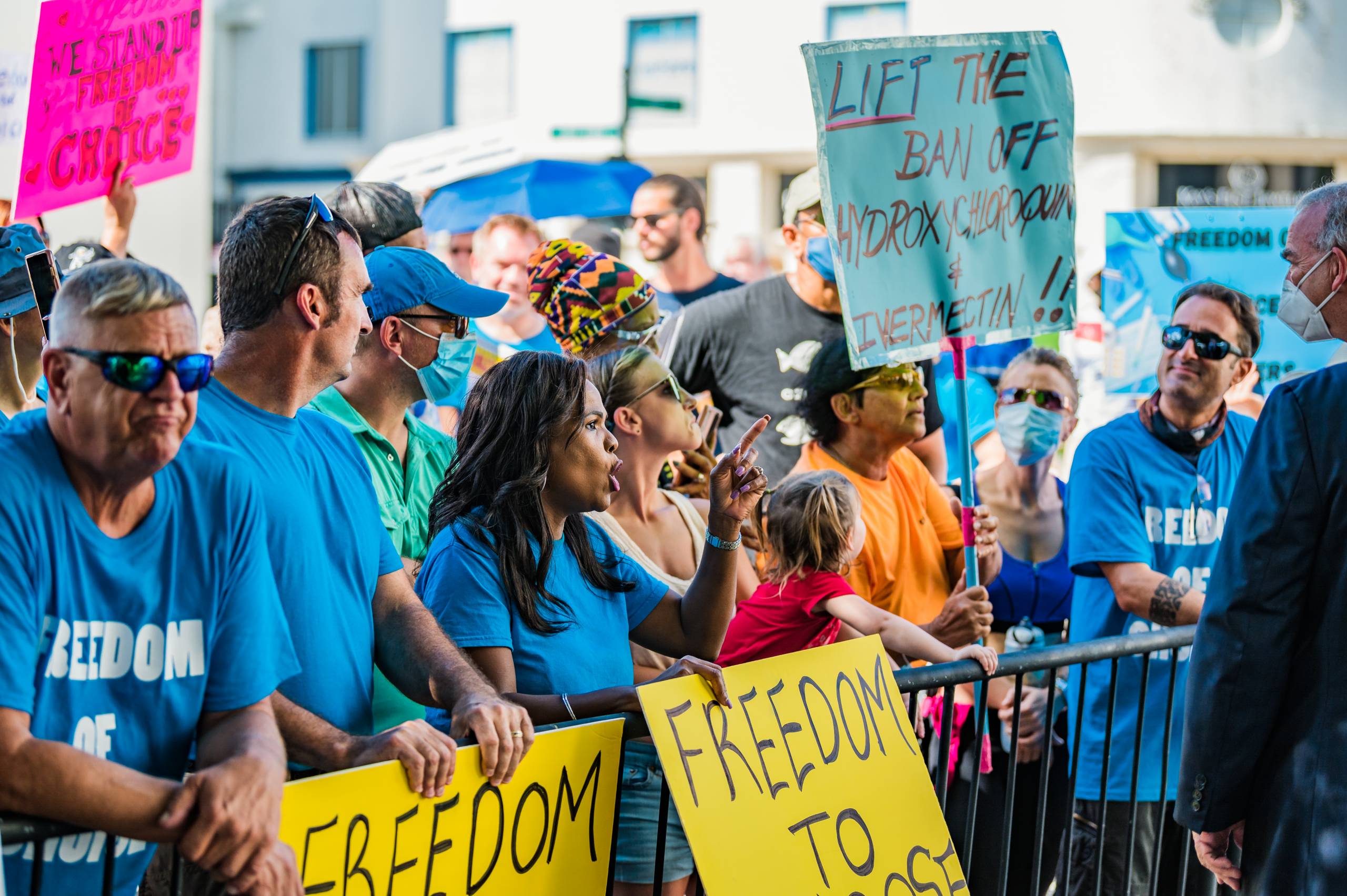
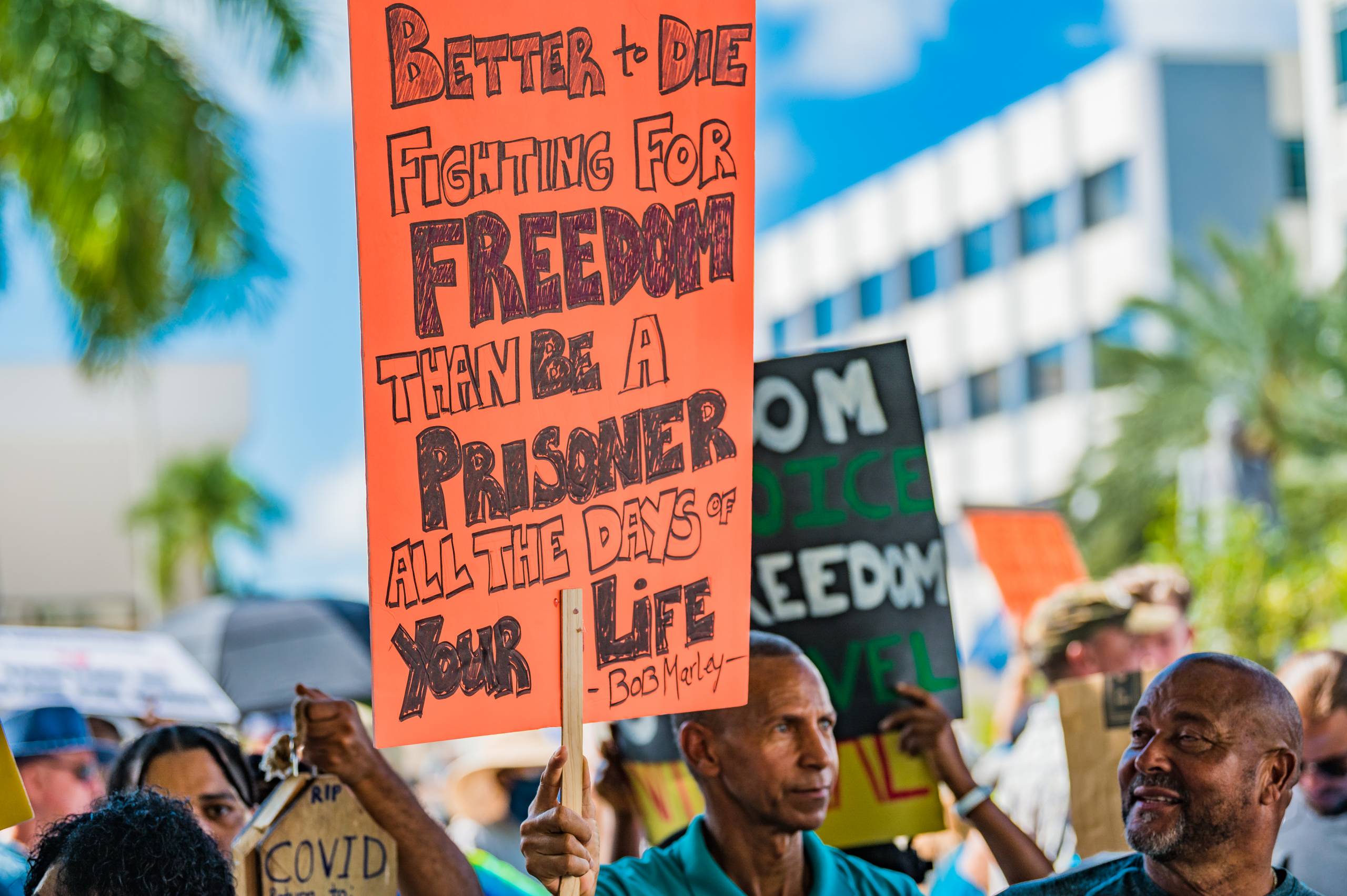
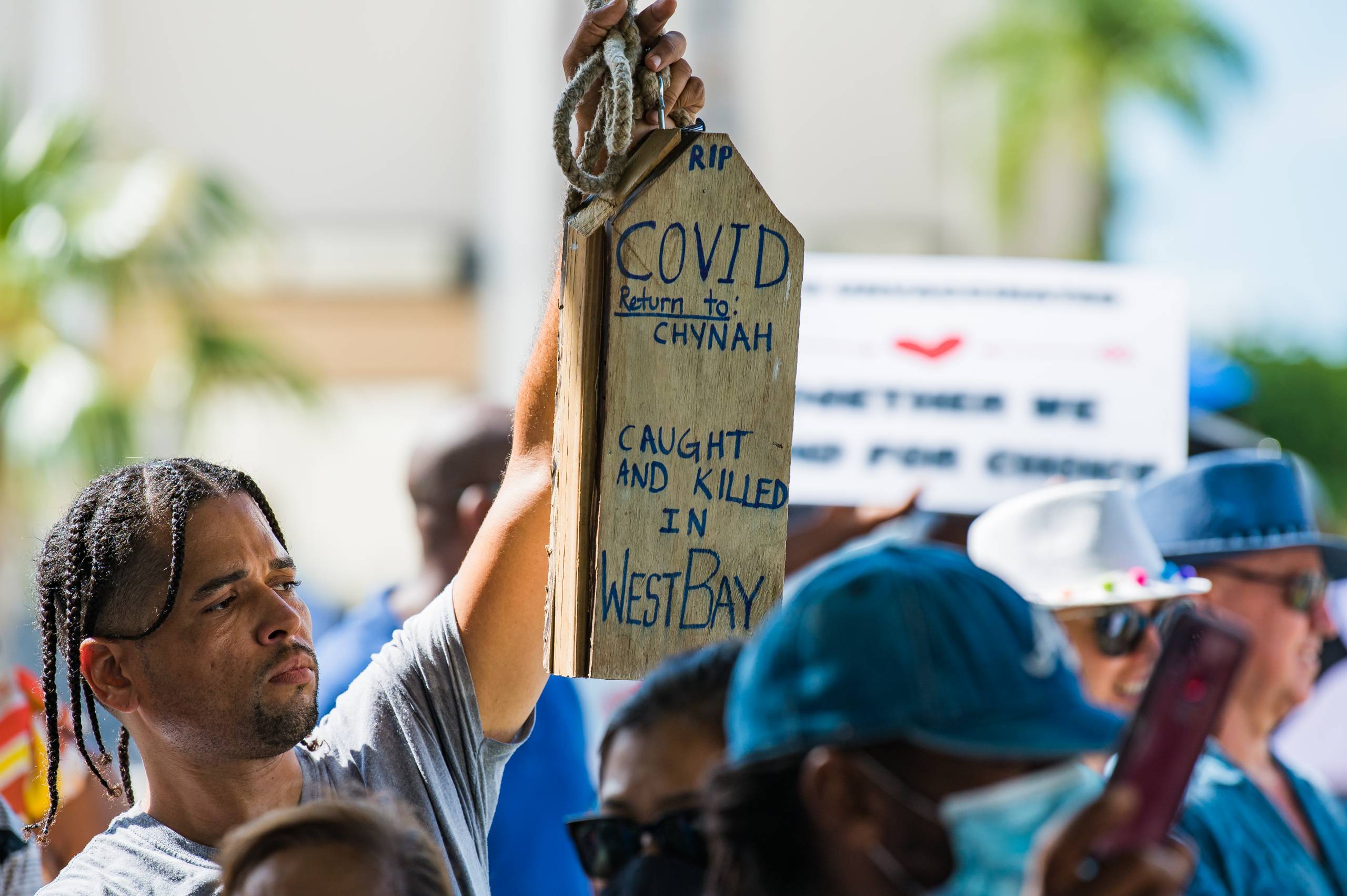
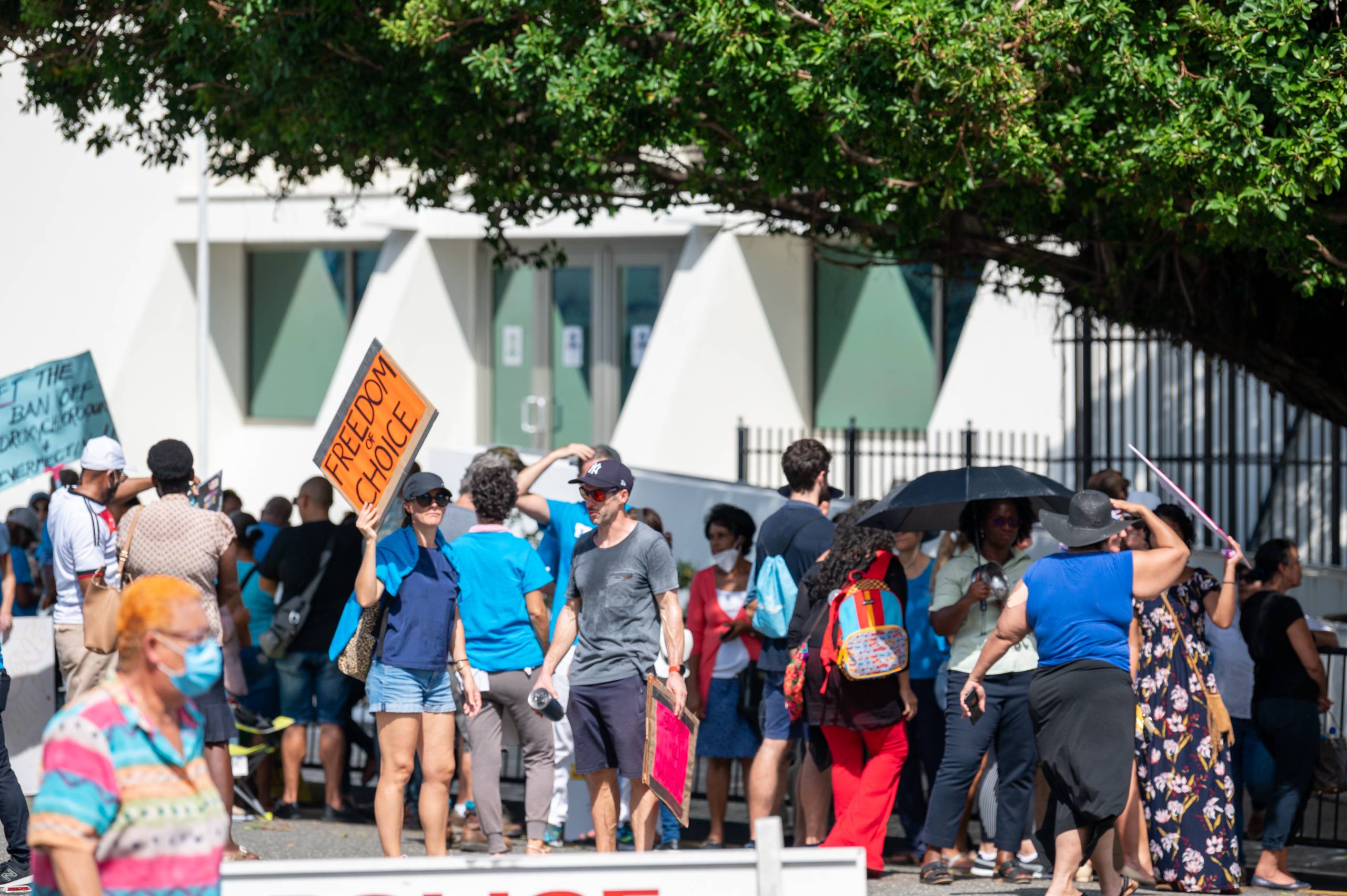
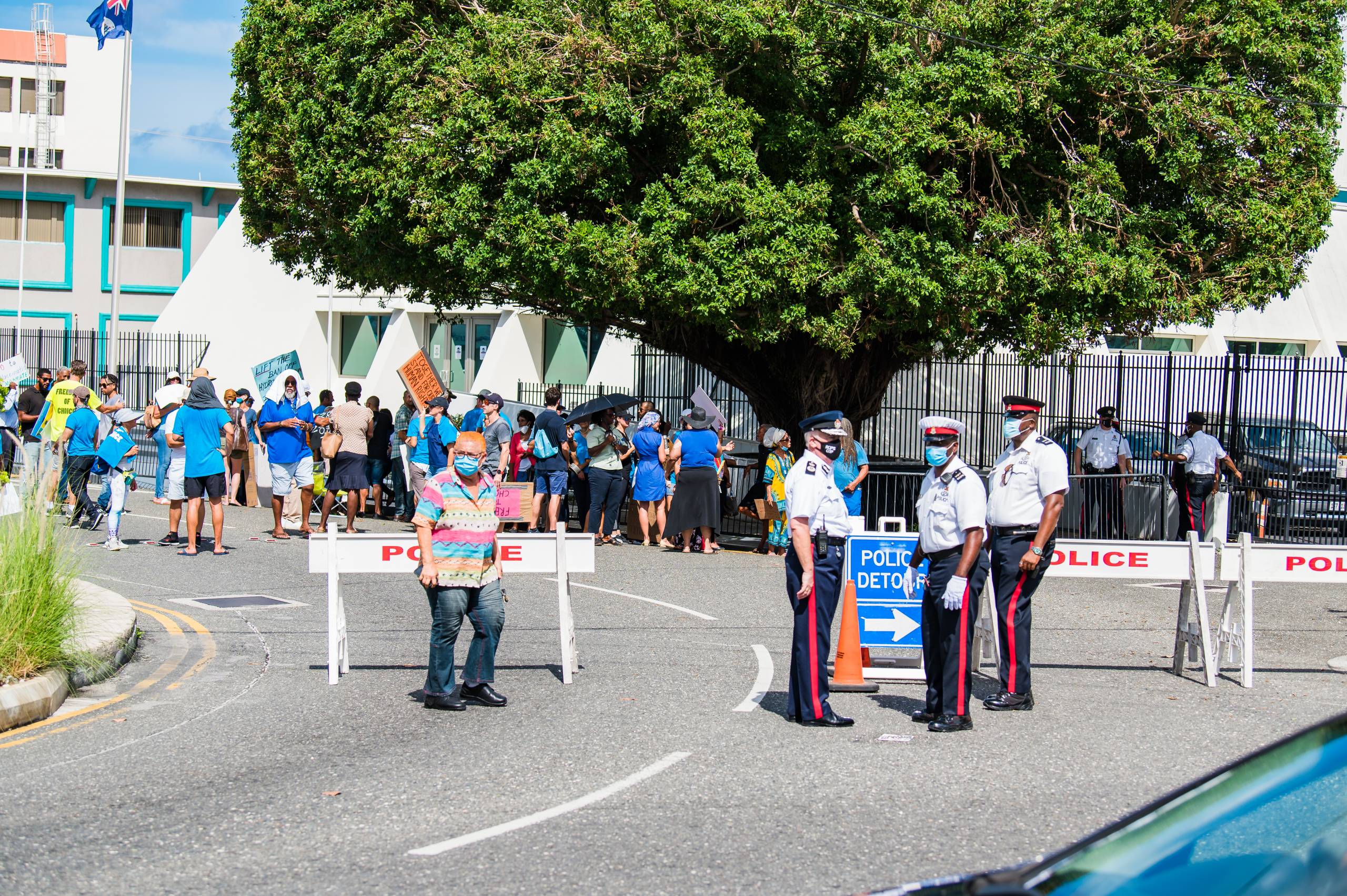
As the debate was set to start Monday, many of the demonstrators took seats in the public gallery to listen to the Members of Parliament’s speeches on the issue.
Border Control and Labour Minister Chris Saunders, who is also the minister of finance, tabled the Customs and Border Control (Amendment) Bill, saying, “This is the first of two amendments coming here today to ensure our vaccination rate stays above 80% so our people and those who call the Cayman Islands home remain protected.”
As of this weekend, 78% of the population had received at least one dose of the vaccine, and 73% had received both doses, according to Government Information Services.
Saunders noted that vaccinating 80% of government’s estimated population of 71,106 would mean at least 56,800 people would have been inoculated.
Explaining the rationale behind the legislation change, he said when the vast majority of residents here had opted to be vaccinated, it would be “highly irresponsible” to allow unvaccinated people to enter Cayman, especially if an influx of people increased the overall population, thus bringing down the rate of the local vaccination rate.
Among those required to be vaccinated under the Customs and Border Control Bill amendment are children or dependents of a Caymanian seeking permission to enter the islands, people arriving on or renewing student visas, and those entering Cayman through the grant of a Cabinet permit.
Vaccinations would also be required for people renewing or being granted work permits and for incoming travellers, under the upcoming proposed amendments to the Immigration (Transition) (Amendment) Bill.
For those to whom the border control law amendments apply, they are required to provide proof of vaccination or, if they are unvaccinated, are required to sign a declaration stating they will complete an approved vaccine course within 40 days after an application is granted; or within 40 days of arriving in the islands, if the person does not live here.
Opposition to vote against bills
The Opposition, led by Roy McTaggart, has indicated that it intends to vote against the amendments in both bills.
McTaggart questioned why the government had brought the legislative amendments before the House with only 10 days of public consultation, rather than the normal 28 days.
“Why the rush?” he asked, pointing out that it was likely to lead to a legal challenge in the courts, and had created division among expatriates and Caymanians and between vaxxers and anti-vaxxers.
He said he believed the government should only have made the legislation applicable to first-time work permit holders who were applying to work in the Cayman, rather than expanding the scope of the legislation.
McTaggart’s queries over why the government skipped the traditional 28-day public consultation period were echoed by Red Bay MP and former Premier Alden McLaughlin, who noted that this was the first time Premier Wayne Panton had exercised his powers to reduce the public consultation period to 10 days.
The government has stated that the amendments were “part of urgent measures being put in place by the government to protect the community from the COVID-19 virus and aid in the country’s economic recovery from the global pandemic”.
Both McLaughlin and McTaggart asked why, when Cayman has one of the highest vaccination rates in the world, the government was attempting to introduce the legislation without allowing adequate time to get public feedback on mandatory vaccinations.
Possible legal challenge
McLaughlin, in his speech, read from a letter by KSG Attorneys at Law – written on behalf of its client, the Christian Association for Civics and Political Education – which stated that the amendments were “incompatible with the fundamental human rights of people in the Cayman Islands”, as enshrined in the Bill of Rights within the Constitution, as well as in international human rights treaties and charters.
The Christian Association for Civics and Political Education, in the KSG letter, gave the government notice that it would challenge the law, if passed, through judicial process.
McLaughlin asked, why, when a judicial review challenging the constitutionality of mandatory vaccines was likely, the government was considering such “draconian measures”.
After reading out sections of the KSG letter, McLaughlin said the proposed legislation amendments did not meet “constitutional muster”.
The Red Bay MP, who has challenged the government’s earlier recalculation of the population size from 65,000 to 71,106, based on Economics and Statistics Office figures, said, by his previous administration’s estimations, 80% of the whole population of Cayman is already vaccinated, therefore making an effort to reach that target by mandating vaccinations unnecessary.
He insisted the Opposition is not taking an anti-vaccine stance and, in fact, believes that vaccinations are the only way to “get us out of this crisis and protect us and our people”, but it will oppose efforts to mandate vaccinations at a time when the islands have a high vaccination rate already.
Challenged by Tourism Minister Kenneth Bryan when McLaughlin said people would be “forced” to take the vaccine if the amendments passed, McLaughlin responded that the only choice being given to people affected by this legislation was “take the vaccine or leave Cayman and go home”.
The debate on the Customs and Border Control Bill was set to continue after the lunch break Monday. The Immigration (Transition) (Amendment) Bill will be debated after the House considers another bill, the Cayman Islands Coast Guard Bill.
Related Videos